ECO Farm SP-400 Samsung Foldable Dimmable Full Spectrum LED Grow Light VS Sylvania GRO-LUX LED Light LINEAR 396W
Do indoor plants require a light source? Most indoor plants can be grown outdoors and still survive in our homes. But they might need some extra love to thrive best led grow lights 2022.
There are many advantages to providing your plants with the additional energy generated by grow lights. In this post, I’ll show you how to grow lights work. I will explain why I believe that led grow lights make the best choices. If you are looking for the top best led grow lights in 2022, keep reading.
What are the Benefits of Full-Spectrum LED Grow Lights?
Full-spectrum LED grow lights offer a bounty of benefits for beginner and professional plants cultivators.
Below, we’ll briefly take a look at each advantage of using a full-spectrum light.
Full-Spectrum LED Grow Lights Grow Big Buds
Plants demand light within the 400–700nm range — and full-spectrum LED grow lights are more than willing to oblige.
Aside from ample light within the usable (PAR) range, most modern full-spectrum LED systems provide small levels of IR and UV light, which further promotes heavy trichome, terpene, and bud production.
Most modern full-spectrum LED systems provide small levels of IR and UV light, which further promotes heavy trichome, terpene, and bud production.
Full-Spectrum LED Grow Lights Reduce Electricity Bills
Full-spectrum LED grow lights are incredibly energy efficient because they offer:
Energy-saving diodes
Minimal wattage
High-performing drivers
Heat-reducing technology
Furthermore, full-spectrum LED systems create a domino effect of energy savings by reducing the demand of your HVAC system. Ultimately, full-spectrum LED grow lights are the perfect option to increase bud production while reducing electricity bills.
Full-Spectrum LED Grow Lights are Versatile
Unlike traditional LEDs or HID systems, full-spectrum LED grow lights are perfect for all stages of plants’ growth.
From seedling to harvest, full-spectrum LEDs provide the perfect wavelength of light during the growth cycle. In other words, you can kiss all those expensive HPS and MH bulbs goodbye once you convert to a full-spectrum LED system.
ECO Farm SP-400 Samsung Foldable Dimmable Full Spectrum LED Grow Light
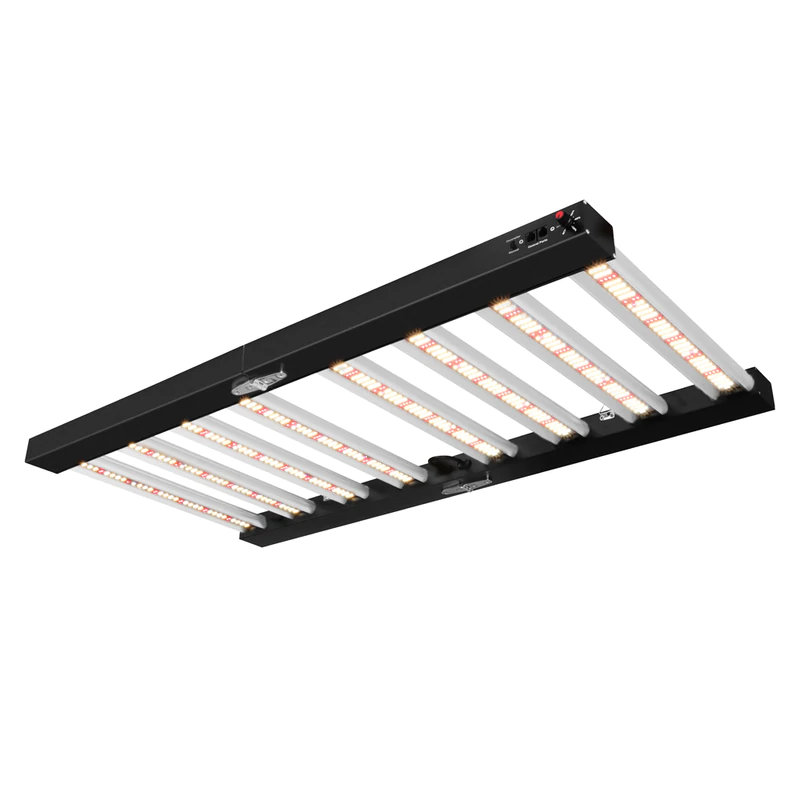
Features:
With upgraded SMD LED technology, ECO Farm LED grow lights can save up to 50% energy than other HID HPS grow lights. High energy efficiency of 2.8 umol/J provides strong light output and uniform penetration for higher yields. It’s the incredible power and lighting it delivers at full power that grows more healthy plants from start to finish. Excellent full spectrum for all stages of plants — red, white and warm white (660nm, 5000K, 3000K). White and warm white light is good for promoting germination and flowering of plants. Red light can speed up plant growth, resulting in more leaves and crops. This full-spectrum light is infinitely close to natural sunlight and is ideal for all stages of indoor plant growth. No assembly required, just plug and play. This is convenient for every grower. There are no fans and no noise, and the four-bar open design allows air to circulate around the lights to aid in cooling. Compared with other quantum board led grow lights, it dissipates heat faster and has a lower surface temperature.
Sylvania GRO-LUX LED Light LINEAR 396W
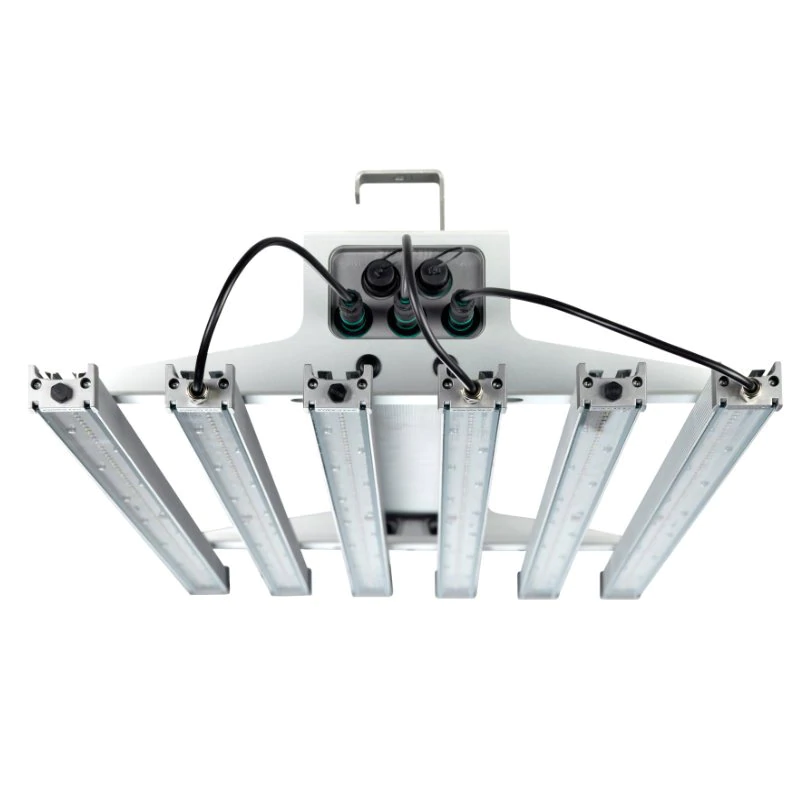
Features:
Sylvania’s Gro-lux range is designed to adapt perfectly to all growing styles: indoors, greenhouses, grow rooms, etc… so all Gro-Lux LED elements can be used independently or fastened to a Gro-Lux LED frame for enhanced Good zenith lighting power. This quiet and waterproof solution is suitable for the beginning and end of planting. Easy to install thanks to its simple electrical and mechanical interface, this lighting system is very efficient due to its 1080 μmol output. One of its big advantages is that it saves more than 33% in energy costs and can completely replace the EL HID 600W 400V system. Glass lenses are non-yellowing, easy to clean, and feature anti-reflective glass for maximum efficiency.
How to Choose the Best Grow Lights for Indoor Plants?
Indoor farming has grown in popularity, but traditional artificial lights aren’t good enough. You need grow lights, and it’s important to select the right ones.
What Types of Plants Will You Be Growing?
It’s important to plan which plants you want to grow before you decide on the lights. Determine how many of each plant you want to figure out how much lighting and what type you need. However, you don’t have to in a lot of detail.
The crop type influences the coverage, spectrum, intensity, and type of light you require. For example, if you want microgreens, the lighting required is very different from people who grow flowers.
Types of Grow Lights to Use
Typically, HIDs, LEDs, and fluorescent lights are used the most. Incandescent bulbs can burn the foliage because they produce too much heat.
Fluorescents tend to be the most affordable, but they don’t last as long as LEDs. With the LED technology, they are becoming less expensive, as well. Plus, they don’t use as much electricity and last much longer.
Understanding Color Spectrum in Grow Lights
Color Spectrum in Grow Lights
Red Light (630–660 nm) is essential for the growth of stems, as well as the expansion of leaves. This wavelength also regulates flowering, dormancy periods, and seed germination.
Blue Light (400–520 nm) needs to be carefully mixed with light in other spectra since overexposure to light in this wavelength may stunt the growth of certain plant species. Light in the blue range also affects the chlorophyll content present in the plant as well as leaf thickness.
Green Light (500–600 nm) was once thought not to be necessary for plants, but recent studies have discovered this wavelength penetrates through thick top canopies to support the leaves in the lower canopy.
Far Red Light (720–740 nm) also passes through dense upper canopies to support the growth of leaves located lower on the plants. In addition, exposure to IR light reduces the time a plant needs to flower. Another benefit of far red light is that plants exposed to this wavelength tend to produce larger leaves than those not exposed to light in this spectrum.
Typically, you want full-spectrum bulbs because they contain all these colors and can produce the best results. Plus, they’re easier for you to see because they emit white light, even when producing blue and red colors.
How Many Watts Do You Need for Indoor Plants?
Typically, the experts recommend that you use 20 to 40 watts per square foot. Check the wattage listed on the grow light and divide it by 20. This gives you the highest square foot area that the bulb can cover.
How to Use Grow Lights for Indoor Plants?
Once you’ve bought the light, you need to set it up. Most of the ones we talk about here are plug-and-play. You can hang some of them or install them directly into the ceiling while others are used on a table.
Turn them on and set the brightness and dim level. Read the manual to find out how to do that for the specific model you buy.
Conclusion
Ultimately, LED grow lights are the perfect choice for stepping up your growing game.
LED grow lights provide beginner and professional plants cultivators with serious firepower. From sky-high PAR output to insane coverage, nothing beats the efficiency of a LED system.
Once you buy a LED system, don’t forget to look at our Grow Guide to produce the best buds possible.
ECO Farm ECOY 600W Movable LED Grow Light Bar VS HortiBloom Mega Plus 650W LED Grow Light
Growing demand in the market for the best full spectrum LED grow lights. A grow light is your answer to creating artificial lights at home for the sake of kickstarting the process of photosynthesis (how plants make food!). Most parts experience an unwavering amount of sunlight, especially during the winters. Hence, it is best to grow them indoors whre you can monitor them the best.
Can I use normal led lights to grow plants indoors?
While you could use any LED light to grow plants, they’re not guaranteed to do the job and help your plants grow healthily or quickly. Most high-quality, current LED grow lights are COB (chip on board) LED and Quantum Board LED- lights specially designed to emit full-spectrum light for optimal photosynthesis. So while you can use any household LED, if you are invested in the healthy, efficient growth of your indoor plants, buying a purpose-built grow light is a good idea.
How do you use grow lights on indoor plants?
Generally speaking, most flowering plants and vegetables require 12 to 16 hours of light exposure daily- and flowering plants (which indoor plants often are) need the most. That said, an important part of a plant’s growth cycle is darkness, so while you can technically leave your indoor plants exposed to your grow light 24/7, they won’t be getting the benefit of every aspect of their growth cycle. Most plants really need about 8 hours of darkness a day in order to make the most of their potential growth cycle. On top of that, leaving your lights on 24/7 isn’t energy efficient, so it’s best to follow the above guidelines if you want the healthiest plants possible.
ECO Farm ECOY 600W Movable LED Grow Light Bar
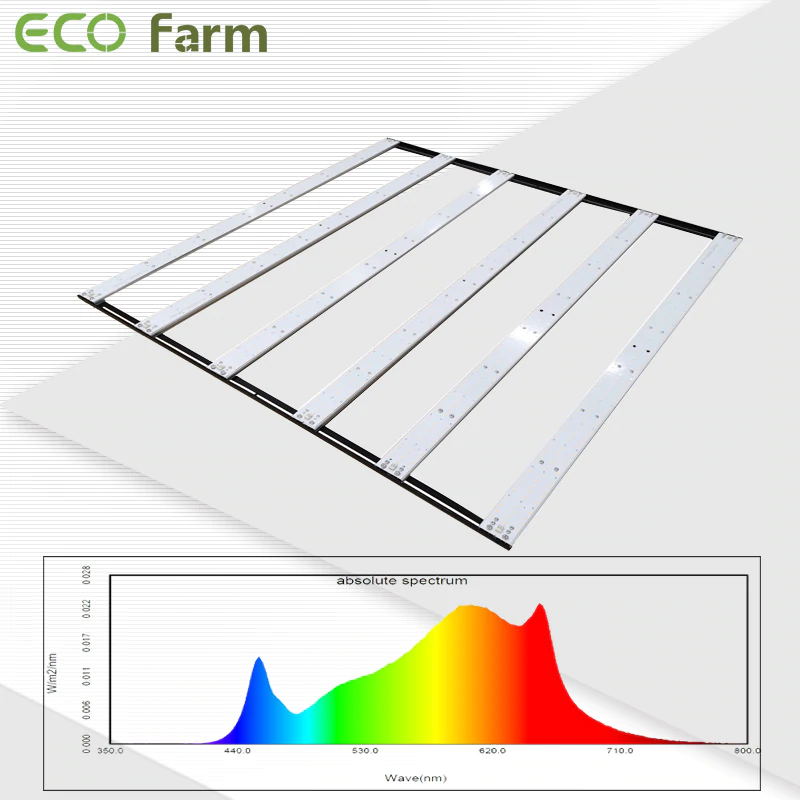
Features:
The ECO Farm LED Grow Light uses today’s latest LED grow light gardening solution — LM301H diode, high lamp efficiency compared to conventional open HPS/MH solutions allows you to finally reduce HVAC capacity by about 30–40% and get Maximum higher yield. Excellent full spectrum LED grow light provides optimal spectral coverage for your flowers, improved PPFD uniformity, even growth distribution and efficient photosynthesis to improve overall chlorophyll levels, full spectrum is not only cost effective but also Produces better yields, especially when you compare it to the HPS/CMH combination. This grow light adopts advanced aluminum heat sink design, no fan, zero noise, high efficiency and low power consumption LED configuration with 6 LED strips, providing excellent 360° heat dissipation, reducing the possibility of problems due to overheating, Allow your plants to receive more energy. The high-quality LEDs are protected by an adhesive coating, which is essential for heat dissipation while ensuring long lamp life.
HortiBloom Mega Plus 650W LED Grow Light
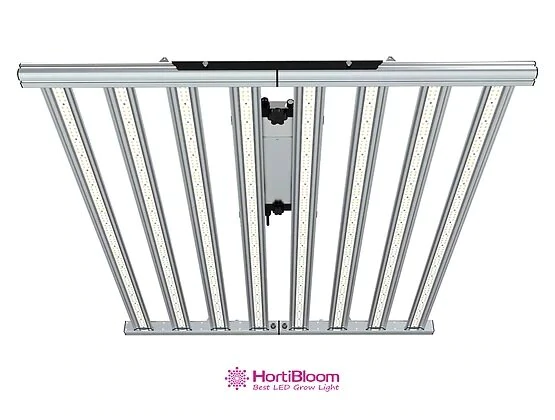
Features:
HortiBloom’s most powerful LED grow lights are made of high quality 6063 aluminum strips and custom made for better airflow, each strip weighs over 1kg and offers the best passive cooling system to extend your LED chipset (Brightness drop less than 3% rate over 5,000 hours) Maximize the life of LED diodes and lamps. Use an optical cover to protect the LED from water and dust working in wet spaces for a long time, so the inside of the LED is always clean, just wash the lamp to clean the cover. Presenting you the latest top LED configuration of 2304 SAMSUNG LM301H white light and 144 660nm Osram LEDs, which is comparable to other grow light brands. Additionally, we use our unique spectrum to maximize grower yields. The lights also support the use of controllers to control large-scale grow lighting.
What Are Some Key Considerations When Buying a Grow Light?
Electricity consumption
Your LED lights operate 10–12 hours regularly, which leads to an increase in the electricity bill.
Read the brand description about the product carefully, as it may help you to choose the best option and save you from trouble in the future. Moreover, always check how many units is the total output.
Plant growing space
Always remember that your space at home is an important factor to note while purchasing the lamps as the size of the lamp depends on the space available in your production area.
Let’s suppose if you are planting in a room, firstly measure the exact size of your room. Then, measure the lighting area size of the lamp that you are considering using for your plant production. The size of your room will also decide how many lamps are used in that specific area.
Furthermore, you should consider that according to the general guidelines, if you are planting high-light plants, you just need to use 32 watts of actual power per square foot, but planting low-light plants like lettuce need 11–18 watt per square foot.
Low heat output
This factor is one of the most important factors choosing the LED lights as it is comprised of two factors:
Durability
This factor is important because light having low heat output guarantees that you would not face any damage to your plants, but it is necessary to keep a smaller distance between the lamp and plant. In contrast, lamps that have high heat output may burn your plants more quickly.
Flexibility and ease of use
Sometimes, you may face some trouble in the adjustment of the lamp as it can not stay horizontal, so you have to prop them to keep them up from your plant. When you buy the best quality lamp, these are more efficient and also easy to use.
Moreover, an adjustable feature of wavelength and light intensity is also an essential part while choosing the best-LED lamps for your plants.
Conclusion
Choosing the best LED grow lights for indoor plants is difficult. Growing plants is not an easier job. It takes some time to become a perfect plants grower. If you are just starting out and want to experiment with a plant or two, this grow bulb is a smart way to get started.
Now growing plants is legal in most of the states. LED grow lights are the most suitable ones for those indoor plants. They can be used for the full life cycle of your plants.
The LED full spectrum grow lights are a great choice for medium to larger sized indoor gardens.
ECO Farm ECOM 1200W LM301B Full spectrum LED Grow Light Bars VS Fohse A3i 1500W LED Grow Light
What are the best grow lights in 2022? LED grow lights are the most sustainable option for indoor gardening. They not only give your nursery or garden a beautiful, vibrant look but also cost-effectively reduce energy consumption! But with so many options available in today’s market ranging from small size to large commercial grow lights, it can be hard knowing which one is right for you? Well, don’t worry because we’ve done all of this research work beforehand and created an easy guide on how best to match up different requirements with various LED grow light models.
What’s the best way to get started with the best LED grow lights in 2022 for indoor gardening? A powerful LED grow light. There are many different types of these lights available, but we’ve narrowed it down for you so that your choice is easier than ever before! With this guide on the top best led grow lights 2022 has to offer, choosing one will be much easier.
What are the major benefits that LED grow lights equipped with IR and UV rays?
LED grow light options that come with ultraviolet and infrared rays have become the modern choice for so many consumers out there. This is mainly down to the fact that their grow lights have more weapons in their arsenal to fight back against diseases and pests on the plants.
These problems have become increasingly challenging to take care of once people start to grow plants indoors. But with these 2 types of rays, you will not have to stress out about them anymore.
What is the ideal number of colors that your LED grow light should have?
For LED grow lights, more color options will result in less effectiveness in the light emitted. This is why you should not go over the top when it comes to colors, because in the end, you will not be able to utilize them all anyway. A solid one with about 6–8 colors is more than enough to take care of your needs.
ECO Farm ECOM 1200W LM301B Full spectrum LED Grow Light Bars
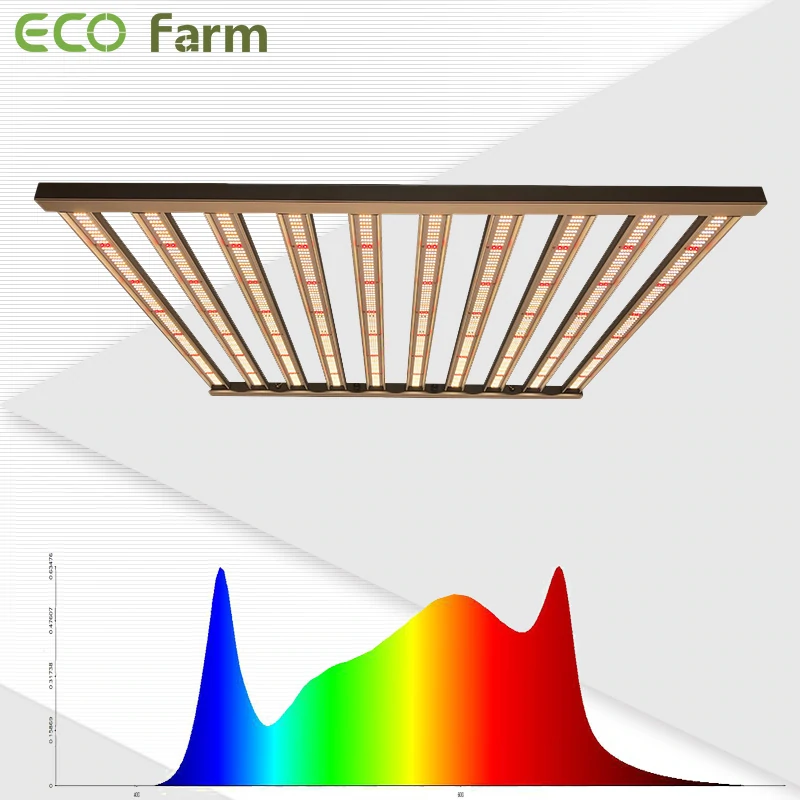
Features:
This ECO Farm LED Grow Light comes with a unique design of 10 LED grow lights to provide more even and complete canopy coverage, especially in outer edge growing areas. Featuring 3180 SAMSUNG LM301B diodes with 1200 watts of power, this LED grow light achieves an impressive 2.8 umol/J of PPE covering a 6'x6' high yield full cycle growth. Full spectrum (LM301B 3000K+6500K, Osram 660nm) is ideal for vegetable flowering to suit every stage of the plant cycle. The dimmer knob is ideal for growers to adjust light intensity for different growth stages. The strip grow light design and the aluminum heat sink on the back contribute to better airflow and good heat dissipation. This grow light features a detachable driver and long power cord to reduce ambient heat in the grow space for longer life. The LED diodes are coated with water repellent, so there is no need to worry about wet environment.
Fohse A3i 1500W LED Grow Light
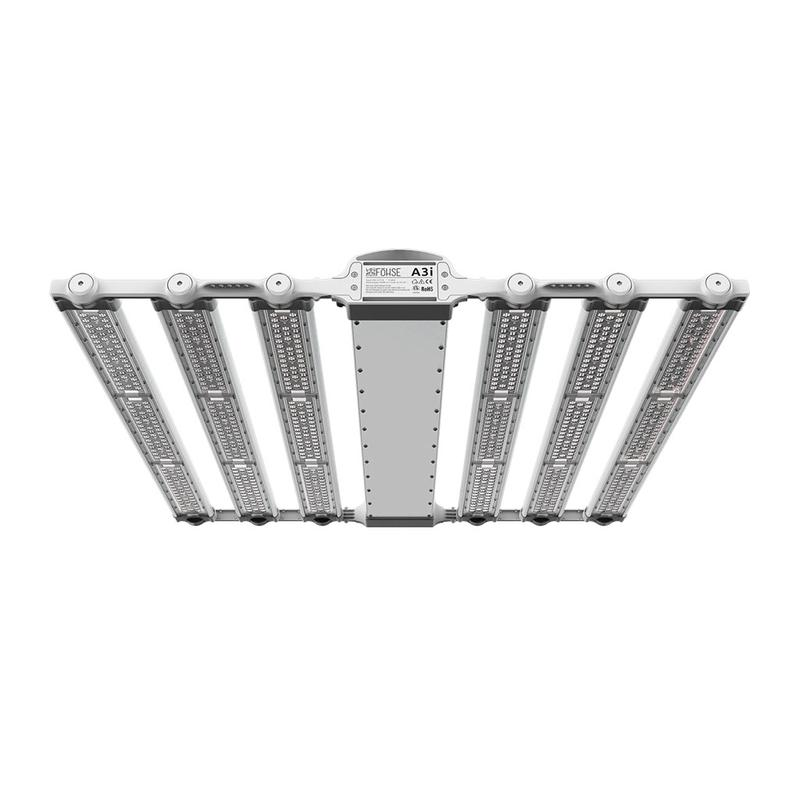
Features:
This Fohse LED grow light is designed for incredible yields in high bay, single storey environments. The power of the A3i lies in thousands of diodes from industry-leading diode manufacturers. Early LED lights failed to succeed in the plants industry due to low yields + low canopy penetration. The secret to Aries’ success is focusing a lot of PAR on your headliner with a polycarbonate focal length lens. Cooling a traditional HPS setup can be expensive, especially when bringing more light into the environment. The A3i produces 60% more light per BTU than HPS systems, significantly reducing cooling system pressure. The A3i has dual protection against electrical overload conditions. When you include our 5-year conditional warranty, you’re triple your protection.
Buying guide
Carefully considering these following factors will help you make the best choice when it comes to purchasing your LED grow light:
The types of plants: Different types of plants thrive in different conditions, and in order to provide the optimal circumstance for them to photosynthesize — you will need to do your own research to find this information. In your LED grow light, look for features that can enhance the plants’ life and cause good reactions out of them.
The surface area: Whether your indoor garden takes up a large space or not, you will need to know the surface area in order to figure out the amount of light needs to be provided. You won’t need to pay much attention to areas that are directly lit, but rather on those that are further away.
Durability: Other than just tough construction, your LED unit has to be stable and does not produce too much excessive heat. If it keeps flickering on and off or generating heat all the time — the lifespan of both your plants and your grow lights will undoubtedly be affected.
PAR value: In short, PAR is the beneficial light that can enhance the growth of your plants. The more evenly PAR is distributed, the better your LED grow light is — since it can reach the plants directly under and those further away with the same intensity.
Cooling system: Although LED units do not generate nearly as much heat as other types of grow lights, using them for extended periods of time can still lead to overheating. Models that have a heat sink at the back are much better at cooling the whole units and protecting the plants from excessive heat.
Customizability: Different LED grow lights from different manufacturers are equipped with various types of programmable modes — and one of these useful features might be beneficial to you. From setting the schedules of the light to changing the intensity to suit different types of plants — you can fully customize your LED unit’s operation to fit your needs.
Price and value: As mentioned before, incandescent or fluorescent units are more affordable options when compared to LED grow lights — but cost way more in use and maintenance. Good LED units do not come cheap, so when you are out looking for cheaper options — ask yourself if the difference in price will be worth it. Most of the time, less money on the price tag will result in more money spent on repairs or replacements — so make your decision wisely.
Conclusion
I hope you found this article useful!
All of the best LED grow lights reviewed in this article will do a solid job for your plants.
They’re all reasonably priced and produced by reliable manufacturers who offer good warranties and customer service.
2022 Best Cheap LED Grow Lights for Indoor Plants
With regards to putting shrewdly in your indoor grow lights, nothing can beat the most supportable choice — LED Grow Lights. LEDs are not only incredible for the strength of your indoor plants yet, in addition, give your nursery or an indoor grow a totally lively glance at a practical cost.
In any case, with such countless choices accessible in the market going from little size to enormous business LED grow lights, it is not difficult to pick the best LED grow light for the cash that impeccably coordinates with your necessities. This article will cover the best cheap grow lights 2022, suitable for your budget.
Why Plants Need Light to Grow
Unlike humans, most plants don’t eat solid material for energy. There’s no munching on some chips or nibbling on a chocolate bar. Rather, plants use the sun’s energy to convert water and carbon dioxide into carbohydrates. This process is known as photosynthesis.
If plants don’t receive enough light, they will become stunted and experience an overall decline in health. If you’ve ever placed a plant in a dark room, you know what we’re talking about.
The wavelength of light relates to the color that humans perceive. Plants absorb light between 400–700 nm for photosynthesis. Therefore, this range of light is known as photosynthetic active radiation (PAR). However, plants absorb blue light (400–500 nm) and red light (600–700 nm) the best.
Plants will absorb both red and blue light throughout their lives, and a balance of both types produces healthy plants. With that said, the types of light can affect the plant’s processes.
Blue light helps form chlorophyll, so it’s especially important for the early vegetative stages. Red light, especially far-red light (700–850 nm), can help induce flowering and fruit set in plants.
How Effective is Grow Light for Indoor Houseplants?
Artificial light can be very effective for indoor houseplants! Of course, all light is not created equal. Just like you may need to move your houseplant around before you find the proper natural light, you may need to adjust your grow light to find a setup that makes your plant happy.
When you’re searching for a light, you need to be concerned about two main factors: intensity and spectrum.
The intensity refers to the brightness of a light and is measured in lumens.
It’s important to note that how you use the lights also impacts how effective they are. Two factors to consider are the distance between the light and the plant as well as the number of hours the lights are on.
Even if you’re using a powerful light, placing it too far away from a plant will lead to weak plants. Not having a light on for enough hours will also lead to problems.
While light distance/intensity and the number of hours the light is on are both important, don’t fall into the trap of thinking one can compensate for the other. For example, you cannot use a high-intensity light for five hours instead of a low-intensity light for ten hours.
ECO Farm DBL5000 Full Spectrum LED Grow Light 480W
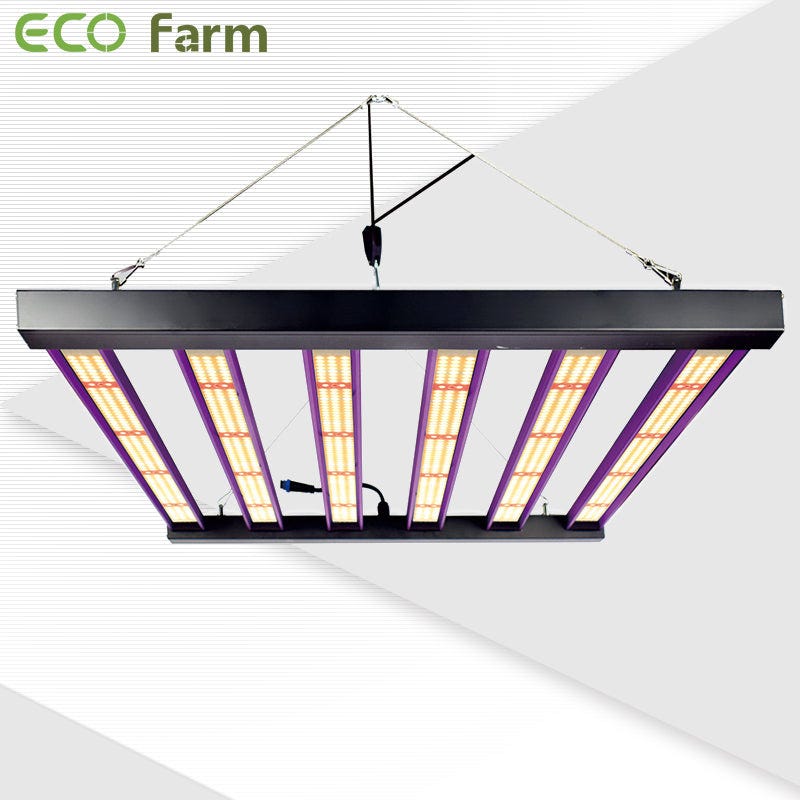
Features:
This ECO Farm LED grow light is equipped with 1296 SAMSUNG LM281B diodes, the light output is up to 2.5 μmol/J, the photons are completely evenly distributed in the 3×3ft coverage area, and the power consumption is reduced while increasing the power, which is more efficient than traditional HPS, More energy efficient. The slim bar design shines with the latest aluminum heatsinks for better airflow and excellent cooling without noise. LED waterproof coating, no fear of wet environment, built-in power supply, no messy wires. It reduces ambient heat in the growing space for longer service life and also expands the heat dissipation area. LED grow lights include 720pcs 3000K LEDs, 282pcs 5000K LEDs, 288pcs 660nm deep red LEDs and 6pcs 730nm LEDs. On the basis of the full spectrum, the absorbable wavelength of the plant is optimized to increase the quality and output of light by 50%, effectively ensuring that the plant obtains sufficient light absorption, speeding up the flowering time and increasing the yield.
HYPHOTONFLUX HPF4000 Full Spectrum Led Grow Lights
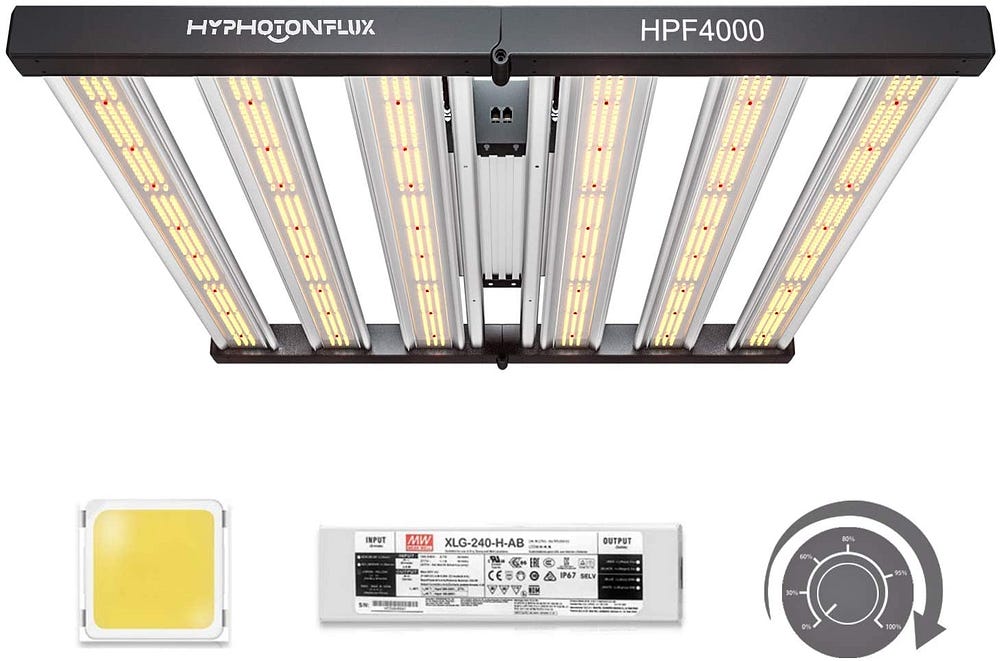
Features:
HYPHOTONFLUX 480w LED Grow Light adopts today’s latest high yield LED technology — SAMSUNG LM301B and OSRAM deep red 660nm diode, equivalent to 1000w HPS grow light, high energy efficiency, 2.7 μmol/J, vegetable footprint is 6 x 6 feet, flowering footprint is 5 x 5 feet. The LED grow light features 1224 LM301B LEDs (3000k+4000k) and 48 Osram deep red LEDs (660nm), providing plants with a full spectrum from seeding to flowering. Ideal for all stages of indoor plant growth, fast plant response from seed to flower, faster flowering time and higher yields. The HPF4000 grow light has a six-level dimming knob to provide ideal light for plants in different stages. In addition, you can connect up to 80 lights through the RJ14 port, adjust the light intensity and time through the controller or the app, which is especially beneficial for large-scale indoor and commercial cultivation.
Phlizon PH Bar LED Grow Lights Bars
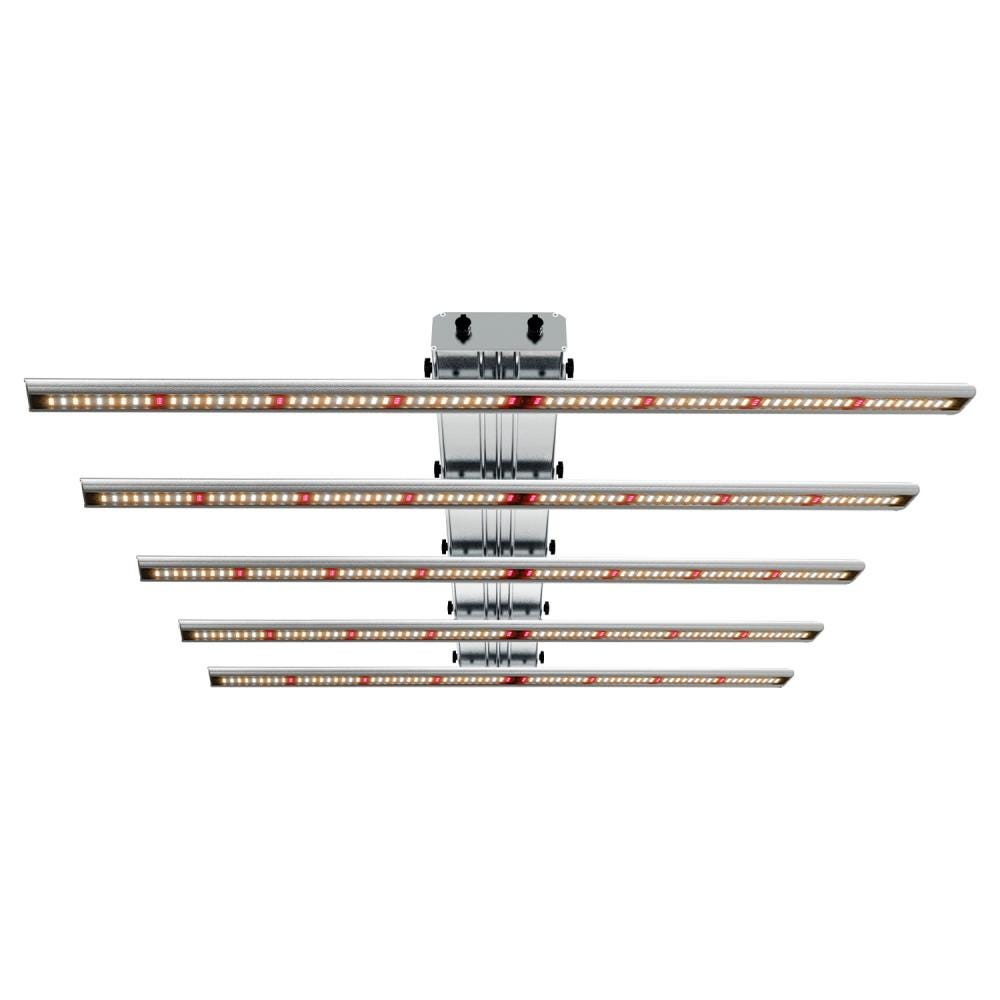
Features:
This grow light has branded and high quality parts to ensure stable and high efficiency and output. Aluminum passively cooled LED strips provide strong light coverage without fans or moving parts, significantly improving heat dissipation. Reliably sourced components include UL-certified drivers, Samsung white LEDs and Osram deep red LEDs for enhanced performance. The Phlizon LED grow light bar series gently drives LEDs to optimize lamp life and increase spectral output, providing full-spectrum, broad-coverage light for long-term growth. The LED Grow Light bar series has a variety of dimmable options, you can adjust the light from 0% to 100% or set a lighting timer by dimmer / 0–10V / PWM signal control / WiFi App control according to the growth stage and needs plants and crops.
Things To Consider
Coverage
Another essential consideration is growing space coverage. You need to be able to calculate the amount of growing space that your fixture can support. This number varies from grower to grower. After all, some people are managing large warehouses, while others boast 4-by-4 grow tents.
Generally speaking, lights with higher wattages are capable of covering larger areas. You will need to consider a light’s wattage, coverage area, and distance from plants before you can determine how many lights you need for your growing space.
Take into account that you may need to raise or lower your lights during different growing spaces. Raising and lowering plants alters a light’s overall PAR per square foot.
Cooling
While LED grows lights do not get nearly as hot as traditional light fixtures, they still produce excess heat. Most lights have a combination of onboard heat sinks, radiators, and fans that help them to maintain a reasonable temperature.
Without a reliable grow system, you risk exposing your plants to excess heat and dryness. The heat that is produced by LEDs has nowhere to go inside a grow room or tent. As such, it is automatically absorbed by the plants and other objects in a growing area. Grow rooms should be well ventilated. The temperature inside the room should fall somewhere between 70 and 85 degrees Fahrenheit when the lights are on.
You can calculate a grow light’s estimated heat production by multiplying the number of watts used by 3.41. This gives you the fixture’s heat production in BTUs (British thermal units.) You can also check out this online calculator to determine the total BTUs of cooling needed for an LED light.
Controls
Lights with built-in or remote controls give you the freedom of programming. You may be able to set a timer, adjust the red, blue ratio of your light, or alter a light’s intensity to better suit your growing needs at any given time.
Included Accessories
If you’re setting up a grow room for the first time, you’re going to need a good amount of accessories to complete your installation. Consider it a bonus if a manufacturer includes ratchets, hooks, and/or other hardware with their grow lights.
Warranty
Most LEDs have promising lifespans, with many ranging between 20,000 and 100,000 hours of estimated runtime. While most LEDs live up to their promises, we still like to see companies stand behind their claims. Three-year warranties are commonplace for LED grow lights. A lengthy protection plan guarantees that you are covered even in the rare chance something goes from with your fixture.
Price
The cost of LED lights is yet another essential consideration. Most fixtures average in the hundreds, but professional models can cost much as $2,000 per unit. When you purchase an LED light, you’re making an upfront investment. You’ll reap the benefits of your investment so long as the fixture’s lifespan and light intensity live up to the manufacturer’s promise. Hopefully, you’ll opt for a model that also boasts a lengthy and worry-free warranty.
If you’re shopping with a limited budget, you’ll want to pay careful attention to the light intensity, spectrum, and coverage offered by your chosen light. The right light should present energy savings alongside healthy plant growth.
Conclusion
Ultimately, LED grow lights are the perfect choice for stepping up your growing game.
LED grow lights provide beginner and professional plants cultivators with serious firepower. From sky-high PAR output to insane coverage, nothing beats the efficiency of a LED system.
Once you buy a LED system, don’t forget to look at our Grow Guide to produce the best buds possible.
HLG 650R Quantum Board VS GROPLANNER 600W LED Grow Light
If you are one of those people who tirelessly follows trends and knows everything about them, then you have surely heard of the quantum board led grow lights.
The whole growing community is buzzing about these led lighting boards. You can read incredibly good reviews and experiences with these lights on forums, blogs, and you can even see them on YouTube videos.
The point is that everyone is thrilled with these quantum lights and guaranteed to work miracles!
If you have been in the growing business for a while, you must have become interested in quantum board grow light at some point.
Now, that’s where the problem arises. You don’t want to take risks and spend money on something that absolutely won’t work, or worse, on something that will damage your plants.
This issue is on your mind because you absolutely have no idea what quantum board led grow light actually is. That’s why we are here today!
Today we will teach you everything you need to know about quantum boards.
We know that no question of yours will remain unanswered.
When you finish reading, know that you can confidently say that you have learned absolutely everything about quantum led lights.
You will generally learn all about quantum board LED grow lights, how they work, whether they are really as good as they say or not. You will also find out which are the best manufacturers of these ‘miracle workers’.
Only at the end will you have a clear picture of what this quantum led board is like and how it works.
What Exactly Is a Quantum Board?
In late years, research on light-emitting diodes (LEDs) has revealed their tremendous potential as a lighting device for regulating herb growth, production, and metabolism.
LED growth was first researched in the 1990s by NASA-alienated researchers as part of the planning for the construction of plant-based life-support systems for potential Moon and Mars bases.
Still, only red LEDs were accessible at the time. As a result, it is possible to argue that the real age of LED testing began with the establishment of blue LEDs to the industry.
LED lighting technologies have evolved significantly in terms of physical shapes and architectures, waveband color availability, power consumption per unit of light output, and cost per unit of light output. LED technology is said to evolve by Haitz’s regulation, which was reformulated in 2011.
A considerable number of lighting firms have recently joined the horticultural industry in partnership with plant growers and researchers, resulting in extraordinary developments in both research and industrial uses of LED technologies for plant cultivation.
Horticulture Lighting Group (HLG), a comparatively recent provider of LED grow lights, coined the name “quantum board.” It was a modern form of light that consisted of a broad number of small LEDs connected to a straight board.
A high-powered continual ongoing driver is used to operate the diodes in rows in coordinate setups. There is now a range of boards accessible from a variety of vendors, all with different compositions.
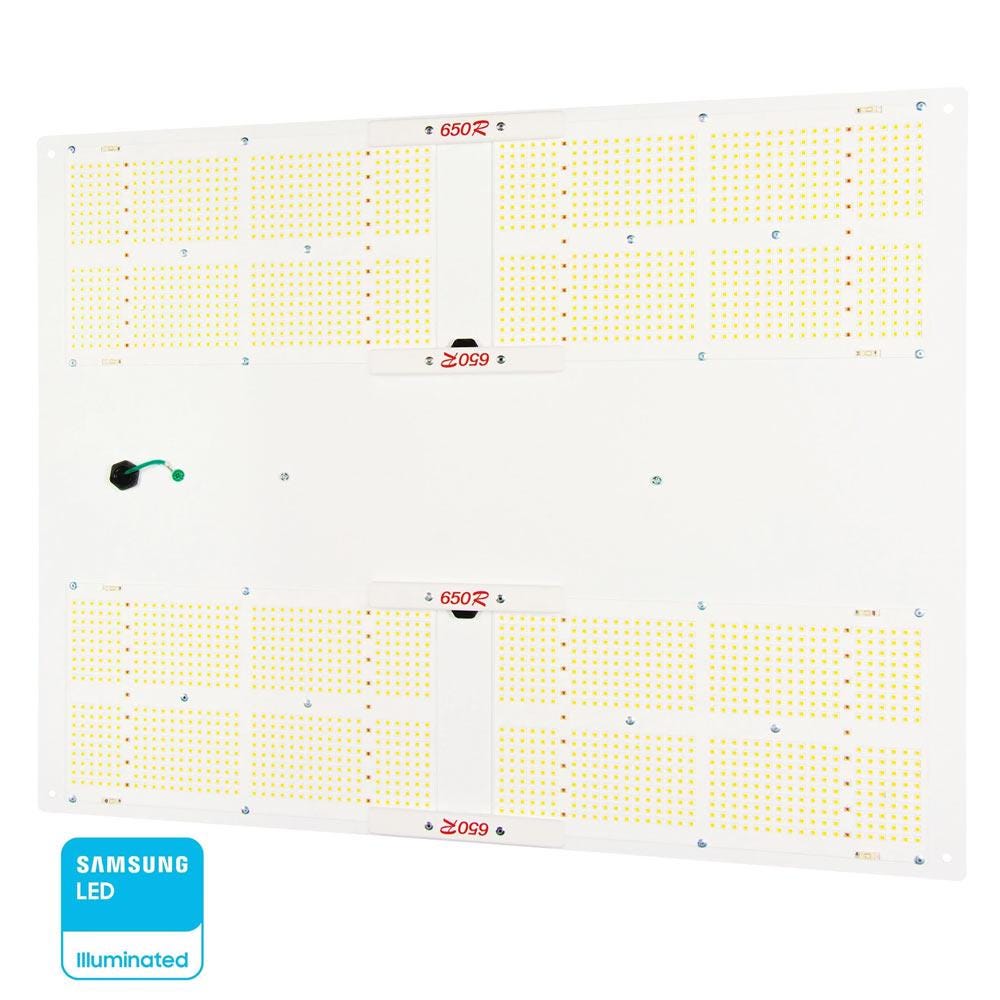
Features:
The HLG LED Grow Light is designed to replace double ended 1000 watt HID lights. Each HLG 650 uses 4 custom-designed full-spectrum high-efficiency white light quantum boards equipped with Samsung LM301H and LM351H V2 deep red 660nm LEDs. The unit is dimmable, ranging in power from 120 to 630 watts, emitting 1770 umol/s, and boasting an excellent efficacy of 2.81 umol/J. The 650R has a dimming range of 60 to 630 watts. It has the perfect blooming spectrum: 4000K full spectrum white light plus 660 nm deep red that enhances during blooming.
GROPLANNER 600W LED Grow Light
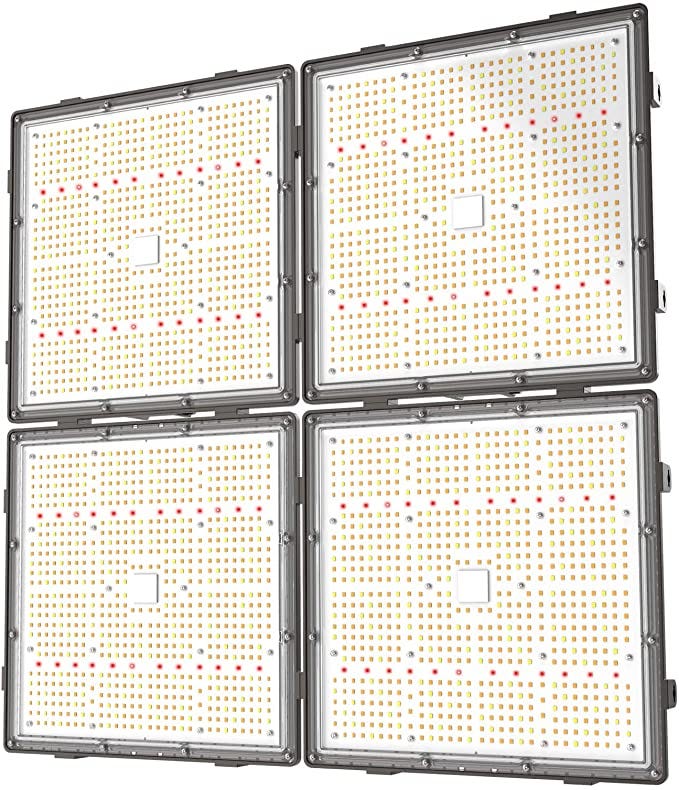
Features:
The LEDs quantity of Groplanner LED grow light is twice as many as other brands with same power. High PPE up to 2.75 umol/J. You can get a high yield of 2.7g/watt. ( Standard 2.7 lbs by Groplanner 450 Watts ). This grow light makes you get 30% higher yield compared with other normal products. The full spectrum optimized and complete plant development for all growth stages from seed to flower. White 3000K and Blue 5000K promote the vegetative growth of your plants. Added Plant Red 660nm LEDs and 760nm IR could speed up the flowering and fruiting stage and promote plants to produce higher yields. Groplanner LED grow lights provides Intelligent and convenient control with WiFi capability. Switch, timing and dimming function could be easily implemented by “Tuya Smart” app. The family group mode will help you connect multiple grow lights and control the lights uniformly or independently. You can get a flexible growth solution for each growing phase.
Things to consider before buying LED Light
Light Spectrum
The most important thing to consider when you are purchasing LED grow lights is the light spectrum. This is very crucial for all kinds of plants as different plants have their own needs in terms of light. Research well before buying a light so that it can provide your plant with the right color and will also help them grow properly.LED Spectrum LEDs cover a more spectral range than HPS or fluorescent bulbs since they run at lower temperatures where there is less loss in conversion efficiency and they also don’t lose much energy in heat. LEDs also give the most intense colors and best PAR, PPF/Lumens and efficiency ratings of any grow light option which makes them a favored choice with many growers. Most LED manufacturers will use “peak” wavelength numbers when advertising ‘color’. This is technically correct, but not very useful for growing plants.
Light Area / Intensity Lighting
Light area refers to how much total space it can cover while intensity refers to how powerful the light source is at that particular area. For example, you may want a bigger coverage in your 4×4 tent so you’ll require a greater lighting area but on the other hand, you might want better intensity since it’s able to penetrate deep into your plants’ canopy whereas smaller LED grow lights may not be as effective.
The intensity of Light The
The intensity of light is determined by the amount of light that falls on a certain area. Growing plants requires more lighting due to their height and size during vegetative growth. If you have a small tent or grow box, LED grow lights often produce too much intensity for your plants. It will also require shielding or ventilation to lower temperature levels or prevent damage from heat buildup which is why we recommend using one bigger LED light instead.
Lifespan and Energy Saving Ability
A grow light is considered durable if it has a longer lifespan. It’s good to know that you don’t have to change your grow lights often since they last for several years. This saves you money and time from frequent replacements. When we purchase an item, our top concern is its energy efficiency. Since LED grow lights are more efficient, using less wattage while providing the same amount of coverage area as other models, its power consumption rate is low compared to others which helps us save energy and costs over the long run.
General Power Consumption & Coverage Area
The higher the color temperature (Kelvin), the brighter and whiter the light produced by a bulb will be; this means more PAR output for flowering. However, the opposite is true for vegetative growth stages. The lower Kelvin temperature gives plants more red and infrared light which stimulates more branch growth as well as flowering and budding at a later time.
Conclusion
Quantum LED Boards are here to stay and will surpass the more traditional LED grow lights we have seen. As this technology grows the price will fall as they become more mainstream for indoor growers. Hopefully, you will find your best quantum board from some of the advice in this article.
Quantum boards produce much better light, ideal for growing plants. As a result, we are excited to see what becomes of this growing technology.
RayonLED GLMF-640W FOLDABLE LED Grow Light VS Mammoth Lighting Commercial Series 8 Bar 640 Watt LED Grow Light
Growing plants indoors is an excellent way to bring in an extra layer of decoration and elevate your home’s atmosphere to a whole new level. However, as fun as this hobby might sound — keeping plants alive and flourishing can be tricky. Other than taking care of basic elements like water and soil, you must pay attention to the amount of light that your plants are getting.
Of course, having a source like natural window light is ideal — but all homes are not created equal. With less-than-sufficient direct sunlight or very limited sunny time in a year, your best bet when it comes to growing plants inside is an LED grow light. And in order to help those in need, here is our guide to the best LED grow lights for indoor plants. Let’s get to it.
The Benefits of LED Grow Lights on Plants
Driven Grow Lights are way better compared to the regular HPS lights as far as:
1) Economical: LED grow lights utilize less energy and hotness to deliver more usable light and in this way a much more prudent and advantageous choice than conventional lights, which cost you long power bills.
2) Eco-Friendly: Since LED lights don’t contain harmful gases or substances like mercury or lead, they are eco-accommodating and recyclable.
3) Longer Lifespan: LED grow lights utilize less temperature to deliver more hotness, making them more maintainable. They are intended to endure longer for as long as 102,000 hours. Their low operable temperature makes them durable and more solid than customary lights.
4) Efficiency: LED lights convert energy into usable light 40–60% more than regular lights with a low hotness signature. While the other customary lights radiated the greater part of their energy as hotness and just proficient 20–40%, LED grow lights produce extremely light hotness and use a large portion of their power into the light outflow.
5) Less Heat Production: Unlike HID lights, LED grow lights seldom emanate frequencies of 730nm, because of which just a negligible measure of hotness is coordinated towards the plants, and the rest is the encompassing hotness from the board. This makes grow lights appropriate for plant growth as more hotness creation can consume the leaves of the plants and harm their turn of events.
6) Better Crop Production: One of the greatest benefits of growing lights is that they accelerate the growth cycle of plants by giving sufficient lighting actually like normal daylight, bringing about better yield creation.
RayonLED GLMF-640W FOLDABLE LED Grow Light
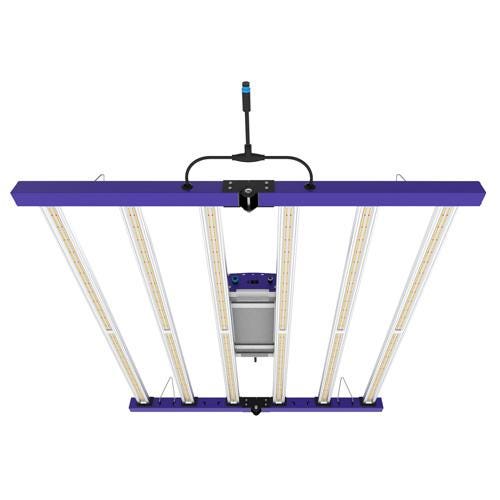
Features:
This Rayonled LED grow light has everything to appeal to hobby and commercial growers with its impressive expertise in LED technology. The GLMF640 is designed to replace and exceed the results of 1000W HID luminaires. From spectrum to certification, it’s engineered to compete with the top grow lights on the market. With a high output of 1,728 μmol PAR and impressive efficacy of 2.7 μmol/J/W, this grow light bar provides full spectrum, broad coverage light for long-term growth. IP65 certification allows the light to function and last in even the wettest grow rooms. And independent strips and drivers ensure that even if something goes wrong, the lights can be repaired without losing production of the entire fixture.
Mammoth Lighting Commercial Series 8 Bar 640 Watt LED Grow Light
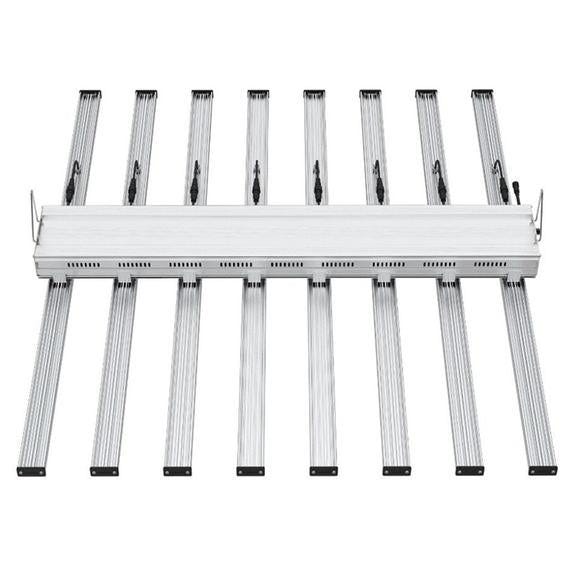
Features:
Mammoth Lighting Commercial Series 8 Bar 640 Watt LED Grow Lights are engineered and scientifically engineered to provide the highest level of PAR output and balanced coverage for today’s LED grow light market. Use more strips, more diodes, and a larger footprint to increase yield and reduce costs than any comparable LED grow light. Mammoth LED grow lights are manufactured with the highest quality Samsung diodes. These powerful lights provide a continuous range of wavelengths from blue and green to red, creating a light mix that matches natural sunlight. Compared to traditional grow light technology, Mammoth customizes their light spectrum to optimize plant growth and increase yields while consuming less energy and reducing operating costs.
THINGS TO CONSIDER BEFORE BUYING GROW LIGHTS
Grow lights are meant to help your plants grow strong and healthy, so it’s important to have a good understanding of what to look for before choosing a product for your setup. Consider the brightness of the light, the light spectrum that each product can produce, and the type of grow light that would be best for the size and configuration of your grow tent.
Brightness
In most circumstances, the brightness of light would be measured in lumens. However, lumens can only be used to measure visible light. Plants are capable of absorbing a wider spectrum of light for photosynthesis, which is known as the photosynthetically active radiation (PAR) zone. So, the PPF and PPFD are required to adequately measure the brightness of a grow light.
– PPF is the standard measurement used for determining the amount of light within the PAR zone created by a single light source per second. Grow light manufacturers measure PPF in micromoles per second (μmol/second). In general, grow lights with a high PPF value are considered more effective, especially if the lights can be dimmed to reduce light when necessary.
– PPFD is the preferred measurement when you know the size of the area where the light will be set up. The PPFD indicates the amount of light within the PAR zone that will actually reach the plants or fall within a given surface area each second. Grow light manufacturers will sometimes provide the PPFD, though it’s important to note the size of the tent or room where the PPFD was set — otherwise, the measurement isn’t as useful for determining the actual output. PPFD is typically measured in micromoles per meter squared per second (μmol/m²/s).
Light Spectrum
Natural light from the sun has a spectrum of waves that includes blue light, purple light, red light, indigo light, infrared light, and more. Plants are exposed to the full spectrum when they grow outdoors, but for indoor setups, you will need to consider the light spectrum when choosing the best grow lights. Certain colours are more important for your plants’ growth than others, so it’s common to see grow lights that offer full-spectrum white lights as well as others that feature a series of coloured lights to better control the plant’s various growth stages.
– Blue light is essential for plants to grow from seedlings because it’s the first colour on the light spectrum that can be absorbed by plants when they are still in a vegetative state. It’s also necessary throughout the remainder of the plant’s life to help with photosynthesis, leaf expansion, photoperiodic flowering, and leaf curvature towards the light.
– Purple light isn’t as important as blue light, but it can improve photosynthetic processes, especially when the plants are young. Adding purple light at later stages doesn’t harm plants, but the effects of this light decline as most plants mature.
– Red light is another key light on the spectrum for healthy plant growth. It can be used to help seedlings sprout and grow, but the effects of red light aren’t really noticeable until the later stages of growth and budding. Both blue and red light are the most important for growing healthy plants.
– White light is the easiest option to go with, especially for beginner growers, because it contains every colour on the spectrum. For this reason, white lights are typically referred to as full spectrum lights by manufacturers. White lights encourage growth throughout the entire plant life cycle, but experienced growers may prefer the precise balance and control over plant development that they can achieve with blue, purple, and red spectrum lights.
Conclusion
Grow LED lights can be exceptionally advantageous for your indoor plant growth if you purchase the right one in the sense of analyzing the different viewpoints.
Understanding that sometimes you need to choose the best grow lights that are suitable for your necessity. We trust that our purchasing guide on LED Grow lights will assist you with picking the best cheap grow light 2022 for business spaces and little rooms.
Every one of the connections we have referenced in this article is certifiable and true. We have remembered the top ideas for this article according to the most recent market accessibility, and we will refresh our rundown of the top LED development lights time-to-time for you all. Stay tuned with us for more device ideas and updates. Cheerful planting!
ECO Farm FLD 320W Full Spectrum Dimmable LED Grow Lights VS Mars Hydro FC-E 3000 300W LED Grow Light
Looking for the best LED grow lights for plants?
We’ve reviewed the most popular LED grow lights in 2022, so you can find the perfect light for your budget and setup.
Does Plants Grow Faster Under Led Lighting Than Regular Light?
Why natural light and grow lights both have their advantages, ultimately, grow lights better for indoor growing environment.
This is mainly because you have a high level of control over the artificial habitat.
The intensity of the light can be manipulated, and so can the humidity and temperature.
The indoor grower also has the ability to provide supplemental carbon outside, which is ineffective outdoors.
The controlled indoor environment is also free from pests and the risk of outside elements.
These outside elements, such as weather, pets, and so on, can greatly affect growth and harvest and are some of the disadvantages of outdoor growing.
With grow lights, light intensity and duration are always constant and consistent throughout the entire growing period.
Therefore, it can be said that grow light is better for your plants than natural light.
How Can Indoor Grow Lights Help You With Your Growth Process?
LED lights are full-spectrum and give your plants the desired wavelength of light in order to yield the best possible quality of plants.
LED lights that include UV and infrared diodes are the best.
Ultraviolet light has been proven to make your plants react defensively and therefore produce additional trichomes.
Ultimately this leads to an increase in the THC levels in your plants.
PAR output present in full-spectrum lighting is also beneficial for photosynthesis.
Between 400 to 600 moles is perfect for late or veg cycles and 700 to 900 is ideal for the flowering stage.
Ultimately, with artificial lighting, you have more control over the consistency and duration of light provided to plants.
ECO Farm FLD 320W Full Spectrum Dimmable LED Grow Lights
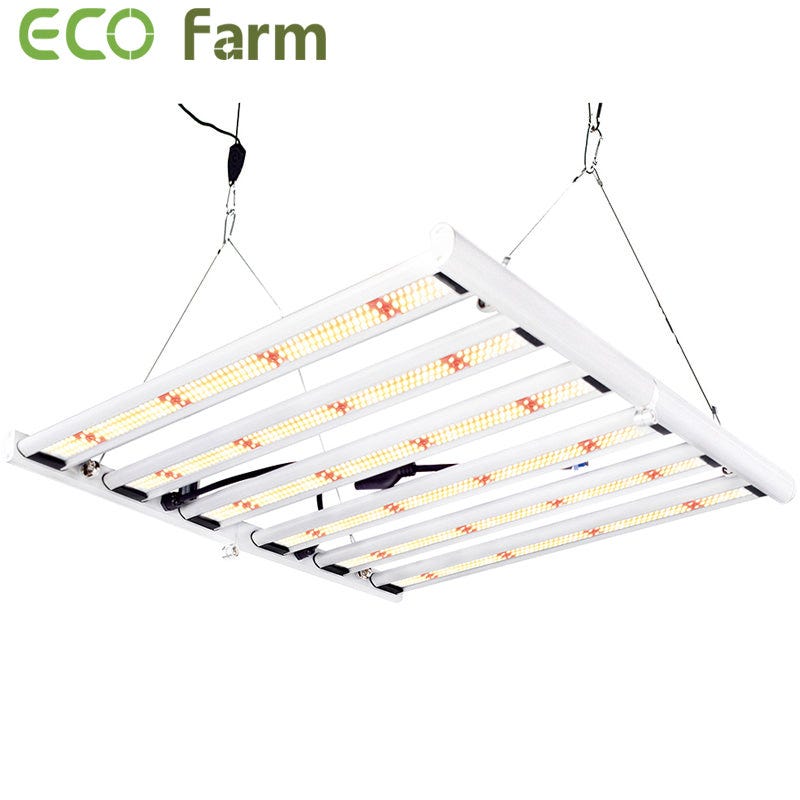
Features:
This ECO Farm LED grow light with upgraded SMD 3030 chip 6 passive-cooled led bars, the actual power is 320 watt, perfect coverage for 3x3ft, helps you achieve maximum quality and quantity. The intensity of light can be adjusted according to the needs of plants. The leds are all new technology SMD leds, SMD leds spectrum is white 3000K leds, white 5000K leds, 660nm red leds and 740nm IR leds. Master light is easily controlled for commercial & home horticulture. No fans no noise, the light case is a whole aluminum radiator , Low energy consumption growing light with 6 passive-cooled bars,aluminum heat-sink ,excellent performance in heat dispersing & lifespan, dropping 50% in electricity bill than HID lights. Innovative easy daisy chain dimming function, no need to buy controllers, just use the daisy chain to link all the lights, then dimmable one light , all lights follow.
Mars Hydro FC-E 3000 300W LED Grow Light
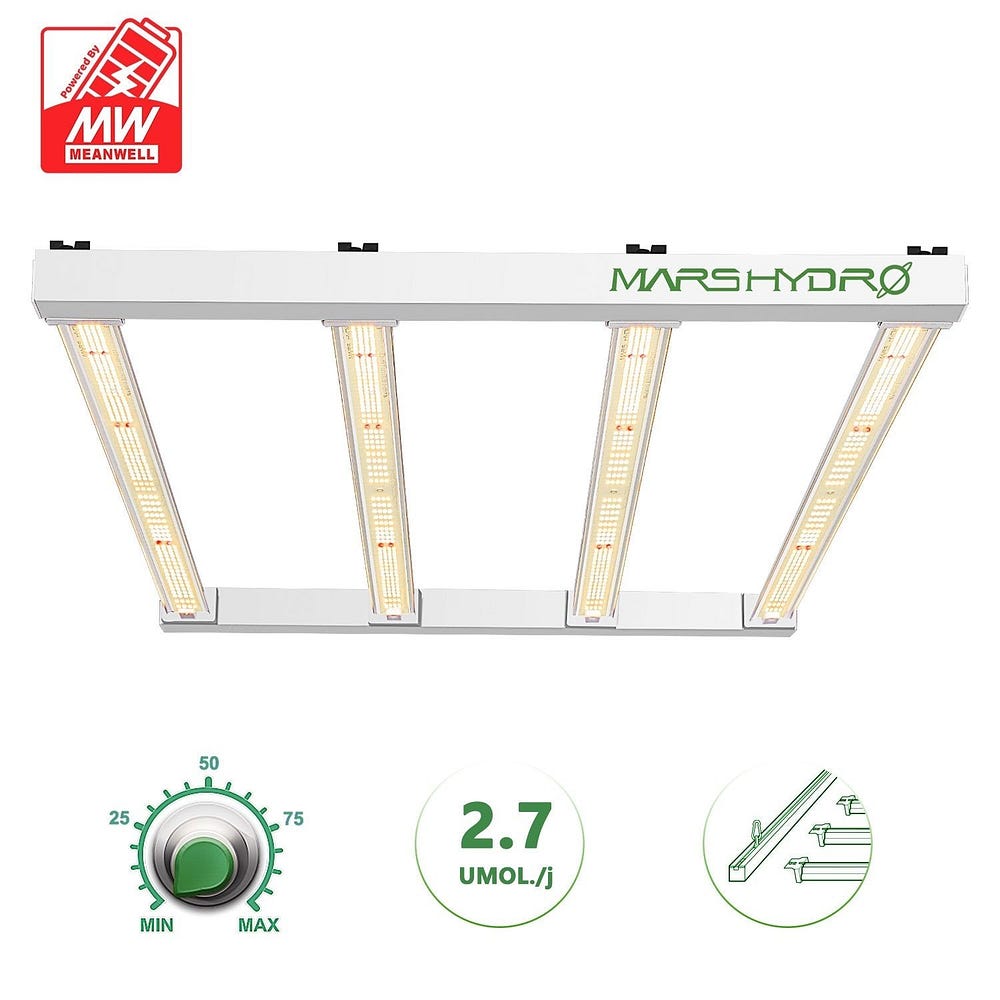
Features:
Equipped with 1184 BridgeLux diodes and MEAN WELL drivers, this MARS HYDRO LED grow light has a market leading PPF of 2.8 µmol/J, a maximum yield of 2.5g/watt, and an average PPE of 30%, making it more cost-effective compared to other lights of the same type . It only consumes 300W and perfectly covers 3x3ft (personal), 2.5x2.5ft (commercial) growth space. The built-in removable rod spacing and dimmability of this grow light allows precise and dynamic PPFD control for each plant growth stage, the FC-E3000 removable rod provides highly uniform adjustable PPFD levels throughout the plant canopy, Best for more even density buds. Real aluminum heatsink with 4 slim passive cooling strips (thinner and larger surface) and removable Meanwell driver that produces less heat and saves 50% more energy than other old grow lights!
Factors to Consider Before Buying an LED Grow Light for Indoor Plants
There are several factors to be kept in mind before you settle for a particular grow light. Some of these factors are as follows:
Size of the Garden: One of the significant factors to consider before choosing an LED grow light is the number of plants or the size of your garden. Grow lights have different coverage areas and accordingly come in varied sizes. The light coverage can be determined by the lens design, angle of coverage, and the capacity.
Growth Stage of the Plants: Grow lights for plants vary according to the growth stage of the plants. This is generally mentioned in the light package. Mature plants require high intensity, whereas young ones require fewer intensity lights as they might get damaged otherwise.
Type of Plant: The type of plant that you have influenced the grow light that you need to buy. Soil or hydroponic plants are the most common plants that are present in the home gardens. There is better penetration if you choose a grow light that is best suited for your plants.
Power Consumption: Grow lights consume power and can affect your electricity bills. It is vital to get a grow light that can give the required illumination without inflating your bills. The grow lights need to be power efficient. LEDs generally are known to consume less energy than other lighting options.
Price: The cost of the grow light plays a significant role in determining the grow light that you will ultimately buy. However, it is recommended not to compromise on quality to save some extra bucks. Compare different LED grow lights available in the market and buy one that suits your budget and, at the same time, gives optimum performance.
Build Quality: A LED grow light can last for ten years easily if the material from which it is made is ideal and sturdy. The quality of the build plays a significant role in this regard. Once you keep a check of this, it would become easy for you to choose the correct one.
Light Output: It is advisable to look at the wattage of the LED grow light while making a selection. The wattage can vary. It can be high to up to 1000W or as low as 50W. It majorly depends on what kind of indoor plants you have.
Conclusion
I hope you found this article useful!
All of the best LED grow lights reviewed in this article will do a solid job for your plants.
They’re all reasonably priced and produced by reliable manufacturers who offer good warranties and customer service.
ECO Farm Z6–600 Samsung LM301B LED Grow Light VS LUMATEK ZEUS 600W LED GROW LIGHT
LEDs have overtaken HPS and other HIDs as the best grow light for nearly all home growers. Although there are some situations where LECs or HPS are a great choice (for example in a cold space where the heat of the lights is a positive thing, or if you’re making concentrates and want to use special bulbs to increase trichome production and terpene levels/smells), generally most home growers will be happiest with LEDs.
LEDs grow magnificent plants indoors without much heat or electricity. Today you’ll learn about some of the best LED grow lights for plants.
Why LED Grow Lights?
More light, less heat — LEDs produce more light and less heat than HIDs, watt-for-watt
Better for heat control — Not only do LEDs run cooler, plants under LEDs actually prefer warmer temperatures. That means they are the perfect grow light to deal with heat. If your grow space is room temperature or warmer, LEDs are your best grow light choice when it comes to controlling heat.
More colorful buds — LEDs tend to bring out colors like pink and purple on buds and leaves. Although some strains will stay green no matter what, many strains have the ability to turn color in certain environmental conditions. LEDs will almost always bring out colors in those strains especially as plants approach harvest.
Excellent bud yields & potency — In my side-by-side grows using clones, modern LEDs produce similar or higher yields, better bud quality, and even significantly more THC than comparable grow lights like HPS and LECs.
ECO Farm Z6–600 Samsung LM301B LED Grow Light
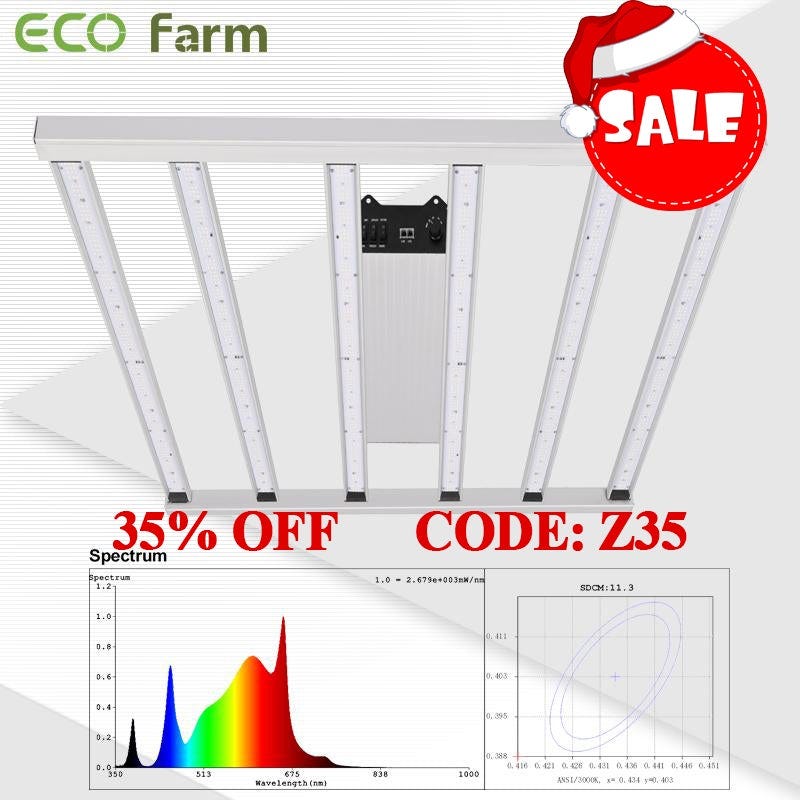
Features:
The ECO Farm LED grow light is paired with Samsung chip 1632 high-efficiency SMD LEDs, with market-leading efficiency of 2.7 µmol/J and 2.5g per watt yield, 30% higher average PPFD, and 600 watts of actual power. The light intensity can be adjusted according to the needs of the plants. The LEDs are all new technology SMD LEDs. This grow light features 6 passive cooling strips, aluminum heatsink, heat dissipation performance and long life, 50% lower electricity bill than HID lights. The sturdy design and quality components make the grow light a durable light with an impressive longevity. An all-aluminum radiator provides better cooling and eliminates noisy cooling fans to keep your space cool and quiet.
LUMATEK ZEUS 600W LED GROW LIGHT
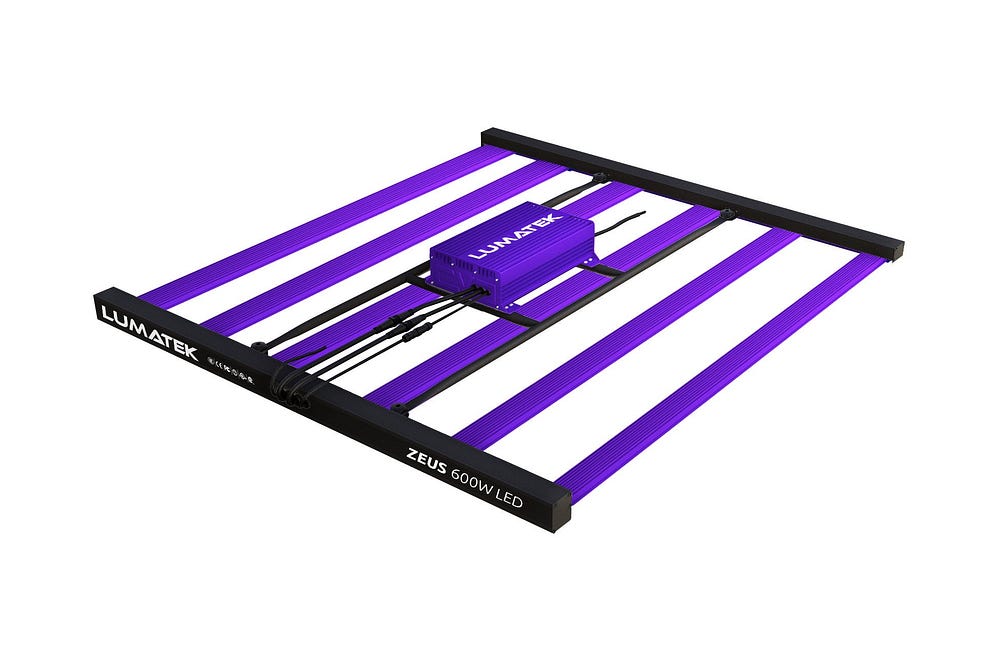
Features:
Lumatek full-spectrum LED grow lights balance light quality (spectrum) with light quantity (intensity and duration) sufficient to provide single-source illumination for the entire growth cycle from vegetative to flowering. LED arrays produce uniform light spread over short distances to the crop, providing single-source grow lighting for multi-level grow systems, individual benches in low rooms, and grow tents. Built using high quality Lumatek drivers and top box LEDs from Osram and Lumileds, the Zeus produces a full spectrum light source suitable for vegetables and bloom cycles. High-efficiency and low-power LED configurations with six LED strips reduce LED temperature, increasing output and improving lighting maintenance.
What to Consider When Choosing the Best LED Grow Lights
The following sections detail some of the most important qualities to keep in mind when shopping for the best LED grow lights for your needs.
Light Spectrum
Natural sunlight features all the colors on the electromagnetic spectrum. Some LED lights can reproduce only certain color frequencies, while full-spectrum white LED lights produce all the hues necessary for every stage of the growing process.
Blue light helps plants grow in the earliest stages of their lives. It’s the first color plants can absorb in their vegetative state.
Purple light is also used in the vegetative state; however, it’s not as effective for photosynthesis as blue light.
Red light helps in the latter stages of growing and is essential for buds to flower.
White light encompasses all the colors of the spectrum. Used alone, it can be effective for every developmental stage.
Power
It’s a bit difficult to compare LED grow lights because manufacturers use a variety of metrics to measure the power of their lights and the amount of light they emit. The brightness of LED lights is measured in lumens. Seedlings require approximately 2,000 lumens per square foot to thrive, while flowering plants may need as much as 10,000 lumens.
While lumens measure visible light, biologists often use photosynthetic photon flux (PPF) or photosynthetic photon flux density (PPFD) to measure light intensity in terms of the light that indoor plants will actually absorb. PPF is measured in μmol/second (or micromoles per second), which is the number of photons of light emitted every second. PPFD is also measured in micromole/m2/s and measures the density of light distributed per square meter per second. The higher the PPF and PPFD, the more effective the light should be.
Heat Output
One of the risks when using a grow light is that the heat emitted by the bulbs can damage your plants. However, LED lights give off very little heat relative to the amount of light they produce. But they do produce some heat, so many models are equipped with built-in cooling systems to ensure proper temperature regulation.
Some LED lights have aluminum heat sinks, and others come equipped with fans. A unit with a fan might be loud, so factor noise level into your choice when selecting a grow light.
Coverage and Wattage
To choose the right plant grow light, you’ll first need to establish how much coverage you need. To do this, group the plants together and measure the square footage they take up. Most grow lights will clearly list the coverage they provide.
To establish how much electricity a light uses, look for its “actual power draw” or “actual power consumption.” This is measured in watts and gives a good indication of the light’s power. Bulb wattage is not a good indicator because LEDs are designed to be energy efficient.
Connectivity
Many LED grow lights are designed to link to other units to cover larger areas, which is typically referred to as “daisy-chain connectivity.” Products with this capability simply plug into each other and then plug into one outlet, which minimizes the number of cords required for setup.
Conclusion
After reviewing this guide, you should now know more about shopping for plant grow lights for your indoor plants. We recommend the LED grow light for its low power consumption, full-spectrum LEDs, and relatively affordable price. Those on a budget may appreciate the the full-spectrum grow lights above, which offers great performance at a lower price point.
3 Best LED Grow Lights for 4x4 Grow Tents of 2022
To maximize your 4×4 grow tent yields, you will need the best led grow light for a 4×4 grow tent. There are plenty of models from well-known brands or smaller brands available worldwide. Grow lights are very important when we talk about indoor gardening, so you have to do detailed research to choose suitable lights.
Our team has made this process easier for you, presenting below the best led light for 4×4 grow tent and much more. This article was written after a long research session so that you can trust all the information presented below. Without any further ado, let’s jump into the article.
Benefits of LED Lighting in Horticulture
Modern LED lights have come a long way since the bulky, heat-emitting, expensive to run lighting that was previously available. Costly ventilation systems were often needed to remove excess heat and protect the plants.
Thankfully, the technological developments in horticultural lighting mean that modern LED lights have none of these issues and a wide range of benefits. LED grow lights were created to meet the needs of the plants, use much less power and are cooler than sodium lights, making it easier for the grower to control the temperature of the growing environment.
They have been designed to maximize coverage and offer full-spectrum lighting for optimum plant growth while minimizing wasted energy and dangerous heat. These lights meet the needs of the plants in a way that traditional lighting isn’t able to do.
LED lights are easily recyclable as the don’t contain any harmful mercury or chemicals, check with your local recycling site for the correct procedure.
Because of their low heat emissions LED lights have a much longer lifespan than traditional lighting, averaging around 50,000 hours. So not only are you saving money, you’re helping to save the planet.
ECO Farm ECOY 600W Movable LED Grow Light
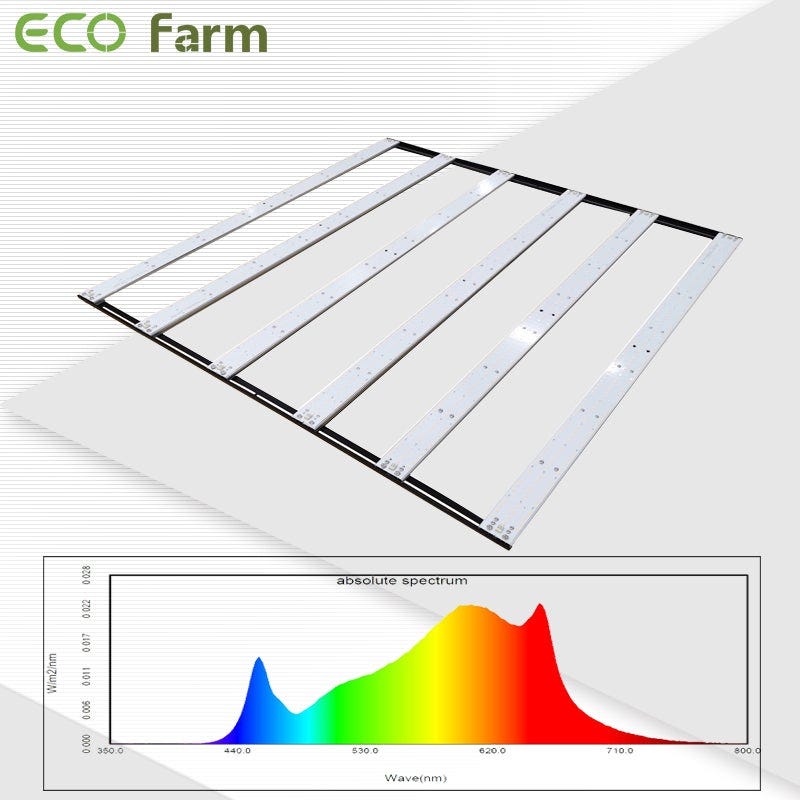
Features:
This ECO Farm LED Grow Light features high quality Samsung LM301H diodes with higher light intensity, less light decay, better lumen and PAR values than other SMD beads, a maximum yield of 2.5 grams per watt, and a higher average PPFD. 6 strips of 4 feet each maximize your growing space. Passive cooling all aluminum bar radiator, no fan, no noise. Coated LEDs protect the luminaire from dust, oil and moisture, making it last longer. This LED grow light saves up to 50% energy and 30% lower temperature than other grow lights. Consumes only 600W! The latest aluminum radiator has a special surface treatment that doubles the cooling area. IP65 waterproof. This light is suitable for all stages of plants.
Fohse F1V 600W (277–480V) LED Grow Light
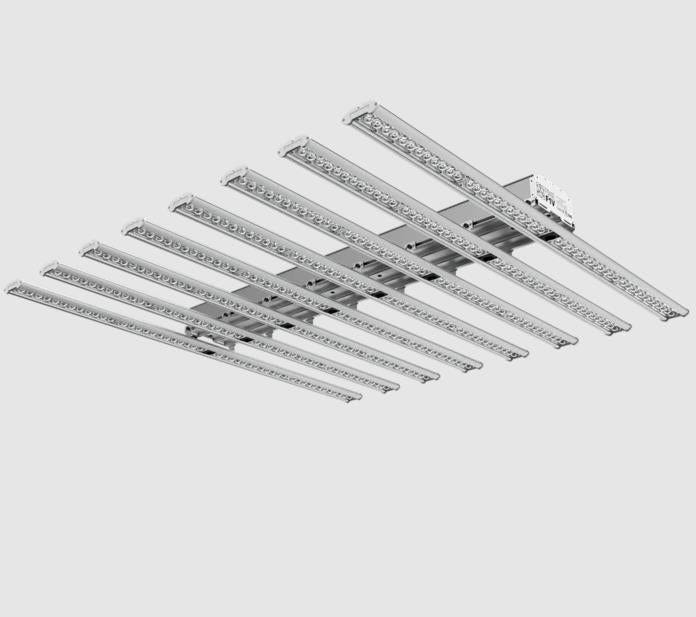
Features:
This LED grow light is generally suitable for growing plants in a vertical environment. The F1V form factor is a dual-purpose design. It utilizes passive cooling to keep the diodes operating at peak efficiency. It also efficiently dissipates heat, allowing you to raise ambient room temperature, pushing the critical RuBisCO reaction closer to its full potential for increased carbon assimilation. High-brightness LEDs are easy to install and have a short learning curve.
Lightspeed Pro Cosmic Plus LED 600W LED Grow Light
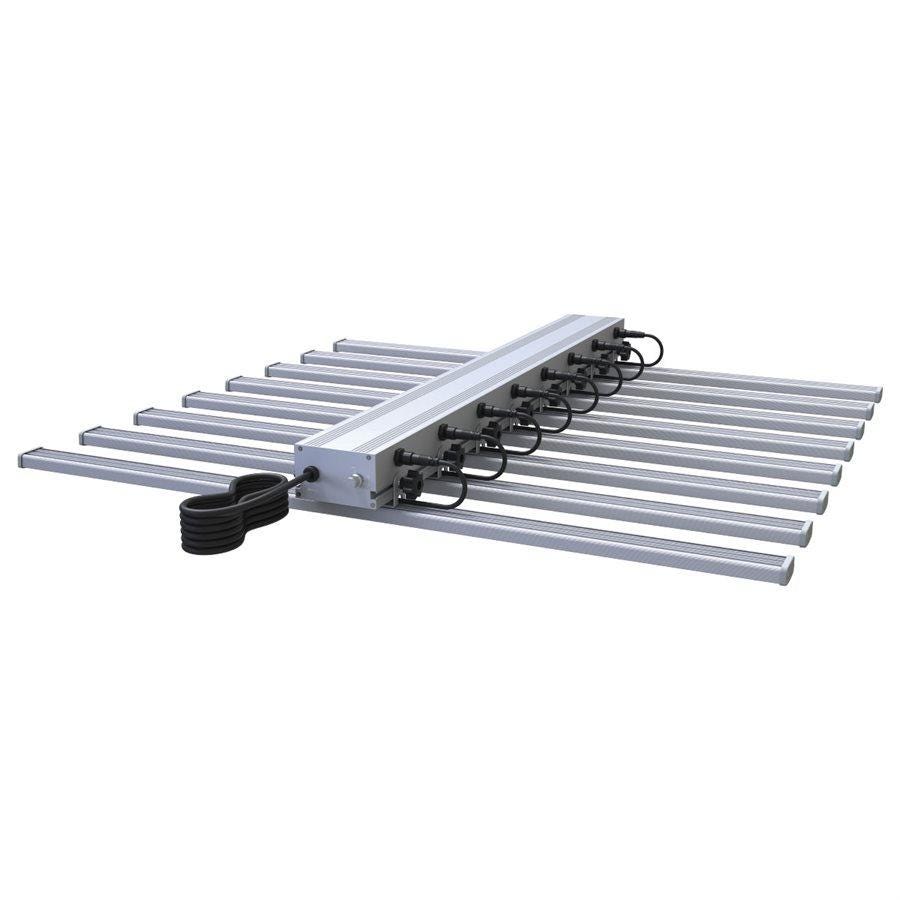
Features:
Lightspeed LED Grow Light is a high-intensity, full-spectrum LED grow light. It provides powerful photosynthetic lighting to stimulate vigorous growth of indoor plants. This 600W affordable LED grow light is ideal for delivering a targeted spectrum to optimize plant reproduction during crop growth stages. The Lightspeed LED Pro Cosmic 600W features many technological innovations designed to help you increase hydroponic yields, reduce operating costs and increase profits. This advanced full spectrum LED grow light produces a balanced natural light distribution that is more even than HPS and MH lighting.
Factors To Consider When Buying A Grow Light
First, you need to keep in mind that not all Led grow lights are created the same way, so you need to make careful consideration and this may include putting some factors like size and location into consideration. Lightening is a crucial growth requirement for your indoor plants.
So to ensure choosing the right led grow light, here are factors to consider.
1. Energy Consumption
Energy is very important when choosing a grow light. It’s best to choose a grow light that consumes less energy or none as it has to be on for approximately 10 to 11 hours and this may lead to growing energy bills. Ensure to read the detailed information before purchasing.
2. Size
Another very important factor to put into consideration is the size of the grow light you want. You need to think about how many plants you will need to cover. Plan ahead where you are going to place your plants to make sure there is enough space for the grow light to operate.
3. LED Type
When it comes to led grow light, there are various types to consider. From a regular light fixture or screw to panels or ones that hang overhead. You need to decide which is best suited for your plants, the type of plants you need it for, and where your plants are located need to Be narrowed down. Desktop lights are smaller and easy to move around while hanging lights are larger.
Conclusion
Finally, you reached the end of this article. As you noticed above, I presented you with the best led grow light for 4×4 tents and more. This article was written after a long research session so that you can trust all the information presented above.
Buy the grow lights suitable for your grow tents to maximize the yields. Without further ado, I will end this article here. If you encounter problems browsing our site, let us know in the comments section. Thanks for reading!
Luxx 860w LED Pro XR LED Grow Light VS TopoGrow Professional 800W LED Grow Light
Growers often spend hours researching different planting methods and finding the best planting equipment. One of the more difficult devices to study is lighting. There are several different types of lights for growing plants and dozens of different technical specifications to know. This makes it extremely challenging to learn and filter through the hundreds of grow lights on the market today. In this article, I’ll present my picks for the best LED grow lights of 2022.
Do LED Grow Lights Yield More Than HPS?
Many growers find that LED grow lights produce similar yields to HPS grow lights, and with improved efficiency some even argue that LED grow lights surpass HPS yields. When it comes to the better lighting spectrum, however, HPS lights still have the upper hand.
For this reason, HPS grow lights might be the preferable choice for larger grow rooms and LEDs for small, sizeable grow tents.
How Many LED Grow Lights Do I Need?
To figure out the answer to this question, you’ll need to gather a bit of information. First, measure the length and width of your plant canopy to get the square footage.
Caution: Measure the actual canopy rather than the size of the grow room, which could be larger. Flowering plants need on average about 20 to 30 watts of light per square foot, so once you have the square footage, multiply that figure by the needed wattage.
Growing plants in a cabinet under the LED lamp
For example, a plant canopy that measures 6 feet by 5 feet results in 30 square feet. Multiply that by 20 to 30 and the wattage range you will need is 600 to 900 watts.
You’ll then need to choose a number of LED grow lights that individually or together meet that actual wattage.
Luxx 860w LED Pro XR LED Grow Light
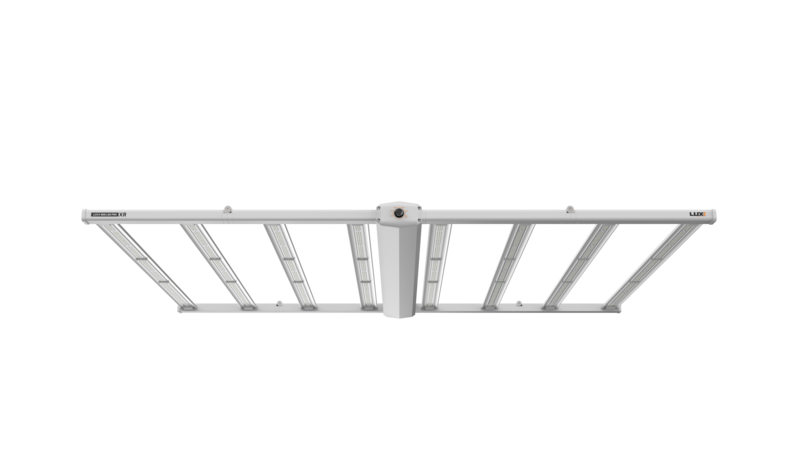
Features:
The Luxx LED grow light features two additional 100W LED strips to increase total light output and maintain PPFD uniformity over a larger area, ensuring consistent growth across 5–6 foot tray widths. The strip layout used by the Luxx 860w LED PRO XR allows the luminaire to be placed close to the canopy, maximizing PPFD, while the strip array provides light from multiple locations at different angles to penetrate the canopy. This maximizes light absorption by plant leaves, increasing light effectiveness and reducing wasted photons. The 860w LED Pro XR is the first true 5' wide LED light fixture. It has a 4' x 5' footprint and is designed for growers running 5' wide benches. The 860 has an average PPFD of 865 at 12 inches. ⠀
TopoGrow Professional 800W LED Grow Light
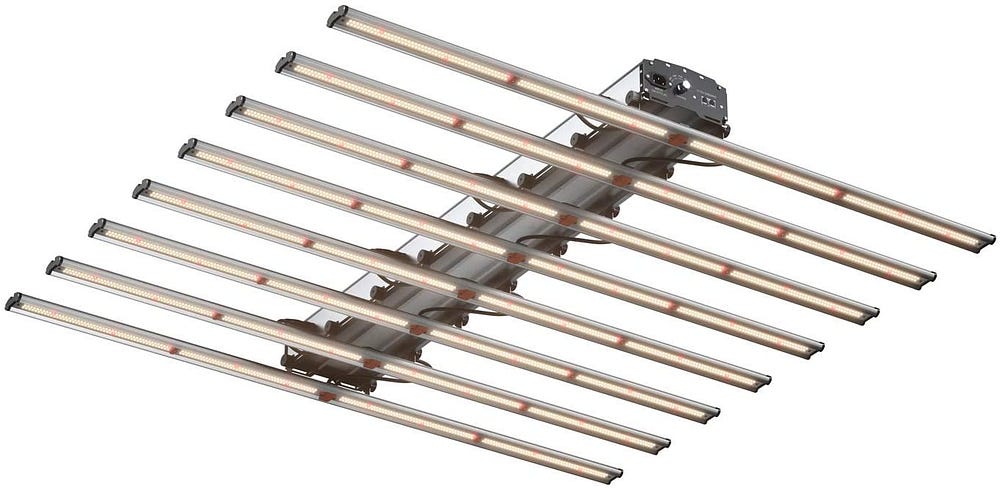
Features:
This TopoGrow LED grow light is made of durable IP65 waterproof aluminum and comes with branded LED chips and drivers. High efficiency of 2.6 umol/J provides strong light output and uniform canopy penetration to maximize yield. PPF of 2080 umol/s maximizes yield with 50% higher average PPFD and 60% higher yield and quality compared to traditional LED lamps. The power consumption is 800W, which is a high-end high-performance commercial plant light. This grow light uses today’s latest high yield LED technology, the maximum yield Spectrum has an enhanced red 660nm LED chip and a warm color 4000K LED chip, it speeds up the flowering and fruiting stages and is ideal for dense buds.
How To Choose A Grow Light
When you are starting your first grow, there are many different factors to consider when looking to buy a grow light. You have to think about the type of light, what crop you are growing and how much light output is needed, the spectrum of light, how big your operation will be, and more.
Types of Lights
The main three types of lights are LED, HID (HPS/MH), and Fluorescent. Each type of grow light has its pros and cons, but when all is said and done, we believe LEDs are the best overall investment for producing high-quality crops for the best cost.
Every plant varies in how much light output it needs to grow. For example, some plants are extremely light-hungry plants and require a much higher light intensity than a vegetable such as a tomato. It is important to keep this in mind when choosing how powerful of a light you choose to get.
Light Spectrum
While getting the necessary light output is very important for your plants, the spectrum of light they receive is also important. Outdoor plants evolved to grow under natural sunlight, which produces every color on the spectrum. Therefore, you want a full-spectrum grow light to best mimic natural sunlight and optimize plant growth.
Within the full spectrum, each wavelength (color) is responsible for a different effect on the plant’s growth. Blue and red light are the most prominent colors since blue drives stockiness in a plant during its vegetative stage, while red light helps plants stretch and bloom in the flowering stage. However, plants also utilize other colors, such as green light for driving photosynthesis and are more effective at penetrating the plant canopy. This is why it is optimal to get a full-spectrum light that uses a combination of all colors for well-rounded growth.
Wattage
It is important to not solely look at wattage when comparing light outputs of different grow light fixtures. Wattage only specifies how much power the light uses, but not how much light output it actually produces for the plants. Efficacy is more important to consider, which is defined as a grow light’s ability to convert power (watts) into light that can be used by crops. Efficacies vary depending on the type of light, which means fixtures with the exact same wattage could have very different light outputs.
Conclusion
Getting the perfect lighting for your plants can be a tricky thing and hopefully, you found this article illuminating. As mentioned at the start, there’s something to be said for innovators who don’t stand for the status quo and continue to find new ways to improve on the original.
Best LED Grow Lights Under $300 of 2022
If you have a small budget your choices narrow down to the few you can afford, and well, with fewer options, the choice is easy. But honestly, with a $300 budget, there are many super-performing LED grow lights for cannabis growing.
In this article, we introduced the best LED grow lights under $300 and the LED grow light's buyer's guide.
VIVOSUN VS4000 LED Grow Light VS King Plus UL Series 400W LED Quantum Board
Indoor Grow lights are lifesavers to plants which for one reason or another are unable to obtain the benefits of natural light. The LED technology has stepped up to provide quality grow lights that will facilitate the growth of indoor plants. In this review, we discuss the top best LED grow lights bulb that are available in the market. Read to find out more.
Everything You Need to Know About Grow Lights
Every green plant requires sunlight for photosynthesis: the process where specific plant cells transform the energy from light into sugars. It is this process that causes plants to release oxygen. The amount of light you need generally depends on the plant itself.
Every plant in its seedling stage requires a lot of bright light to grow. When seedlings don’t receive a sufficient amount of light, they can become leggy and weak. In most cases, a windowsill cannot provide enough duration or intensity of light required, particularly during the winter.
What Lighting Terms Should You Take Note Of?
Color: Color is the term used to describe how the light looks. The majority of grow lights produce full-spectrum light. Plants tend to use red and blue light, representing the warm and cool ends of the spectrum. Green and yellow lights are less used by plants. Red light stimulates the production of fruit and flowers, while blue light is for vegetative growth.
Duration: Duration is simply used to measure the number of light hours a plant gets in an entire day. This can be affected by turning lights off and on or simply using a programmable timer.
Intensity: Intensity is the term used to describe the amount of light that reaches a surface at a particular distance from a light source. For instance, an extremely bright LED bulb 1 foot away from a surface offers the same intensity as a closer but dimmer bulb 2 inches away.
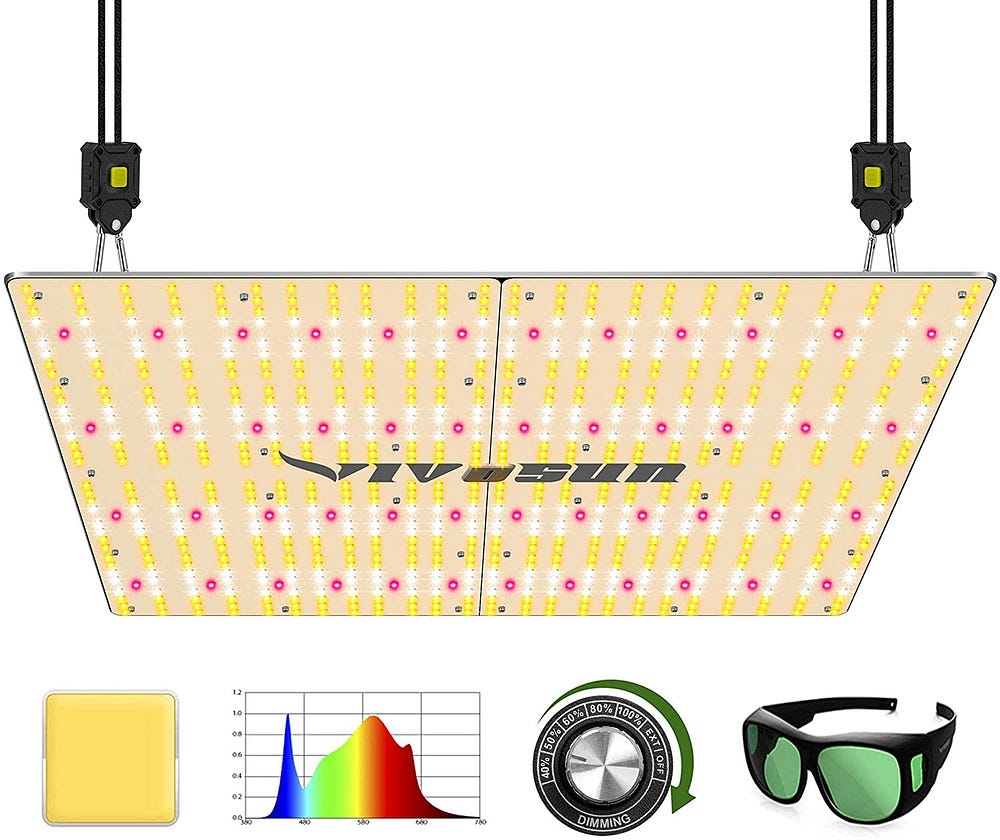
Features:
VIVOSUN LED grow light adopts the latest LED grow light technology, with Samsung LM301H diode and brand driver, the energy efficiency is up to 2.9μmol/J; extremely high output but only consumes 400W of power, making it more efficient than traditional HID lights and other plants on the market Lights are more efficient. This LED grow light comes with a dimming knob and ballast, so it can be adapted to different plant growth stages by adjusting its output from 40% to 100%; super convenient for both beginners and professional growers. These Samsung VS4000 LEDs provide the best full-spectrum coverage and power plants need at all growth stages, with maximum PAR output at different distances, supporting efficient photosynthesis in indoor plants.
King Plus UL Series 400W LED Quantum Board
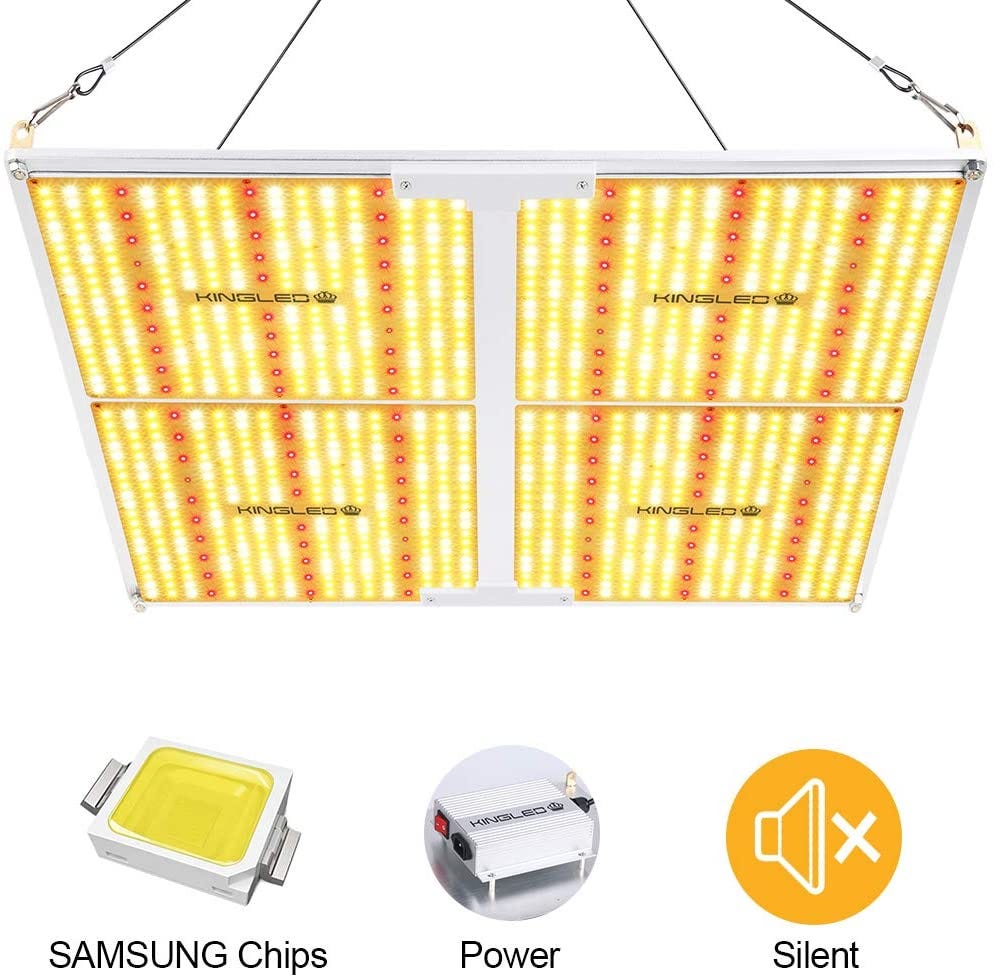
Features:
KingLED has developed a high-efficiency and safe quantum growth lamp, using SAMSUNG chip (2.8 umol/J, more energy-saving and brighter), UL power supply (safer, longer use time), high-strength aluminum alloy hot plate (lower operating temperature and Not easy to deform), high-quality products bring the highest cost performance. No fan, no noise, simpler structure, light weight, easy installation, special protective cover for cable, waterproof LED lampshade, far lower than the working temperature of traditional LED lamp, its service life is extended by 100%, high-quality products bring longer service life. Blue, white, red and IR (660–665nm, 3000K, 5000K and IR 760nm), provide all the light spectrum plants need to thrive so your plants thrive, high-quality products for higher yields. The actual power is only 447.5w, and high-quality products bring lower electricity bills.
BUYER’S GUIDE: ALL YOU NEED TO KNOW ABOUT THE BEST LED GROW LIGHTS
Are LED Lights Good For Plants?
The truth is many people have this fear of using artificial products when it comes to natural stuff like plants and flowers. However, LED lights are good for plants and can aid productivity. All you need to do is to make sure you get the top-rated ones.
Can You Use Regular LED Lights For Grow Lights?
Yes, you can use regular led lights but it’s not advisable at all. Using regular LED lights is a big risk as your plants may not grow effectively. And this is because there aren’t enough colors and light spectrum in regular LED lights like there are in LED grow lights.
What Size Of LED Grow Light Do I Need?
To determine this, you need to figure out the size of the grow space. A standard LED grow light should use about 32 watts per square foot. For better results, we recommend a product with at least 40 watts.
How To Choose The Best LED Grow Lights
Dimensions
It’s very important to ensure you have the right dimension before making a purchase. To do this, you have to consider the growth space as that will determine the number of watts needed. For instance, for a 1 by 1 growth space, you’ll need about 32 watts.
Wattage
This is also very important to note before choosing a product. The average LED grow light draws around 32 watts to cover one square foot of growing space. Of course, you wouldn’t need this if you were looking for the best humidifier for plants.
Coverage Area
The coverage area is determined by the size, lenses and hanging heights of the grow lights. The max coverage area refers to the maximum light spread while the core coverage is the area that has the most extreme brightness. Wattage largely determines how much area you can light up as mentioned earlier.
Life span
Checking the lifespan of the grow lights is also very important before you make a choice. The average lifespan is 50,000 hours while some are as low as 20,000 hours with others as high as 100,000 hours. We advise you to go for products with a lifespan of at least 50,000 hours.
Energy Efficiency
The energy efficiency of a product impacts the price many times. This is why LED lights cost 75% less than HPS lights. Higher efficiency will produce more light and cost less to run. So, if you are on a budget, the best LED grow light for the money is the one with high energy efficiency.
Controls
It’s always better to have control when using LED grow lights. Grow lights should have dimming modes to control brightness for different stages of growth. They should also have automatic timing functions that allow you to set lighting times.
Programmability
Programmable LED grow lights also give you control as they enable you to customize spectrums and adjust light intensity. This allows you to make timely and needful adjustments at every given point. It’s a vital feature of the best LED grow lights for indoor plants.
Price
The price of the best smart sprinkler controller varies depending on the brands and that’s the same in the case of LED grow lights. It’s better to go for cheap LED grow lights when you are on a budget. You just need to make sure you go for the best budget LED grow lights with basic features that guarantee efficiency.
Conclusion
I hope this article has helped you to choose the right grow light for your indoor plants!
If you have any further questions, please do not hesitate to contact me.
Please share this article with anyone who might benefit from it!
