Kind LED X420 Grow Light VS Rayonled GLMF400W LED Grow Light
LED grow lights are the future of indoor gardening. There’s no way around it. LED lights provide very high yields, excellent potency and a great value to your wallet. The best led grow light is also cost effective, with an average lifespan of 50,000 to 100,000 hours or more; that’s almost one year continuous use! Moreover, many models come with a ten-year warranty as well.
The main point is this — if you want to achieve the highest possible yields from your plants, then go with LEDs over regular fluorescent or HID lighting systems. They’re simply better in every aspect from power consumption to plant health and growth. In fact, a recent study shows that LEDs are up to 90% more effective in the vegetative stage while only using 50–70% as much electricity!
Full-spectrum LED grow lights for optimal results
If you’re thinking about investing in quality LED grow lights, then you stand to benefit in many ways (we’ll be covering that in this guide too). However, it’s essential to know what full spectrum LED grow lights are before anything else.
Cultivators have been using natural light from the sun for years in greenhouses, although it isn’t always practical. This is where full spectrum LED grow lights come in as they mimic the sun’s natural light as closely as possible.
Where traditional LED grow lights typically use a combination of red and blue LEDs only (pinkish-purplish light is emitted as a result), full-spectrum LED grow lights use the entire spectrum (light from the full ultraviolet to infrared range, just like the sun). This light source appears mostly white, but it doesn’t necessarily make it full-spectrum by default because an LED light is white.
It’s more beneficial to use LED grow lights that emit the full spectrum as it closely mimics actual sun rays, helping you obtain higher yields. For this reason, you’ll find that white LEDs are notably more expensive than those which emit red or blue light only.
Light spectrum impact on indoor plant
The full spectrum grow lights emit UV, Blue, Green, Red, Far red, and every type has its main impact on the plant.
full spectrum wave lenghts
UV — slows the growth and enhances oil production. UV light does drive photosynthesis and might also trigger cannabinoid synthesis and potentially reduce disease.
Blue — reduces cell expansion, thus plants get shorter and reduce leaf expansion.
Green — penetrates leaves and facilitates human vision. Green wavelengths penetrate deep in the leaf and are absorbed by certain plant pigments which benefit the plant.
Red — chlorophyll strongly absorbs red light, thus it is effective at photosynthesis.
Far red — enhances cell expansion, plants stretch.
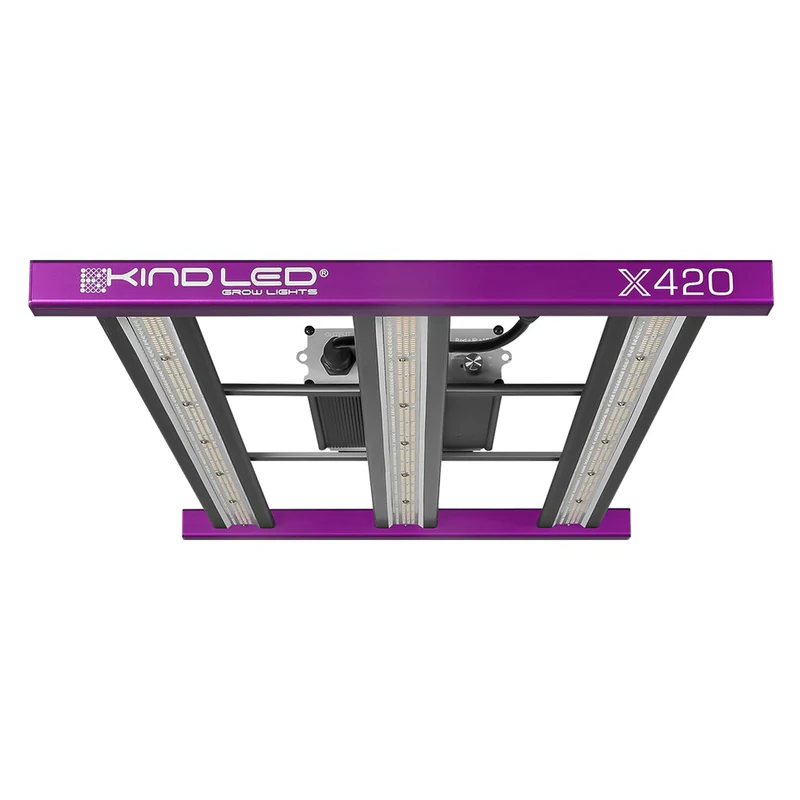
Features:
This Kind LED grow light offers 3.5 times improved light distribution to the plants. It helps you get excellent returns from your grow room. The external driver of the new X-series provides a 25% reduction in the heat output and a 60% reduction in the weight of light. Precise IR/UI control boosts potency and terpenes in plants to unlock your plants’ complete potential and maximize output. Kind LED X420 grow light offers 2 X boosted PPF for faster and healthier growth of plants. This Kind of LED grow light also has put this spectrum as an independently controlled channel. It offers users full control over the Ultraviolet and Infrared rays. Therefore, the grower can decide when to use these rays. It helps them avoid unnecessary stretch, remove the wasted energy, and increase metabolites (that boosts both terpenes and potency).
Rayonled GLMF400W LED Grow Light
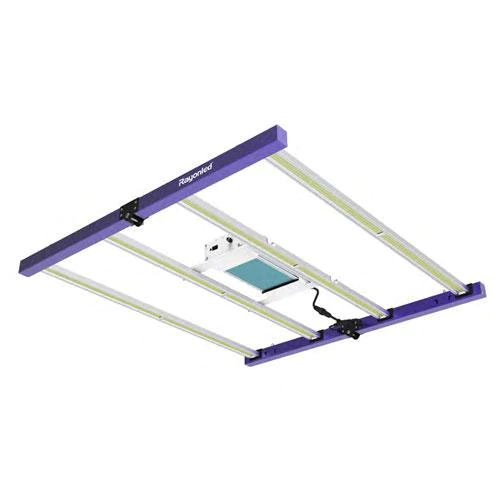
Features:
This Rayonled LED Grow Light’s Input Power is 400w but has High PPFD. It redefined engineering real full spectrum led grow light strips hydroponics from veg to bloom for indoor plants grow. It is ideal for beginner or professional growers choice. The full spectrum design of this grow light provides nutrients for each stage of plants, which is perfect for germination, seedling, indoor growing. One 400W grow light is equal to a complex 800W HPS grow system, making indoor planting become more convenient. It is also a noise-free fanless LED grow lamp for indoor plants. All casing is a heat sink. This LED grow light will provide high performance, long-lasting and energy-saving for general purpose use.
Key Features To Consider LED grow lights:
Some of the essential features for the best LED grow lights are as below:
Brightness:
For the proper growth of plants, the light intensity is a crucial factor. The use of LEDs makes sure the brightness would be enough for plant growth. Still, it is advisable to focus on this aspect before making a purchase. The brightness determines how the LED light shines and how deeply it can go inside the canopy. Several growers have no issue storing their plants until they grow and their leaves get very thick. The presence of the canopy can affect the yield and overall health of your plant.
Make sure the light output is not so bright else it may burn the plant’s leaves. Before purchase, you can focus on the needs of individual plants to guarantee excellent growth.
Heat production:
Plants indeed need enough light to grow but they are also prone to damage due to excess temperature. Choose an LED grow light with low heat production. The one with excess heat-producing light might need extra equipment for cooling down the room. Hence, it will add to expenses. These LED grow lights that produce low heat usually last longer. Also, they will not burn the plants.
Size of the surrounding:
You may usually set up your plants in a garden, backyard, or your room. The size of the surrounding space affects the type of lights which will perform efficiently. For larger spaces, panel lights are suitable because they cover a huge area. On the other hand, smaller lights are usually suitable for smaller spaces and plants set up randomly.
Conclusion
Quality LED grow lights are the best solution we have today for growing plants indoors. They are more efficient that traditional forms of light, meaning they produce more output, while using less electricity and producing less heat.
They also last much longer. You won’t have to change bulbs for at least 5 years, and often over 10.
2022 Best 400W LED Grow Lights for Indoor Plants
Some people have a hobby to grow green plants in their garden or backyard. These plants need enough light to grow well. The amount of light required for growth varies based on the type of plants. When you desire to grow plants indoors, certainly, they will not get enough sunlight. You need to provide them an artificial light source for proper growth. The 400 watt LED grow lights are the best light sources available in the market for plants grown indoors.
These lights are well-known for offering full-spectrum lighting and intensity. In addition to being used in fluorescent lamps, LED lights are also used in grow lights. The presence of LEDs makes sure the brightness at the output is always excellent. Generally, these light products produce low heat and come with easy plug & play convenience. The output consists of intense bright light without much consumption of energy.
How to identify quality LED grow lights: PAR, PPF, and PPFD
As you continue to become an experienced grower and find new ways to improve your yield, it will benefit you to familiarise yourself with some acronyms for indoor plant growing.
What is PAR?
Photosynthetic Active Radiation (PAR) describes the wavelengths of light within the visible range: 400 to 700nm (nm is the unit used to measure wavelength). It’s not a metric like feet or inches, but rather a term that helps plants growers determine two things: the type and volume of light required to optimize the plants’ yield and health.
When purchasing LED grow lights, PAR is an important consideration because the more PAR your light can produce, the more PAR available to plants, the better they will grow.
What is PPF?
Photosynthetic Photon Flux (PPF) is the term we use to define the measurement of PAR. Its underlying value determines how much PAR your LED grow lights can produce per second. The PPF measurement helps you understand how much of the light your fixtures are producing, which can be used by your plants for photosynthesis.
PPF is measured in micromoles per second or “µMol/s”, where one micromole is equal to approximately 602 quadrillion photons. Measuring your PPF properly requires a thorough understanding of the process and a little bit of mathematical subtleness and patience. And while there are PPF measurement tools that can be purchased from the open market, you might work with a trusted partner who can help you choose the perfect LED grow lights that are efficient enough to provide the desired PAR and PPF.
The most popular LED lights on the market currently deliver from 2000 to 2900 µmol/s.
What is PPFD?
Photosynthetic Photon Flux Density (PPFD) is the third and final part of the PAR equation. PPFD measures not just the PPF but also the surface area. The unit for measurement is micromoles per square meter per second or “µMol/m²/s”, which is used to determine how many PAR photons are effectively landing on a given area. So, PPFD has to do with how many of those crucial photosynthetic photons actually positively impact the growing area and how efficiently your LED grow lights are working in terms of output.
As a plants grower, you need to bear in mind the distance from the light source. A few measurements can be used as an average (the minimum and maximum ratio) before buying LED grow light. We’d again recommend working with a trusted LED grow light partner who can provide the necessary and reliable metrics.
Beyond what we’ve explained for these three terms, it can all get extremely technical, which may serve more counterintuitive for the average grower than anything else. Your LED grow light partner can help you understand the best lighting system needed according to your specific growing needs.
ECO Farm SP-400 Samsung Foldable Dimmable Full Spectrum LED Grow Light
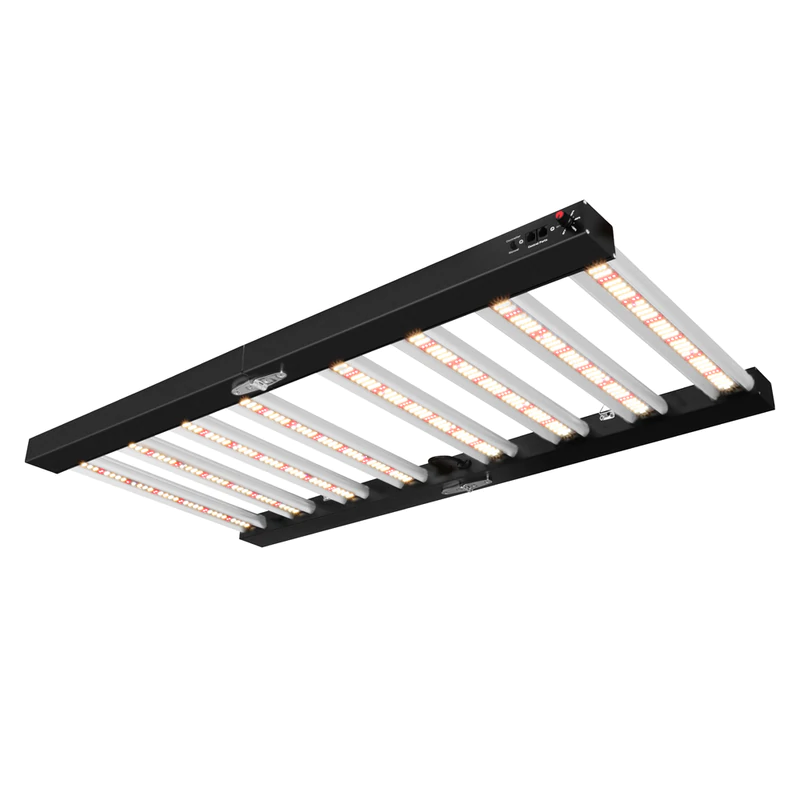
Features:
ECO Farm LED grow light is equipped with 1088 high-efficiency Samsung LM281B LEDs. It has a market lighting efficiency of 2.8μmol/J and an output of 2.5g per watt. The average PPFD is increased by 30%, and the actual power is 420 watts. Proven high-yield full-spectrum (lm281b LEDs (3000k+5000k) + RED 660nm + IR 730nm + UV 395nm), with enhanced deep red 660nm. Born for big buds, the plant responds quickly from seed to flowering, which speeds up the flowering time and increases the yield. The relaxed dimming design meets the needs of different growth stages of indoor plants. No fan, no noise. The aluminum light bar can better dissipate heat and keep cool, and at the same time spread the light evenly. Save you a lot of ventilation and exhaust costs. The most powerful daisy chain-up to 100 lights can be connected, the controller can be used, especially suitable for homes, planting tents, planting rooms, greenhouses, gardens, and hydroponics.
Mars Hydro FC-E 4800 480W LED Grow Light
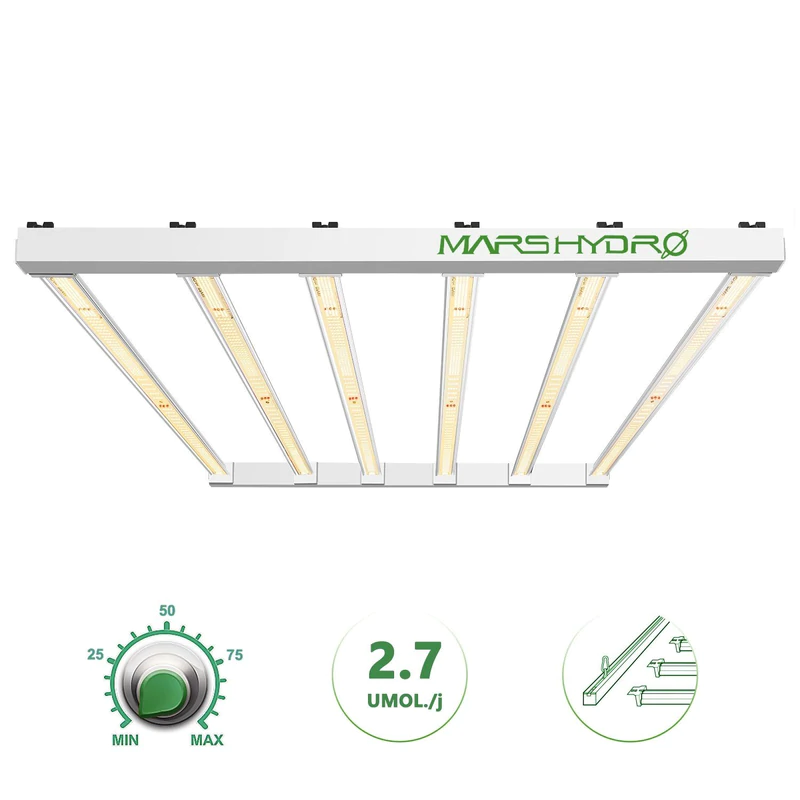
Features:
The grow light consumes 480W input power. The FC-E4800 has 2646 high-quality BridgeLux chips, which can perfectly cover the growing space of 4x4 feet (flowers) and 5x5 feet (vegetables), which is more cost-effective than other lights of the same type. Not only the driver is removable, but the light bar is also removable for easy installation, storage and replacement of the light bar. At the same time, growers can freely adjust the light bar space according to their own growth needs to maximize the use of light. mars Hydro’s newly developed chip arrangement enables a more uniform and efficient light distribution, allowing growers to achieve a more uniform crop. The light is designed with a dimming knob, which is more convenient for dimming. Up to 30 lamps can be daisy-chained and controlled from a single lamp.
TotalGrow MH Lumyre 480W LED Grow Light
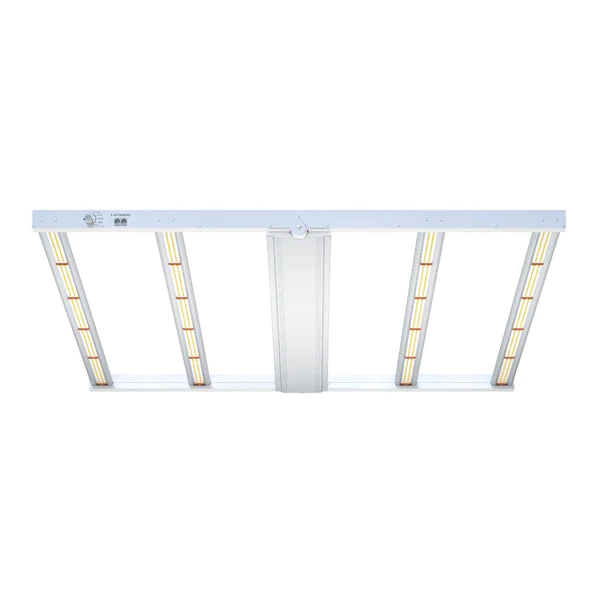
Features:
TotalGrow LED grow lights feature multiple high-intensity light strips in a slim profile and built-in power supply to distribute the ideal light intensity evenly across your growing area to meet your growing goals. Superior, customizable full spectrum supports efficient, high-quality growth of any life stage and crop variety. This plug-and-play solution with direct daisy chaining is easy to implement, has low up-front and ongoing costs, and sustainably produces high-quality crops. The efficacy of this LED grow light is as high as 2.8 μmol/J to meet the light intensity your plants need. Robust, reliable, ideally shaped design for ease of use and excellent uniformity.
Things to consider before buying LED Grow Light for the Money
Space Matters
You need to consider how much space you have available for your grow operation. The lights that best fit a small indoor operation are not always the same as those that will work well in an outdoor garden. Indoor growers should consider an LED light that is thin and lightweight, so it may be mounted above their plants with minimal intrusion into other spaces in the room. If they choose LED lights of different colors, they can change the look of the growing environment by altering lighting schemes from time to time. Outdoor growers have more options when choosing how to hang their lamps, but even these operations can benefit from lightweight fixtures that allow excess heat and moisture to escape quickly through air vents at top or bottom of the fixture housing.
Total Light Output
We all know the saying ‘Bigger is Better’, this applies to LED grow lights as well. The bigger the light, the more output it will provide for your garden. You don’t want to be in a situation where you have under-powered lights that don’t give off enough intensity for proper growth of your plants.
Manufacturer’s Lifespan Rating
While no manufacturer can guarantee total lifespan of their LED grow light fixtures, they do guarantee at least a certain level of output over an 18 month period. This should give you confidence when buying a unit from any manufacturer and won’t leave you thinking twice about purchasing it if you believe in how reliable they are stating their product is.
Heat Management
As with all high powered lighting systems, heat dissipation is always an important factor to consider when choosing a light for your operation. The larger the light, the more heat it is going to create and you want to make sure you have some place for that excess heat to go in order to keep your grow room or garden from overheating.
Fan Controllers
Depending on how your specific grow operation is set up, you may already have an exhaust system built into place. If not, then a fan controller might be something you wish to purchase with one of these lights. These go by many names, but essentially they are electronic devices that help run fans in sync with the power draw of the LED light(s) allowing them to work at optimum efficiency while keeping everything within your growing space cool enough for healthy plant growth.
Conclusion
We hope that by the time you reach this section, you’ve got a fair idea about what to expect from these grow lights. One needs to understand that LED grow lights are critical when it comes to growing plants indoors. However, one doesn’t always need to buy expensive lights, because sometimes cheaper lights do the trick too. And it isn’t right for one to associate that cheap lights are bad lights. If you buy one of the lights from our list, or if there are any grow lights that you would want us to review, or add to our list, do let us know in the comments below, or drop us a mail and we shall get it done as soon as we can!
ECO Farm FLD 320W Full Spectrum Dimmable LED Grow Lights VS Iluminar 330W iLogic™6 Full Spectrum LED Grow Light
Experienced growers know that the success or failure of your plants cultivation relies on three major factors: Soil, water, and light. No matter what other variables you’re going to tweak, you must get these three elements dialed in if you want to enjoy an abundant harvest.
For the overall cost of your grow, though, choosing the right light can make it all seem worth the time and effort… Or break your wallet and your overall yields. While LED grow lights may not have been a great option even 5 years ago, advances in LED technology have made them our hands-down favorite style of light for consistent, low-maintenance indoor grows!
The only problem with LED grow lights for growing plants? There’s a lot of imitators on the market, trying to sell bargain-bin lights at a premium price. That’s why today, in this review, we’re going to be presenting a comprehensive guide to choosing the best LED grow light for your indoor grow.
With every product taken from a well-vetted source, we’re presenting only the best of the best products of LED grow lights. So, what are you waiting for? Let’s get started!
Led Lighting Fixtures For Your Indoor Garden
These lighting fixtures have been around for a little while, but they are still new in hydroponics for a good number of growers. Although they are still relatively expensive, they do come with numerous benefits over other lighting systems.
Luckily, as they gain more popularity, their prices will continue to fall. However, some manufacturers produce lights that deliver lower amounts of light. When looking to purchase, be sure the lights you look for are 2.0 micromoles per watt of energy as a minimum.
These cheaper LED bulbs aren’t enough to support flowering plants, so it is essential to do some homework beforehand. This can change depending on the type of plants being grown, but hopefully, these subpar grow lamps will vanish when costs fall.
One final thing to note when looking at buying LED lighting systems is that many are sold as being all in one unit. In some cases, this isn’t the case, and there is a need for reflectors to be used with LED grow lights.
Pros
Very energy efficient, and are among the cheapest type of light sources to run.
LEDs produce more light per watt of energy than both HID’s and fluorescents. But with some exceptions
The LEDs run much cooler, so there are considerably fewer chances plants will be burned
LEDs are very long-lasting, and in many cases, it is the control unit that fails before the bulbs themselves
LEDs don’t need any ballast to operate and can be plugged directly into the mains socket
LEDs cover a wide range of the color spectrum and are adjustable so they can be tailored to your plant’s needs and stages of growth
LED’s are now known to be the easiest to use
Cons
At present, these lighting fixtures are more expensive than the alternatives
Some of the lighting systems throw out less light than other varieties of LED grow lights.
Some manufacturers produce lights that don’t have the power to support plants when they are in their flowering stages.
ECO Farm FLD 320W Full Spectrum Dimmable LED Grow Lights
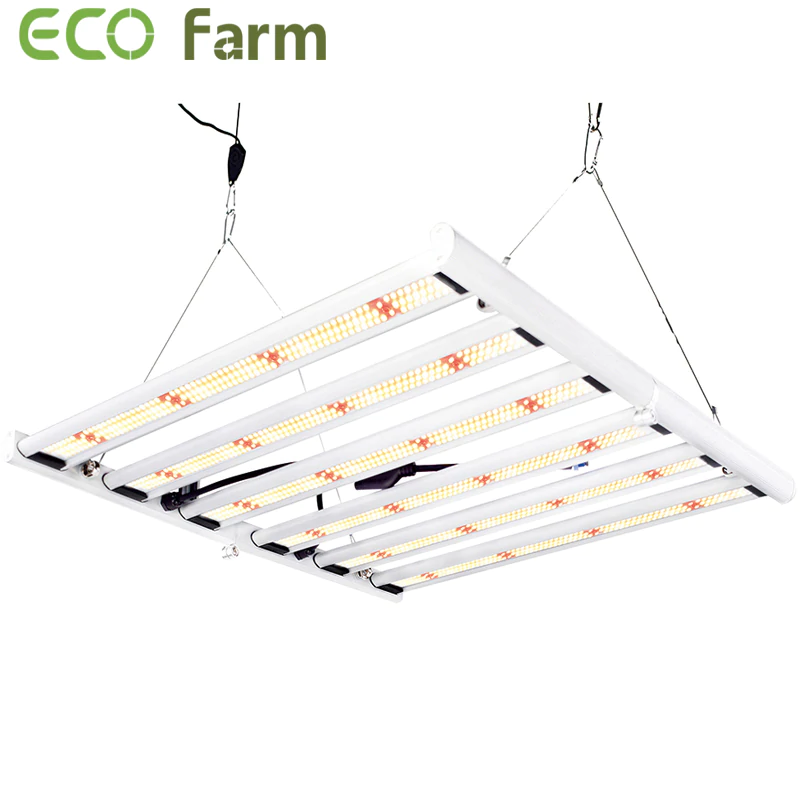
Features:
Equipped with SMD 3030 chip, this ECO Farm LED grow light has a maximum yield of 2.5 grams per watt, 30% higher average PPFD, and 50% higher yield and quality compared to other similar lights. Consumes only 320W. This LED grow light has a Yield Max spectrum (3000k, 6000k, 660nm red, 730nm IR LED), which can make the light more uniform, truly simulate the sunlight, and perfectly meet the entire growth cycle of all plants from seed to harvest, including Medicinal plants, flowers, vegetables, etc. Newly designed fast heat dissipation material aluminium with 4 slim cooling strips, produces less heat and saves 50% energy than other old grow lights! The whole plant grow lights are waterproof. No need to worry about wet growing conditions. LED grow lights can be folded 180°, easy to install and move.
Iluminar 330W iLogic™6 Full Spectrum LED Grow Light
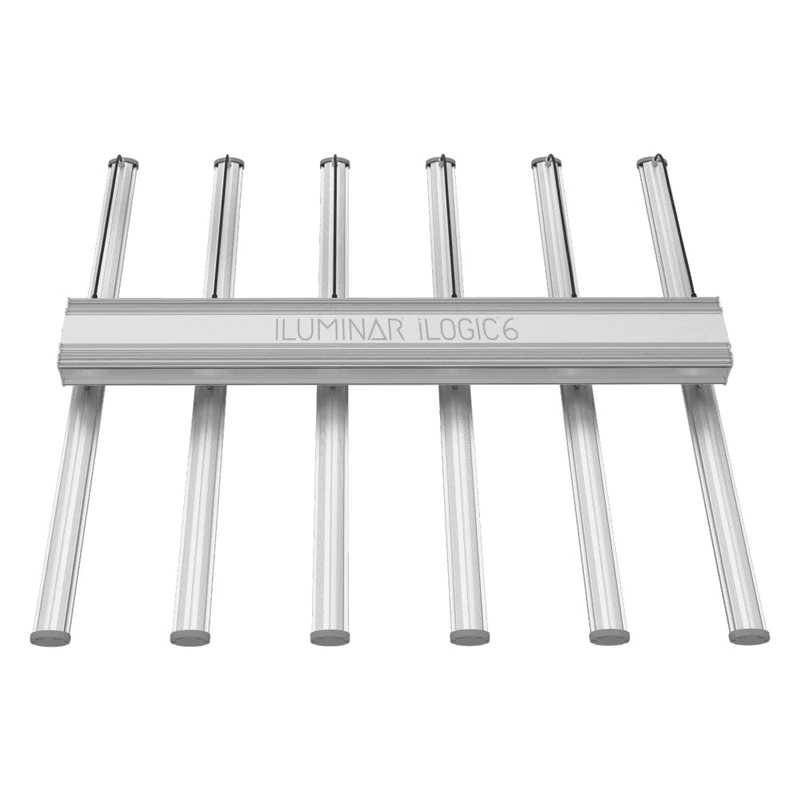
Features:
The Iluminar LED grow light provides depth, penetrating light intensity, and industry-leading uniformity in a 4' x 4' square space. Optimized for the most demanding floriculture applications, iLogic 6 is designed to scale easily as your operation grows, delivering unmatched reliability, longevity and performance. iLogic 6 LEDs maximize plant productivity, even in the densest canopy in CO2-rich flowering chambers. Likewise, in single- or multi-story cultivation environments at home, this state-of-the-art LED grow lighting promotes compact and vigorous growth and produces high levels of secondary metabolites with full spectrum output.
Choosing the Best Light for Growing Plants Indoors
When using Grow lights for your plants, it is critical to keep some things in mind such as the intensity of the light, color of the light, duration of provision of the light source and what kind of light like incandescent, LED, Fluorescent and others.
This would essentially depend on the brightness of the bulb used in the Grow Light as well as the distance between the plant and the source of light. Since plants vary in their requirements of intensity, this will have to be considered before matching your plants with your Grow Lights. A general thumb rule is most flowering and fruit/veggie plants require high intensity lights whereas foliage plants can be positioned about 36 inches away from the Grow Light.
Right Color of Light
Sunlight encompasses the entire spectrum of white light and thus has all the colors of the rainbow from violet to red. Thus, impliedly indoor plants grow best when placed under lights with bulbs of the whole spectrum. This provides a natural balance of warm as well as cool light imitating the natural spectrum.
Right Duration of Light
Plants respire in the dark and thus it is pertinent that plants get their time of darkness as well. Thus a good Grow Light should typically include a built in timer as well. Plants that fit in the Short-day category of plants would require about 12 hours of contact with light. Those that are classified as long-day plants would require nearly 14 to 18 hours of light per day and those that are day-neutral only need about 8 to 12 hours of light throughout the year!
Conclusion
As you can see, not all LED grow lights are created the same. Each comes with its own benefits, and also its own unique downsides.
On top of this, is the fact that all grow rooms are very different, so there are countless other variables growers need to consider. Lighting is only one part of this puzzle, but it is evident, no one lighting system is perfect.
Growers need to understand all of their plant’s requirements, and also what they want from their plants. When they know this, they can put things in place, and choose the best lighting system that their budget allows. Even then the choice may not be so simple, but at least growers will know the options they have, and which lighting systems are most suitable for them.
AgroMax PRIME 600w Flower LED VS GE LED Arize Element L1000 Type-R 600W LED Grow Light
Grow lamps used to be massive and ungainly — fluorescent tubes more than a metre long that required complex and hideous systems of stands, cables and reflectors all coming at a significant price. They consumed a lot of power too, so not great for the planet, or your energy bills. They also emitted quite a lot of heat, raising safety issues and damaging the plants that were being grown.
Recent breakthroughs in LED technology have created a new generation of effective, cool-running grow lights that cost a fraction of the old-school options both to buy and to run, consuming up to 90% less energy. They have also reduced down in size, enough to be easily incorporated into average house decor, some seamlessly integrated into planter-cum-lamp designs. There is also increasing evidence to show LED lighting provides a significantly higher yield than traditional lighting.
What Colour Grow Light Should I Get?
A popular question is what colour grow light to get. If you choose to go with fluorescent lights make sure to look for the kelvin rating which measures the colour of the lights. A rating between 5000–6500K will sufficiently mimic natural sunlight.
Now if you do choose to go with LED light you can get full spectrum; this offers you a perfect balance of each of the red and blue lights which mimics the natural sunlight the best. The blue light promotes plant growth in the roots and leaves, while the red light promotes growth for fruiting plants.
You can also get white full spectrum LED grow lights if you don’t like the colours on your eyes.
How High Should I Hang My Grow Lights?
Once my seeds emerge and the lid is taken off, my LED grow lights have 2–3″ from the soil. The closer to the soil the better because it will prevent leggy seedlings.
As your seedlings get older, you can continually move the grow light up. I would still recommend keeping the grow light at a min. of 4–10″ above the plant.
How Long Should I Leave My Grow Lights On?
The day your seedlings emerge from the soil is the day you should start with the grow lights. It’s important to keep the grow lights on for 12–18 hours a day, depending on whether you have fruit plants or leave greens. Buying a timer for the outlet will help you remember (and is a game-changer!!)
Once the seedlings have grown, are over 4″ in height and have true leaves on them (and of course depending on what time of year it is) you can start the hardening-off process. This process allows the plant a break from the grow lights and is put outside for a few hours each day, increasing the time each day, so that the plant can prepare for its life outdoors. In that case, you won’t need the grow light anymore.

Features:
The AgroMax Prime 600W Flower LED Grow Light is designed to replace and outperform 1000W HPS grow lights in high value flowering crop applications. This evolution of the PRIME series combines a huge PRIME heatsink with a Samsung LM301B 3500K chip and opted for a 660nm red chip to increase yield, targeting flower development and yield. With a 4' x 5' footprint and 1524 µMol output, the Prime 600 Flower offers explosive blooming potential as well as huge energy cost savings. Additional features include a low profile plug-and-play design and a moisture-resistant conformal coating, making the PRIME 600w Flower an ideal high-efficiency LED lighting solution for home and commercial use.
GE LED Arize Element L1000 Type-R 600W LED Grow Light
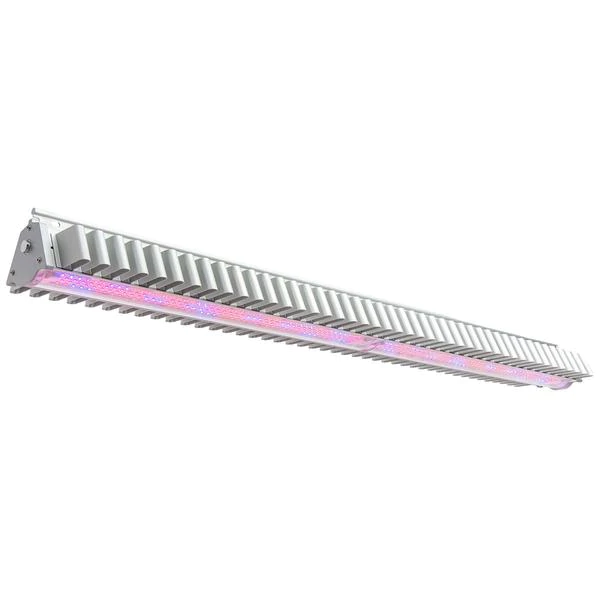
Features:
Arize LED grow lights offer best-in-class efficiencies up to 3.5 µmol/J, versatile mounting options, and a tailored spectrum, making the Element the smartest choice for your greenhouse. The Arize® Element features a unique new optical design that delivers the same level of uniformity as leading HPS systems, making the Element the first true 1:1 HPS alternative. Produces the same light output as a 1000W HPS luminaire using only 40% of the energy and offers multiple spectrums. Put more money in your pocket without sacrificing power. The modular design of the Arize Element allows for virtually limitless installation methods, including multiple bracket options, wire cutter installations, and universal loop cables. Spend less time installing and more time growing with the elements.
How to Choose the Best LED Grow Lights
1. Intensity
The intensity refers to how much energy is being put out by the light source. There are two main types of light intensity: full-spectrum and fluorescent lights (also referred to as “cold” lights). Full-spectrum lights are the most powerful, and they produce the most light. They also come in a wide variety of different colors. On the other hand, fluorescent lights produce a lot of light with less intensity than full-spectrum lights.
The intensity of your light source is important for growing plants because it determines how strong the plant will grow and how quickly it will grow. The more intense the light, the more energy is put into that particular area of your plants. If you want to get your plants to start flowering quickly, you should use full-spectrum lights or HPS lights (high-pressure sodium) instead of fluorescent lighting. Fluorescent lights are great for vegetative growth because they are extremely low in intensity and produce very little heat than full-spectrum lighting.
2. Color Temperature
Colors in nature are produced by how sunlight is reflected on different objects. This is why we see most plants that are green and blue. Blue light, in particular, has a lot of energy that plants can use to grow quickly.
When it comes to growing plants indoors, you will want to choose a lighting system that produces the same color temperature as your room’s natural light. This will allow your plants to use the same amount of energy from your lights as they would when they are outdoors. It also reduces eye strain because it allows you to see more clearly with your eyes while growing plants indoors.
3. The proportion of grow area and plants
When selecting lights for your grow room, consider the plants and the grow area size. If you have a small grow area, you will want to use lights that are lower in intensity and higher in lumens. This will fill the room with light and allow the plants to grow quickly. If your grow area is larger, you can choose lights with more intensity than a smaller space. This will allow your plants to grow faster and produce more buds.
4. Maintenance
You must maintain your grow room and lighting system to ensure that it works efficiently. For example, if you notice that your lights are not producing high-quality light, you need to replace them immediately. Also, make sure that you clean the lenses of your lights regularly; this will help produce quality light output. The other thing you need to do is check the ballasts now and then. If they are getting old, then change them for new ones.
Conclusion
After reviewing all the best LED grow lights for indoor plants, we cannot declare a clear winner because every grow light has its distinctive features. Now it all boils down to your personal preference. If you’re running low on budget you can choose a budget-friendly option otherwise you can go for a premium model. Look for a light system that is best for a range of different plants and boasts blue and red spectrum. You also need to go for an adjustable timer ranging.
So which one of these LED lights have you used for your indoor plants! Please share your experience with us by leaving a comment below!
AC Infinity IONBOARD S44 400W Full Spectrum LED Grow Light VS AgroMax RAW 550 4000K LED Quantum Board Grow Light
If you are looking to purchase a grow light for your indoor plants, there are a few things you need to consider.
Grow lights come in all shapes and sizes, and each type has its advantages and disadvantages.
In this blog post, we will discuss the best LED grow lights available, as well as the factors you need to consider when choosing the right one for your needs.
Why Grow Lights over Sunlight?
Grow lights are a better option than sunlight for several reasons.
Sunlight is only available during certain times of the day, and it can be challenging to find a location that receives enough sunlight for your plants. Due to changes in weather conditions, the photosynthesis of plants affects.
We can use Grow lights year-round. The main difference between Grow light and sunlight is that Grow light emits a specific wavelength of light that is beneficial for plants, while sunlight contains all wavelengths of light. This means that We can use Grow light to grow plants indoors, even when it’s cloudy outside.
Grow lights can be placed closer to the plants, which allows for more intense light and fewer shadows.
In addition, grow lights can be used in any location, regardless of outside weather conditions.
Further, some research studies proved that using grow lights increased fresh weight, the number of leaves, and plant height.
AC Infinity IONBOARD S44 400W Full Spectrum LED Grow Light
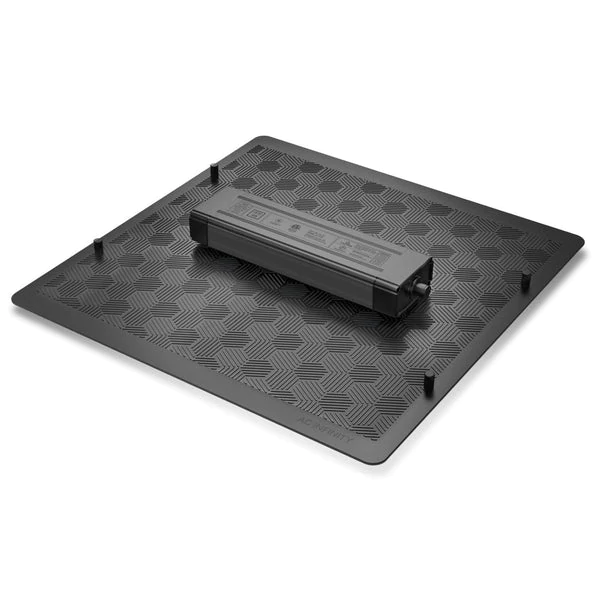
Features:
This full spectrum LED grow light is designed with algorithmically positioned Samsung LM301B diodes to maximize plant yield. Features proprietary drivers for dimming, daisy chaining, and interfacing with our smart controllers. Built on a fanless one-piece aluminum plate for heat dissipation and longer diode life. All components are sealed to IP-65 standards for optimum performance even in high temperature and humidity growth environments. Includes a pair of metal rod hangers and rope hangers. This LED grow unit is specially designed for grow tents with internal reflective mylar lining for growing a variety of plants, fruits and vegetables.
AgroMax RAW 550 4000K LED Quantum Board Grow Light
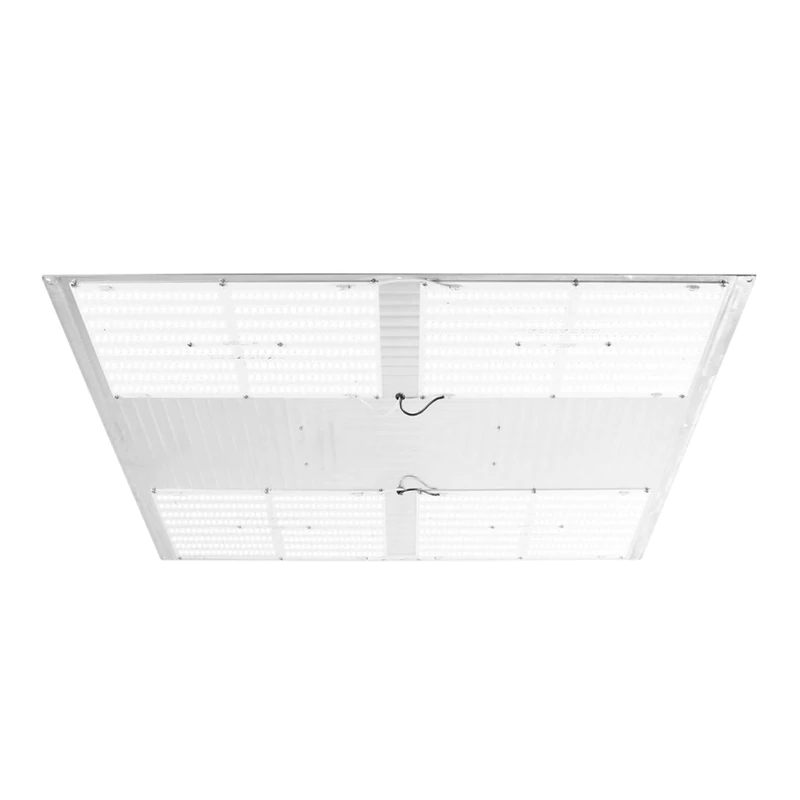
Features:
The AgroMax RAW 550 light fixture combines top-of-the-line Samsung LED chips with premium Meanwell drivers to deliver industry-leading LED grow light technology. They produce an impressive 2.5 micromoles/watt output, enough to support a 6' x 6' growing space or 4' x 4' flowering cover. The AgroMax RAW is designed with a sturdy aluminum heatsink and a dust/waterproof conformal coating that can also withstand the conditions in a cultivation environment. To protect the panel’s circuitry, a thin polymer layer is applied to seal the electrical connections. This feature ensures that dirt, dust, water and corrosion will not damage your fixtures. Replacing LED fixtures can be expensive, and conformal coatings can prevent accidental water damage.
What Are the Lighting Terms to Know before Buying a Grow Light?
The lighting terms you should be aware of before buying a grow light are lumens, kelvins, and PAR value.
Lumens measure the total amount of visible light emitted by a source. This is the most important measurement to consider when choosing a grow light, as you want one that emits enough lumens to cover your entire growing area. Light intensity is the same as lumens. Lumens measure the amount of visible light emitted by a source, while intensity measures the amount of power required to produce that light. Both terms can be used interchangeably when choosing a grow light.
Kelvins are used to measure the color temperature of a light source. A higher Kelvin rating means a whiter, cooler light, while a lower rating means a warmer, yellower light. You’ll want to choose a grow light with a Kelvin rating that matches the type of plants you’re growing.
PAR value is used to measure the amount of photosynthetically active radiation (PAR) emitted by a source. This is important for growers who want to maximize plant growth. Choose a grow light with a high PAR value if you’re looking for maximum plant growth.
The Colour of the light is not as important to plants, but some growers prefer to have a light with a cooler color temperature (higher Kelvin rating) so they can see what’s going on in their grow area better.
The majority of grow lights give full-spectrum light. Plants utilize the vast majority of the blue (“cool”) and red (“warm”) spectrum’s radiation. Blue light promotes vegetative development (foliage and roots), while red light promotes flower and fruit production.
Things to Consider Before Buying the LED Grow Lights
1. Efficacy
If we know the PPF output of a fixture and the input energy you can figure out the efficacy rating. This is expressed as micromoles per joule or uMol/j. Most commercial LED suppliers will list the efficacy rating in their product specifications. The higher the efficiency rating, the more light you will get for the energy input.If you only know the PPF and the wattage of a fixture, you can just divide to get the efficacy. For example, a 400watt fixture that has a PPF rating of 800 has an efficacy rating of 2.0. Or a 400w fixture at 2.0 uMol/J produces 800 uMol of PPFIn the old days, HPS had the highest efficacy rating which was up to 1.9 umol/j. This is why it consistently got good yield. However, LEDs are currently reaching 3.0 umol/j and have left HPS in the dust. The efficiency of LEDs will continue to increase while HPS efficiency is fixed.
2. Semiconductor chips
The semiconductor chip is what converts electricity into the light that your plants need. Without this vital component, your LED grow light simply won’t work. Because of this, be sure and pick out a LED grow light that has a quality semiconductor chip. LED grow lights with a good semiconductor chip will outlive those that lack one and save you money in the long run.
3. Wattage
When you see a wattage associated with a LED grow light, it is typically the equivalent wattage you would need in a HID or HPS light to get the same result. So a LED grow light listed as 400W can replace a 400 watt HID or HPS light but the actual wattage of the LED will be far less. This is way LED grow lights are much more energy-efficient. First-time buyers often assume the more wattage a grow light provides, the better. But bigger is not always better. The rule of thumb is you need 32 watts per square foot of growing space for flowering and light-loving plants. Low-light plants like lettuces and herbs need only around 11–18 watts per square foot.When you take these all into consideration, you will quickly know which one is the best grow light for indoor plants. Of course, the cost is also an important factor that you need to consider when buying grow lights for indoor plants. This requires you to make a comprehensive comparison before you can choose the most cost-effective one.
4 .Light Spectrum
While getting the necessary light output is very important for your plants, the spectrum of light they receive is also important. Outdoor plants evolved to grow under natural sunlight, which produces every color on the spectrum. Therefore, the best grow lights have a full-spectrum grow light to best mimic natural sunlight and optimize plant growth.Within the full spectrum, each wavelength (color) is responsible for a different effect on the plant’s growth. Blue and red light are the most prominent colors since blue drives stockiness in a plant during its vegetative stage. The red light helps plants stretch and bloom in the flowering stage. However, plants also utilize other colors. The green light is not as easily absorbed by the plant for photosynthesis, so that makes it more effective at penetrating the plant canopy and delivering light to areas that are less saturated with light. Therefore it is optimal to use a full-spectrum light that uses a combination of all colors at all stages of growth.
Conclusion
Grow lights are commonly used in hydroponics systems to help plants grow indoors, even off-season. Many lighting options are available, but an ideal choice will always depend on your growing area. Still, there is no single best light source to use for growing plants indoors. Before purchasing any plant grow lights, consider what you will be using them for, where they will go inside your garden, and how much money you want to spend on the lights.
Jungle - LED G7 2000 LED Grow Light VS TotalGrow MH Lumyre 720W LED Grow Light
When it comes to investing smartly in your indoor grow, nothing can beat the most sustainable option — LED Grow Lights. LEDs are not just great for the health of your indoor plants but also give your nursery or an indoor grow a completely vibrant look at a cost-effective price. But with so many options available in the market ranging from small size to large commercial LED grow lights, it isn’t easy to choose the best LED grow light for the money that perfectly matches your requirements.
Worry not! With our detailed top LED grow lights buying guide, we will cover every inch of various types of grow lights available in the market for both large spaces and small rooms. We have curated the top suggestions based on your requirements, budget options, bestselling reviews, and functions to let you get the right led grow light for indoor growing.
How safe is Grow LED lights to use for indoor grow?
Grow LED Lights are safe for plants if you are buying certified ones. Always check for the certifications and warranty while buying the Grow light for your indoor space to avoid any damage to your crops or tent space. An ideal grow LED light must be CSA, or UL certified. Also, take care of a few things while using the grow light to avoid any damage:
There must not be any humidity or moisture around your LED light to prevent damage.
Never overload the circuit as it will shorten your light lifespan and decline its performance.
Use eye protection like sunglasses while operating LED lights to avoid harmful UV rays.
How much light do plants need?
Different types of plants require different levels of light to grow. For example, shady plants require a low level of light, while veggy and other flowering plants require a high level of light to grow. For high light level plants, 800–1000 uMols is a considerable range for the flowering and vegetation stage. For low-light-level plants, 400–500 uMols will work fine.
Jungle — LED G7 2000 LED Grow Light
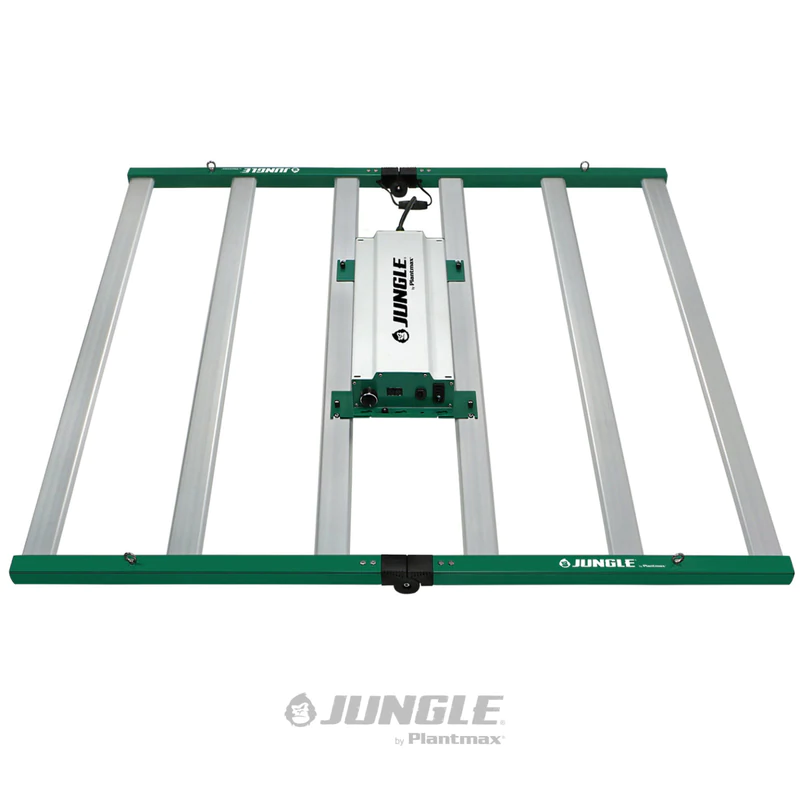
Features:
Jungle LED grow lights are designed to be efficient and easy to install right out of the box. The Jungle G7–2000 is designed with a power drive and can be mounted on a rack system away from the fixture itself to accommodate installation in your growing space with minimal constraints. It comes with an onboard dimmer and an external connection port for use with the main controller. The Jungle LED system maintains an IP65 wet location rating as well as corrosion resistant construction, ETL and DLC certification standards. Its single power supply (LED driver) detachable design provides flexibility for remote mounting to most vertical rack systems without adding accessories or modifying existing space. The single power supply (LED driver) provides mobility for growers who wish to mount the power supply unit away from the growing space and is wall-ready.
TotalGrow MH Lumyre 720W LED Grow Light
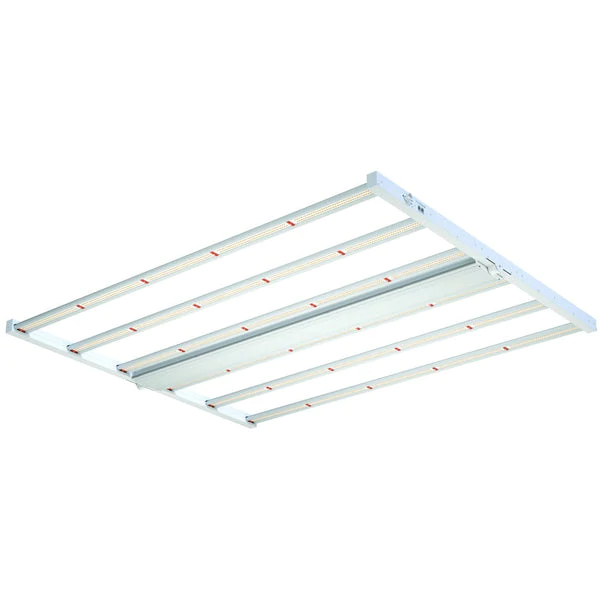
Features:
The TotalGrow LED grow light features multiple high-intensity light strips in a slim profile and built-in power supply to distribute the ideal light intensity evenly across your growing area to meet your growing goals. Superior, customizable full spectrum supports efficient, high-quality growth of any life stage and crop variety. This plug-and-play solution with built-in dimming is easy to implement and has very low up-front and ongoing costs for sustainable production of high-quality crops. With an actual power of 720 watts, this LED grow light covers a 4'x4' high-yield full-cycle growth and has a market-leading efficiency of 2.6 μmol/J to meet the light intensity your plants require. Robust, reliable, ideally shaped design for ease of use and excellent uniformity.
An Ultimate Buying Guide To Choose Grow Lights For Indoor Plants
Some strains of plants are very sensitive that they can be grown only in indoor settings. You have to take proper care of it by keeping it under optimum temperature and humidity settings. When you are growing multiple plants under one roof indoors, you will need to grow lights to keep a regular check on the growth of the plants. We will help you with some useful tips to choose the best grow lights for your plants.
1. Budget & Warranty
Planning the budget is the first step to follow before buying the grow lights. Grow lights come in various price ranges according to their quality, quantity, light type and design. Sort out your planting requirements first and measure the size of your plants growing area. Choose the grow lights accordingly. For a smaller area, a minimum number of grow lights will suffice. This will come at an affordable cost than many numbers of grow lights.
Similarly, look for warranty and customer support while choosing to grow lights from a specific brand. Some brands offer to grow lights at a cheaper price with attractive features, but won’t have a warranty. Your invested money will be a total waste if the grow light stopped functioning after a month or so. So, it is highly recommended to buy grow lights with a warranty period.
2. Number of lights
The number of lights depends on the number of plants you grow and the size of the area in which the plants are grown. If you are growing two to six plants, one or two lights will be more than sufficient. Most home growers will grow only up to 6 or 8 plants, for which one or two lights will be enough.
However, if you own a large grow area with numerous plants; plan the number of lights accordingly. Also, make sure you don’t overcrowd the area with lights more than what is required. This may produce heat and can harm plant growth. You can invest in large lights if you own a big lawn or grow room with multiple chambers. Just like how the number of lights is important, the quality of the light is also important. Invest in high-quality lights.
3. Light coverage & intensity
As there are many grow light models in the market, first decide the light coverage area to select an appropriate light model. For example, if you grow plants in a 5’ x 5’ area, you can buy several grow lights according to that. Large lights can cover a 5’ x 5’ area. If you are not sure what type of light is suitable for your coverage area, you can consult a professional for advice. While buying LED lights, make sure the light intensity is as much as you expected.
Some complain of poor light, while some complain of overlighting. Both are bad. Light intensity is nothing but the number of photons your plants use for their growth and flowering. To decide the light intensity, you can check on factors like the PAR chart of the manufacturer, and PPF reading. These readings will tell you about the exact light intensity.
4. Durability & Design
Durability is an important factor to consider, especially if you are buying an electrical device. Before buying the grow lights, check their material and quality as you don’t want them to wear off soon. Buying grow lights with a warranty is an added advantage as you can claim the warranty when something goes wrong. Make sure the wires and bulbs are of durable quality. Design is up to your personal choice & plant requirements. You can buy small or large or aesthetically pleasing bulbs depending upon your choice.
5. Additional features
Apart from the above features and functionalities, you can also look out for useful bonus features to save your power cost. Many grow light models come with energy-saving technology to save your power consumption and costs. You can opt for such models over normal ones. Some grow lights are equipped with a cooling system to reduce heat produced from the bulbs. This will avoid heating inside the tent and protect your plants from bulb heat. You can also prefer lights that produce low noises without disturbing your plants.
Conclusion
When you grow plants indoors with lights, you have to decide what is most important. Will you prefer to buy cheap lights that consume a lot of energy, or would you rather spend a lot of money at the start and spend less on electricity? You also have to consider the conditions in which you are growing your plants. What works well in one space may not be suitable for a different area. Happy gardening!
Mars Hydro FC 6500 650W LED Grow Light VS SpecGrade LED Verta-6 Eco 640W LED Grow Light
If you grow plants indoors or in a greenhouse, then you know the importance of light to your plants. But do you know how high light intensity impacts hemp growth?
The relationship between the plant and light has become quite complex. Ensuring that your plant gets constant light is no longer enough. To get a better yield, you now need to focus on other aspects of lighting.
Apart from the spectra of light and its quality, light intensity is becoming a focal point to plants researchers and growers.
The evolution of lighting technology continues to unveil quality grow lights. These products can meet the light demands of plants. However, you first need to understand the effects of high light intensity on your plant.
Once you do, you’ll know exactly how to use indoor LED grow lights for plants. And improve the quality of your yield.
Mars Hydro FC 6500 650W LED Grow Light
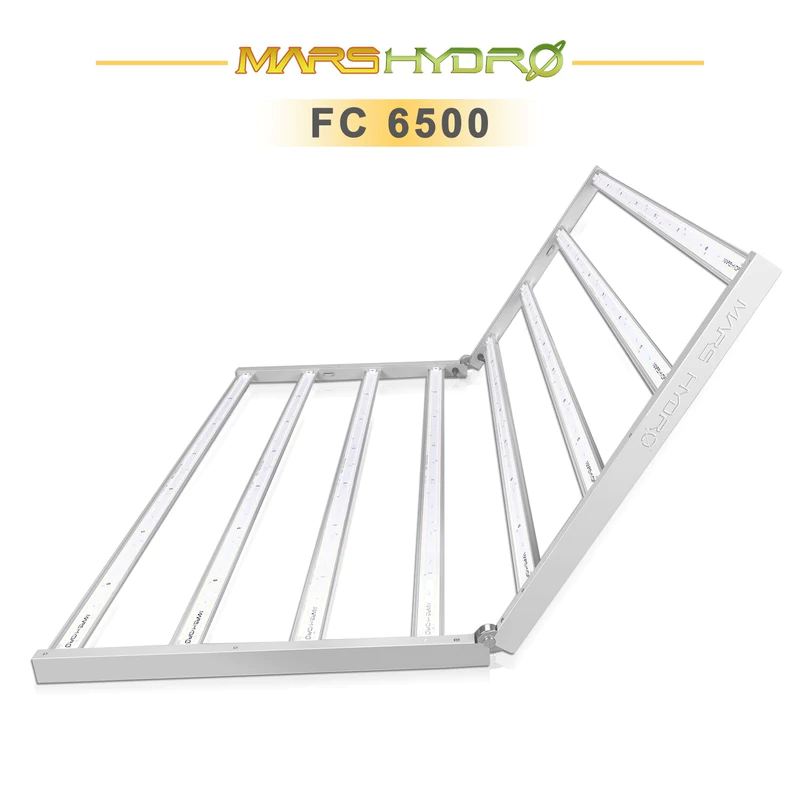
Features:
The Mars Hydro LED grow light is manufactured with 2688 Samsung lm301b and Osram 660nm chips. Use twice as many LEDs as similar lights to drive grow lights at low current and avoid overdriving. Quality is guaranteed with efficiencies up to 2.85 μmol/j. Multi-light bar design, the light sheets are densely distributed. Make the PPFD value of the LED grow light range from 1000–1500 μmol/m²/s over the entire effective coverage area. Enhances blue and red light based on specific spectral combinations to accelerate plant growth while improving plant yield and quality. Make sure the plants grow evenly. The dimming function can be used from 10% to 100% brightness, allowing different stages of plant growth and saving electricity. Up to 30 lights can be daisy-chained together and controlled by one master light.
SpecGrade LED Verta-6 Eco 640W LED Grow Light
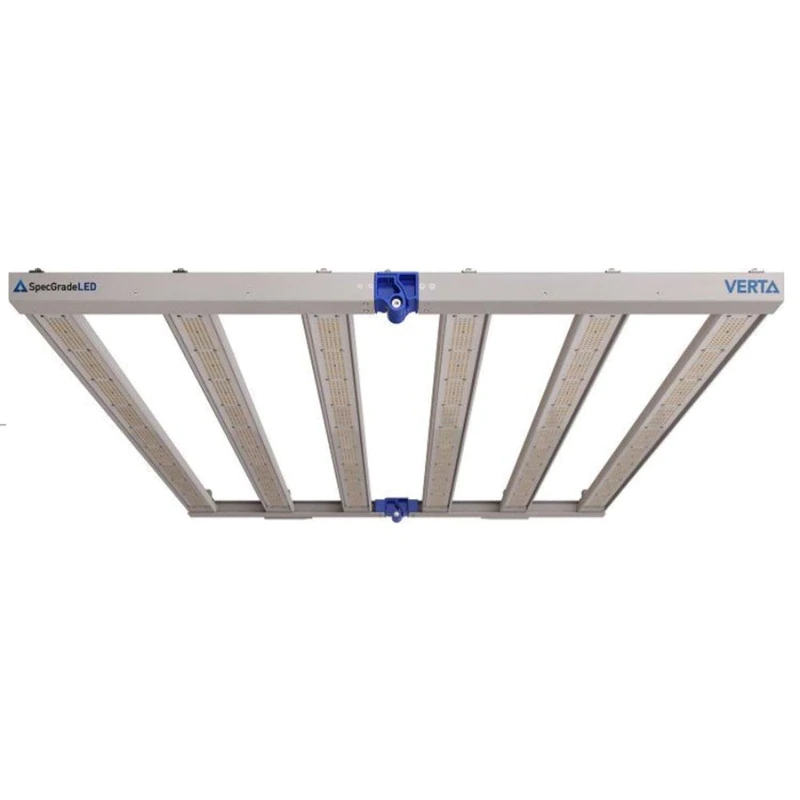
Features:
SpecGrade’s new professional-grade Verta-6 Eco combines performance, superior engineering, and price. Their fine-tuned mature A1 spectrum will improve tricolor and flavor while reducing operating costs and shortening growth cycles. Verta-6 Eco is sure to be the new choice for professionals to get the highest return on investment. Standard 0–10V dimming works with Grow-Connect ready (daisy-chain) harnesses, making the Verta-6 Eco the perfect choice for flowering and vegetable applications. Its modular design allows you to repair any failed components in the field without experiencing any downtime. A proprietary thermal management system radiates less heat to the plants while providing unprecedented light levels and uniformity.
Things to Consider Before Buying the Best LED Grow Lights
1. Color Spectrum of the Lights
Knowing the lights’ color spectrum is vital when deciding which grow lights to use. There are three types of lighting: blue, red, and white.
Blue lights are very popular among indoor growers. They stimulate the plants’ flowering stage, helping them grow faster and bigger. Blue light is also useful in speeding up the time between germination and flowering.
On the other hand, red lights are used to keep the plants in their vegetative stage. This means that they will grow taller, but not as much as if they were exposed to blue light. Red light is also used during germination and cloning because it helps speed up these processes.
White light combines blue and red light; it has both red and blue wavelengths in its spectrum. White light stimulates plant growth just like blue light does, but you can also use it to keep your plants in their vegetative state as red lights do. White lights are great for when you want your plants to flower quickly or when you want them to start flowering at all.
2. Intensity
The intensity refers to how much energy is being put out by the light source. There are two main types of light intensity: full-spectrum and fluorescent lights (also referred to as “cold” lights). Full-spectrum lights are the most powerful, and they produce the most light. They also come in a wide variety of different colors. On the other hand, fluorescent lights produce a lot of light with less intensity than full-spectrum lights.
The intensity of your light source is important for growing plants because it determines how strong the plant will grow and how quickly it will grow. The more intense the light, the more energy is put into that particular area of your plants. If you want to get your plants to start flowering quickly, you should use full-spectrum lights or HPS lights (high-pressure sodium) instead of fluorescent lighting. Fluorescent lights are great for vegetative growth because they are extremely low in intensity and produce very little heat than full-spectrum lighting.
3. Color Temperature
Colors in nature are produced by how sunlight is reflected on different objects. This is why we see most plants that are green and blue. Blue light, in particular, has a lot of energy that plants can use to grow quickly.
When it comes to growing plants indoors, you will want to choose a lighting system that produces the same color temperature as your room’s natural light. This will allow your plants to use the same amount of energy from your lights as they would when they are outdoors. It also reduces eye strain because it allows you to see more clearly with your eyes while growing plants indoors.
4. The proportion of grow area and plants
When selecting lights for your grow room, consider the plants and the grow area size. If you have a small grow area, you will want to use lights that are lower in intensity and higher in lumens. This will fill the room with light and allow the plants to grow quickly. If your grow area is larger, you can choose lights with more intensity than a smaller space. This will allow your plants to grow faster and produce more buds.
5. Maintenance
You must maintain your grow room and lighting system to ensure that it works efficiently. For example, if you notice that your lights are not producing high-quality light, you need to replace them immediately. Also, make sure that you clean the lenses of your lights regularly; this will help produce quality light output. The other thing you need to do is check the ballasts now and then. If they are getting old, then change them for new ones.
6. Schedule of lights
It is best to set your lights on a schedule. It is essential to note that even these plants need a few hours of darkness every day to get some rest. For example, you can set your lights to turn on at 5 am every day and turn them off at 10 pm. Also, you can use digital timers to set the lighting system up for the night. However, make sure that you do not forget to turn off the lights before sleeping.
7. Heat emission
The heat that your lights emit during lighting will affect the temperature inside your grow room. For example, if you have set it to a high temperature, you mustn’t expose your plants to this heat for a long time. Too much heat can affect the growth of your plants and the yields. So, ensure you are setting the right temperature for your plants. This will help you to have better yields.
Conclusion
In an ideal world, every indoor grower would choose to have the very latest technology and most expensive grow lights, however not everyone can afford to fill a room with high-priced lights. As long as you understand the lighting spectrum that plants require at the different stages of their life cycle, and can provide them with the intense quantity they prefer, then it is easy to grow high-grade flower and large yields as well when it comes to growing plants indoors.
ECO Farm DBL5000 Full Spectrum LED Grow Light 480W VS TotalGrow MH Lumyre 480W LED Grow Light
There is no underestimating the importance of the right LED grow lights to help you produce the juiciest, most potent buds, along with the highest yields possible. When looking for the right lights for your grow, you’ll need to consider your power needs, space requirements, and most importantly, budget.
The market has exploded in the last few years, with the grow light market accounting for $3.05 billion in 2018. This means tons of grow light innovation, more available options, and so much bud. There can be no doubt that the industry is here to stay, so you’ll need the best lights possible in order to get your slice of the pie. So, how do you wade through the ever-expanding and often confusing waters of grow light options?
Don’t worry, we’ve got you covered! We’ve distilled the massive array of available lights down into a concise list to help you choose the best lights for the grower on a budget. We’ll take a look at the best budget-friendly lights and help you decide which one will give you the best bud for your buck.
ECO Farm DBL5000 Full Spectrum LED Grow Light 480W
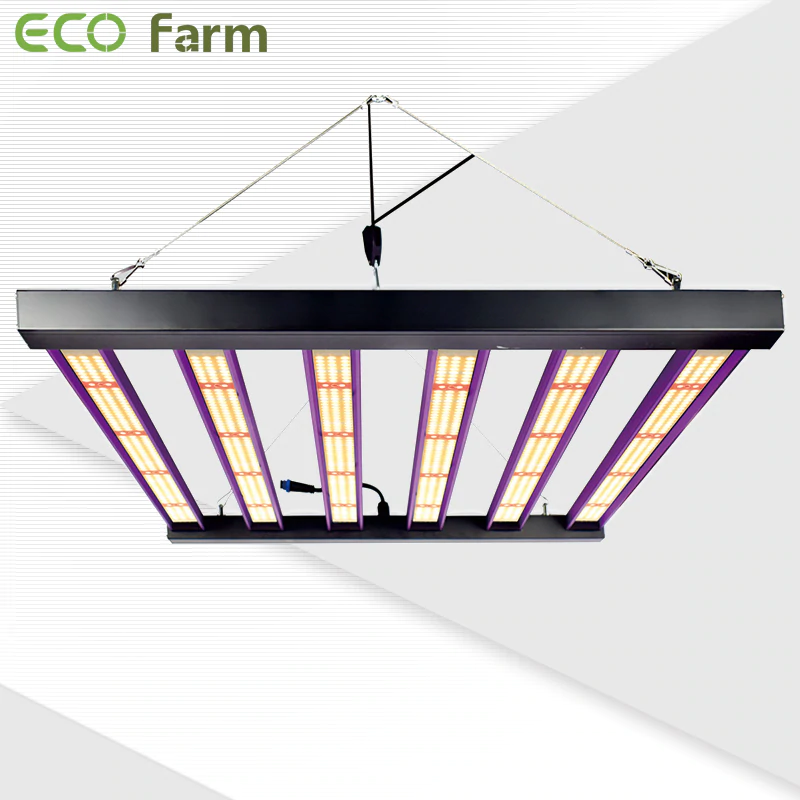
Features:
This ECO Farm LED Grow Light uses 1296 LED diodes, a high-efficiency driver with a photon efficiency of 2.5 umol/J and an actual power of 480W, providing a sufficient light source for plant growth. Composed of 660nm red light, IR, 3000K and 5000K white spectrum, this LED grow light provides everything plants need in natural sunlight at all stages from vegetables to flowering. LED grow lights can be widely used in home growing (grow boxes and grow tents), climate chambers, commercial growing (horizontal and vertical), greenhouse growing, vertical shelves, hydroponics. All housings are heat sinks that allow heat to escape from the lights. Specially designed for home growers, the fan will make noise when used for a long time, bringing you a fanless and quiet growing experience.
TotalGrow MH Lumyre 480W LED Grow Light
Features:
TotalGrow LED grow lights feature multiple high-intensity light strips in a slim profile and built-in power supply to distribute the ideal light intensity evenly across your growing area to meet your growing goals. Superior, customizable full spectrum supports efficient, high-quality growth of any life stage and crop variety. This plug-and-play solution with direct daisy chaining is easy to implement, has low up-front and ongoing costs, and sustainably produces high-quality crops. The efficacy of this LED grow light is as high as 2.8 μmol/J to meet the light intensity your plants need. Robust, reliable, ideally shaped design for ease of use and excellent uniformity.
What to Consider When Choosing the Best Grow Light
Whether you’re hunting for a grow light to supplement natural light for indoor overwintering of potted patio plants, or you’re looking to start seeds indoors for transplanting to the garden in spring, a grow light can help.
Cool, Warm, and Full-Spectrum
Grow lights are labeled with numbers like 2,500K or 6,500K, which tells you the temperature of the light according to the Kelvin scale of measurement. The higher the number, the cooler the light. So a bulb with a Kelvin rating of 6,000K will have a white or bluish tint, whereas a 3,000K bulb will be yellower. Each type of light — warm or cool — stimulates specific plant behavior.
If your goal is to improve foliar growth in your houseplants or grow leafy greens or seedlings, choose a cooler spectrum bulb around 6,500K. Warm light will have a lower Kelvin rating and is ideal for flower production in houseplants and fruiting plants like citrus. When in doubt, full-spectrum lights take out the guesswork and offer a combination of both cool and warm light for the best of both worlds.
LED vs. Fluorescent Bulbs
Standard fluorescent bulbs are a weak home light source but they’re great for supplementing natural light for houseplants or starting seedlings. Their cooler light makes them one-dimensional, so they’re ideal when lush foliage, not flowers, is the goal. Because their light cannot penetrate plant leaves with strong intensity, the grower must locate the light within a few inches of the top of the plant to be effective.
Full-spectrum compact fluorescent lights (CFL) are a better option. Available in tube and bulb forms, CFL grow lights are more intense than standard fluorescent lights.
LED grow lights, not to be confused with regular LED lights, are more expensive than fluorescent lights but they make up for that with longevity and energy savings. LEDs have both blue and red lights to mimic the full-color spectrum of the sun and might emit a bright, purplish glow. That’s not a big deal if the lights will be in a basement or a garage, but it’s something worth considering if they’ll be in a living area. Like fluorescent bulbs, LEDs are available in tubes for lighting a tray of seedlings or as bulbs when you want to light a specific plant.
Bulb or Stand Setup
The number of plants or seedling trays you want to grow is a good indicator of the kind of grow light best suited to your situation. Although a single bulb is perfect when positioned above a sun-loving succulent during the winter, seedling trays are better suited to a stand system that allows you to raise the light as the seedlings grow taller. So, whether it’s a premade stand with lights attached or one you build from scratch with an inexpensive wire rack and a hanging grow light bar or two, ultimately, your budget will have the final say.
Premade stand setups are pricey and if your seed-starting plans are modest, consider building your own system. However, houseplant enthusiasts might gravitate toward a more aesthetic premade grow light stand better suited to indoor living spaces.
Bells and Whistles
For houseplants, consider a full-spectrum grow light attached to a bendable or gooseneck arm that allows you to position the light directly above the plant. Some are stationary lamps for tabletops, and others have a clamp at the end of the bendable arm so you can attach the light to the edge of a desk or table. Intended for use with one or two houseplants, these lights often come with timers so you can cater to a plant’s specific light needs and a USB connector for plugging into a computer.
For seed starting and flowering houseplants, some full-spectrum grow light panels come with timers as well as remotes that allow you to change the type of light emitted based on the plant’s growth stage — cool light for seed starting, warm light for flower production, and full spectrum when you’re uncertain about the type of light you need.
Mistakes To Avoid Using Grow Lights
If you are new to growing plants indoors, and have most of your equipment checklist covered, it is important to consider a few things before buying your grow lights. Below are some mistakes to avoid and bad habits that you do not want to develop.
1) Low Intensity Lighting:
Indoor plants thrive under intense lighting and will produce the biggest and best looking, smelling, and tasting flowers possible. If you choose to use H.P.S, then avoid using 400w high-pressure sodium lights as these will only yield small-sized buds and stick with 600–1000w.
2) C.F. L’s For 18/6:
When it comes to seedlings and clones that require soft lighting, then compact fluorescent work very well. Once the plants clones and seedlings reach a certain point of maturity, then avoid using C.F.L for anything else than a starting point and switch to H.P.S or L.E.D for flowering.
3) Checking for Lumens
Lumens are a measurement of light that is created as a reference for the human eye. Plants rely on the P.A.R levels which will indicate how much red, blue and white light is present and the spectrums the plants require. The brightness of a growth bulb should not be a way to calculate the efficacy of the grow lights.
Conclusion
For growers seeking a budget-friendly light option or for new growers looking to dip their toe into the indoor growing world, our first choice would be the ECO Farm LED. This light will give you a full-spectrum, powerful yet energy-efficient grow light that won’t break the bank. Its veg and bloom options and long lifespan will give you all you need to grow juicy, resin-packed bud for years to come.
Choosing the right light can be an unnerving experience due to the huge number of available power options, sizes, and prices. Hopefully, we’ve made it easier and less confusing to get you the best bud for your buck
AC Infinity IONBOARD S24 200W Full Spectrum LED Grow Light VS Viparspectra Pro Series P1500
You’re probably at your wit’s end right now — hours deep into researching the best indoor grow lights out there.
You may not even be that much closer to buying any lights -maybe you’ve been put off entirely.
We get it, the process isn’t easy. Most of what you’ve seen up to this point has probably felt “samey”. Never mind the reviews. How many times have you felt as though you’ve landed on the perfect product only to be put off by the reviews?
Basically, we understand how tough it’s been for you up to this point. But that’s all about to change.
In this article, we’ ll put your hours of frustrating research to an end by providing you with some quality and energy-efficient grow lights.
AC Infinity IONBOARD S24 200W Full Spectrum LED Grow Light
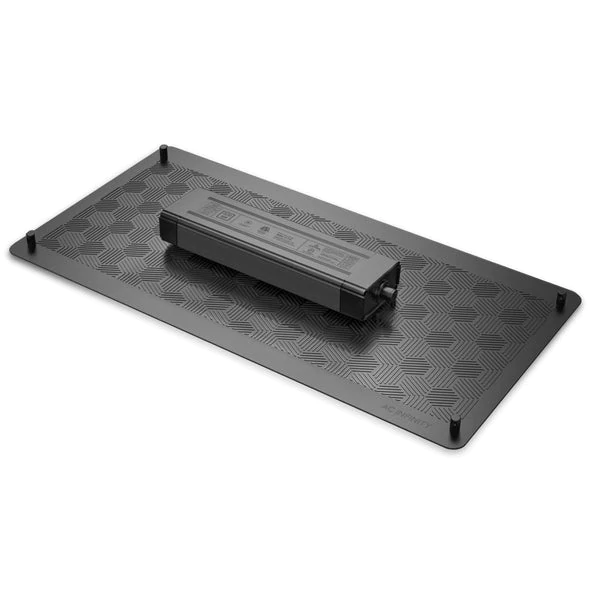
Features:
This LED grow light contains optimized proportions of gardening series Samsung LM301B white, red and infrared LEDs designed to maximize plant yield. The diodes are then algorithmically positioned within the board to provide the most uniform PAR map coverage and deepest light penetration. These characteristics help to achieve the highest growth rates during the germination, vegetative and flowering stages. It features a proprietary LED driver that enables 0–100% dimming with an easy-to-use control knob to adjust light intensity in 20% increments. The driver also includes a daisy-chain capable port and can interface with our smart controller to access growth cycles, scheduling, application control, and more.
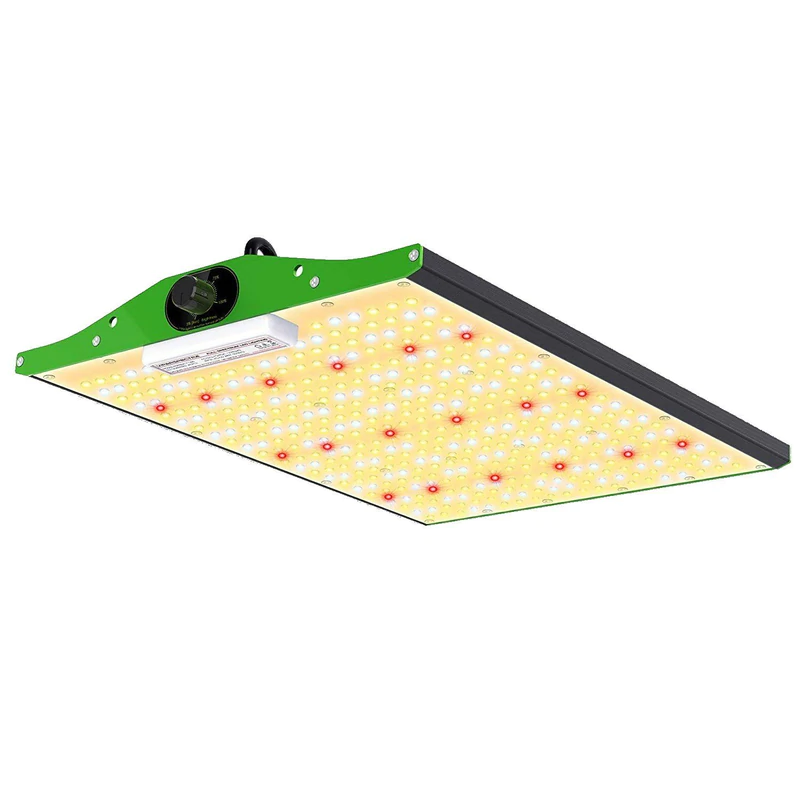
Features:
The VIPARSPECTRA LED Grow Light uses the latest SMD LED technology to increase efficiency and longevity while increasing light penetration. An additional dimming knob controls the brightness level of the entire light from 5%-100% for the flexibility to achieve perfect growing performance. This lamp can replace a 400W HPS/MH lamp while only consuming 150W. The spectrum includes 660nm red and 730nm IR, and 3000K and 5000K white. The P1500 provides excellent full-spectrum lighting that is perfectly suitable for all factory stages. The light also features a reliable UL listed waterproof driver. No internal fan means zero noise when operating the lighting system. The P1500 has a built-in aluminum heatsink, which is critical for heat dissipation and ensures a long luminaire life.
Buyers Guide: Choosing the Best Budget Grow Lights
There are several important aspects to consider when deciding on a grow light. Because your lights are like the “sun” to your plants, they are one of the most important purchases you’ll make. They will affect your yields, bud quality, and power consumption. The choice that you ultimately make will need to take into account the following factors.
Budget
You’ll need to weigh up light cost vs. yield, as well as the cost of production vs. yield. If you are using a power-hungry light, like HIDs, your big juicy buds will cost more to produce in the long term. LED lights in particular will dramatically lower your energy consumption and thus, your running electricity costs.
Light Spectrum
LED lights are the new standard for indoor grows. They save power and are usually full spectrum. Full-spectrum lights live up to their name by giving your plants the complete range of light they need for optimum growth, imitating the spectrum that the sun would give. They give the full range of light spectrums from red, blue, infrared, and violet in order to help your plants grow optimally and ensure maximum yield.
They are generally a more expensive light, though their wide use is driving the price down slowly but surely, as our list above demonstrates. There are good quality yet affordable LEDs available to new and budget-conscious growers.
Light coverage area
When buying lights, you also need to take into account your grow room size. Most budget lights will not give you a wide area of light spread. More plants need more light, and you’ll need to decide if you want a few high-output lights or several smaller lights.
Heat
Another consideration is heat output. LEDs typically pump out far less heat than their HID counterparts and so do not require much extra cooling. While lights like HIDs can save you money initially, in the long run, you’ll need extra fans and vents for cooling. Added to this is the fact that LEDs have a far longer lifespan than any other lights currently available.
LEDs do run the risk of burning your plants if placed too close, so they are more suited for bigger grow spaces. They can be used for smaller grows if you have enough height available above your plants.
Conclusion
We’re certain that they’re a bunch of other fantastic grow lights out there. If you’ve come across any, share your experience with us in the comment section below.
Top 3 Cheapest Quantum Board LED Grow Lights in 2022
Greenhouses have a “bright” perk over enclosed grow spaces: the sun! No matter how sophisticated light technology gets, it will never fully replicate the power of natural sunlight. Indeed, with such an obvious advantage, it may seem strange to add LED grow lights to a greenhouse space.
While you could grow greenhouse plants without extra grow lights, many cultivators like to add these units to their setup. Although LED lights will add to total energy expenditure, those costs could be offset with superior plants yields and unparalleled quality.
However, greenhouse cultivators can’t pick an LED willy-nilly and expect great results. Specific LED models are fantastic for greenhouse settings, while other designs are suited for traditional tent cultivation. Before adding grow lights to a greenhouse, you must know what to look for in an LED.
ECO Farm LM301B UV&IR 450W Quantum Board
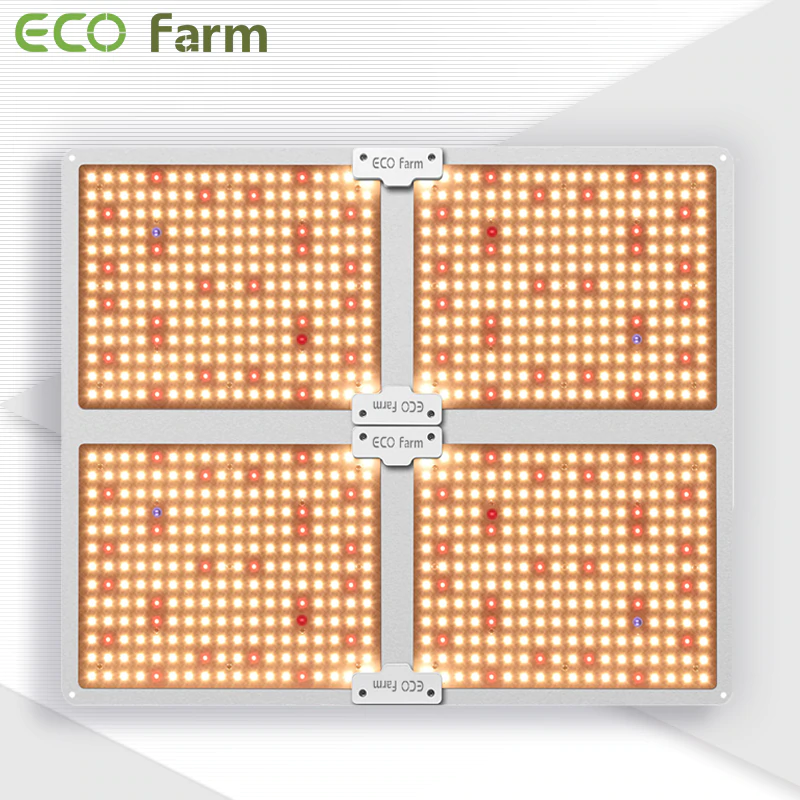
Features:
This ECO Farm LED Grow Light contains optimized ratios of gardening series Samsung LM301B white, red and infrared LEDs designed to maximize plant yield. The diodes are then algorithmically positioned within the board to provide the most uniform PAR map coverage and deepest light penetration. These properties help to achieve the highest growth rates during the germination, vegetative and flowering stages. It features a proprietary LED driver that adjusts light intensity in 20% increments with an easy-to-use control knob for 0–100% dimming. Full Spectrum LED grow lights are designed for indoor growers to help individual indoor growers and greenhouse growers achieve higher yields and better quality within a budget.
AC Infinity IONBOARD S44 400W Full Spectrum LED Grow Light
Features:
This full spectrum LED grow light is designed with algorithmically positioned Samsung LM301B diodes to maximize plant yield. Features proprietary drivers for dimming, daisy chaining, and interfacing with our smart controllers. Built on a fanless one-piece aluminum plate for heat dissipation and longer diode life. All components are sealed to IP-65 standards for optimum performance even in high temperature and humidity growth environments. Includes a pair of metal rod hangers and rope hangers. This LED grow light is specially designed for grow tents with internal reflective mylar lining for growing a variety of plants, fruits and vegetables.
Bloom Plus BP 4000W Full Spectrum LED Grow Light
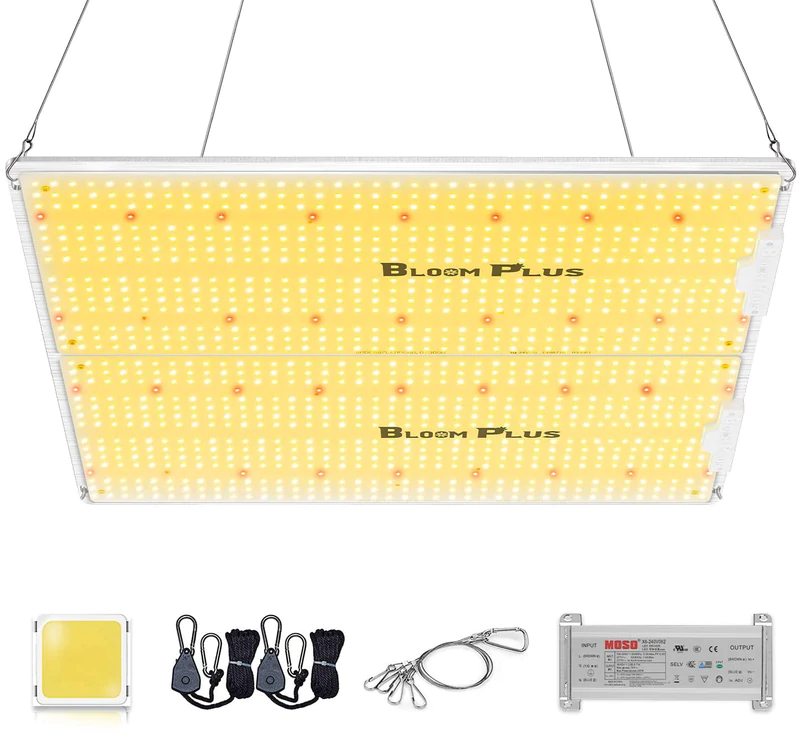
Features:
This LED grow light uses the latest high-yield LED technology — 1292 Samsung 2835 diodes. Therefore, the BP4000 LED grow light achieves a high energy efficiency of 2.7 umol/J and improves the light transmittance. LED grow lights consume only 400W of power, operating 50% less than other 800W HID/Blurple/HPS lights, while helping to achieve 50% higher yield harvesting. Full-spectrum LED grow lights provide everything your plants need in light at all stages. Powerful blue light makes plants grow faster, while infrared light is especially useful when it comes to blooming, it can speed up bloom time, increase yields, and fill up space with flowers for amazing harvests. Not only does this reduce the number of shoots, it also increases yields while saving energy and costs.
An Ultimate Buyer’s Guide
When it comes to growing plants in an indoor area, ‘grow tents’ or ‘grow rooms’ play an important role in providing your plants with the necessary growth conditions and temperature. Grow tents are easily portable and hence can be placed anywhere you wish. To keep a regular check on the plants growing inside the tent, you will need an efficient LED light. If it’s both cheaper and efficient, it’s an added advantage. People who grow multiple plants can buy additional LED lights to observe the plant growth. Here are a few useful tips you should consider before placing an order on the cheapest LED grow lights.
Brightness & number of lights
Considering the cheapest LED grow lights, the first thing that comes to our mind is the brightness. The main purpose of installing grow lights inside your grow room is for the brightness to observe what’s going on inside the grow room. So, make sure the intensity of the LED lights caters for your plant requirements. It must not be too bright, as it can disturb plant growth by producing enormous heat. It should also not be dim as you will face strains in observing the plant growth. The light intensity should be at the optimum range, according to the grow room area. After brightness, you should also decide the number of lights you are going to purchase. The number of lights will depend on the grow room area and the number of plants. Single light would be sufficient for a small grow tent, while you’ll need two or more LED grow lights for a larger grow room.
Durability & construction
Next comes the durability of the cheapest LED lights. Make sure the lighting units are of good durable quality for a longer lifespan. You don’t want the lights to stop working after a few weeks or months. See if the lights are made of durable materials. Purchasing grow lights from a brand that provides a warranty is highly recommended as you can claim the warranty in case of any technical failures or repairs. Grow lights of good quality will last for many years. The warranty period can vary between 1 to 10 years, depending on the brand. Expensive grow lights come with a longer warranty period and high-quality materials. There are also affordable grow lights in the market with good durability and a decent warranty period. You can go through the website of the light brand for warranty details.
Light coverage area
There are different kinds of cheapest LED grow lights in the market. The coverage area of the grow lights depends on the grow room size or dimensions. The grow area size depends on every person. Some might grow plants in 4’ x 4’ area while some might grow in 8’ x 8’ area. You should buy lights according to your grow room space or size. Some of you might be confused and unaware of what kind of lights you should buy for your grow room area. In such scenarios, you can consult a professional for advice or ideas. You can also check the PPF reading and PAR chart of the manufacturer to decide the light intensity and coverage.
Budget & Brand
Decide your budget before purchasing grow lights. As the years pass, new models of LED grow lights evolve every day. Before reviewing a suitable and cheap LED grow light for your grow tent, figure out how much you can invest in them. The features, construction, design, and quality of the grow lights will also vary according to the price. You should also make sure you buy it from a reputed and trustworthy brand. It is suggested you prefer brands that provide customer support and a warranty period. You can claim the warranty if something goes wrong. This will be a good value for money.
Bonus features
Besides all the above-mentioned factors, you can also consider some additional useful features when buying grow lights. This will include energy-saving technology, a cooling system, low noise technology, etc. Some LED bulbs are equipped to lower your energy costs. You can opt for such models to save your energy bills. Your plants won’t grow well if they grow lights produce too much heat, hence you can opt for cheaper LED lights with minimized heat or cooling technology. Some cheaper LED light models also come with low or no noises to not disturb your plants.
Conclusion
Before we end this article, we’d like to emphasise the fact that just because they are cheap doesn’t mean they are of bad quality. Several products are available for cheaper price points after discounts, so make sure that you keep a check on the same too. We have sorted out our favorite products with hopes that it will come in handy for you as well. Always ensure that you check the product that works the best for you and then make the final purchase.
Atreum Lighting VELA 240W Full Spectrum Horticulture LED Grow Light VS AC Infinity IONBOARD S33 240W Full Spectrum LED Grow Light
Until scientists invent convenient little mini Suns we can keep inside our homes, our plants will need to rely on artificial light. Fortunately, those sources of illumination have come a long way in terms of efficiency and efficacy.
LED technology has improved everything from TVs to your smartphone, but it can also help your plants. Whether you’re trying to baby your indoor plants, nurture some seedlings that will eventually go out into the garden, or just please an outdoor plant that needs to spend some time inside, these LED arrays can pump out the photons plants crave.
But, you can’t just go shining an LED flashlight at your precious plants. You need to pick the right power, color, and size to make your indoor garden thrive. That can be tricky, but these picks can provide the perfect illumination no matter what your flora looks like.
Why Would You Use LEDs In A Greenhouse?
Before sharing how to pick LED grow lights for greenhouses, it’s worth reviewing why plants cultivators would bother installing these lights.
While LEDs may not be “essential” for greenhouse spaces, they allow cultivators to double their output throughout the year. Since plants are photoperiod sensitive, there’s only one growing season per year. However, if growers install LED grow lights, they could grow top-quality buds even in the dead of winter.
LEDs also offer an extra measure of control for growers throughout the year. Even if it’s cloudy outside, greenhouse growers could use their LED grow lights to make it “bright inside.” Plus, on sunny days, high-quality LED lights offer additional light penetration, which will help plants reach their max potential.
Atreum Lighting VELA 240W Full Spectrum Horticulture LED Grow Light
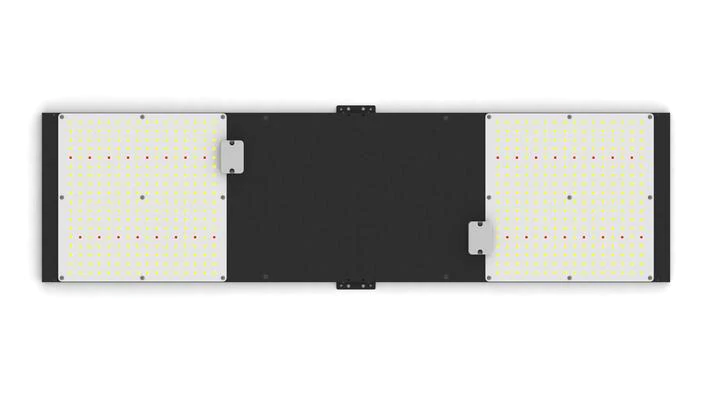
Features:
The Atreum Lighting LED grow light is a very energy efficient full spectrum light source for horticultural applications. Fully waterproof (IP65) design allows operation in wet environments. Add DC extension cords to remotely locate drives and remove heat from growing areas. Fanless and noiseless design will make your growing life easy and quiet, the large area of solid aluminum quickly dissipates heat, reduces light loss in aisles and walls, increases light intensity, and allows your plants to get more energy without burning yours Plant for maximum headroom.
AC Infinity IONBOARD S33 240W Full Spectrum LED Grow Light
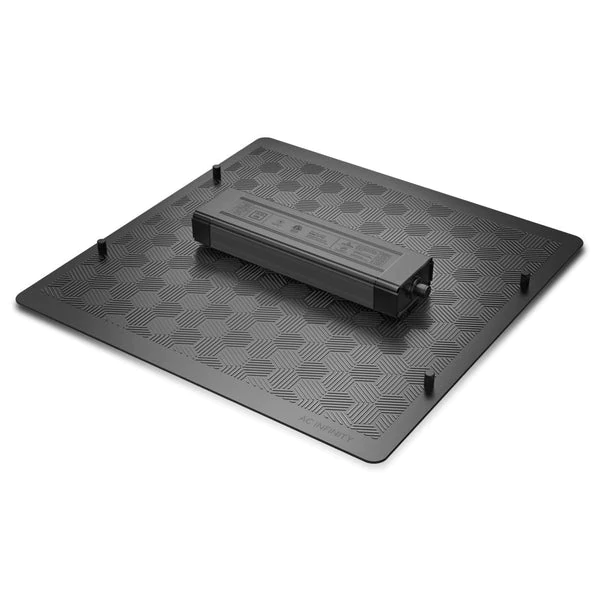
Features:
This dimmable LED grow light is designed with an optimized spectrum and diode positioning to maximize plant yields. Grow lights are specially formulated with full spectrum Samsung LM301B white, red and infrared LEDs optimized for all growth stages. The dimmer enables 0 to 100% brightness. Can connect with our smart controllers to access growth cycles, scheduling and applications. All components are sealed to IP-65 standards for optimum performance even in high temperature and humidity growth environments. Includes a pair of metal rod hangers and rope hangers. This LED grow light is specially designed for grow tents with internal reflective mylar lining for growing a variety of plants, fruits and vegetables.
Best LED Grow Lights Buying Guide
Setting up your plants with the best LED grow lights won’t be easy. You need to know exactly what to look for and what to overlook. And if you’re a total noob or just not experienced enough, then this may become a bit of an issue.
Luckily, we’ve brought a set of factors to consider if you’re ready to learn. Below, you’ll find these things to look for when buying a new grow light:
Light Spectrum
Probably the most essential feature if you want the grow light to work effectively. The light spectrum refers to the color range it offers, meeting the plant’s growing needs according to its stage.
A full-spectrum light should offer Red, Blue, Green, and Infrared/Ultraviolet waves. The focus is to have a light that gets to the whole spectrum to increase the effectiveness.
But you don’t necessarily need a broad light spectrum. You can also consider those with Red light only. This color is the most important for plants, especially on their initial growing stage.
Overall, try to get a light that goes anywhere from 380mn to 780mn. This range (or anything in between) should be enough to meet your plant-growing needs.
Light Power
You want a light that works with a few watts as possible and provides strong-enough light at the same time.
That’s why the power (in watts) is such an essential factor to think about. You will find lights going from 100 watts up to 1000 watts or even more. So the more output you get, the more likely the light will provide higher brightness. But if you go low, then the electrical consumption will be less.
Often, we recommend going as high as possible in power. But if you’re looking to save some bucks, then you may want to go for low power (less than 50 watts). Just be sure it is enough to help your plants grow.
Micromoles & Brightness
There are several light measurements from grow lights you may want to think about when picking. Among them, you’ll find micromoles (the number of photons per meter square) and the lumens (that measures brightness).
For the micromoles, you can go for as many as you need. And for brightness, we typically recommend at least 50 lumens.
Light Control
Because you want to reduce your own output on the growing process, then getting a LED light that automatically controls the spectrumcan be a huge advantage.
These lights will automate the different phases and types of light to ensure proper growth. For example, it will deliver Red light for 12 hours and shut off for the other 12. The same should happen with other phases as necessary. Automated cycles will save tons of time and effort.
Durability & Safety
Your growth light also needs to be secure and last through the whole growing process of several plants (preferably).
That’s why a quality construction with heat-dissipating materials is a go-to choice. Materials like aluminum and plastic tend to be pretty effective at reducing heat. The LED quality should also be part of what you’re looking for.
Another thing to consider is a fire-retardant material that prevents any kind of fire-related accident. Especially for cheap grow lights, you want to be sure it is safe enough to use.
Overall, you need to look for a grow light that lasts at least 20,000 hours of total use. This means no less than 2 years.
Programmability & Adjustments
Lastly, consider those lights that offer programming functions. This includes a timer, the ability to change the phases (spectrum), and those you can adjust the brightness (dimmable ones). Anything you can program to meet your demands is an excellent thing to consider.
Conclusion
If your plants need a little top-up when it comes to sunshine, the best LED grow lights can provide just that in an affordable, efficient way. If you’re getting serious about growing, you’ll want to make sure you get the right kind of light for your plants, but there’s almost certainly an LED option out there that can give you exactly what you need.
ECO Farm MB720 Foldable Grow Light Bar VS TotalGrow MH Lumyre 720W LED Grow Light
For us gardeners, living in a country that has more rainy days than sunny can be a real struggle. For 9 months of the year, it seems the sun never appears. The remaining 3? Well, it’s a little hit and miss! I’ve found it’s the seedlings that struggle the most, as they simply cannot germinate without adequate sunlight.
Luckily, a lack of sunlight no longer poses a problem for many gardeners, and that’s thanks to LED grow lights. These lights are available in a range of sizes, bringing all the benefits of natural sunlight to seedlings and plants at every stage of their development. They are simply hung above your seedlings, switched on and left to work. Many gardeners see results within just a couple of days.
How Much Power Does a Grow Light Use?
Well, the amount of electricity/power a grow light uses depends on the wattage of the grow lights you are using and the number of hours the light is running per day.
Let’s say your grow light is 600 watts which is on for 16 hours per day. The average price of electricity in the US in 2022 is 13.75 cents per kilowatt-hour, which equals $0.1375 per kWh.
If you are a UK resident, the average price of electricity for you in 2022 is 28 pence per kilowatt-hour, which equals £0.28 per kWh.
The average daily energy consumption of a 600 watt LED grow light = 0.6 kWh x 16 = 9.6 kWh.
That gives us a daily cost of 9.6 x 0.1375 = 1.32 dollars per day living in the US. And for the UK residents, it’s 9.6 x 0.28 = 2.688 pounds per day.
Typically, a plant needs 14–16 hours of light per day. Therefore, the watts of your grow light purely determines the amount of electricity you use. Higher the watts, the higher the electricity consumption.
“How many watts grow light do I need?”, you might ask. It actually depends on the size of your grow space.
As a rule of thumb, you will need 30 to 40 watts per square foot. That is, if you have only one plant, you will need only 30 to 40 watts of power. 60 to 80 watts if there are two, 120 to 140 watts if 4, and so on.
ECO Farm MB720 Foldable Grow Light Bar

Features:
This ECO Farm LED grow light is designed with 8 strips for a more even and complete canopy coverage. Equipped with high efficiency Samsung LM301B diode with extremely low thermal resistance. The plant light is flicker-free and dim, with a lifespan of 50,000 hours. The LED grow light consumes 720 watts at 1994 µmol/s for a satisfactory PPE of 2.7 µmol/J covering high yield full cycle growth of 5'x5'. Plantation gardeners prefer light because it uses the highest quality diodes for high quality output. For the ECO Farm LED grow light, it uses the least energy to provide the most output. LEDs emit full spectrum light, providing maximum output and promoting all growth stages of the plant life cycle. With high efficiency, the fixture is expected to increase yield and quality production. It’s ultra-thin and has a foldable design for easy portability. This light is perfect for all commercial growing environments. The drive’s built-in design helps you save installation time. So you can simply plug in and start playing,
TotalGrow MH Lumyre 720W LED Grow Light
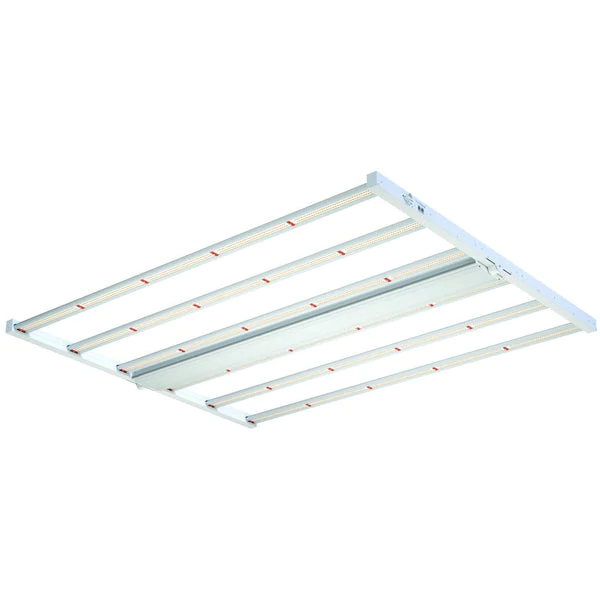
Features:
The TotalGrow LED grow light bars in a slim profile with a built-in power supply that evenly distributes the ideal light intensity across your growing area to meet your growing goals. Superior, customizable full spectrum supports efficient, high-quality growth of any life stage and crop variety. This plug-and-play solution with direct daisy chaining is easy to implement, has low upfront and ongoing costs, and sustainably produces high-quality crops. 720W power, 2.6 μmol/J, meet the light intensity required by your plants. The high-efficiency and low-power LED configuration with 6 LED strips reduces the temperature of the LEDs, with no fans or moving parts, significantly reducing the number of possible points of failure compared to other grow lights. It works out of the box, reducing installation costs.
Things To Consider Before Buying the LED Grow Lights
1. Color Spectrum of the Lights
Knowing the lights’ color spectrum is vital when deciding which grow lights to use. There are three types of lighting: blue, red, and white.
Blue lights are very popular among indoor growers. They stimulate the plants’ flowering stage, helping them grow faster and bigger. Blue light is also useful in speeding up the time between germination and flowering.
On the other hand, red lights are used to keep the plants in their vegetative stage. This means that they will grow taller, but not as much as if they were exposed to blue light. Red light is also used during germination and cloning because it helps speed up these processes.
White light combines blue and red light; it has both red and blue wavelengths in its spectrum. White light stimulates plant growth just like blue light does, but you can also use it to keep your plants in their vegetative state as red lights do. White lights are great for when you want your plants to flower quickly or when you want them to start flowering at all.
2. Intensity
The intensity refers to how much energy is being put out by the light source. There are two main types of light intensity: full-spectrum and fluorescent lights (also referred to as “cold” lights). Full-spectrum lights are the most powerful, and they produce the most light. They also come in a wide variety of different colors. On the other hand, fluorescent lights produce a lot of light with less intensity than full-spectrum lights.
The intensity of your light source is important for growing plants because it determines how strong the plant will grow and how quickly it will grow. The more intense the light, the more energy is put into that particular area of your plants. If you want to get your plants to start flowering quickly, you should use full-spectrum lights or HPS lights (high-pressure sodium) instead of fluorescent lighting. Fluorescent lights are great for vegetative growth because they are extremely low in intensity and produce very little heat than full-spectrum lighting.
3. Color Temperature
Colors in nature are produced by how sunlight is reflected on different objects. This is why we see most plants that are green and blue. Blue light, in particular, has a lot of energy that plants can use to grow quickly.
When it comes to growing plants indoors, you will want to choose a lighting system that produces the same color temperature as your room’s natural light. This will allow your plants to use the same amount of energy from your lights as they would when they are outdoors. It also reduces eye strain because it allows you to see more clearly with your eyes while growing plants indoors.
4. The proportion of grow area and plants
When selecting lights for your grow room, consider the plants and the grow area size. If you have a small grow area, you will want to use lights that are lower in intensity and higher in lumens. This will fill the room with light and allow the plants to grow quickly. If your grow area is larger, you can choose lights with more intensity than a smaller space. This will allow your plants to grow faster and produce more buds.
5. Maintenance
You must maintain your grow room and lighting system to ensure that it works efficiently. For example, if you notice that your lights are not producing high-quality light, you need to replace them immediately. Also, make sure that you clean the lenses of your lights regularly; this will help produce quality light output. The other thing you need to do is check the ballasts now and then. If they are getting old, then change them for new ones.
6. Schedule of lights
It is best to set your lights on a schedule. It is essential to note that even these plants need a few hours of darkness every day to get some rest. For example, you can set your lights to turn on at 5 am every day and turn them off at 10 pm. Also, you can use digital timers to set the lighting system up for the night. However, make sure that you do not forget to turn off the lights before sleeping.
7. Heat emission
The heat that your lights emit during lighting will affect the temperature inside your grow room. For example, if you have set it to a high temperature, you mustn’t expose your plants to this heat for a long time. Too much heat can affect the growth of your plants and the yields. So, ensure you are setting the right temperature for your plants. This will help you to have better yields.
Conclusion
The sun does a wonderful job nurturing plants with its light, but it can not always get to plants inside your home. That’s where the best grow lights come in. Just be sure to choose the right kind for your plants, your home, and your budget.
