Spider Farmer SE5000 480W Full Spectrum LED Grow Light VS Viparspectra KS5000 500W LED Grow Light
Indoor grow lights are an essential part of an indoor garden, especially if you live in an area that doesn’t have much natural sunlight. Grow lights allow your plants to photosynthesize so they can grow larger. But choosing the right light can be challenging, especially when there is so much conflicting information.
Full-spectrum LED grow lights are all the rage among indoor gardeners. But some qualities are better than others. We’ve reviewed some of the top market recommendations and compiled a quick guide on how to understand full spectrum LED recommendations.
Grow Light Uses
Keeping plants alive and helping them flourish can be hard as is, but growing things indoors is even trickier, especially during winter when light levels are reduced even further.
When there is insufficient light, the grow light can supplement light to plants and promote the progress of plant photosynthesis. The grow light is very important for the seeding, growing, flowering and fruiting of plants.
There are 4 main uses for grow light: seedlings, propagation, growing food, and limited light.
Seedlings: Grow lights can be used to assist with the propagation of indoor plants from seedlings since seedlings need enough light and warm temperature to grow healthy.
Propagation: If you love propagating plants to give as gifts or as a side hustle, you must have grow lights to properly propagate your indoor plants.
Growing Food: Of course, if you have an indoor garden of greens and herbs, you definitely need grow lights for them to grow correctly.
Limited Light: Grow light can help indoor plants to grow healthy and strong, especially during the colder months. Grow lights can also be used as artificial lighting for rooms with limited light or no sunlight.
By providing the specific color spectrum needs for the plants, grow lights can not only promote the plants’ growth, prolong the flowering period, intensify flower color, but also can increase crop production efficiency, yield in advance, and enhance quality and taste.
Spider Farmer SE5000 480W Full Spectrum LED Grow Light
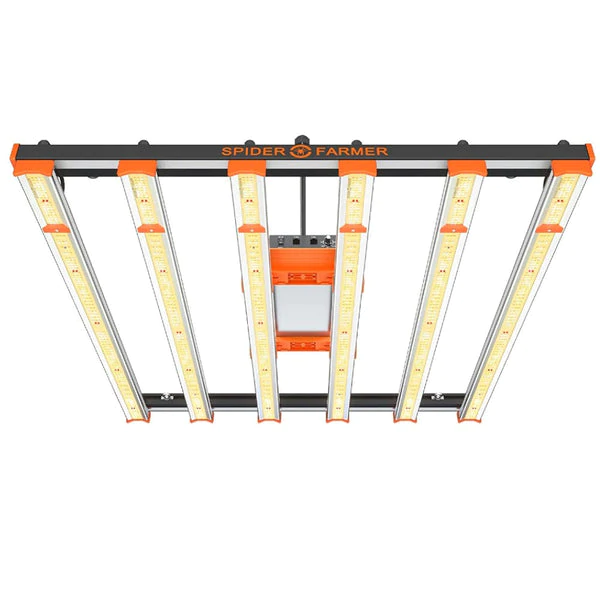
Features:
This Spider Farmer LED grow light features a uniquely designed 6 extended LED strips that provide more even canopy coverage, especially on the outer edges of the growing area. With 1680 SAMSUNG LM301B diodes, the SE5000 Led Grow Light consumes 480 watts at 1333 umol/s, achieving an impressive PPE of 2.75 umol/J, covering a high yield full-cycle growth of 4'x4'. The full spectrum (380–410nm, 660–665nm, 730nm, 3200–4200K, 4800–5000K) is ideal for vegetable flowering to suit every stage of the plant cycle. The dimmer knob is ideal for growers to adjust the light intensity for different growth stages. The daisy chain feature allows you to connect up to 30 spider farm grow lights — dimming multiple lights at the same time.
Viparspectra KS5000 500W LED Grow Light
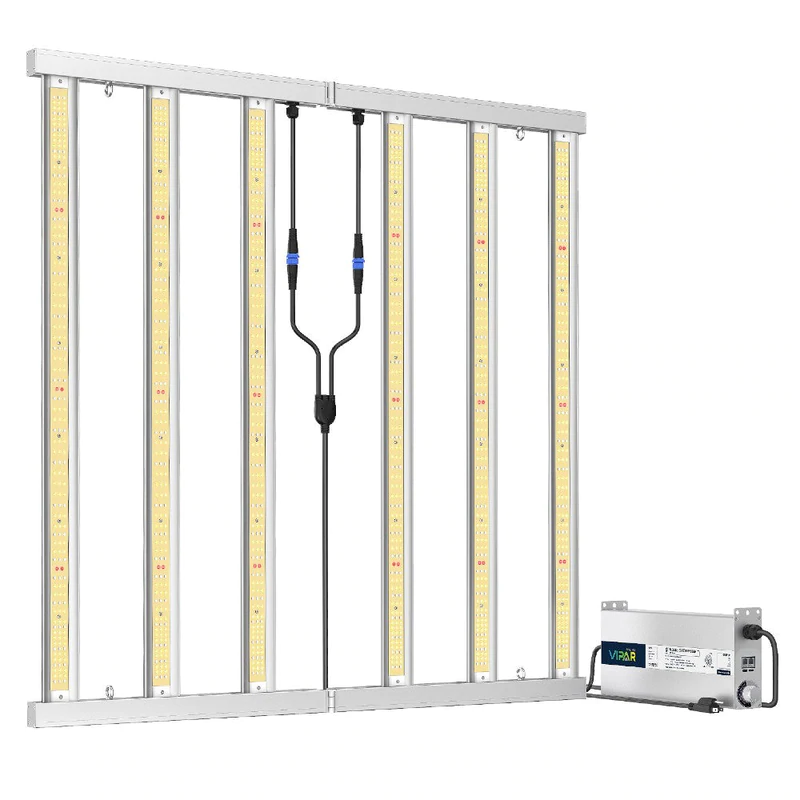
Features:
VIPARSPECTRA LED Grow Light uses market-leading Samsung LM301H diodes (3.10 μmol/J) and Osram 660nm diodes, more energy-efficient LEDs that increase crop yields and save operating costs. High-end components give the KS5000 incredible performance. The KS series is designed for individual or commercial growers who want to optimize their growing space for maximum crop yield while producing the highest quality crops. A built-in dimmer allows you to dial in the perfect PPFD for your plants at all growth stages. The KS5000 features a detachable power supply that can be remotely mounted on the side of a rack or on an adjacent wall to dissipate heat from your grow space.
The main factors of choosing the best grow light
Now you may have a basic knowledge of the grow light, then we will go ahead to our main topic — How to choose the right LED grow light for indoor growing?
There are many different types of LED grow lights and LED grow light bulbs on the market. Different factors will affect which grow light bulb is best for you. These factors you should consider:
1. Light Spectrum
A color spectrum is a graphical display of each of the colors in the light. Scientists use wavelength numbers to refer to the colors instead of color names, which is a much more accurate way to measure the color.
The various light colors effect plants growth differently. This is not all visible to the naked eye. Typically, what humans refer to as “light” is actually only the visible area of the light spectrum (~400–750 nanometers).
This visible light spectrum range covers most of the range of wavelengths needed to grow plants, known as the PAR or photosynthetically active radiation.
light spectrum range
Different wavelengths of light have different effects on plant photosynthesis. The light required for plant photosynthesis has a wavelength of about 400–700nm. 400–500nm (blue) light and 610–720nm (red) contribute the most to photosynthesis.
Blue (470nm) and red (630nm) LEDs can just provide the light needed by plants. Therefore, the ideal choice for LED plant lights is to use a combination of these two colors. In terms of visual effects, the red and blue plant lights are pink.
Blue light can promote the growth of green leaves
Red light is helpful for flowering and fruiting and prolonging the flowering period.
There’s a variety of plants and each of them has different habits, and also different growth stages have different light needs. For the healthiest plants you really need to include light from right across the color spectrum. While it’s true that certain types of light may be more effective at different stages of the growth cycle, your plants still need light from across the spectrum at any stage of their growth. If you concentrate your light too much on one end of the spectrum you probably won’t like the results. The spectrum required for plant growth should be a continuous spectrum with a certain distribution width. It is obviously inappropriate to use a light source made of two specific wavelength chips of red and blue with a very narrow spectrum.
Full spectrum means all colors (but means much more than just color named Electromagnetic spectrum) produced from natural light and a term used for grow lights.
Full-spectrum grow lights are the closest to real sunlight and will help your plants grow the best. Natural sunlight emits all spectrums of light, even ultraviolet and infrared, which aren’t visible to the naked eye.
Conclusion: Blue is used to encourage bushy growth in plants, the vegetation and the germination of seeds ‘stage of growth’. Red colored light is for encouraging budding, flowering and fruiting. Too much red light can cause serious problems, namely lanky and spindly plants. Too much blue light, however, will result in stunted plants.
Grow lights should provide the proper spectrum of light for photosynthesis, which key to plant growth. Lights that provide a full spectrum are the ideal choice for your growing space. Here we’d like to recommend you the 24W grow light with 3 spectrum modes and the right SANSI full-spectrum grow lights, so that you can manipulate the type of light your plants are exposed to in order to optimize their growth at different growth stages.
2. Light intensity — PPFD (photosynthesis flux density, PPFD)
Both PPFD and Lux are units used to measure the intensity of light. Lux is universally used to measure and compare the brightness of visible light that reaches a surface, also referred to as illuminance. PPFD is referring to the amount of light suitable for active photosynthesis of plants.
Whenever dealing with lighting conditions of plants, Lux might not accurately represent the real light intensity suitable for photosynthesis. If you’re seeking the optimum PAR range, switch to PPFD. If you want to determine the overall light intensity in your grow room, choose the unit of your liking — PPFD or the lux option, here we will explain the PPFD in details.
For grow light, wattage is not as important as you think, but the light intensity (PPFD) is the very most important factor when choosing grow light.
The amount of light is actually measured as PPFD (Photosynthetic Photon Flux Density), sometimes abbreviated to PPF (Photosynthetic Photon Flux, umol/s). PPFD is a better way to measure the quantity of light for LED grow lights, than lumens.
PPFD is a ‘spot’ measurement that tells you how many photons from the PAR range hit a specific area of your canopy over time. It is expressed as micro moles per square meter per second (μmol/m2/s).
Note that the PPFD value is heavily dependent on two factors that can vary widely: the distance between the LEDs and the plant, and the loss of PPF from vegetation canopy.
The more light reaches the plants (μmol/m2/s, aka PPFD), the greater the rate of photosynthesis. But light can only do so much: after approximately 350 μmol/m2/s, light stops having as much of an effect on photosynthesis, since the plant’s chloroplasts can only process so much light at a time.
Generally, positive plant PPFD> 50 μmol·m-2·s-1 can start the photosynthesis mechanism; while shade plant PPFD only needs 20 μmol·m-2·s-1. Therefore, when installing LED plant lights, you can install and set according to this reference value, select the appropriate installation height, and achieve the ideal PPFD value and uniformity on the leaf surface.
Conclusion
Plant lights are an important part of a healthy hydroponic garden.
When choosing grow lights, it is crucial to consider the specific needs of your plants. Some factors you may want to consider are the type of plant, what stage of growth the plant is in, the amount of light the plant needs, and the amount of space available for growing it.
Sometimes, with so many different types and sizes of grow lights to choose from, it can be challenging to know which one is right for you. If you’re not sure which Grow light is best for your needs, ask an expert.
ECO Farm MB3 Pro 760W LM301B LED Grow Light VS Spider Farmer SE7000 730W Full Spectrum LED Grow Light
Many growers are skeptical of LED grow lights because they have gone through various upgrades over the years to get to where they are now. High-Intensity Discharge (HID) lights have been around for much longer than LEDs and have historically been reliable indoor grow lights. However, advances in the industry have proven the value of LED grow lights in grow rooms.
How does the light spectrum affect plant growth?
The influence of the light spectrum on plant development is defined as photomorphogenesis.
Plants have different needs, but the light spectrum tends to impact plants in the following ways:
UV (280–400nm)– Develops plant defences and helps with disease resistance.
Blue (400–500nm)– Stimulates leaf/root growth, and inhibits stem elongation.
Green (500–600nm)– Some Photosynthesis, can inhibit nutrients (for example anthocyanin).
Red (600–700nm)– Stimulates flowering/fruiting, germination.
Far Red (700–800nm)– Stimulates stem elongation.
Every grow light fixture, from reputable grow light manufacturers in the grow lighting market, comes along with detailed spec sheets that can help you learn more about an LED Grow light performance.
ECO Farm MB3 Pro 760W LM301B LED Grow Light
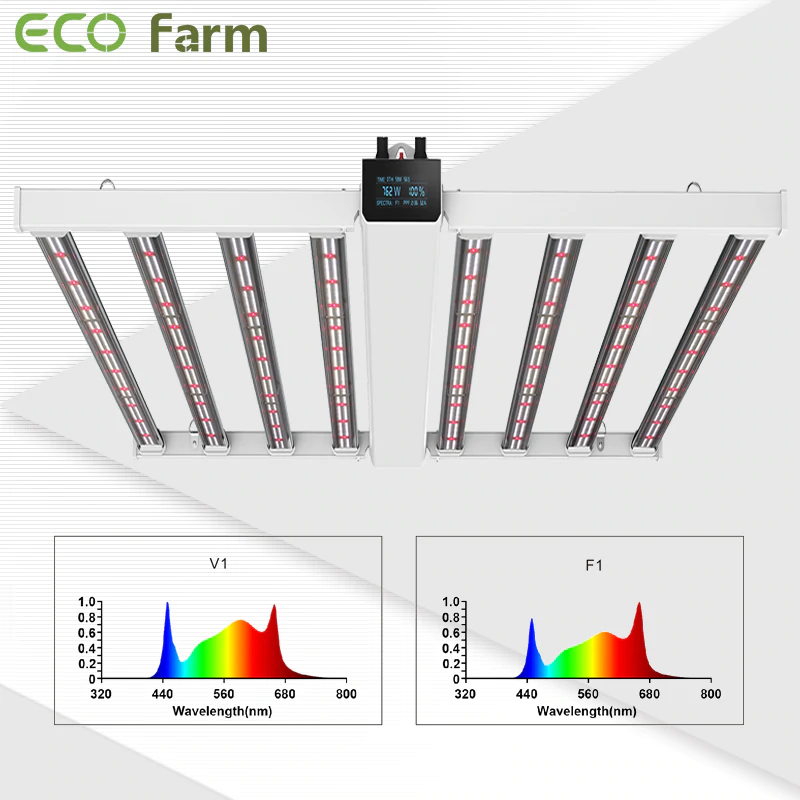
Features:
The ECO Farm LED grow light is equipped with tWith 2880 pcs SAMSUNG LM301B diodes+80 Osram 660nm, with high PAR/PPF efficiency up to 2.8 umol/J and powerful output, enabling you to obtain the higher output. Only consumes 760W. The ultra-thin and unique 180° foldable design grow light is easy to stretch or fold. It is very suitable for large-area planting and commercial planting. The perfect coverage area is 4*6 feet. Both sides can be folded freely from 0° to 180°, easy to install, save space, and easy to carry, no need to worry about hurting hands and lights. The dimming knob is ideal for growers to adjust the light intensity according to different growing stages., which provides the needs of each stage of the plant, allows the plant to obtain the perfect growth effect flexibly, increase the yield, and save energy costs at the same time.
Spider Farmer SE7000 730W Full Spectrum LED Grow Light
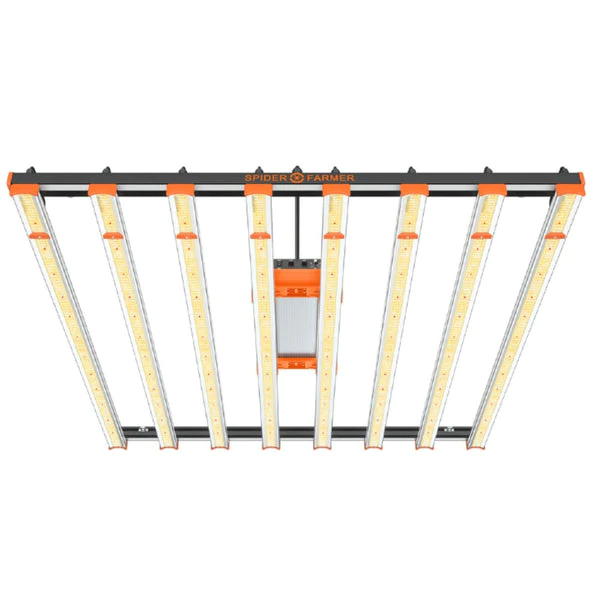
Features:
This Spider Farmer LED grow light features a uniquely designed extension of 8 bars to provide more even and complete canopy coverage, especially in outer edge planting areas. With 2688 SAMSUNG LM301B diodes, the SE7000 Led Grow Light consumes 730 watts at 2045 umol/s, achieving an impressive PPE of 2.8 umol/J. The full spectrum (3200–4200K, 4800–5000k, 650–665nm) is ideal for vegetable flowering to suit every stage of the plant cycle. The dimmer knob is ideal for growers to adjust the light intensity for different growth stages. The strip grow light design and the aluminium radiator on the back contribute to better airflow and good heat dissipation. The LED diodes are coated with water repellent, so there is no need to worry about a wet environment.
What to Look for?
A) Location
Using artificial light from grow lights will allow you to grow year-round if indoor space allows. However, your situation may require an additional light source to extend the daylight your plants are already receiving to full-cycle lighting in a room without daylight. When evaluating grow lights, consider the location of your plants and how much extra light they need to induce photosynthesis.
B) Heat
Besides artificial light, grow lights also provide different amounts of heat. This is a cautious feature to take into account as some houseplants require more heat. Other houseplants such as lettuce or peas may prefer a cool environment. Plants growing under lamps that are warm to the touch should not come into contact with the bulbs. This is because hot bulbs will burn the houseplants, ruining the crop.
C) Spectrum
You also need to determine if you want warm, cool, or full-spectrum light. Without getting overly technical, some types of bulbs filter the lights in the spectrum that your indoor plants need. You can find this rating on the bulb’s packaging. A 2700 Kelvin bulb is a good starting point for flowers but not large enough for vegetables. Typically, vegetables require 6500 Kelvin, which is a broadband option.
D) Reflection
Whatever type of grow light you choose, it is essential to integrate reflective features into your design. This is because typical grow lights diffuse the light they create, resulting in a lower lumen value at the base of the grow box compared to the top. As the name suggests, reflection reflects the light that escapes onto your indoor plants and maximizes the light level they receive.
Conclusion
Knowing the best and appropriate setup for your indoor or greenhouse plants seems complex at first, but knowledge and experience can clear things up and make things simple in due time. Choosing the right type, quantity, and size of bulbs is crucial to ensure that your plants can thrive.
ECO Farm FLD 320W Full Spectrum Dimmable LED Grow Lights Bar VS Atreum Lighting HYDRA-3200 320W Full Spectrum LED Grow Light
The right plant grow lights are one of the most important pieces of equipment you can purchase for your hydroponics system or for your indoor garden. Without it, you risk stunted growth and less quality produce. However, with so many different plant grow lights options to choose from, how do you make a decision?
This blog post discusses the pros and cons of LED grow lights. We’ll also look at what factors are important when choosing a grow light to ensure you select the best grow lights for your specific needs!
Advantages and Disadvantages of using a LED Grow Light
But what are the pros and cons of using LED Grow Light in plant cultivation? Are there only advantages to using this product or are there also disadvantages?
Indeed, as stated in the lines above, there are many advantages in using LED Grow Lights for plant growth, but there are also some disadvantages.
Advantages of using LED Grow Light for plant growth
Greater light spread and Uniformity ( a higher spread generated photons result in better uniformity over the canopies).
Full spectrum lighting (LED Grow Lights can produce full spectrum, which benefits greatly in increasing plant growth efficiency).
Customizable spectrum (the LED Grow Light spectrum can be manipulated regarding the crop you are growing).
Long service life (while LED Grow Lights have an average lifetime of 50.000 hours or more, HID lamps have an estimated lifetime of between 10.000 and 18.000 hours).
Low heat waste (LED lamps work at much cooler temperatures than HID lamps).
Closer to canopy (Since LED work cooler than HID can be positioned more closer to canopies leading to less light loss).
Efficiency (Less energy power needed to convert electricity into useful photons).
Less power consumption (as they need less power to generate the almost same number of photons regarding HID, the electricity bill will be effectively lowered).
Size(LEDs are extremely adaptable to various lighting applications as they can be of different sizes, some of them really small).
Less carbon footprint (more energy savings means less electricity consumption).
100% recyclable (Led grow lights don’t contain any toxic substances like mercury. This means all quality LEDs are certified by RoHS).
Disadvantages of using LED Grow Light for plant growth
But there are also some disadvantages of using LEDs Grow Lights in plant growth, namely:
Higher initial investment (LED lights imply an initial investment of greater scale than, for example, HID lights. However, in the medium/long term this higher initial investment will be profitable and this will mean cost savings).
Blue light exposure hazard (Prolonged exposure to shorter wavelengths and blue light can damage your eyes and skin). LED lights emit a blue coloured light that is dangerous to humans).
Overheating (ineffective heat sinks will reduce the lamp life since the diodes are sensitive to high temperatures).
Aging effect (cheaper chips can change colour over the lifetime, meaning that the light quality can be changed as well).
ECO Farm FLD 320W Full Spectrum Dimmable LED Grow Lights Bar
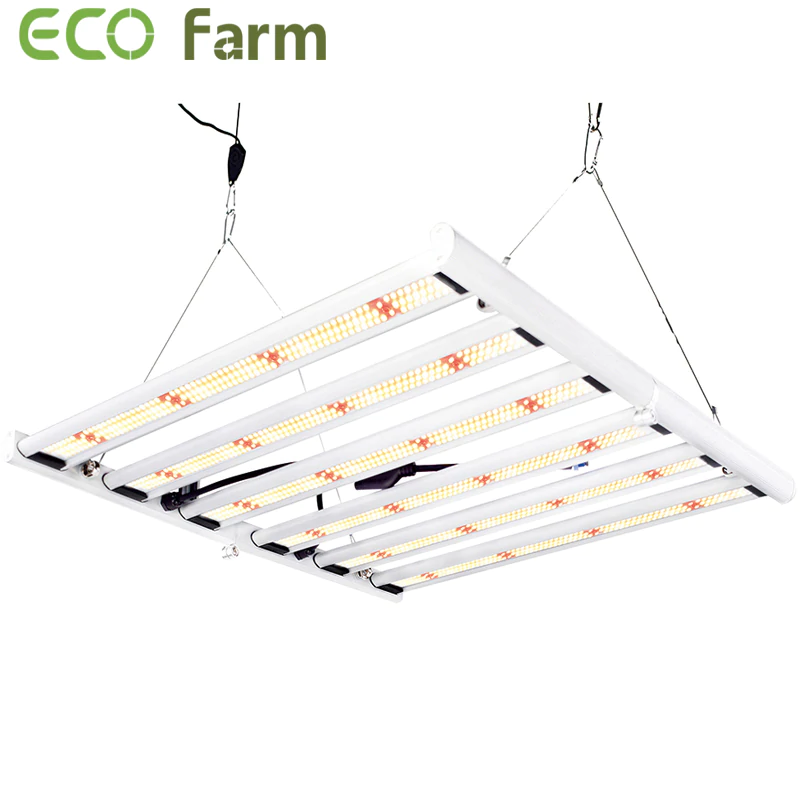
Features:
ECO Farm LED grow light with upgraded SMD 3030 chip 6 passive-cooled led bars, higher light intensity, less light decay, better lumens and PAR values than ordinary LED chips. FLD 320W uses 1200 LED chips that consume only 320W, perfect coverage for 3x3ft, helps you achieve maximum quality and quantity. The intensity of light can be adjusted according to the needs of plants. It can be freely adjusted lighting intensity as plants need growth at different stages with dimming options ranging from 0 to 10 levels. SMD leds spectrum is white 3000K leds, white 5000K leds, 660nm red leds and 740nm IR leds. This professional-grade led grow light is designed for maximum results in all stages of growth.
Atreum Lighting HYDRA-3200 320W Full Spectrum LED Grow Light
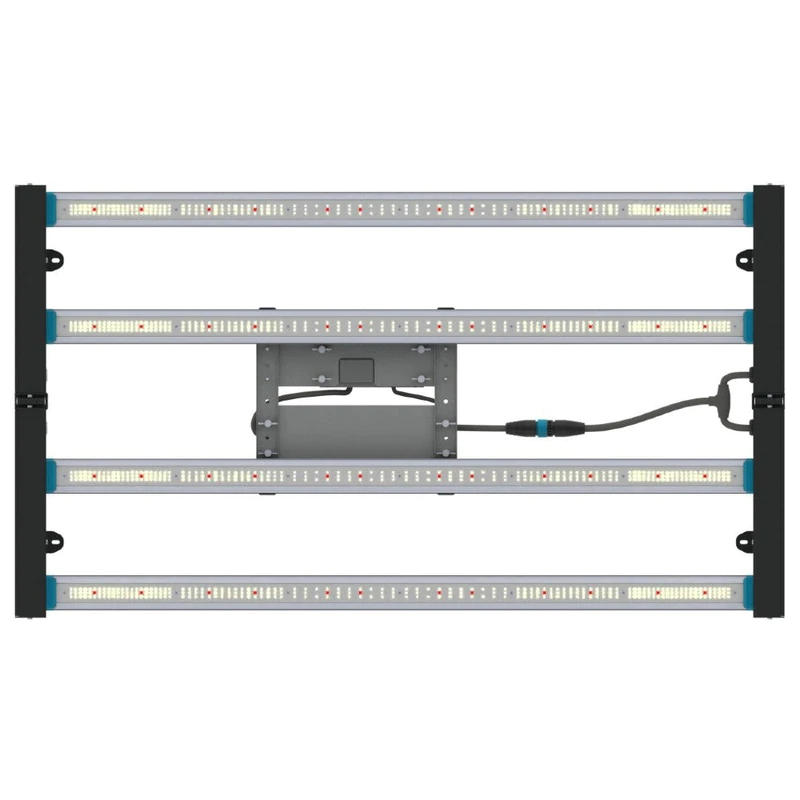
Features:
The Atreum Lighting grow light is a very energy efficient full spectrum light for horticultural applications. It is the perfect light source for horticultural growth from seed to harvest. With a proprietary algorithmic spacing of LEDs, the HYDRA-3200 provides even light coverage at edges and corners. Their unique algorithmically spaced LED design reduces hot spots and creates an extremely uniform light distribution across the canopy. The continuous spectral output of PAR 400–700nm provides excellent energy efficiency and quality light for human work environments. Resistance to liquid spray ensures a long service life in any environment. Light output is precisely adjusted using the built-in digital control box.
What factors are most important when deciding if I want a full spectrum light?
There are several factors to take into account when you buy a grow light. You can’t guarantee that every “full-spectrum” light is created equal, so you need to evaluate other aspects of the light too.
First and foremost, consider the cost. LED grow lights are pricey, and much pricier than standard lights with lower intensity bulbs. You will need to pay more to put the system together than you would if you used a different kind of bulb.
But with that said, LEDs are significantly more energy-efficient. If you can weather the cost of setup in the first place, then you’ll pay significantly less as time goes on. You won’t need to replace the LED bulbs for thousands upon thousands of hours. In addition, they will run with a fraction of the electricity of traditional lighting.
When you buy one of these LED lights, you can expect it to last for at least a decade before needing replacement. Many last 15 to 20 years. So as long as you’re able to afford the pricier setup, you’ll get rewards in the long term.
Another factor is the size. Traditional setups tend to be relatively bulky. If you have an entire room or building dedicated to a greenhouse, this might not be a problem. But it can be an issue for people who don’t have a lot of extra space for a complicated lighting rig.
An LED rig tends to be less cumbersome. You also don’t need any reflectors or ballasts for your plants to get the most out of your setup. As such, LEDs are a better choice for those who want to save space in a cramped area.
You’ll also need to take heat into account. Traditional bulbs emit heat while they emit light. If they’re on for long periods of time, they can raise the temperature of your grow room significantly. If your grow tent or room isn’t properly ventilated, your plants could overheat and die.
But LEDs don’t emit heat. Or at least, they don’t emit enough heat to affect the temperature of a room. Some longtime gardeners have found that after switching to LEDs, they had to invest in winter heating that they’d never needed to use before.
This makes LEDs a favourable option for people who are trying to grow in a warm indoor area.
Conclusion
Grow lights are often used in hydroponic systems to help plants grow indoors, even in the off-season. There are many lighting options to choose from, but the ideal always depends on your planting area. Before buying any grow lights, consider what you’ll be using them for, where they’ll go into your garden, and how much you want to spend on the lights.
ECO Farm ECO Z Lite 1000W LED Grow Light VS Spider Farmer SE1000W Dimmable Full Spectrum CO2 LED Grow Light
Until scientists invent handy little mini suns that we can keep in our homes, our plants will need to rely on artificial light. Fortunately, these light sources have come a long way in terms of efficiency and efficacy.
LED technology has improved everything from TVs to smartphones, but it can also help your plants. Whether you’re looking to nurture indoor plants, nurture some seedlings that will eventually make their way into your garden, or just please an outdoor plant that needs to be indoors for a while, these LED arrays can spark the photons your plants crave.
However, you can’t just light up your precious plants with an LED flashlight. You need to choose the right wattage, color and size for your indoor garden to thrive. It can be tricky, but these options provide the perfect lighting no matter what your flora looks like.
What are the Benefits of LED Lighting?
First, LEDs are directional. A standard light bulb emits light — and heat — in all directions. This is further the wastage of valuable energy. The fact an LED is directional makes it ideal as a grow light as it can be pointed to the plant and direct all the light where it is needed at the right time with no energy wasted.
Next, LEDs can be tuned across the light spectrum. This requires some explanation, so we’ll do our best! The light spectrum runs from Ultra Violet (UV) through to Infra-Red (IR), in between is light that we are familiar with.
An LED can emit light at any point across the spectrum, and the grow lights from the maker we mentioned above can be tuned to any point on the spectrum.
Why is this important? Shining a bright light on a plant may or may not help it grow. This is because to get the energy it needs from a light source — the sun in nature — it needs to absorb that energy.
The sun’s light is at the UV end of the spectrum. When you consider that different species of plants need different light levels, you begin to see why being able to tune grow lights to a specific point on the light spectrum is important.
Plants will respond and grow best when they are subject to the right type of light for the right length of time, and this can be finely tuned when using LED light. You may see this referred to as PAR or Photosynthetic Active Radiation.
This is what plants absorb from the sun, and when replicated at the right level via LED grow lights, they get the same level of PAR they would in the natural world.
Generally, the higher the PAR rating of the LED, the more effective and energy-efficient it will be when used to enhance the growth rate.
Using these also means your plants will not be subjected to higher than usual heat during their early growth, which can cause problems when you use standard light forms.
ECO Farm ECO Z Lite 1000W LED Grow Light
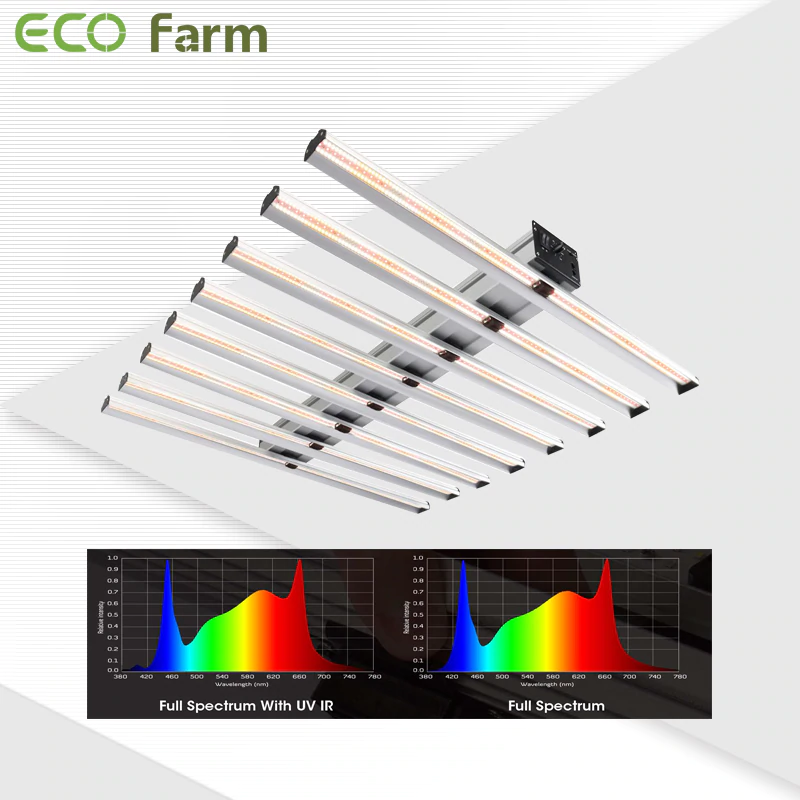
Features:
These ECO Farm LED grow lights ensure concentrated and even lighting and reduce light waste. This plant light brings a 30% increase in output, consumes a total of 1000W, 2800 LEDs, and replaces the traditional 2000W plant light. Achieve higher yields while saving energy costs! Grow lights are easy to assemble yourself in minutes. You can install as many LED strips as you want. Plug and play, effectively save your installation cost and time. The aluminum backplate enables excellent heat dissipation. Pure aluminum light bars better dissipate heat and stay cool, essential for heat dissipation while ensuring long lamp life. No fan, no noise. The cost-effective grow light is designed for home/commercial growers, long-term use of the fan will make noise, but the LED light panel uses aluminum to cool it instead of using a fan, giving you a fanless and quiet growing experience.
Spider Farmer SE1000W Dimmable Full Spectrum CO2 LED Grow Light
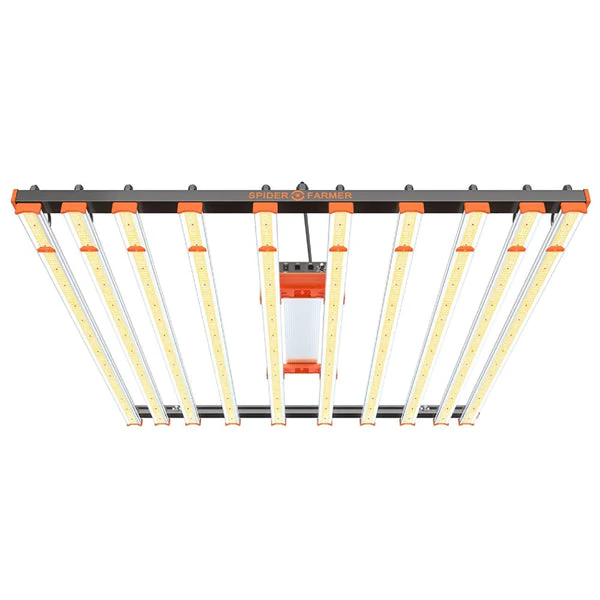
Features:
Spider Farmer LED Grow Lights feature a uniquely designed extension of 10 to provide more even and complete canopy coverage, especially in exterior growing areas. With 3710 SAMSUNG LM301B diodes, the SE1000W Led Grow Light consumes 1000 watts at 2955 umol/s, achieving an impressive PPE of 2.9 umol/J, covering a high yield full cycle growth of 4'x4'. The dimmer knob is ideal for growers to adjust light intensity for different growth stages. The SE1000W grow light comes with a detachable driver and long power cord to reduce ambient heat in the grow space and extend its lifespan. The LED diodes are coated with water repellent, so there is no need to worry about wet environment.
Complete Buyer’s Guide
Lumens
Lumens are a unit of measurement for the total amount of light being emitted from an led grow light. High lumen light penetrates the plant canopy better and bounces more photons off the grow tent walls to get to the lower reaches.
Wattage
Wattage is the measure of electricity that will be drawn by an led light system to function at full power; in most cases, it’s measured over time and not as instantaneous usage. You want highly effective light fittings that give you the highest lumen output for watts in.
Light Spectrum
Different plant growth phases require different light spectrums. For example, blue light is ideal for the vegetative phase because it encourages plant growth and chlorophyll production. The Red/far-red spectrum promotes flowering and increases your plants’ output during harvest time. Not all lights allow you to control the spectrum, but our S-series led grow lights, come with 3 channel dimmers that allow you to control the UV/IR Cool White and Warm White outputs which means you’ll only need one light through the entire grow.
Heat Output
Lights that are not so efficient, like HPS lights take in a lot of watts and put out a lower ratio of lumens as the rest of the energy is lost as heat. If you have a cool grow space, then a high heat lamp like an HPS fitting is ok. If you want to prevent heat stress, then LED grow lights are the way to go.
Light Use
The type of light you choose depends on what you’ll use it for. If you’re heavy into cloning, a low power 100W LED Grow light will do. If you want more flowers, use a bloom enhancer or a light that’s heavier on the red spectrum.
Grow Space Moisture Content
If you’re growing in a high moisture area because you’re keeping VPD in mind, then LED grow lights are safer than HPS alternatives as there are fewer exposed elements and fewer points of failure. HPS lights can short in high moisture environments.
Conclusion
To choose the perfect grow light for your indoor plants, you will find it very useful whether you are a plant lover or a professional.
If you need advice on setting up grow lights in your home, or if you have more questions for me, don’t hesitate.
I hope you have all the information you need to set up an efficient grow light system for your houseplants and enjoy them no matter how much natural light you have in your home.
Optic Slim 720S Dimmable LED Grow Light VS Spectrum King Phoenix 680W LED Grow Light
With less light coming through your windows during these shorter winter days, you may be wondering if your plants are getting what they need to thrive. While the season’s weaker light may be enough for some houseplants, others need a boost to keep them growing. Still others, such as garden seedlings and flowering plants, may require more intense light than your home provides.
If you’re thinking about introducing the best LED grow light into your home, here’s what you need to know.
How can I tell if my plants need more light?
If your plants thrive during the spring and summer but struggle the rest of the year, it may be time to bring supplemental light to your living space. Adding a few hours of light in wintertime can reinvigorate houseplants and sustain overwintering outdoor pots until the next growing season. It can also help certain plants flower and make fruit.
Since stressed plants develop problems, here are some signs your plants need more light:
Dying or yellowing leaves.
Smaller than normal leaves.
New pests and diseases.
Tall and leggy growth.
Variegated plants losing variegation.
To address any of the following problems, do an inventory of your plants and find out how much direct and indirect sunlight they need each day. Use a sunlight calculator or app to find out if your space provides enough light for optimal growth. If not, it’s time to consider grow lights.
Optic Slim 720S Dimmable LED Grow Light
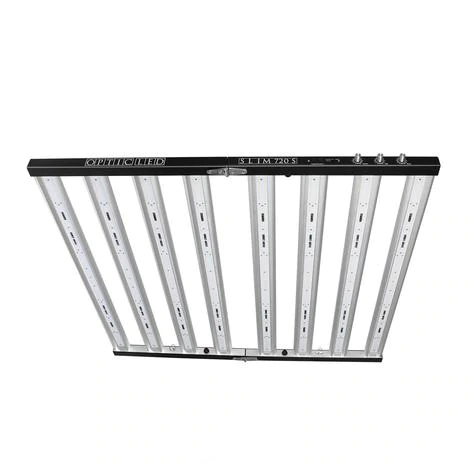
Features:
Optic LED grow light is the Most Powerful Triple Dimmer LED Grow Light Ever Created. Slim 720S delivers all the amazing Proven technology from the highly refined Slim 650S with a Cranked up Meanwell Driver System beaming up to 720 Watts through 3,096 of the world’s most efficient LEDs. Slim 720S is specifically engineered for growers in 5x5 areas or growers who just want power to spare in the 4' x4' area. Slim720S is engineered to give you performance far beyond what any other LED Grow Light company has in the market today including Samsung’s all-new record-breaking LH351H Version 2 660nm Deep Red LEDs at 3.75 umols/j and LH351H 450nm Royal Blue LEDs paired with the Samsung White LM301H LEDs which are above 3.0 umols/J with a 3way dimmable system running 3,096 LEDs total for next-generation efficiency and tuning capabilities.
Spectrum King Phoenix 680W LED Grow Light
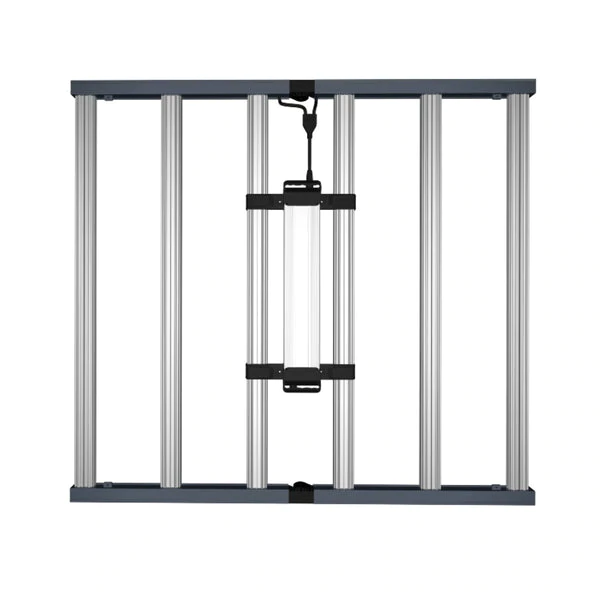
Features:
The Spectrum King LED grow light is the new LED standard for a 1:1 1000W DE HPS replacement that consumes 36% less power while offering the highest reliability in the industry. SK Cryo-Therm cooling technology enables an ultra-thin profile that maximizes airflow and minimizes microclimates. This grow light is optimized for single or multi-level planting close to the canopy. Many growers are switching from heat-generating HPS lights to ultra-high performance LED strip lights. SonoFarm LED grow lights utilize the latest technologies on the market — from intensive research for optimum performance, to customizing the spectrum for the highest possible yield.
Buyer’s Guide
Before buying an LED grow light, read our buyer’s guide below to learn about important factors that’ll help you make an informed purchasing decision.
Coverage: Grow lights typically give you measurements for how much vegetative and flowering coverage they offer. Be sure to choose a light that matches the amount and type of coverage you need.
Wattage: A grow light’s wattage determines how much light it produces. Different plants require different amounts of light, so don’t just choose the light with the highest wattage. Instead, match the wattage to the plants you’re growing. For example, if you’re growing tomatoes, choose a grow light that offers about 32 watts of light per square foot.
Adjustability: Several features of your LED grow light should be adjustable.
Color: Plants need a different color light for every step of their growing cycle. The best LED grow lights offer red, blue, and white color options.
Brightness: In addition to color adjustability, LED grow lights usually have knobs for adjusting the brightness of their bulbs.
Proximity: You can also adjust how close the lights are to your plants by lengthening or shortening the rope or chain they’re hanging from.
Installation
Grow lights are usually mounted to the ceiling with a chain or rope. This installation process can take anywhere from 30 minutes to a couple of hours.
Tips for Growing Plants with Lights
Group plants with similar lighting needs together so they can benefit from the same amount of light.
Buy grow lights that fit your regular fixtures to help keep costs down. Table lamps are suitable for indoor plants. Tube lights are suitable for seedlings and groupings of plants.
Choose lamps with adjustable intensity and/or spectrum. Alternatively, choose grow lights with a slightly warmer spectrum to create a comfortable ambient light in your home.
Set your grow lights on timers so your plants get the right amount of light each day. Many grow lights have built-in timers. If they don’t, use plugin timers for consistent, regular lighting.
Conclusion
Thanks for reading! I hope you have all the information you needed to set up a highly efficient grow light system for your houseplants and enjoy them regardless of the amount of natural light you have in your home.
How Many Watts of LED Grow Lights Do 4X4 Grow Tents Need? (2022 Updated)
A big garden or dependable light is not needed to grow an indoor plant always. While it is sufficiently simple to arrange a little growing area in a basement or in private. The best led grow lights for a 4X4 tent can assist you to grow your plants in a proper environment.
There are a few LED grow lights planned clearly for 4X4 grow tents. These particular LED grow lights comparatively use higher wattage but provides full light spectrum, light intensity, better heat dissipation, and spread sufficient light consistently over the grow tent or space so that even buds on the sides of your grow tent get enough light for optimal growth. A significant lighting arrangement ensures better returns.
Buying LED grow lights for a 4X4 grow tent is a difficult job when someone has no previous experience. We would like to assist you to decide the best LED light for you. Before making a choice, you can have a look at the basic factors that you have to keep in mind while choosing the best LED grow light. Also, we have tried to accumulate the most common questions asked by growers.
Though the market has overcome with a wide range of excellent LED grow lights, to assist you with your determination, we have checked on the best LED grow lights for 4X4 tent. Additionally, we have included valuable specifications and their pros and cons, which will help you to choose the best led light for 4X4 grow tent.
How much LED wattage needs per square footage or for a 4X4 tent?
Generally, it depends on the plant you wish to grow but for an idea, you need to provide 30 to 40 watts per square foot.
So, For a 4X4 tent, you need around 450 watts minimum.
You should pay attention to actual watts, not the watts usually mentioned in the title, as they are used for misleading marketing strategies.
ECO Farm SP-400 Samsung Foldable Dimmable Full Spectrum LED Grow Light
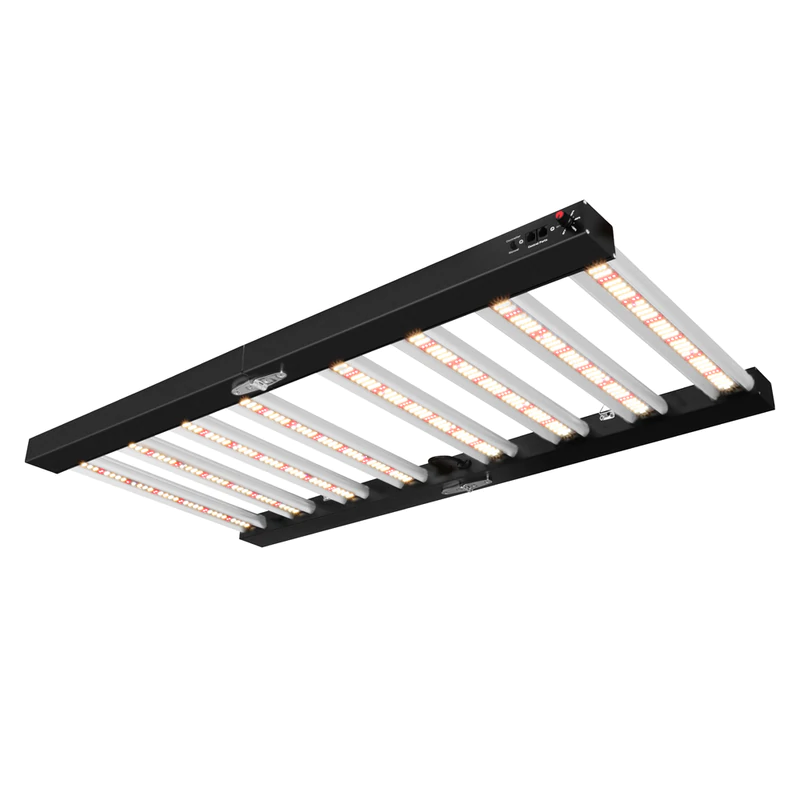
Features:
ECO Farm LED grow light is equipped with 1088 high-efficiency Samsung LM281B LEDs. It has a market lighting efficiency of 2.8μmol/J and an output of 2.5g per watt. The average PPFD is increased by 30%, and the actual power is 420 watts. Proven high-yield full-spectrum (lm281b LEDs (3000k+5000k) + RED 660nm + IR 730nm + UV 395nm), with enhanced deep red 660nm. Born for big buds, the plant responds quickly from seed to flowering, which speeds up the flowering time and increases the yield. The relaxed dimming design meets the needs of different growth stages of indoor plants. No fan, no noise. The aluminum light bar can better dissipate heat and keep cool, and at the same time spread the light evenly. Save you a lot of ventilation and exhaust costs. The most powerful daisy chain-up to 100 lights can be connected, the controller can be used, especially suitable for homes, planting tents, planting rooms, greenhouses, gardens, and hydroponics.
TotalGrow MH Lumyre 480W LED Grow Light
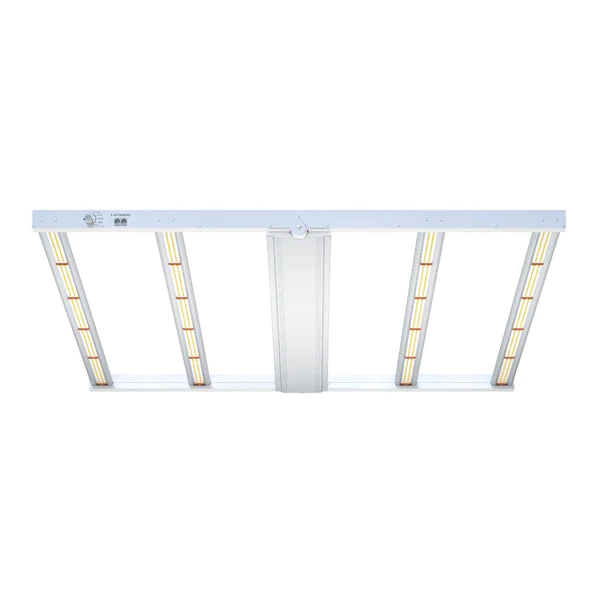
Features:
TotalGrow LED grow lights feature multiple high-intensity light strips in a slim profile and built-in power supply to distribute the ideal light intensity evenly across your growing area to meet your growing goals. Superior, customizable full spectrum supports efficient, high-quality growth of any life stage and crop variety. This plug-and-play solution with direct daisy chaining is easy to implement, has low up-front and ongoing costs, and sustainably produces high-quality crops. The efficacy of this LED grow light is as high as 2.8 μmol/J to meet the light intensity your plants need. Robust, reliable, ideally shaped design for ease of use and excellent uniformity.
BESTVA BAT W400 Dimmable LED Grow Light
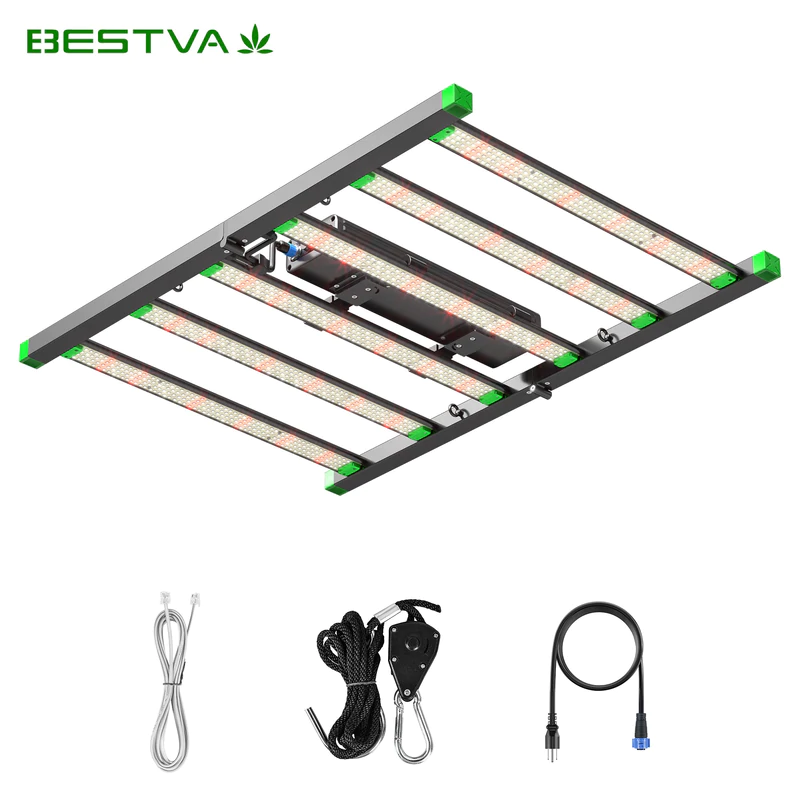
Features:
This LED grow light features a uniquely designed 6 LED strips that extend to the edge to provide more even canopy coverage, especially in outer edge planting areas. The full spectrum is perfect for vegetable flowering to suit every stage of the plant cycle. The dimmer knob is ideal for growers to adjust light intensity for different growth stages. The strip light design and aluminum on the back contributes to better airflow and good heat dissipation. Grow lights feature detachable drivers and long power cords to reduce ambient heat in the grow space for longer life. With waterproof circuit board, there is no need to worry about wet environment.
What Makes A Grow Light Good For A Grow Tent?
Knowing whether or not a grow light suits your tent is determined by a few metrics:
The dimensions of the tent and light fixtures,
Wattage and heat generated by the grow lights
Varieties of plants you are planning to grow.
The factors that make a grow light good are all relative to the grow tent or grow room you are using and its efficiency in providing the proper levels of lighting to your plants. No single grow light will suit every growing space.
Here’s my full guide to lighting solutions for your home hydroponic garden.
Dimensions of Grow Tent Lighting
Most grow lights are manufactured as straight tubes of fluorescents, LED strips, or as a flat panel of LED lamps. Other designs include circles, ladder panels and traditional bulbs. Each has its own design purpose and application.
The dimensions of square and rectangular light fixtures are standardized as 12”, 24” and 48” lengths and widths. This size is ideal for grow tent dimensions which are similarly sized with 24”, 36”, 48” and 96” sides.
Be aware that a 48” light fixture will fit a 48” grow tent but if the power cord connects at the end it will be pressing against the side of the tent. It hasn’t caused any issues in my grow tent.
The dimensions of a grow light are clearly marked on the packaging to help assess whether it will fit your tent and how it will work in conjunction with your other lights and ceiling mounted equipment.
The weight of the grow light may become a problem if the frame of your grow tent is not strong enough to support it. Commonly grow lights are suspended from the ceiling frame poles above the grow space. They can be raised and lowered to the ideal height above the plant tops.
Wattage, Efficiency and Heat From Grow Lights
High wattage grow lights can create a lot of heat inside a grow tent which needs to be vented using an exhaust fan and duct. The high powered electronics and fixture ballast convert a lot of electricity into heat if they are not efficient.
Many low wattage LED lamps that provide color spectrum of Blue, Red, Green and even IR ranges are more efficient at creating electricity into light with less heat produced. Fluorescent lights operate efficiently as well but lack the range of spectrum offered by LED technology.
An exhaust fan can be mounted inside or outside your grow tent and is commonly hanging from the frame poles at the top of the tent. The warmer air rises to the top of the tent and fresh air can be provided using the vents along the bottom of the side walls.
Grow Light Cooling System
High powered lights can have an active cooling system like built in fans or a passive cooling system like a large heat sink. This is to keep the heat generated by the fixture from causing damage to the onboard electronic components including the diodes. Heat is a byproduct of converting electricity to light and is considered an inefficiency of the light.
The heat generated by grow lights is minimized in many LED and fluorescent fixtures but large ballast lights like HM and HPS lights create a lot of heat loss. This can create a swing in temperature inside a grow tent and the extra heat will need to be exhausted to the exterior of the tent.
Grow tents can be purchased online as kits which include the lights, ducting, inline fan, carbon filter and more. These kits are designed to provide the proper amount of lighting and air flow for the tent size.
Color Spectrum of Grow Lights
The color spectrum of grow lights varies by lighting type and manufacturer. Fluorescent, Metal Halide, and some LEDs are in the blue light spectrum which is good for plant growth in the vegetation cycle of life.
High pressure sodium and special LED chips operate in the red spectrum which is best for the flowering and fruiting phase of the plant’s life.
Full spectrum LED grow lights combine red, blue, and some infrared wavelengths because those are the ones that most benefit the plants of an indoor garden. Using a white lamp makes it easier to identify plant disease and insect issues early compared to a blue, red or purple light.
Grow Light Coverage
The light coverage refers to the area that a single grow light can properly illuminate at a given intensity. This measurement is typically given in square feet. For instance, one grow light will illuminate a 2 foot by 2 foot area properly, but others can illuminate a 4 foot by 4 foot area. This means you have to know the coverage needed for the area of your grow room.
Operating Conditions and Ratings
Depending on what you are growing, your lights will experience varying amounts of moisture or humidity, and it goes without saying that water and electricity are not a good combination. Grow lights, electronic timers, extension cords all have a UL, CSA, or equivalent waterproof rating to prevent damage to your body and your equipment.
Conclusion
So, here are all the stats on the top best LED grow lights for grow tents in 2022, right at your fingertips. Overall, the aforementioned products are strongly reviewed and explored by satisfied customers. They offer great highlights and performances. Nonetheless, indoor growing just got simpler with LED development lights. Now your plants have less fire risk and more light. Also, be sure to check out the reviews and consider some valuable elements. Now by reading all the reviews, you can totally choose the product according to your needs.
SpecGrade LED Linea Series 600 640W LED Grow Light VS BIOS ICARUS® Ti2 Grow Light
If you have plants that need a little more fun in the sun, but you’re lacking the sunny climate or the south-facing window of your dreams, you might be thinking about supplementing with grow lights.
More specifically, you’re probably wondering what kind of grow lights are the best for your indoor plants. And let’s be honest — that brings up a whole other host of questions.
While picking the right kind of grow lights for your plants might seem a little overwhelming at first, don’t panic. We’ve got the lowdown on all the basics you need to know to keep your plants happy, healthy, and photosynthesizing with the best of ‘em.
The Benefits of Choosing an LED Grow Light
There are many, many types of grow light fixtures to choose from, such as High-Intensity Discharge or HID grow lights, Metal Halide, ceramic metal halide (CMH), High-Pressure Sodium (HPS), and even fluorescent lights. Each of these have their own supporters, all laying claim to a particular strength or application, but LED grow lights have risen to the top of the heap in terms of all-around performance, efficiency, and yields.
Easy to Install
LED grow lights can typically be assembled in minutes and hung using very simple wire hangers — you don’t have spend valuable time or resources configuring and installing elaborate wire or cable management. These simple wire hanger systems also make it amazingly easy to change the light’s height or position. Essentially you just plug them in, set their position and go.
Produce Less Heat
LED grow lights produce significantly less heat than their HPS counterparts so they can be placed closer to plants without worrying about heat damage. This reduced heat production means fewer dollars spent on maintaining proper temperatures in your grow space.
Optimized Light Output
With many LED grow lights, you can adjust the amount and type of light your plants will get. You can customize the light spectrums based on the specific needs of your specific plants. Many LED grow lights can be configured to emit specific wavelengths of light allowing you to adjust the light’s color balance to precisely suit the needs of your specific plant types. This type of feature cannot be done with other lights.
Environmentally Friendly and Convenient
LED grow lights can be plugged directly into a standard electrical socket and typically don’t need a separate ballast. Not only is this more convenient, but it makes them easier to fit into tight spaces. Additionally, LED lights don’t contain mercury, so they don’t need to be disposed of in a way that meets your local or federal guidelines for disposal of hazardous materials. Along with being energy efficient, this makes LED grow lights the best environmental choice as well.
Saves Power
LED lights consume less electricity than other types of grow lights, so maintaining a low power bill becomes much easier. Although LEDs are more expensive upfront, they are cheaper to run over the long-term thanks to their low power consumption.
Long-Lasting
LED grow lights have a shockingly long life. Some models have a lifespan of more than 100,000 hours, meaning that if run for 12 hours a day, they would last for upwards of 20 years. Compared to other grow lights, lifespans of 25,000 hours or less are in optimal conditions.
SpecGrade LED Linea Series 600 640W LED Grow Light
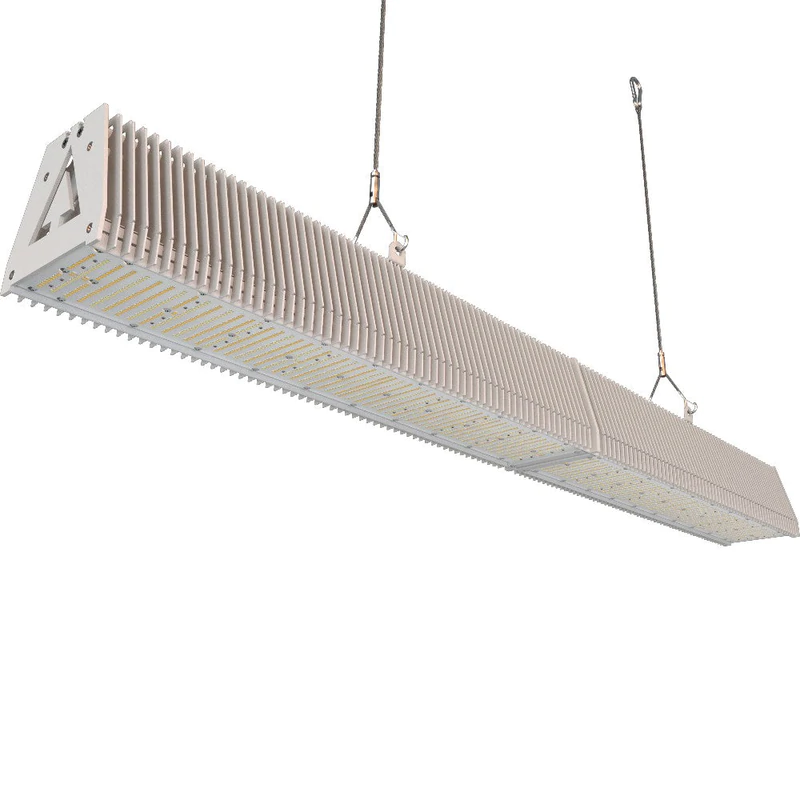
Features:
SpecGrade Grow lights are designed for professional cultivators to provide exceptional photobiology and engineering. Whether your intention is to use this grow light as a supplemental light source or as a single light source, this grow light will provide your crops with unparalleled uniformity and virtually no shading. Proprietary bi-folded aluminum heatsinks are designed to ensure the LEDs operate at the lowest operating temperature, thus ensuring the longest lifespan. The fine-tuned A-1 “Whole Lifecycle Spectrum” has been proven in universities and in a variety of growing environments to improve trichomes and taste, while reducing operating costs and shortening growing cycles.
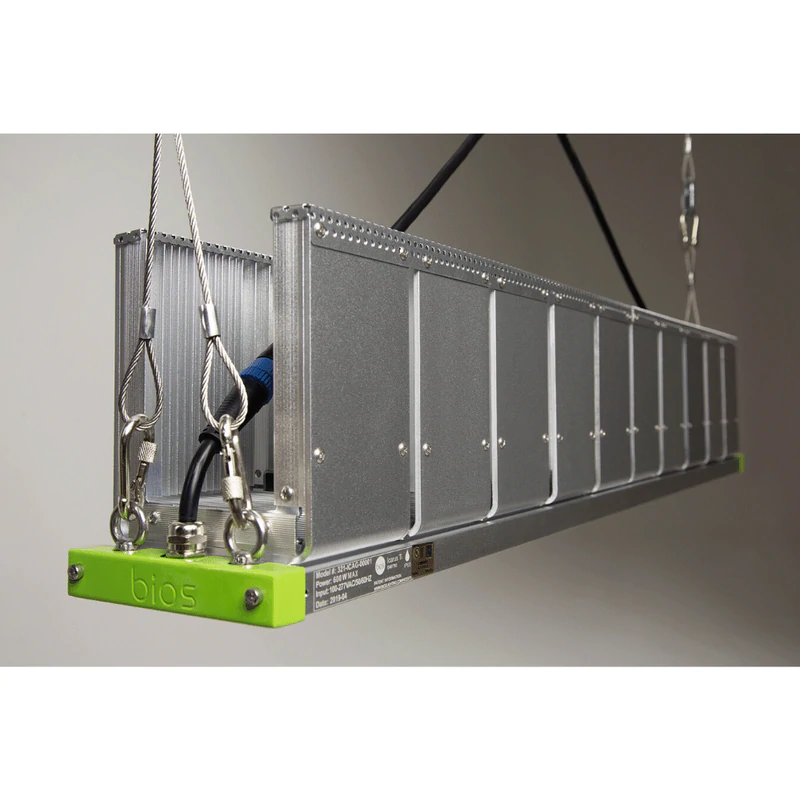
Features:
The BIOS LED grow lights offer maximum light output in a minimal footprint and durable form factor to boost crop production for greenhouse or indoor top light growing environments. The BIOS biology first approach allows for a scientifically engineered spectrum that maximizes photosynthesis and growth. The grow light also features a heat pipe design that pulls the heat away from the LEDs to keep the fixture cool leading to a longer life span. The grow light is spectrally optimized to improve overall plant health and increase yield while providing a high output, energy efficient solution for all your lighting.And optimized broad spectrum, dimmable light for all phases of plant growth and production.
Factors to Consider when Choosing a Grow Light
So you’ve determined that one or more of your plants needs some extra light. Great! Now it comes down to knowing which one is right for your situation.
To do so, you should consider the light’s color spectrum, its size, its heat output, and how long you’re going to keep it on at a time.
I know that’s a lot to keep in mind! Don’t worry, we’ve got it all broken down for you here.
1. Color spectrum
Light is light, right? Well, not quite.
As you probably remember from science class, white light is composed of all the visible spectrum colors. Plants do not absorb all of those light frequencies. Specifically, they do not absorb most of the green light; instead they reflect it, which is why they look green to our eyes.
The two-color frequencies that plants benefit the most from are red and blue. That’s why some grow light setups have an intense purple light, especially if the plants are being grown for commercial purposes.
Grow lights come in blue/red as well as full-spectrum white. There are pros and cons to both, and you will have to choose which is best for your situation.
Difference between Red & Blue vs Full spectrum growlights
Red & Blue Spectrum grow light will appear purple or pink in color. While Full Spectrum appears white in color.
Blue and Red
Blue light and red light are both good for your plant. Each of these colors provides a different benefit. Some plants may need a higher percentage of red light or vice versa.
So what do red and blue lights do for your plant?
Blue light is related directly to chlorophyll production. Plants that receive lots of blue light will have healthy leaves and stems. This prevents the plant from becoming etiolated and leggy. All plants will benefit from blue light.
Blue light also promotes darker, healthier color in plants’ leaves and stems. If low light causes faded leaves, a blue light would bring the color back!
Red light stimulates plant growth, and it benefits flower and fruit production. Its importance in building biomass means that red light is useful for younger plants in getting established. Using only red light will cause plants to grow vigorously, but they will be stretched out, long, and weak.
Red/blue grow lights come in different ratios; some will have more or less red light. Your choice will ultimately depend on how much you want your plant to grow and whether or not you want it to flower or produce fruit.
Full Spectrum
A full spectrum grow light may be a better option if you don’t like how the red and blue lights look. This grow light will appear white to the human eye, but don’t worry, as it still contains plenty of blue and red light to keep your plants happy.
Full-spectrum lights are great because they are stealthy! You can sometimes even put them in a regular lamp so that you and your plants both benefit from the light.
2. Lit Surface
How many plants are you trying to grow under a light?
Grow lights range in size from a single bulb to a meters-long fluorescent array hung from the ceiling — and everything in between!
If you only have one small plant, you will only need one small light, perhaps a fixture you can clip to the side of your desk or table.
However, if you have multiple plants or one that is quite large, you would need to consider a larger light or perhaps multiple smaller lights to work together.
3. Heating output
It is important to consider how much heat is going to be produced by the lights. Some bulbs may produce more heat than others.
Placing a cooler bulb (like you will find with LED lights) closer to your plant, able to provide more light without risking giving your plant a sunburn.
On the other hand, hotter bulbs can also pose a hazard; they can become hot to the touch when left on for too long. Also, the energy that the bulb transfers into heat ends up being wasted and just makes the light more expensive to run.
4. Time of use
When choosing a new grow light, you should think about how long you will need to run it every day. Some grow lights have a timer, a handy function to make sure they get turned off on time.
If your plants already get some sunlight from the window, you can cut back the time your grow light is on and use it as a supplement for when the sun isn’t shining.
So how much light do plants really need?
In general, plants need between 12 and 16 hours of light. However, just like different plants require either brighter or lower light, some plants need light for more or fewer hours each day.
Long-Day plants need a full 16 hours of light daily, while Short-Day plants may need as few as 10 hours. Lots of succulents, for example, are long-day plants. Long days with bright light allow these hardy plants to thrive and even flower. A popular short-day plant is the Christmas cactus, which only blooms when the days grow shorter in the winter.
Then some plants are day-neutral, which do not react to day length to determine when they bloom. They do well with 12 hours every day.
Ultimately, you will have to do some research to determine your plants’ day length preference, so you know how long to keep their lights on!
Conclusion
Grow lights can help you grow and maintain your indoor plants and vegetable garden through the seasons without a problem.
Using this comprehensive guide, you should be able to pick out the best grow lights for plants based on your needs and spatial requirements. Once you get it set up, you can easily keep your plants healthy and thriving all year round.
Mammoth Lighting Commercial UV Series - 10 Bar 740W LED Grow Light VS HEO 1700Pro 700 Watt LED Grow Light
Are you thinking about buying a grow light for your houseplants but don’t know where to start? Don’t worry, it doesn’t have to be complicated! This post will guide you through everything you need to know so you can pick the best grow light for your plants.
Ready to learn more about grow light? Let’s dive in!
How Long Should You Leave Your Grow Lights On?
Generally speaking, you won’t need to leave your lights on all the time. A good rule of thumb here is to try to mimic the sun as best you can, meaning you should have periods of “night” when your grow lights are off.
The total duration, though, is really going to depend on the individual plants. Do a bit of research for your specific types of plants to find out how many hours of direct light they thrive in.
___
So after all is done and said, do you need grow lights to keep healthy plants? Not necessarily, but they can be very beneficial depending on your local climate, the amount of sunlight you get in your home, and the season (hours of daylight within a day).
Of course, if you do live in a place with sparse sun another option is to stock up on some gorgeous low light plants to begin with. Check out our best low light plants and see if any tickle your fancy.
Does grow light give off radiation?
All light is technically considered radiation, as it consists of waves radiating from a source. Of course, some frequencies are more dangerous to us than others.
The visible spectrum, red through purple, are not damaging to humans. Once you go past blue and purple light, however, you find ultraviolet light. UV light is what causes your skin to become damaged when spending too much time in the sun.
Some grow lights do include ultraviolet wavelengths, as they have been shown to provide some benefit to plants. This would not be enough UV light to pose any risk to people in the same room near the light.
Dangerous wavelengths, such as X– or gamma-rays, are not produced by grow lights. These lights provide only a very narrow range of light wavelengths to provide specific benefits to the plant.
Mammoth Lighting Commercial UV Series — 10 Bar 740W LED Grow Light
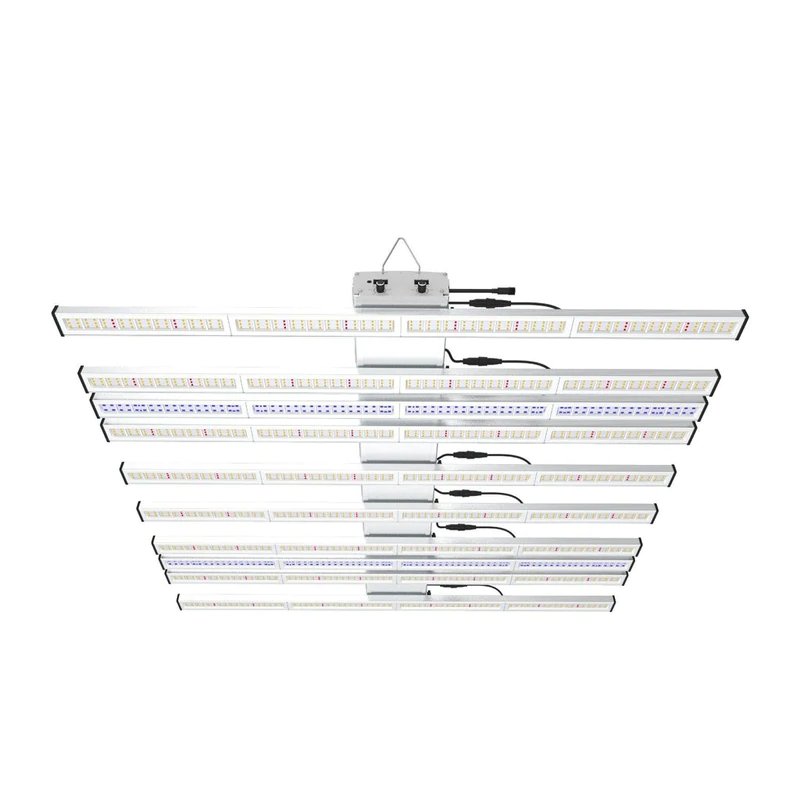
Features:
Mammoth Lighting has been developed by indoor growers over many years of careful experimentation and testing. Scientifically engineered to deliver the highest level of PAR output and balanced Coverage in the LED grow the market. At 1850 µmol/s of PPF, the Mammoth Lighting 10 Bar fixture measures up to the best LED Grow Lights on the market. The Mammoth LED grow lights are built with high-quality Samsung diodes. The lights encompass a continuous range of wavelengths from blue and green to red, creating a light blend matching the natural sunlight. The grow light customized the light spectrum to optimize plant growth and increase yields while consuming less energy and reducing operating costs compared with traditional horticulture technologies.
HEO 1700Pro 700 Watt LED Grow Light

Features:
The HEO 1700Pro 700W LED Grow Light is an excellent light for any and all stages of a plant’s growth life cycle, whether you’re using it in a tent in your personal indoor garden or hooking it together in a large commercial operation. The 1700 Pro’s 8 powerful lighting strips evenly focus intense light on your plant canopy for healthy, efficient, high-yielding plants. The HEO 1700Pro 700 Watt LED Grow Light provides full-spectrum light to 4' x 4' flowering areas and 5' x 5' vegetable areas. This high-efficiency LED grow light offers a fully programmable spectrum to suit every stage of a plant’s life cycle. High efficiency of 2.4 µmol/j and power consumption of up to 630–700 watts make it an efficient and affordable indoor grow lighting solution.
Grow Lights for Plants — Buying Considerations
You might think all grow lights are the same thing, but you now know this isn’t true. No matter if you want to replace your lights or if you’re buying them for the first time, you want to keep a few key features in mind. They’ll help you narrow down your choices and pick out the best option to suit your wants and needs.
Burn Time
All types of grow lights burn at a different rate. This is why it’s a good idea to check and see what the burn time is on the light you buy. Spending a lot doesn’t mean that your light will last longer, and you’re not necessarily getting the best value. Double-check the packaging when you compare lights to see which one burns the longest while being the most energy-efficient.
Ease of Use
Your time is very important, even if you only have a small vegetable patch or a few indoor house plants to tend to. The last thing you want to do is spend hours setting up and adjusting your lights over and over again. Pick out the lights that have a simple operation, are easy to set up, and are easy to maintain. Double-check how easy it is to adjust your light intensity as well.
Garden Size
How big do you want your indoor garden or growing space to be? This is something you have to know before you start shopping because it’ll help you decide how many lights you need. If your plants need a higher amount of light, you’ll have to have around 32 watts for every square foot of space. If your plants need a lower amount of light, you’ll want to have around 14 watts for every square foot of space you have set up.
Smaller garden sizes won’t need as many grow lights to support them, but you will need more if you have bigger plants in general.
Internal Chip Strength
Inside every grow light you buy, you’ll have a chip that converts electricity into light. Your internal chip should be extremely high quality because it’ll help ensure it’s powerful enough to jumpstart your plant’s growth cycle. As a rule of thumb, look for lights that have a chip of at least 3W. In turn, this will help ensure your light emits enough power to help your plants grow.
Light Shape
These come in several different shapes ranging from light bars to saucers and panels. You’ll have to consider where you want to set up your space before you buy the light. This will help you pick out the correct shape when you shop for you grow lights for plants. Smaller lights let you set up scattered light patterns, and they’re better for tight spaces. A panel light will cover bigger areas.
Lower Heat Generation
Heat generation is something you really want to keep an eye on with your lights. Some LED-style lights will put out a large amount of heat to create a warming growing environment. If this is the case, you’d have to have a fan or two going to help cool the area and keep your plants comfortable. To save yourself this step, get lights that have a lower heat output. They tend to have longer burn times because they don’t overheat, and they put out less atmospheric heat as a whole.
Conclusion
We hope that this Guide to Choosing the Best LED Grow Light has given you the basics you need so you can buy your first LED grow light, dig deeper into the details concerning grow lights for your indoor garden, or just serve as a review of the information you need.
ECO Farm FLD 320W Full Spectrum Dimmable LED Grow Lights Bar VS ChilLED Tech Growcraft X6 mini 330W LED Grow Light
Indoor lighting is rarely bright enough to give plants what they need to thrive — even on a windowsill. We tested the top grow lights on the market to see if they could ensure healthy plant growth.
When it comes to plants, all light is not equal. Unless you have a greenhouse or an unlimited number of south-facing windows, grow lights are your best option for providing the right light to your plants. Though nothing is better than natural sunlight, grow lights are designed to provide Photosynthetic Active Radiation (PAR) so the plant can undergo photosynthesis like outside in nature. We wanted to know if they worked well enough to keep plants not just alive — but thriving — so we tested the most popular models on the market.
We placed the plants and grow lights in areas that were otherwise too dark for plants to grow, and we tried them out on a variety of plants, from houseplants to herbs, to flowering seedlings. We kept track of plant health, overall growth, and the development of new leaves. Ahead, learn what to look for when selecting the best grow lights for your indoor plants.
Advantages Of LED Grow Lights
LED grow lights outperform traditional HPS fixtures in yield per watt while also promoting a significant increase in overall quality because of their targeted spectrum, which includes UV and IR wavelengths.
LED Grow Lights have been demonstrated to enhance the production of oils and terpenes by up to 80%, as well as provide tighter internodal spacing and denser fruits and flowers than alternative grow lights because of having IR and UV wavelengths.
They can produce this significant improvement in quality while using 50% less energy than HPS fixtures. Because LED lights provide less heat, they do not need to be air-cooled like HPS lights, removing the need for additional fans and allowing them to run more quietly.
Lower light temperatures result in a much easier to maintain grow environment. Because each diode in a LED light is programmed to emit a specific colour and a particular proportion. They can emit the exact spectrum that a developing plant requires thriving, with little to no waste.
If you want to save money, get a few LEDs to offset your costs and provide excellent results.
ECO Farm FLD 320W Full Spectrum Dimmable LED Grow Lights Bar
Features:
ECO Farm LED grow light with upgraded SMD 3030 chip 6 passive-cooled led bars, higher light intensity, less light decay, better lumens and PAR values than ordinary LED chips. FLD 320W uses 1200 LED chips that consume only 320W, perfect coverage for 3x3ft, helps you achieve maximum quality and quantity. The intensity of light can be adjusted according to the needs of plants. It can be freely adjusted lighting intensity as plants need growth at different stages with dimming options ranging from 0 to 10 levels. SMD leds spectrum is white 3000K leds, white 5000K leds, 660nm red leds and 740nm IR leds. This professional-grade led grow light is designed for maximum results in all stages of growth.
ChilLED Tech Growcraft X6 mini 330W LED Grow Light
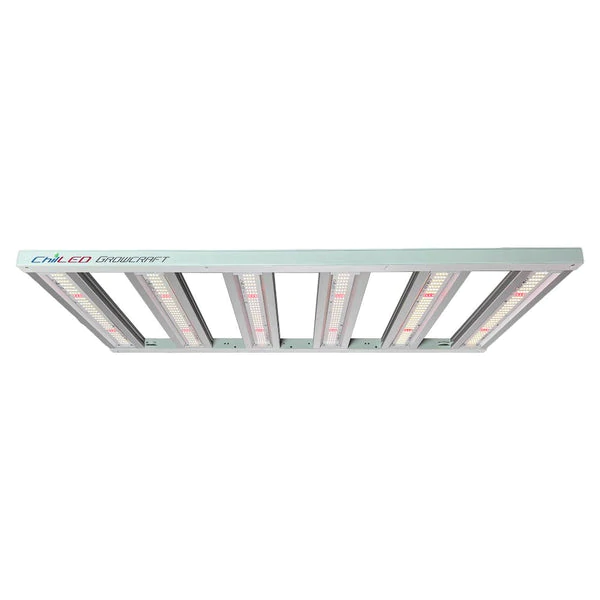
Features:
The ChilLED LED Grow Light features six light bars that provide a footprint of up to 2 x 4. With a compact 1.375" design, it hangs easily in a variety of growing areas. This 6-strip commercial LED grow light is designed and manufactured in the USA with a choice of flowering or plant growth optimized lights to suit your needs. ChilLED LED grow lights can maximize your yield and profit. Switch from HPS to ChilLED and increase your yield and profits by over by 30–70% without adding any additional heat, energy costs or cooling requirements. Market-leading efficiency combined with our adjustable maximum yield spectrum equals unmatched performance. This grow light uses the highest build and component quality — never sacrificed for profit. ChilLED grow lights are built to last.
Features to Look for
When purchasing the best grow light for seedlings, we recommend looking for the following features in a prospective model.
LED Lights
All modern grow lights feature design with LED technology. LED is effective and affordable to run. It’s the best way to give your plants the optimal spectrum they need for growth. LEDs have a longer service life than fluorescent, incandescent, or metal halide bulbs, and they use less electricity.
LED Output and Power
When selecting your ideal indoor grow light, we recommend looking at the LEDs’ output in your prospective light. The average small grow light for seedlings needs between 45-Watts to 80-Watts of light output. That’s enough lumens to help your plants achieve optimal growth.
LED Quality
The quality of the LEDs in your grow light makes an enormous difference in service life. The average high-quality T5 LED should provide you with at least 10,000-hours of service life before replacement.
Light Spectrum
It’s critical that you look at the wavelength emitted by the device when purchasing your grow light. Plants require full-spectrum light for the best growing results. Look for models featuring a full PAR spectrum, offering both red and blue wavelengths. Some models will also feature white-light.
Lighting Modes
Your LED grow light should feature different lighting modes. Look for models offering blue, red, and full-spectrum modes for your choice of growing conditions. The lighting modes affect your plants and how they grow.
PAR refers to the balance of red, blue, and white light in your LEDs. Top models feature high PAR ratings, giving you the best performance out of your new grow light.
Timers
The best grow light for seedlings come with timers. You get the option of setting your light cycle to 3-hours, 6-hours, or 12-hours, depending on your plant’s needs.
A timer is a handy feature in your light, allowing you to control the light cycle. However, if your model doesn’t come with a timer, you’ll have to purchase one separately or rely on manual operation.
How to Use Grow Lights
Use grow lights to help your indoor plants grow quicker and healthier.
Choose your equipment. Select the style of light you think will work best for your houseplants or herb garden. Fluorescent and HID grow lights often require ballasts to regulate electrical outputs. Full-spectrum grow lights are a good option for most indoor plants. If you have several houseplants, consider using a larger grow lamp, a panel of lights, or a reflector for supplemental light to reach the bottom of leaves.
Set up your lights. The ideal lighting levels depend on the types of plants you have in your indoor garden. Although some plants thrive in low-light conditions, most require bright light — particularly succulents and flowering plants.
Monitor the temperature of your lights. Depending on the wattage of your light sources, grow lights can burn houseplants. Place incandescent lights at least two feet away from your plants. Keep fluorescent and HID grow lights at least twelve inches away from plants. With a low heat output, LED grow lights can typically get as close as six inches to houseplants without harming them.
Install a timer. Constant light output prevents plants from experiencing a normal light-dark cycle and ultimately harms them. Use a timer to regulate the amount of light your houseplants receive from your grow lights. Make sure your plants get between eight to sixteen hours of light and at least eight hours of darkness.
Conclusion
Ultimately, grow lights come down to your preferences, growing space and whatever your budget allows. Just start small if you’re not sure how often and how much you’d like to grow.
Fortunately, I only care what you think. I sincerely hope this guide on growing lights helps you successfully grow your plants indoors.
And, speaking of that … It really feels empowering to be able to grow your own plants. Whether you can’t find what you need in stores or you just want to be more self-sufficient, this is an excellent step in that direction!
Best 300W Full Spectrum LED Grow Lights for Plants [2022 Updated]
Growing plants in a confined space requires proper lighting. For this, you can opt for 300W LED grow lights offering efficiency and a good amount of brightness. Let’s take a look at some of the best 300W LED grow lights out there and what to expect from each of them.
How can I tell if my plants need more light?
If your plants thrive during the spring and summer, but struggle the rest of the year, it may be time to bring supplemental light to your living space. Adding a few hours of light in wintertime can reinvigorate houseplants and sustain overwintering outdoor pots until the next growing season. It can also help certain plants flower and make fruit.
Since stressed plants develop problems, here are some signs your plants need more light:
Dying or yellowing leaves.
Smaller than normal leaves.
New pests and diseases.
Tall and leggy growth.
Variegated plants losing variegation.
herbal grow jars on kitchen counter
Indoor herbs like these culinary grow kits need bright or supplemental light to flourish.
To address any of the following problems, do an inventory of your plants and find out how much direct and indirect sunlight they need each day. Use a sunlight calculator or app to find out if your space provides enough light for optimal growth. If not, it’s time to consider grow lights.
How Long Should a 300W Grow Light Be Left On?
As a general rule of thumb, most vegetables and flowering plants need 12 to 16 hours of light per day, with flowering plants at the top end of that range.
Plan on giving most plants at least 8 hours of darkness per day.
But remember that different types of plants may need different amounts of light.
Darkness is actually very important for the plant growth cycle. During the day, sunlight helps plants produce energy through photosynthesis. At night, however, plants break this energy down for growth and flowering in a process called “respiration”.
Check your seed packaging or plant tags, or ask at the nursery for specific suggestions. And make sure you turn your grow lights off every once in a while. No one likes to work 24 hours a day — even plants!
ECO Farm DBL3000 Full Spectrum LED Grow Light 320W
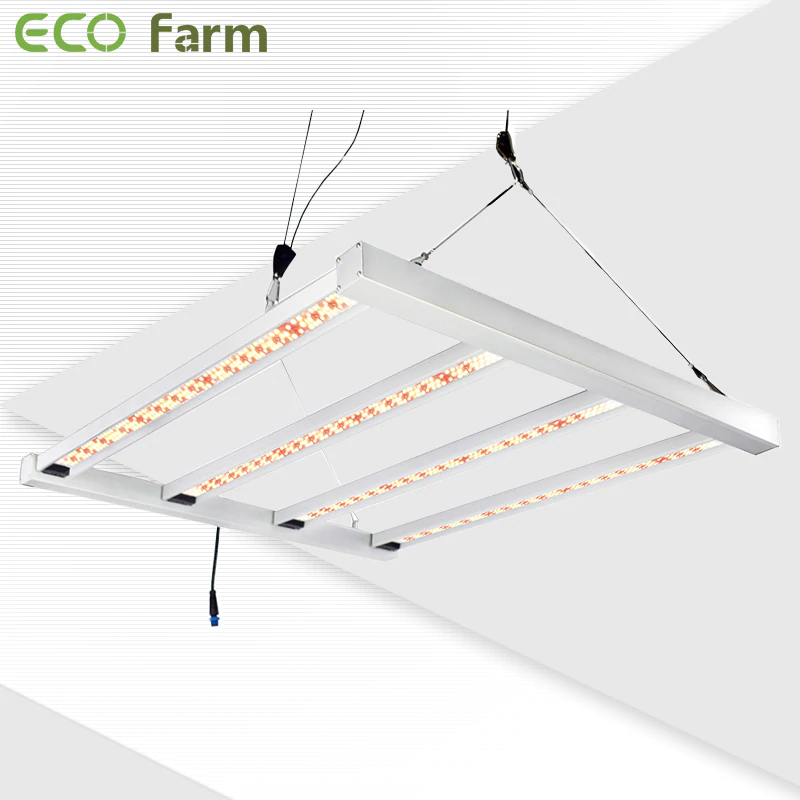
Features:
This ECO Farm LED grow light has a unique designed 4-LED bars provide more even canopy coverage, especially to the outer edges cultivation areas. With 864 pcs SAMSUNG LM281B diodes, DBL3000 Led grow lights draw 320 watts achieving an impressive PPE of 2.5 umol/J, coverage for 3'x3′ of high-yielding full-cycle growth. Full-spectrum (3000K, 5000k, 660nmnm, 30nm) is perfect for veg to bloom, to adapt to each phase of the plant cycle. The dimming knob is ideal for growers to adjust the light intensity according to different growing stages. Bar light design and aluminium material on the back contribute to better airflow and great heat dissipation. This grow light comes with a detachable driver and long power cord, thereby reducing ambient heat in your growing space for extended lifespan. With the waterproof circuit board, worry free of the moist environment. Easy installation.
ChilLED Tech Growcraft X6 mini 330W LED Grow Light
Features:
The ChilLED LED Grow Light features six light bars that provide a footprint of up to 2 x 4. With a compact 1.375" design, it hangs easily in a variety of growing areas. This 6-strip commercial LED grow light is designed and manufactured in the USA with a choice of flowering or plant growth optimized lights to suit your needs. ChilLED LED grow lights can maximize your yield and profit. Switch from HPS to ChilLED and increase your yield and profits by over by 30–70% without adding any additional heat, energy costs or cooling requirements. Market-leading efficiency combined with our adjustable maximum yield spectrum equals unmatched performance. This grow light uses the highest build and component quality — never sacrificed for profit. ChilLED grow lights are built to last.
MAXSISUN MG3000 300W LED Grow Light
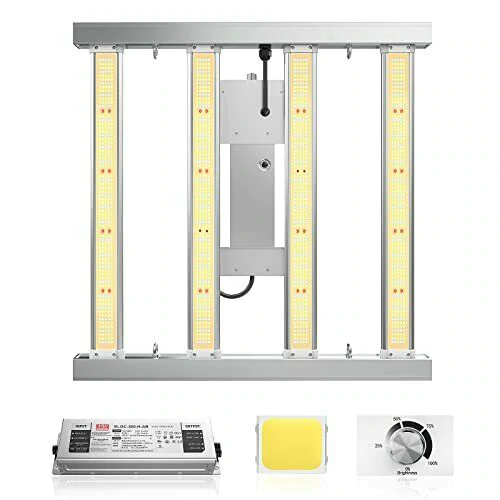
Features:
This MAXSISUN LED grow light uses top components with Samsung diodes and MeanWell driver with a bar light design. It is our most professional LED grow light that fits perfectly into a 3x3 ft space from seeds to harvest. The MG3000 consumes only 300 watts, offers a truly high efficacy rating of PPF per Joule 2.4 μmol/J, empowering plants with plentiful and evenly PAR distribution without hot spot. Keep the same distance between plants and the MG3000. Adjust its brightness for different growing stages. We provide a PAR map including brightness, hanging height, and power draw. A smooth rotary dimmer offers flexibility to reduce the amount of energy while reducing your electricity bill. It helps you master light levels from normal daylight to super bright.
How to Choose the Best LED Grow Lights
Desired Coverage Area
This is an important point you should pay attention to. Often people ask which is the best growing light? It depends. Much of the grow lights are not suitable to fit in the same grow space.
What’s the best hanging height? It depends on the stage of the plant growth you are at. First choose the system dimensions and then choose fixture dimensions and output.
Wattage per Square Meter (W/m2)
Typically for plants, we would suggest 300 to 400 Watts per square meter. Which are levels for hungry light plants. But of course, it will depend on the plant species you want to grow.
You can always dim the light to reach the ideal intensity, depending on your grow stage instead of adjusting canopy height distance. If your intentions are to increase light intensity to high levels of PPFD (ex: >1000 µmol/ms/s in flowering stage) you may have to enrich your grow system CO2 levels.
Light Spread & Uniformity
It is also important to consider when purchasing grow lights to ensure that photons are uniformed through all the entire canopies. There are companies that focus on the dead center of the grow canopy.
For example, 900 PPFD in the center but if you see on the edges the values have less PPFD, like 200. So, uniformity has an important role in your grow system to avoid uneven canopies.
Efficacy (µmol/J)
It is traduced in how efficiently a grow light can take input wattage and turn it into usable PAR. This is an important factor. This specification can be calculated by a grower if not provided by the manufacturer, by simply dividing the total PPF output by the total Input Power. Some LED grow lights may have 1000 Watts but with a low efficacy.
Spectrum
Another big thing to look at. There’s a spectrum graph with all the colours available. If the grower wants to grow indoor, from seedling to harvest he should choose a full spectrum fixture.
Almost 20% of the spectrum is blue which is coming from the white LEDs, ideal for the vegetive stage. Around 48% of it is Red, having a greater impact in the flowering stage.
The left number of photos are majority green, resulting in chlorophyll production and ideal to pass through thick canopies raising the photosynthesis levels. This dimension of light (Light Quality = Spectrum) will have a greater impact on the quality of the crop.
Energy Consumption
In the past, growers just focused on Watts. The higher the value the better.
Watts is a measurement of energy consumption. If you considered a single 1000 W fixture, it means 1 kW of energy consumption per hour. With this you can predict your future electricity bill.
If you are looking to profit from your growing plants, you should do the maths to see if the profit covers these expenses.
CRI (Coloured Rendering Index)
This parameter represents accurately how light can represent plants to its natural colour. There are LED lights that illuminate your canopy with more purple colour and that will decrease the detection of problems in your growing plants.
The higher the CRI the closer a crop will look to its natural colour. Grower’s don´t want to work in a purple place. Bigger CRI values indicate more white light from the fixture.
Quality of the Material
The overall quality of the build materials of the fixture is another aspect. The chassis must be robust and solid. Aluminium heat sinks are also an advantage to exchange the heat more efficiently.
Tips for growing plants under lights
Group together plants with similar lighting needs so they can benefit from the same amount of light.
Purchase grow lights that will fit into your regular light fixtures to help reduce costs. Desk lamps work well for houseplants. Tube lights work well for seedlings and groupings of plants.
Choose lights with adjustable intensities and/or spectrums. Alternatively, choose a grow light with a slightly warmer spectrum for a cozy, ambient light in your home.
Set your grow lights on a timer so your plants get the right amount of light every day. Many grow lights come with a built-in timer. If they don’t, use a plug-in timer to achieve consistent, regular light.
Conclusion
Indoor gardening gets a lot easier with grow lights, and they enable you to cultivate plants at any time of year, in any climate.
Easy to use and economical, you’ll love watching your plants flourish under their nurturing glow!
If you have any questions, or a model you’d like to recommend, drop us a note in the comments below. And if you’re ready to start gardening, be sure to read our tips on how to start annuals indoors from seeds.
Mars Hydro FC-E 3000 300W LED Grow Light VS ChilLED Tech Growcraft X6 mini 330W LED Grow Light
Plants grown indoors typically don’t receive as much light as those that spend their lives outdoors. Many houseplants are specifically suited to lower-light conditions and will flourish inside. Some, however, may need supplemental lighting inside to flourish. Most seedlings that are started indoors to be moved outside when the time is right also get a better start when they’re helped along by grow lights.
Whatever the case, your plants will let you know they’re not happy and one of the steps you can take to address their distress is to set up some grow lights. Additional light will fuel the plants’ ability to photosynthesize, which in turn leads to the ability to create fuel for growth.
Choosing a Grow Light Type — Grow Bulbs vs. Lighting Fixtures
Should you swap out the bulbs in an existing light with special grow bulbs, or should you buy a brand new fixture with built-in lighting? It all depends on what you’re looking for — convenience and cost or specialized quality.
Grow light bulbs are the cheaper option. For most people, it’s easier to use as well. Just take an old lamp or ceiling light that needs bulb replacement, and pop in a specially-designed grow bulb.
Grow light fixtures are more expensive, but they offer a more holistic solution. A single fixture can provide the illumination for multiple plants, dispersing the lighting evenly throughout the space. Because these fixtures are specifically designed for grow light purposes, they tend to provide a fuller light spectrum range than cheaper light bulbs.
What Color Light is Best for Plant Growth?
Violet-blue light in the 400–520 nanometer range encourages chlorophyll absorption, photosynthesis, and growth.
Red light in the 610–720 spectrum range promotes flowering and budding.
Grow lights should provide the proper spectrum of light for photosynthesis, which key to plant growth. Before purchasing a light, be sure to check out the provided color spectrum. Lights that provide a full spectrum are the ideal choice for your growing space.
This is where LED lights come in handy. Most LED growing lights offer both types of color spectrum lighting, so you can get all the benefits.
Mars Hydro FC-E 3000 300W LED Grow Light
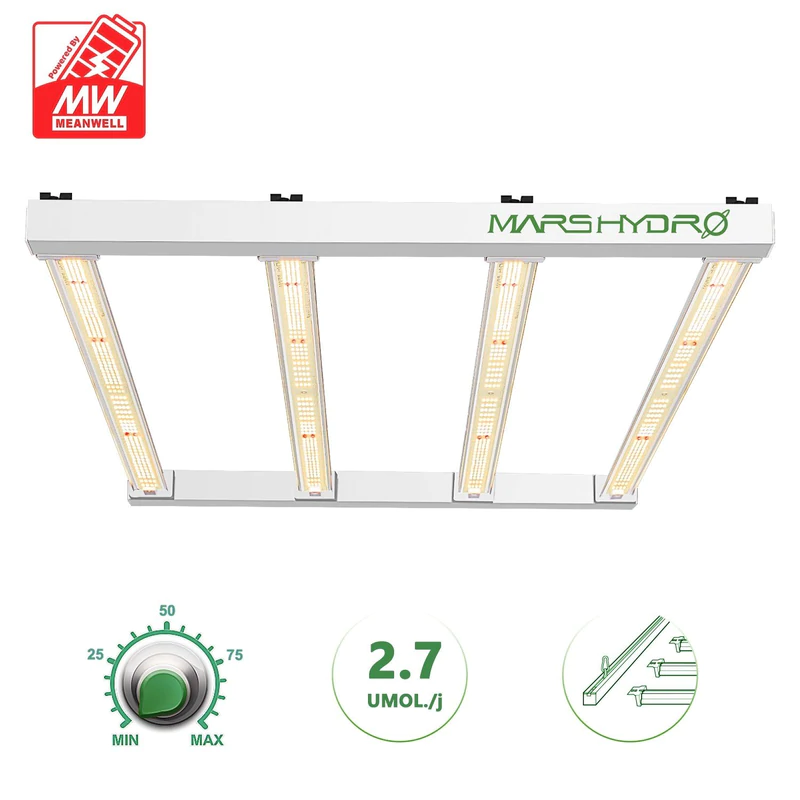
Features:
This Mars Hydro LED grow light with 1184pcs BridgeLux Diodes & Meanwell Driver, market-leading PPF 2.7 µmol/J, Max 2.5g yield/watt with 30% higher Average PPE, more cost-effective compared with other same type lights.Only consumes 300W, perfectly cover 3x3ft (personal), 2.5x2.5ft (commercial) grow space. Built-in removable bars interval & disability enable the exact & dynamic PPFD control over each of the plant growing stages, FC-E3000 detachable bars deliver highly uniform adjustable, PPFD levels throughout the plant canopy, best for more uniform Density Buds. Real Aluminum heatsink together with 4 slim profile passively cooled bars (THINNER & LARGER surface) and detachable Meanwell Driver, create less heat, save 50% energy than other old grow lights.
ChilLED Tech Growcraft X6 mini 330W LED Grow Light
Features:
The ChilLED LED Grow Light features six light bars that provide a footprint of up to 2 x 4. With a compact 1.375" design, it hangs easily in a variety of growing areas. This 6-strip commercial LED grow light is designed and manufactured in the USA with a choice of flowering or plant growth optimized lights to suit your needs. ChilLED LED grow lights can maximize your yield and profit. Switch from HPS to ChilLED and increase your yield and profits by over by 30–70% without adding any additional heat, energy costs or cooling requirements. Market-leading efficiency combined with our adjustable maximum yield spectrum equals unmatched performance. This grow light uses the highest build and component quality — never sacrificed for profit. ChilLED grow lights are built to last.
How to Choose the Best Grow Light for Your Indoor Garden
Grow lights provide a convenient, economical source of artificial sunshine, so your seedlings, indoor herb gardens, and houseplants can thrive throughout the year.
The lights and all-inclusive kits are easy to use, but there’s a huge variety of lamps to choose from.
From LED strips to fluorescent tubes, each has its own characteristics and strengths. And a basic understanding of their features can help you make a more effective decision when purchasing.
Let’s dig into the details a bit.
Why Grow Lights?
For plants to develop in a healthy manner, they need to capture and convert energy from the sun. This is the process of photosynthesis, and it provides plants with the fuel needed for vigorous development.
A vertical picture of lettuce plants growing hydroponically in an indoor garden under a lamp on a soft focus background.
In the absence of adequate sunshine, plants can become leggy, stretch for the sun, and fail to thrive.
Grow lights provide an artificial source of luminous energy, providing the different frequencies in the color spectrum that plants need throughout all their phases of their development — from sprouting as seedlings to setting fruit.
The Electromagnetic Spectrum
The sun emits all the frequencies found within the electromagnetic spectrum, including those of visible light — violet, indigo, blue, green, yellow, orange, and red.
A close up of two pots of microgreens growing indoors under a lamp, on a soft focus background.
These are the frequencies plants need for normal development.
Blue — Blue is the first color absorbed by plants and is essential at the beginning, or vegetative, stage.
Purple — Purple also helps in the vegetative stage, although purple by itself does not provide effective energy for photosynthesis.
Green — Green is primarily reflected, but small amounts are retained and contribute to energy conversion.
Yellow — Yellow is the least effective for the purpose of photosynthesis.
Red — Red is needed in the mature, flowering stage for blooms to form and is most effective when combined with blue. Red alone should not be used in the early, vegetative stages.
White — White is the combination of all colors in the visible light spectrum and can be used effectively for all stages of a plant’s development.
So, for seedlings and leafy green vegetables, higher spectrum bulbs in the blue range are required.
But if you want plants to flower and set fruit, you’ll also need low spectrum red colors.
Or, you can make things easy. Use a full spectrum, white bulb to satisfy all stages of cultivation.
Lumens vs. Watts
It used to be that a bulb’s brightness was indicated by wattage. For example, a 100-watt bulb gave one and a half times the luminosity of a 40-watt bulb.
A close up of frilly lettuce plants growing indoors under a lamp on a soft focus background.
But due to the advent of energy efficient bulbs, wattage is no longer a good indicator of brightness. Wattage simply shows the amount of power drawn to produce a lamp’s brightness — which is now commonly indicated by lumens instead.
For example, an energy-efficient LED of 1,600 lumens has the equivalent brightness of one 100-watt bulb — but it only consumes up to 22 watts of power. And a comparably bright CFL bulb will use around 26 watts.
Basically, the higher the lumen value, the brighter the light will be. For seedlings, approximately 2,000 lumens per square foot is adequate. Flowering crops can require as much as 10,000 lumens per square foot.
Conclusion
LED grow lights are incredibly effective in growing plants and are guaranteed to give you the best quality harvest! LED grow lights are designed to be energy-efficient and help save on electricity costs. The LED bulbs are highly durable, so they last a long time and don’t require frequent replacements. LED grow lights are usually more affordable than other grow lights such as HPS or MH lights. These lights are also great if you need a grow light that cools down quickly; within a few seconds of turning the light off, the temperature of the bulb stays cool.
Happy growing!
AC Infinity IONBOARD S44 400W Full Spectrum LED Grow Light VS VIVOSUN VS4000 LED Grow Light
When it comes to finding the best LED grow lights, there’s going to be a lot to consider, and that’s where we’re here to help point you in the right direction.
They can be a convenient solution for growing indoor plants, especially if you don’t get that much light where you live, and also during winter when light levels are reduced, anyway.
A key thing to look out for first and foremost is going to be price. Some grow lights are pretty affordable and therefore are a superb choice for everyone, whilst others can be a little pricey, so it’s worth weighing up how much you want to spend on some grow lights.
In addition, you’ll also want to consider their brightness and efficiency, which leads you into the debate of whether you go for fluorescent or LED bulbs. Fluorescent bulbs are cheaper but less efficient than LEDs, and LEDs do need to be placed further away from plans than their fluorescent counterparts.
This leads nicely onto the point of space. If you’re working with a more compact growing space, then go for some fluorescent lights as these can work when hung as little as three inches above the plants, whilst LEDs usually work best between 14 and 24 inches.
This distance also works hand in hand with the brightness figure — the more lumens, the brighter the light. If you get some brighter lights, you don’t need to position them as close to your plants as if they’re a little dimmer.
So, with all this in mind, we’ve listed what we think are some of the best grow lights based on specs, general reviews, and features they offer that we think to make them stand out from the crowd, plus answered some of your most frequently asked questions too.
Let’s get into it — here are some of the best grow lights out there today.
AC Infinity IONBOARD S44 400W Full Spectrum LED Grow Light
Features:
This full spectrum LED grow light is designed with algorithmically positioned Samsung LM301B diodes to maximize plant yield. Features proprietary drivers for dimming, daisy chaining and interfacing with our smart controllers. Built on a fanless unibody aluminum plate for heat dissipation and longer diode life. All components are sealed to IP-65 standards for optimum performance even in high temperature and high humidity growth environments. Includes a pair of metal rod hangers and rope hangers. This LED grower is specially designed for growing a variety of plants, fruits and vegetables with interior reflective mylar lined grow tents.
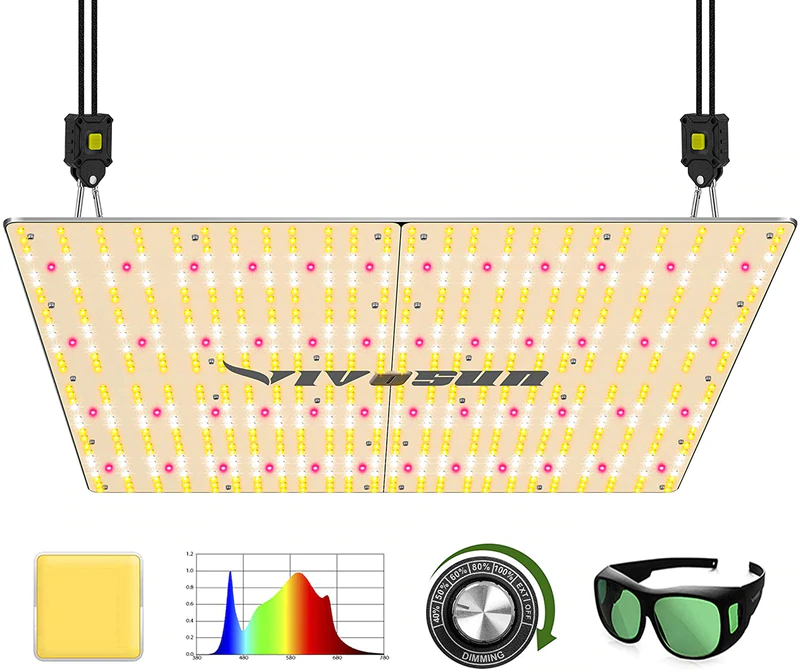
Features:
VIVOSUN LED grow light uses the latest LED plant light technology including Samsung LM301H Diodes, high-energy efficiency with 2.9 umol/J. Extremely high output but consumes only 400W of electricity, more efficient than traditional HID lamps and other plant lamps on the market. VS4000 LED grow light has a dimming knob that makes it adaptable to different growing periods of your plant by adjusting its output from 40% to 100%. The VS4000 full-spectrum LED delivers optimal full-spectrum coverage — offering power needed by your plants at all growth stages and maximum PAR output at various distances, supporting photosynthesis of your plants in an efficient way.
How To Choose The Right Grow Lights?
Listed below are some key features to look for when you choose a grow light.
LED Output and Power: When selecting your ideal indoor grow light, we recommend looking at the LEDs’ output in your prospective light. The average small grow light for seedlings needs between 45-Watts to 80-Watts of light output. That’s enough lumens to help your plants achieve optimal growth.
LED Quality: The quality of the LEDs in your grow light makes an enormous difference in service life. The average high-quality T5 LED should provide you with at least 10,000-hours of service life before replacement.
Timers: The best grow light for seedlings comes with timers. You get the option of setting your light cycle to 3-hours, 6-hours, or 12-hours, depending on your plant’s needs.
A timer is a handy feature in your light, allowing you to control the light cycle. However, if your model doesn’t come with a timer, you’ll have to purchase one separately or rely on manual operation.
Color spectrum: This is the most crucial feature of the grow light. Indoor plants require full-colour spectrum light, which outdoor plants receive from sunlight.
Programmable: A programmable light reduces the incidence of errors.
Cooling system: Since the lights also produce heat, it is essential to look for an excellent cooling system to prevent the plants from burning or drying.
Size: If you require a large footprint, then go for a large grow light. You can choose the more aesthetic desktop or free-standing smaller models for smaller plants. Choose a lightweight, compact glow light for easy portability.
Ease of use: Some grow lights are easy to use, while others require a lot of effort for installation. When you buy a grow light, you must consider the one that is easy to operate.
Noiseless operation: Choose a grow light that does not have noisy cooling fans.
Conclusion
By now, you should have your eye on a few prospective models for your LED grow light. Light is an essential element for the development of your plants, and choosing the right lighting system makes a significant difference in your plant’s yield at harvest time.
