ECO Farm 240W Samsung LM561C Quantum Board VS VIPARSPECTRA XS2000 LED Grow Light
Need help choosing the best LED grow lights for your indoor grow? Use this complete guide to help narrow down your LED grow light options.
LEDs are regarded as some of the best indoor grow lights on the market. But there are so many out there it can be tough to plants out the cheap, unreliable brands and models from the quality ones. And with the high price of some grow lights, it’s crucial that you do your research before purchasing.
Advantages Of LED Grow Lights
LED grow lights outperform traditional HPS fixtures in yield per watt while also promoting a significant increase in overall quality because of their targeted spectrum, which includes UV and IR wavelengths.
LED Grow Lights have been demonstrated to enhance the production of oils and terpenes by up to 80%, as well as provide tighter internodal spacing and denser fruits and flowers than alternative grow lights because of having IR and UV wavelengths.
They can produce this significant improvement in quality while using 50% less energy than HPS fixtures. Because LED lights provide less heat, they do not need to be air-cooled like HPS lights, removing the need for additional fans and allowing them to run more quietly.
Lower light temperatures result in a much easier to maintain grow environment. Because each diode in a LED light is programmed to emit a specific color and a particular proportion. They can emit the exact spectrum that a developing plant requires thriving, with little to no waste.
If you want to save money, get a few LEDs to offset your costs and provide excellent results.
ECO Farm 240W Samsung LM561C Quantum Board
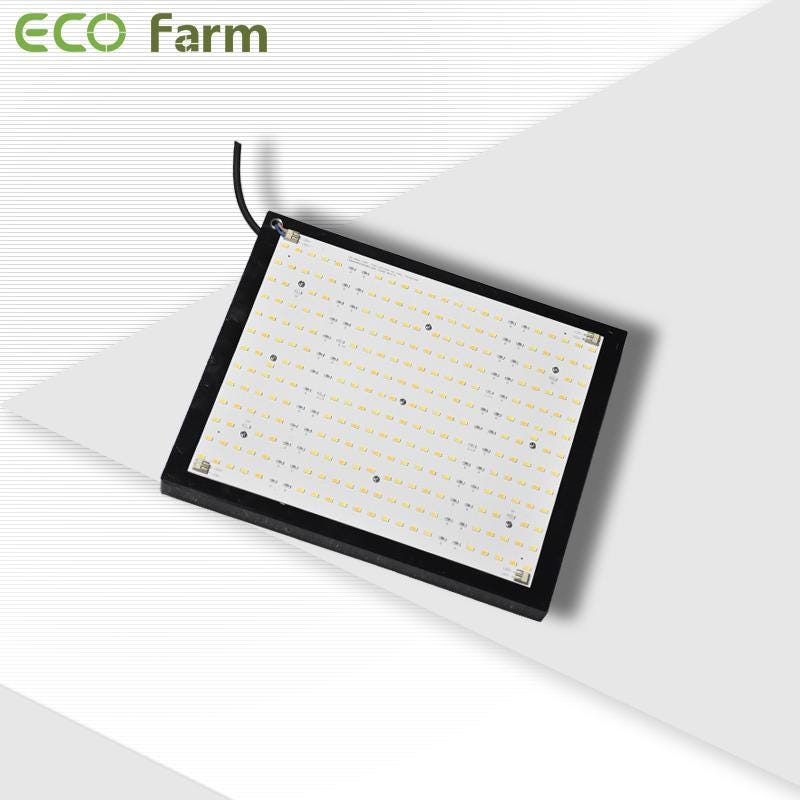
Features:
The ECO Farm grow light’s each board of the full-spectrum LED growth board uses Samsung LM561C LED chips. Its PPF per joule is 2.5 umol/J. Its power is 240 watts, however, it is so energy efficient that it uses half of the power. It can accept AC power from 100 to 240 volts. Our growth light bar provides everything that plants need, which is very suitable for all kinds of indoor plants, vegetables, and flowers at all growth stages, and is especially helpful for plants.
Independent and detachable power supply design helps you reduce the cost of repairing led plant lights.
It emits only half of the heat. The shell of the long light board is made of aluminum, which has excellent heat dissipation, does not require a cooling fan, and runs quietly. You can use it in a well-ventilated planting tent, but the planting light itself does not require an additional noisy fan.
VIPARSPECTRA XS2000 LED Grow Light
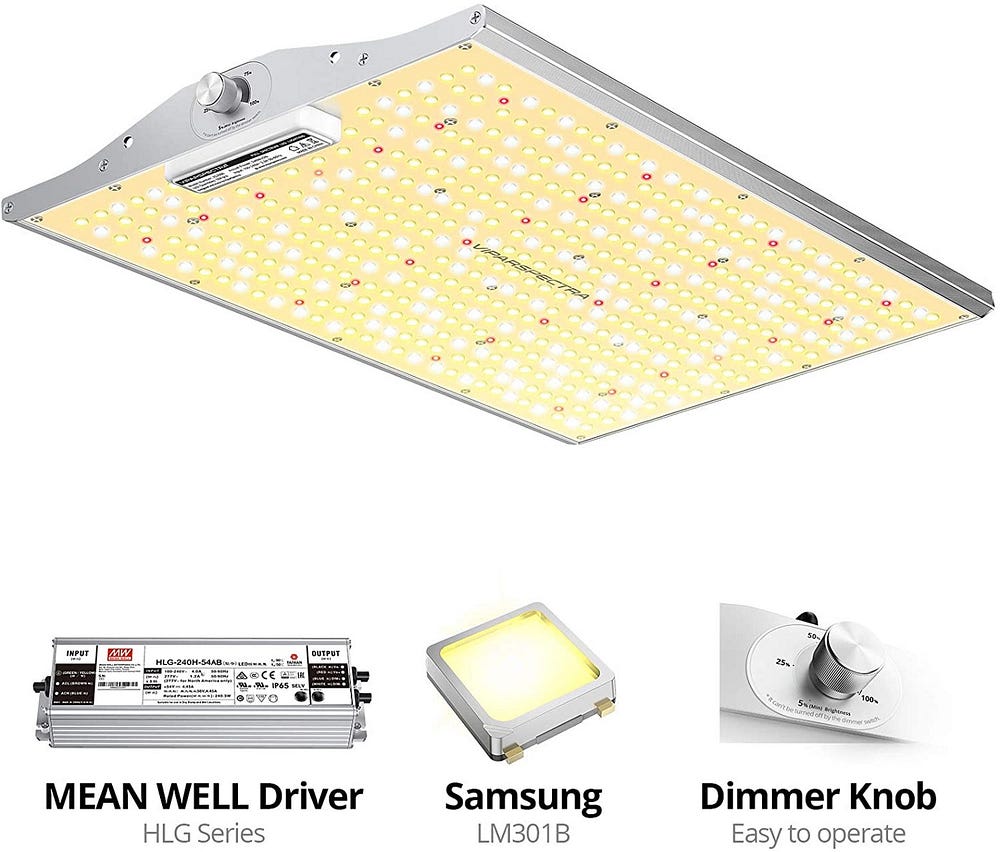
Features:
VIPARSPECTRA LED grow light adopts the latest high-quality LEDs technology-Samsung LM301B diodes, high energy efficiency LEDs increase yield of crops and save operation cost, generates more usable lighting per watt and provides better light canopy penetration. Consists of 3000K warm white, 5000K white, 660nm deep red, and 730nm IR light, which providing your plants with excellent full spectrum led grow lights. No fans zero noise. Large areas of solid aluminum heat sinks help you to achieve the ideal cooling system. Adopts high safety performance MEAN WELL HLG series driver to achieve high PAR output, longer lifespan to speed up plant’s grow processes and boost yields while saving you on your energy bill.
How To Choose The Right Grow Lights?
Listed below are some key features to look for when you choose a grow light.
Color spectrum: This is the most crucial feature of the grow light. Indoor plants require full-color spectrum light, which outdoor plants receive from sunlight.
Programmable: A programmable light reduces the incidence of errors.
Cooling system: Since the lights also produce heat, it is essential to look for an excellent cooling system to prevent the plants from burning or drying.
Type: There are various types of grow lights, from overhead hanging panels, free-standing tripod designs to bulbs that fit into light fixtures. The choice of glow light depends on the plants’ type, location, and natural light available.
Size: If you require a large footprint, then go for a large grow light. You can choose the more aesthetic desktop or free-standing smaller models for smaller plants. Choose a lightweight, compact glow light for easy portability.
Ease of use: Some grow lights are easy to use, while others require a lot of effort for installation. When you buy a glow light, you must consider the one that is easy to operate.
Noiseless operation: Choose a glow light that does not have noisy cooling fans.
Light is one of the key factors for a plant to grow. If you are planning to grow a plant indoors, you will need an artificial grow light that can substitute the sunlight to help the plant grow properly. When looking for an artificial grow light, you need to consider factors such as the plant’s size, type, color spectrum, cooling system, and more to ensure optimal functioning. We recommend choosing a product that is waterproof, durable, portable, energy-efficient, full-spectrum, and has a warranty period.
Conclusion
Many people choose to use LED Grow lights because they are energy-efficient, and this helps contribute towards healthy plant growth in various indoor environments like homes, greenhouses, patios, bedrooms, etc. LED fixtures to produce bright colors (red, orange, yellow) are usually the most effective ones for growing plants indoors. There are other ways that people use these lights to help their plants grow, but using them as supplements is one of the easiest and straightforward options.
ECO Farm FLD 320W Full Spectrum Dimmable LED Grow Lights Bar VS MAXSISUN MG3000 300W LED Grow Light
When you decide to buy LED Grow lights, you are making a decision to not only invest in your indoor grow, but also want to make sure they are the best led grow lights. Over the years, growing lights have proven to be of quite an importance and ever since LED lights have gone popular as a technology, a lot of indoor growers have been switching to these kind of lights!
Over the course of this article, we will first cover the purpose of grow lights, then we look at the factors that you need to consider before you buy a LED grow light, and then at the best LED grow lights.
We have created a list of some of the best LED grow lights on the market for 2022 . There are many lights to choose from, so this list is not exhaustive.
What is the Effect of LED Grow Lights on Plants?
A few colored models have a direct connection to the intended purpose. According to some studies, a few specific colors can influence plant growth, affecting root and flower formation. For example, it indicates that most plant sorts complete a normal growth cycle while exposed to blue and red models. Adding other colors to the spectrum like green, far-red, and deep-blue will help you add the process.
A spectrum containing all colors is known as a full spectrum, and it looks like the sunlight. When it has high proportions of green, you will see white light. LED grow light’s full spectrum help to make a visual inspection of the plants possible.
ECO Farm FLD 320W Full Spectrum Dimmable LED Grow Lights Bar

Features:
This ECO Farm LED grow light with upgraded SMD 3030 chip 6 passive-cooled led bars, higher light intensity, less light decay, better lumens, and PAR values than ordinary LED chips. FLD 320W uses 1200 LED chips that consume only 320W, perfect coverage for 3x3ft, helps you achieve maximum quality and quantity. The intensity of light can be adjusted according to the needs of plants. It can be freely adjusted lighting intensity as plants need growth at different stages with dimming options ranging from 0 to 10 levels. SMD leds spectrum is white 3000K leds, white 5000K leds, 660nm red led, and 740nm IR leds. Master light is easily controlled for commercial & home horticulture.
MAXSISUN MG3000 300W LED Grow Light
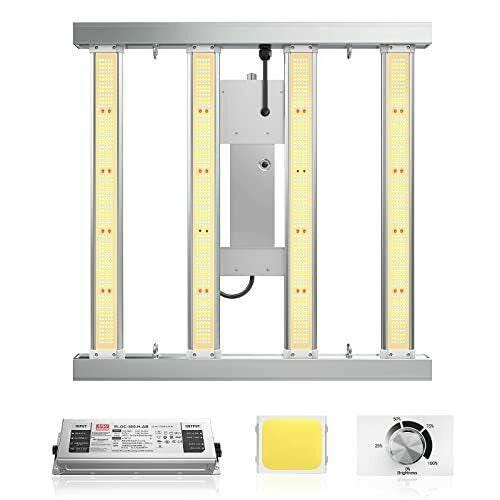
Features:
This MAXSISUN LED grow light uses top components with Samsung diodes and MeanWell driver with a bar light design. It is our most professional LED grow light that fits perfectly into a 3x3 ft space from seeds to harvest. The MG3000 consumes only 300 watts, offers a truly high efficacy rating of PPF per Joule 2.4 μmol/J, empowering plants with plentiful and evenly PAR distribution without hot spot. Keep the same distance between plants and the MG3000. Adjust its brightness for different growing stages. We provide a PAR map including brightness, hanging height, and power draw. A smooth rotary dimmer offers flexibility to reduce the amount of energy while reducing your electricity bill. It helps you master light levels from normal daylight to super bright.
How to Choose an LED Grow Light?
The LED grow light is efficient for trees and plants of the winter-prone countries. If you’re habituated to a winter-prone country, you should learn that the sun doesn’t easily reach the earth’s surface.
Consequently, the trees and plants of the earth don’t get the proper nutrients that they require. However, if you plant indoor trees, you’ll probably have the same problem of not having sunlight.
Using the LED grow light efficiently reaches the indoor plant where the sunlight can’t reach. But, how to choose an LED Grow light? Let’s see!
Plants You’re Growing
Before buying the LED grow light, you must first figure out what types of plants you’re growing. You must decide the kind of Grow light based on the plants or garden you’re growing.
For example, if you’re growing seedlings indoors, the grow light with sufficient light and temperature can help you.
When growing propagating plants, choose the grow light that correctly propagates your indoor plants.
If you’re growing plants indoors, like herbs, and greens, you’ll need the grow light that helps them grow.
Durability
Regardless of what types of grow light you choose, you must check for their durability. The durable grow light serves your greenhouse for a long time without any problem.
So, when you invest in durable LED Grow light, it is definitely worth your hard-earned money.
Area of Growing
Growing plants indoors will need the LED light with plenty of light if you’re growing plants indoors.
Moreover, you might need numerous LED lights to produce light when you have a more extensive garden indoors. Several LED lights are also crucial for the garden at larger greenhouses.
So, check the quality and light providing the capacity of grow lights when you’re buying them for a larger space. Apparently, you’ll need a less LED light for your larger garden when your grow light has a high capacity for providing lights.
Heating System
Your money after the LED light will be worth it only when it meets your purpose of producing accurate heat.
Ensuring proper light is vital for the steady growth of the plant. Because too much heat production from LEDs will damage their development. Sometimes, the small plants might die.
Poor quality LED construction is one of the top reasons for overheating. So, confirm that you buy high-quality LED grow light from the best brands, and the LED isn’t producing unbearable heat.
Budget
Your budget should never be so cheap when you’re buying the LED grow light. Usually, the top branded high-quality LED light comes at a higher price.
If you’re somewhere, find the cheaper variants of LED grow lights, they must be affordable for you. But, unfortunately, those types of Grow lights are harmful to your garden.
So, when you’re selecting the best LED Grow light, make sure that your budget doesn’t become a restriction.
Cooling System
Even though your LED light produces soothing heat, still, it can become overheated due to long-time use.
If your grow light continuously serves for 15 hours or more, it’s harmful to your plants. Fortunately, some Grow light features with a proper cooling system make your garden care safe and sound.
So, give a check your Grow light whether it features a cooling system or not before you buy it.
Programmable
The programmable LED light has several types of features that make it worthy of your investment. Due to programmability, you can quickly turn on and off the light, creating a schedule whenever you want.
Besides this, you can adjust the intensity of light and spectrum if you buy the programmable LED grow light. So, select the programmable LED Grow light for quick and efficient use.
Conclusion
With the current planting mode, LED grow lights seem to be the future of indoor gardening. If you have zero experience growing with HID lights or just any other lights, we recommend beginning with LED grow lights. This is because LEDs are cost-effective, cheaper, and ultimately the future of indoor gardening. Many people also like to change lights at different growth stages, which is not good. We highly recommend using the same lights at all stages to avoid shaking the plant and increase yield. With the options and buying guide above, you can now make a wise decision according to your budget and needs.
Viparspectra KS2500 250W LED Grow Light VS FloraGear FLORA X4s 240w Full-Spectrum LED Grow Light
Planning to grow herbs indoors? Growing sustained, harvestable amounts of herbs indoors require long periods of intense light (6–8 hours of direct light for most varieties).
Why? Abundant light is essential for helping herbs produce the oils that give them their distinctive flavors.
Without the right amount of light, your herbs won’t taste much like … well … herbs.
Sunlight is ideal for herbal plant growth, but when growing indoors it’s not always possible to get enough, especially during the winter months.
What is the difference between and regular LED light and an LED grow light?
The answer is that plants require a much higher light intensity to grow plants effectively than humans need for vison. The minimum light intensity required to grow plants is at least 30 times greater than required for human lighting in an office environment for example.
High light intensity is required to drive photosynthesis which generates plant growth. Photosynthesis occurs when photons of light reach the plant leaves and causes a reaction which generates plant growth. The measure of light intensity for plant growth is called Photosynthetically Active Radiation or PAR and includes photons of wavelengths from 400nm to 700nm or from deep blue to deep red. It is about the same range of wavelengths as the visual range for humans.
LED grow lights are designed to withstand the high humidity in a grow room and will be able to withstand condensed water dripping on the grow light. The LEDs are often protected with a silicone or acrylic coating and the connectors and cables are Ingress Protection (IP) rated so that they can operate in damp conditions.
Viparspectra KS2500 250W LED Grow Light
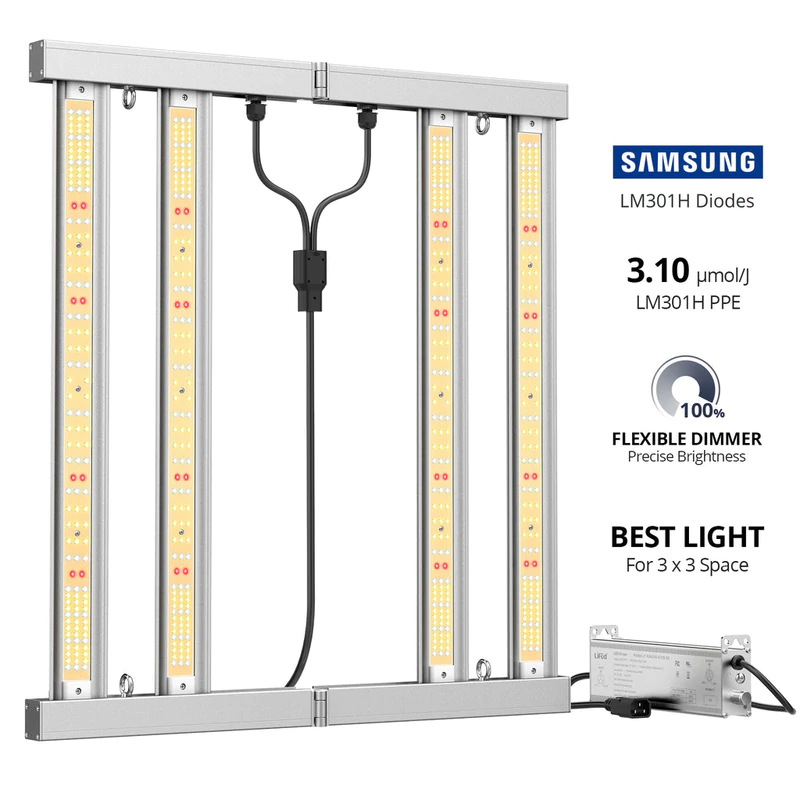
Features:
The VIPARSPECTRA LED Grow Light uses the market leading Samsung LM301H diode (3.10 μmol/J), a more energy efficient LED that increases crop yield and saves operating costs. The KS series is designed for individual or commercial growers who want to optimize their growing space for maximum crop yield while producing the highest quality crops. Composed of 3000K warm white, 5000K white, 660nm deep red and IR730nm, it provides your plants with an excellent spectrum, tailored for germination, vegetative and flowering applications in indoor environments. The KS2500 delivers high light output and consistent uniformity with market-leading efficacy, consuming only 250 watts of perfect light for 3'x3' coverage.
FloraGear FLORA X4s 240w Full-Spectrum LED Grow Light
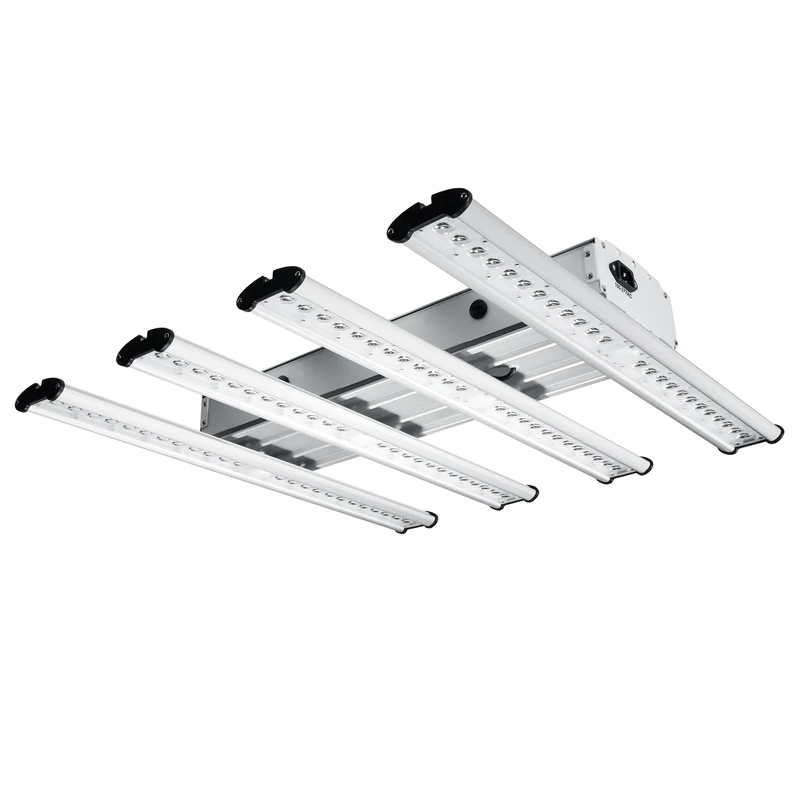
Features:
This FloraGear LED grow light is ideal as a stand-alone light for small tents, or as a “travel” light in larger HPS or CMH grows. Designed for serious growers, the FLORA X4s are equipped with OSRAM LEDS and are the ideal system for vegetables and bloom/bloom spaces up to 3'x3'. Designed and built for rugged reliability, the grow light’s 240-watt full-spectrum LED light provides the steady input plants need to reach their full genetic potential during the vegetative and flowering stages. Can be part of a system of up to 100 lamps using an RJ14 hardwired network. It is designed to operate in wet spaces: the transparent lens hood protects against moisture.
Factors To Consider When Choosing A LED Grow Light
There are a couple of factors you need to put into consideration before choosing a LED to grow light. There are lots of advantages to getting LED to grow light and compared to incandescent lamps, they are energy efficient and emit less heat too. LED grow lights are available in different sizes, intensities, colors to suit your plants.
So to make sure you are choosing the right one for your indoor plants, here are factors to consider.
1. Power Consumption
Since LED lights are designed to emit less heat then you need to make sure they are energy efficient. Although they are made to consume less energy but high-power LED lights should be chosen carefully. But typically you should expect energy savings to the tune of 25% to 30 %.
2. Light Spectrum
The colors produced by the LED grow light plays an important role in the growth of your indoor plants. LED grow light needs to be user-friendly and not so bright that it hurts your eye. Ensure you are choosing one with quality light and easy-to-operate features.
3. Duration
How long the light is going to last is also another very important factor. It is important to go for one that can provide your plants with light for a period of 24 hours and also ensure it can be controlled. A programmable timer should come with it so you can easily turn the lights on and off.
Conclusion
As you can see, there’s plenty to consider when shopping for a new LED grow light. But the most important aspects to keep in mind when shopping are the PAR your plants need, the wavelengths they need to thrive, and the footprint of the lights you’re looking at.
When you know the light intensity your plants need, what wavelengths they thrive on, and how much area you have to cover, you can pin-point the exact grow light you need. From the size to the type, the more you know about your plants, the easier you’ll find the right light. So when you have the right light growing your plants, you’ll get the yields you’ve been working toward.
And you’ll do it using less energy while getting more intensity over HID’s.
ECO Farm SP-400 Samsung Foldable Dimmable Full Spectrum LED Grow Light VS PRO TECH 430W LED Grow Light
LED grow lights continue to be a popular choice for indoor growers and indoor gardeners who are always looking for the best products to help them and their plants succeed.
The newest crop of LED grow lights use less energy than traditional bulbs, which means they’re more efficient and cost-effective in the long run. They also last longer and produce a brighter light that will make your plants thrive like never before and because they emit very little heat, you can put them closer to your plants without worrying about damage to your crops..
The demand for high-quality, versatile, and energy efficient LED grow lights is skyrocketing in response to demand for easy-to-use indoor garden lighting, growing concerns about electricity costs and usage as well as a desire for more options to customize your indoor gardening space to suit both edible and medicinal plants in addition to the needs of the grower.
There are many LED grow lights on the market to choose from and we want you to know which ones will work best for your indoor garden. This year’s new models will offer improved light spectrums and higher yields with better coverage than ever before, and we’ve included some older models just can’t be beat. And with so many options available, it’s never been easier or more affordable to upgrade your lighting system and find the best led grow lights for you! Here is a list of the top picks that we think will fit your needs.
When to use Dimmable Led Grow light?
LED Dimmable grow lights work equally well for all phases of plant growth; seedling started plants through flowers/fruits.
However, the grower must know how to use led grow lights dimmable to avoid any uncertain situation that may become a nightmare for him.
Manufacturers’ guides often tell you not to dim the LEDs until the plant bloom, but this is impractical. Your plant will be dim unless you dim at least somewhat during seedling phases. The solution is choosing LED grow lights dimmable that are most likely to work well with dimming and keep your plants thriving.
Although dimming is not required for plants during their vegetative phase, dimming in the vegetative stage can negatively affect growth patterns.
But make sure that your LED dimmable grow lights are designed to create a reasonable range of dimming values. So, you can dim them slightly for vegetation, if necessary, without risking overdriving even if it means taking care not to dim too much in flowering or seedling stages.
Dimming during flowering may be necessary to keep plants from getting too tall if you want to grow them sideways rather than vertically in a hydroponics system where light distribution can’t be controlled.
ECO Farm SP-400 Samsung Foldable Dimmable Full Spectrum LED Grow Light
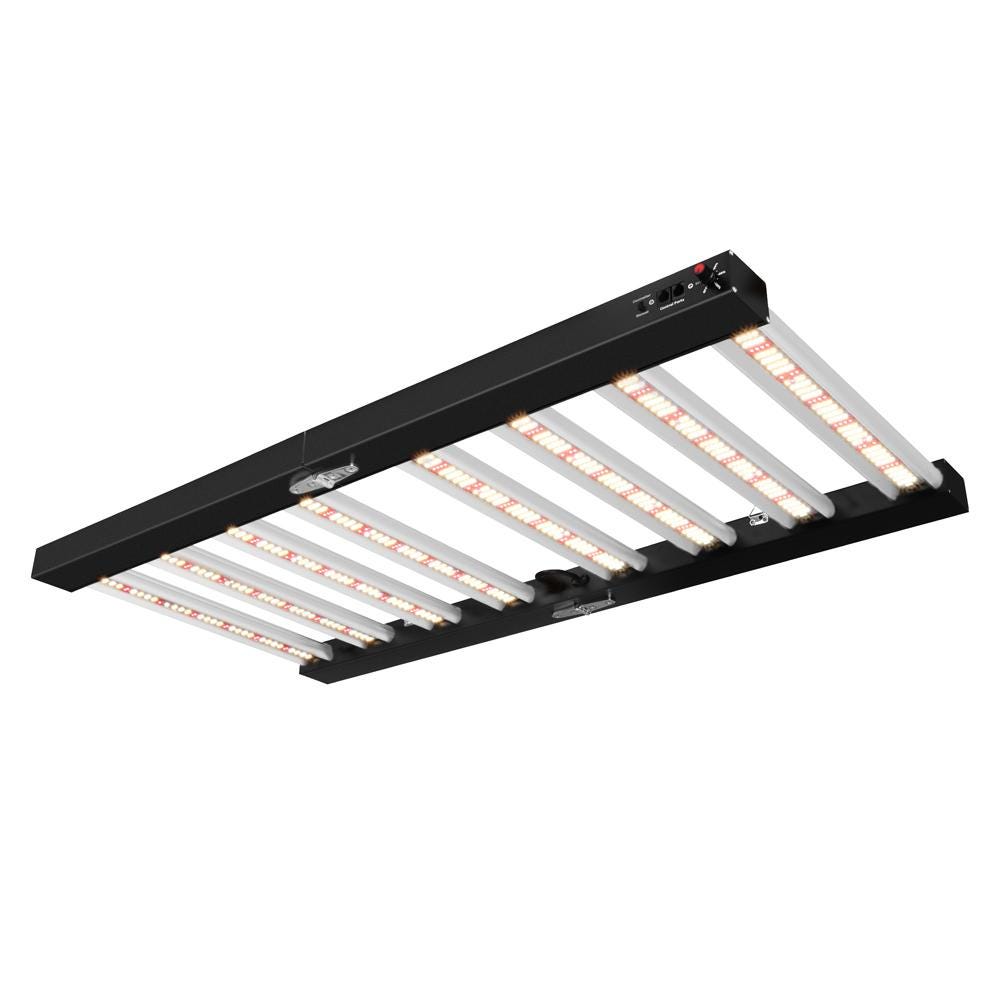
Features:
The ECO Farm LED grow light has lm281b leds(3000k+5000k) +RED 660nm+IR 730nm +UV 395nm ,provides the plant with the full spectrum from seeding to flowering. This light offers great help for all stages of plant growth; It offers more than enough white light, which boosts plants’ blooms, making flowers bigger and more vivid; Blue light promotes plants’ germination, and red light leads to higher yields when combined with blue light.This LED light is more than 50% higher in PPFD compared to HID lamps, as well as having 37% lower power consumption regarding energy saving; This high quality LED light is able to support your plants’ photosynthesis in an optimal, efficient way. The fixture can fold up to 180 degrees, making it compact and easy to install; It won’t take up much space, thus keeping your storage room tidy. With dimming options, this LED grow light can satisfy a range of needs.
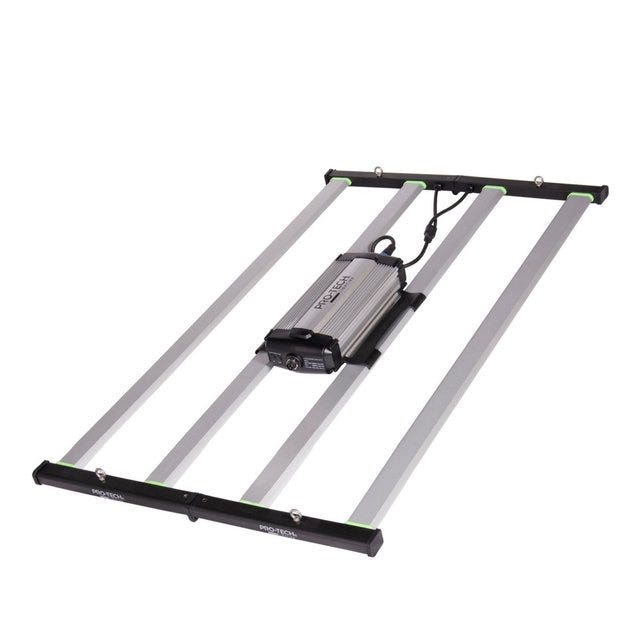
Features:
Pro Tech LED grow light is a linear multi-light bar fixture producing a high PPF of 1200 µmol/s and a Photon Efficacy (fixture efficiency) of 2.8 µmol/J. Its full spectrum horticultural LED solutions balance light quality (spectra) with light quantity (intensity and duration) sufficient to provide single-source lighting for the entire grow cycle from vegetative through the flowering period. The array of LEDs create a uniform spread of light at a short distance to the crop enabling single source grow lighting for multi-layer cultivation systems, single benches in low rooms, and grow tents. This LED grow light is built using high-quality Pro Tech drivers and top bin LEDs from Samsung and Osram generating a full-spectrum light source ideal for veg and flowering cycles.
Things to Consider Before Buying Grow Lights
Grow lights are meant to help your plants grow strong and healthy, so it’s important to have a good understanding of what to look for before choosing a product for your setup. Consider the brightness of the light, the light spectrum that each product can produce, and the type of grow light that would be best for the size and configuration of your grow tent.
Brightness
In most circumstances the brightness of a light would be measured in lumens. However, lumens can only be used to measure visible light. Plants are capable of absorbing a wider spectrum of light for photosynthesis, which is known as the photosynthetically active radiation (PAR) zone. So, the PPF and PPFD are required to adequately measure the brightness of a grow light.
– PPF is the standard measurement used for determining the amount of light within the PAR zone created by a single light source per second. Grow light manufacturers measure PPF in micromoles per second (μmol/second). In general, grow lights with a high PPF value are considered more effective, especially if the lights can be dimmed to reduce light when necessary.
– PPFD is the preferred measurement when you know the size of the area where the light will be set up. The PPFD indicates the amount of light within the PAR zone that will actually reach the plants or fall within a given surface area each second. Grow light manufacturers will sometimes provide the PPFD, though it’s important to note the size of the tent or room where the PPFD was set — otherwise, the measurement isn’t as useful for determining the actual output. PPFD is typically measured in micromoles per meter squared per second (μmol/m²/s).
Light Spectrum
Natural light from the sun has a spectrum of waves that includes blue light, purple light, red light, indigo light, infrared light, and more. Plants are exposed to the full spectrum when they grow outdoors, but for indoor setups, you will need to consider light spectrum when choosing the best grow lights. Certain colors are more important for your plants’ growth than others, so it’s common to see grow lights that offer full spectrum white lights as well as others that feature a series of colored lights to better control the plant’s various growth stages.
– Blue light is essential for plants to grow from seedlings because it’s the first color on the light spectrum that can be absorbed by plants when they are still in a vegetative state. It’s also necessary throughout the remainder of the plant’s life to help with photosynthesis, leaf expansion, photoperiodic flowering, and leaf curvature towards light.
– Purple light isn’t as important as blue light, but it can improve photosynthetic processes, especially when the plants are young. Adding purple light at later stages doesn’t harm plants, but the effects of this light decline as most plants mature.
– Red light is another key light on the spectrum for healthy plant growth. It can be used to help seedlings sprout and grow, but the effects of red light aren’t really noticeable until the later stages of growth and budding. Both blue and red light are the most important for growing healthy plants.
– White light is the easiest option to go with, especially for beginner growers, because it contains every color on the spectrum. For this reason, white lights are typically referred to as full spectrum lights by manufacturers. White lights encourage growth throughout the entire plant life cycle, but experienced growers may prefer the precise balance and control over plant development that they can achieve with blue, purple, and red spectrum lights.
Conclusion
We hope you’ll find this list of the best LED grow lights for 2022 helpful while shopping for the best LED grow light for your indoor garden of growth. The lights we discussed above offer improved light spectrums, higher yields, and better coverage than ever before. They are also affordable so if you want to start growing your own vegetables, flowers, or medicinal herbs, these lights can help you do just that without breaking the bank. The first step is choosing a light that suits your needs and if you need any other help, our expert staff can help guide you on how to do everything else from there.
Mammoth Lighting 10 Bar 740W LED Grow Light VS ProGrowTech Evolve Series LED EV700
Growing plants indoors needs a lot of care, with particular attention to light and water for your plants. Proper lighting is of paramount importance if you want to grow plants inside your home. Growing indoors has several advantages, resulting in indoor-grown plants having better quality than those grown outdoors. This is a primary reason why plants grown indoors is used for recreational and medicinal purposes.
There are different types of grow lights that you can use to nurture your plants. With the right grow light fixtures, you will be able to improve the THC level of your plants, which enhances the quality of your plants. Growing plants indoors also means you get to control the lighting according to your needs instead of just relying on natural light.
WHAT IS LIGHT SPECTRUM?
The light spectrum is the different colors (aka wavelength) a source of light can emit. Light is measured in nanometers (nm) and each nanometer represents a band of light (a band of light is a section in the color spectrum). Humans can see a small part of the spectrum, between 380 to 780 nanometers, which means we can only see the colors ranging from violet to red. Even though it appears white, the sun is a full spectrum light source and contains the whole spectral wavelength. That’s why rainbows happen. When raindrops refract light into individual wavelengths you can see all the colors (visible to humans) that make up sunlight.
In nature, plants grow under the sun, receiving the whole spectrum of wavelengths. This means we have to provide the maximum amount of wavelength possible for the best development of our plant. Although it’s not essential, it is considered good to provide the best light spectrum to encourage plant growth. Remember this is not a rule, you can grow your plant from seed to harvest with any light spectrum or amount of light but this can seriously affect your harvest.
CAN LIGHT SPECTRUM IMPROVE YIELDS?
Utah State University also conducted research to see how the different spectrums can affect yields,.
Again, there is a difference in yields but is not significant, which means that yes, growing under the right light spectrum will result in slightly better yields and slightly more trichome production but you don’t need to buy a new light, as long as you’re providing enough light and are taking good care of your plants you will still get excellent results.
Mammoth Lighting 10 Bar 740W LED Grow Light
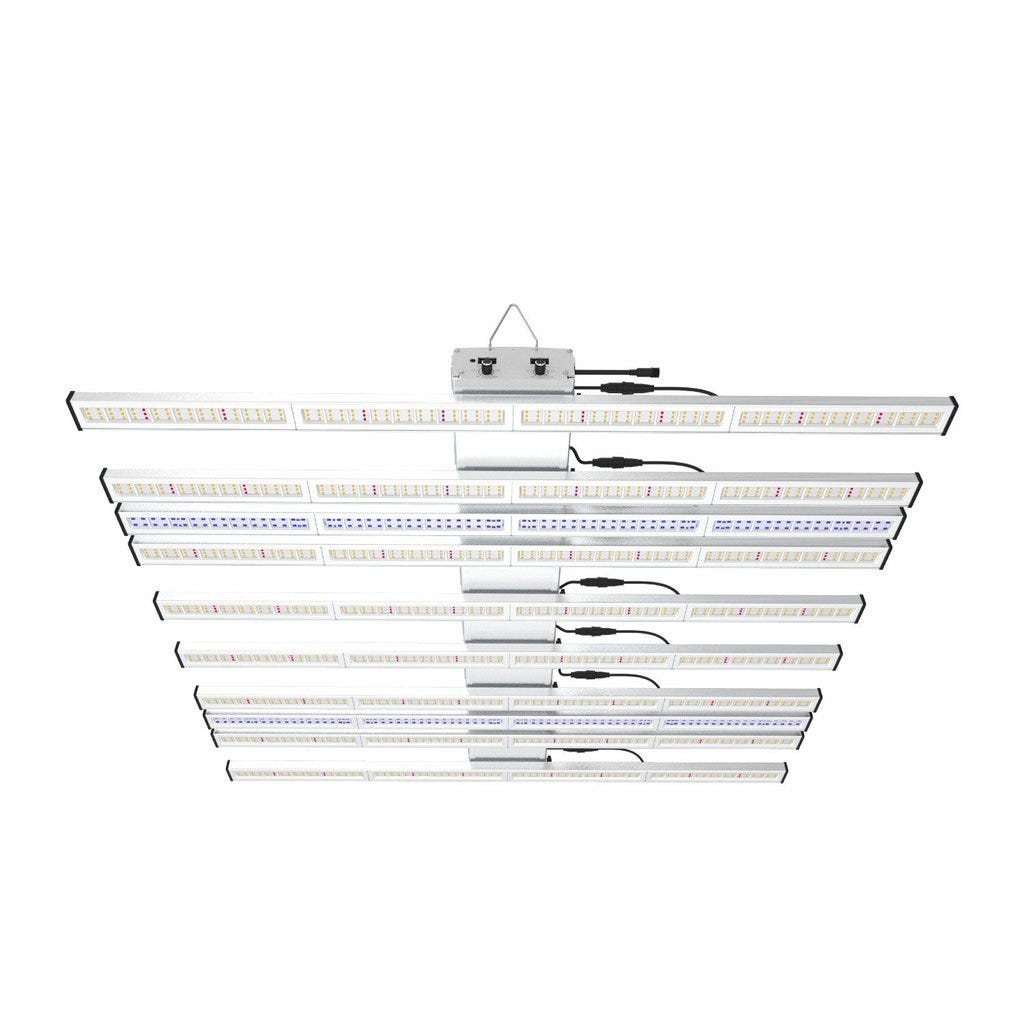
Features:
Mammoth Lighting has been developed by indoor growers over many years of careful experimentation and testing. Scientifically engineered to deliver the highest level of PAR output and balanced Coverage in the LED grow the market. At 1850 µmol/s of PPF, the Mammoth Lighting 10 Bar fixture measures up to the best LED Grow Lights on the market. The Mammoth LED grow lights are built with high-quality Samsung diodes. The lights encompass a continuous range of wavelengths from blue and green to red, creating a light blend matching the natural sunlight. The grow light customized the light spectrum to optimize plant growth and increase yields while consuming less energy and reducing operating costs compared with traditional horticulture technologies.
ProGrowTech Evolve Series LED EV700
Features:
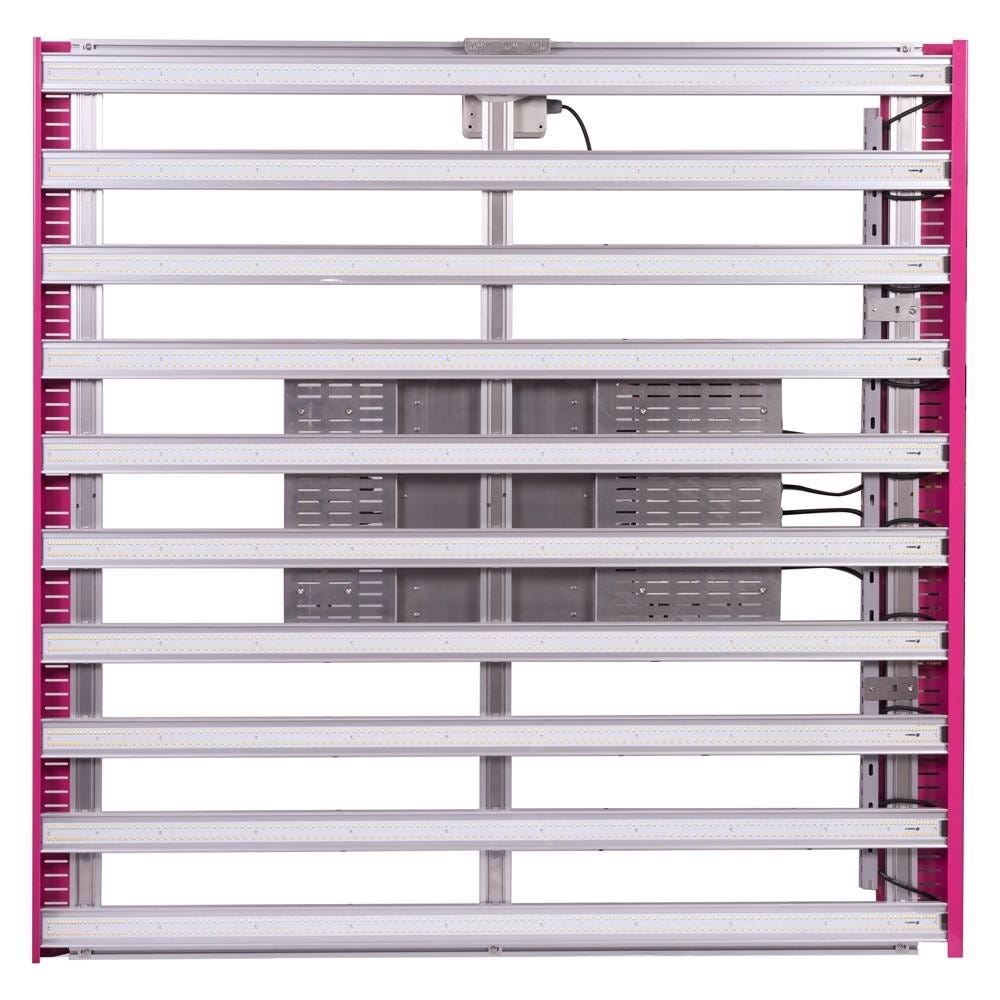
Evolve EV700 is the true HPS killer, outperforming the highest end solutions. With enough intensity to maximize yields for the heartiest strains, the industrial-grade EV700 is the ultimate fixture for the flowering phase, enabling producers to increase yield, quality, and energy efficiency. Massive 4'x4' footprint, which means more even light distribution across the canopy. 700watts yet out-competes 1000w HPS in PPFD. Runs incredibly cool in temp. Lower light temps = less HVAC run-time and less electricity cost.This grow light can be automated (not included computer component) to create Sunrise/Sunset fade-in/fade-out each day
Buying LED Grow Lights: Factors To Consider
Whether you’re new to growing indoors altogether or just new to growing plants with LED plant lights, you may not be familiar with some of the unique characteristics of LED lighting. Here are the main factors you want to check on when purchasing LED horticultural lights for your plants grow.
The factors are listed in no particular order. Only you can know which one is most important to you, given your specific growing situation.
Real Wattage And Theoretical Wattage
You may have noticed that most LED lights have two different wattage figures. One of these is the potential wattage and the other the actual wattage. The potential wattage is the wattage the light could run at if the LED chips were running at full power. For example, a light with two hundred 3w LEDs has a potential wattage of 600.
LED chips are never run at full power, though. Doing so would considerably shorten their life span. Generally, they are run at 50 to 60% of their potential power. This is their real wattage and is the amount of electricity the light will actually consume.
The 600 watt LED grow light from the example above would probably have a power draw of 300 to 400 watts. And lights listed as 300w don’t actually have a power draw anywhere near that much either, especially if it’s a Chinese brand (they tend to exaggerate a lot).
Light Spectrum
Most indoor horticultural LED lights use LEDs in multiple colors. The majority will be various shades of red and blue, with the better lights also using some white LEDs as well as some infrared and ultra-violet ones.
This mix of colors gives you all the light plants, need for every stage of growth: cloning, veg and bloom. It is referred to as full-spectrum light and is generally what you want.
If you are looking for a light to only grow clones or to just veg plants, then you might want to check out one with mostly blue LEDs. If you are looking for a light to supplement your existing setup to give your plants a boost during the flowering stage, you’ll want one with mostly red LEDs.
Finally, I need to mention all-white LED fixtures. These lights use only white LED, which gives them a spectrum similar to natural sunlight (which is also a mix of the HPS and metal halide spectra). Proponents of white light claim it is best for plants, because it gives them the light they are used to from the sun.
More and more, the indoor plants industry as a whole is moving toward white light. White LED grow light fixtures are becoming much more common on the market as a result.
And white light does work well to grow and flower plants. But it includes a lot of light in the yellow and green ranges, which is light plants do not use much during photosynthesis. Thus, it goes to waste, right?
That has been the case made by manufacturers (and fans) of fixtures with mostly red and blue LED lights. They say these are more efficient, because you are not using any of the electricity you paid for to produce light that plants don’t want.
But plants do want that light. Sure, they don’t want as much of it as they do of light in the red and blue wavelengths, but they do still want it. That is why the best-selling LED grow lights these days all include white LEDs on their lights. And many use mostly white LED light.
Light Intensity
For LED lights, the most widely used measure of intensity is PAR (technically, it is PPFD and not PAR, but most still refer to it as PAR). It stands for Photosynthetically Active Radiation and is used to measure the amount of light in the wavelengths that plants use for photosynthesis. Some brands will list the lumen output, but that isn’t all that useful for grow lights.
Some brands give PAR readings for their indoor plant lights; others do not. Those that do often only give one value, which doesn’t really tell you much about its effectiveness for vegetative growing, much less blooming.
That value was taken dead center beneath the light. A large value here means you have a powerful light in the middle of the coverage area, but it tells you nothing about the strength of the light around the edges.
Ideally, manufacturers will provide a PAR footprint that shows PAR readings throughout the coverage area. Most do not do this, however, so you will often have to look to tests done by third parties, such as review sites, for this information. For white LED lights, lumen output can have some value. For others, it is mostly useless.
Coverage Area
This refers to the area a grow light can cover while still providing enough light for the plants in that space. For the flowering stage of growth, plants need more light, so you will have to move the light fixtures closer to the canopy. This increases the intensity, but also decreases the coverage area.
This is why LED lights have a smaller coverage area for the flowering stage than they do for vegging. Always make sure the space given by the manufacturer is for blooming, unless you only plan to veg with your light.
Cooling System
Te best LED grow lights give off far less heat than HID bulbs, but powerful LED diodes still emit enough heat that they require cooling. Any larger LED fixture must have heat sinks to reduce the amount of heat emitted and internal fans to disperse whatever heat remains.
You want to make sure that a LED light’s cooling fans and heat sinks are adequate for the amount and strength of diodes in contains. If it isn’t, this will considerably shorten the life span of the LED chips and make them far less efficient.
Another issue to consider is noise. Fans can generate a lot of noise, so fixtures with multiple fans will be much louder than you might think.
When you add their noise to that of oscillating fans and exhaust vans for your tent, you can end up with a fairly high noise level. If this is a concern, consider a fixture with fewer, or even no, fans.
Conclusion
Are you planning to purchase LED grow lights anytime soon? Share us your thoughts below!
ECO Farm ECO NET 680W Samsung 301B Chips LED Grow Light VS Enlite Flora 680W LED Grow Light
Just because the days are shorter in winter doesn’t mean that the growing season has to be over and done! Greens and some herbs will flourish indoors, under grow lights. Here’s what to consider when choosing indoor grow lights.
The benefits of using LED grow lights
Now that we know more about what LED grow lights are, let’s take a look at the many advantages they offer indoor gardeners throughout the year.
Efficiency: The biggest advantage of LEDs is efficiency. According to the Department of Energy, LEDs offer the most energy-efficient lighting technology. Bulbs use about half the energy of fluorescent bulbs, which is better for the environment and better for your wallet.
Higher light intensity: I used old fluorescent grow lights to hang the fixtures on chains so I could move them up and down to keep the bulbs close to the top of the plant’s canopy. If the bulbs are more than a few inches away, the plants don’t receive enough light, and they’ll grow legs. With high output LED lights, you don’t need to worry about light intensity or fuss with moving the light fixture closer to the top of the plant or seed.
Less heat: Unlike fluorescent lamps, LEDs emit very little heat. In fact, LEDs run 80% cooler than fluorescent lamps. Why is this important? Overheating can affect the moisture levels in the soil and leaves, and can burn leaves.
Long Life Lamp: LEDs have a long lifespan, typically up to 50,000 hours. This is about five times longer than fluorescent bulbs. This is convenient for the gardener, but also reduces waste.
Cost-effectiveness: LED technology has come a long way over the past few years. One benefit of this is that the price of LED grow lights has come down. Combine this with lower operating costs, and LED grow lights are a cost-effective option for indoor gardeners.
ECO Farm ECO NET 680W Samsung 301B Chips LED Grow Light
Features:
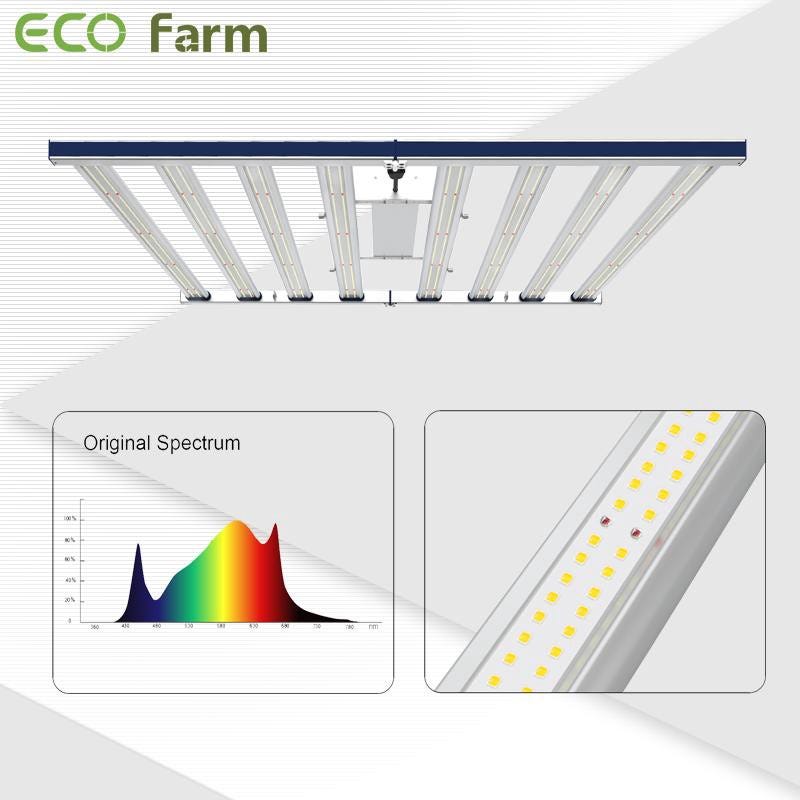
This ECO Farm LED grow light used a foldable design, can be easy to adjust the angle between the lamp and the plant, and according to your plant stage to adjust the illumination area. which is more effective to promote plants growth. Designed for home growers, fans get noisy when long time use, but this LED light board use aluminium to make it cool down instead use fans, bringing you a FANLESS QUIET grow experience. High Safety performance driver and Pure Aluminum light bars for better heat disappear and stay cool, never burn your plants like other low quality led grow lights. 680w 2400 individual LED’s covering the full-colour spectrum 3000K 5000K 660nm our grow lights are ideal for all growth stages., infinite close to natural light, best for all plants all stages growing, rapid plant response from seed to flower and increase yield & crop quality, improve the nutritional value of plants.
Enlite Flora 680W LED Grow Light
Features:
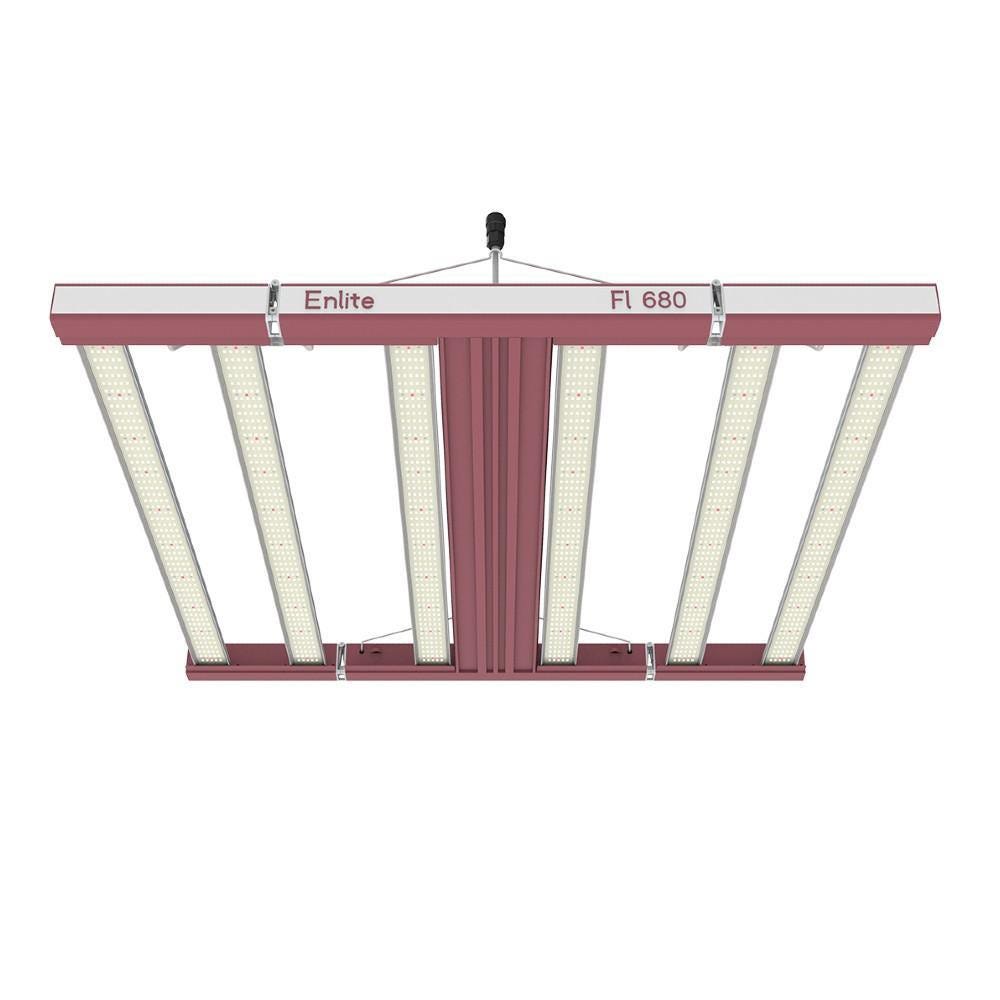
This Enlite LED grow light gives a High-PPFD level 1000–1100 μmol/m2/s in a 4x4ft to growers. This grow lights adopt a self-designed special structure heat dissipation system. Compared with other plant lights, its working temperature is much lower. This unique design can not only extend the light life, but also bring less harmful canopies. Enlite LED plant growth lights use full spectrum, a light suitable for the entire growth stage from vegetables to flowering. So growers only need to buy a lamp suitable for the entire growth stage. The Flora series plant light is composed of 3 parts of uniform size, each part can be folded 180 °. This design helps us make shipping and packaging easier, and you can store it more easily.
How To Choose The Best LED Grow Lights For A Grow Tent
led lights
Since LED grow lights can be expensive, you shouldn’t buy them willy-nilly. There are things to consider if you want to make a smart purchase, such as:
Lifespan
One of the biggest benefits of LED light products over others is their burning time. Some brands have managed to produce LED grow light with a lifespan of 100,000 hours or so, which is admirable, to say the least.
However, don’t expect all LED lights to have such a long lifespan. Around 50,000 or less is what you should expect, and anything over it is a huge plus.
Still, it’s a lot more compared to others and you do get the best value for your money.
Generally speaking, the best grow LED lights are long-lasting, but make sure to check the lifespan of the light you choose for your tent so you know what to expect.
Shape and size
You have to match the size of the light to the size of your grow tent to ensure the heat balance and that your plants receive the heat evenly during each growth stage.
While the shape is not crucial, you can choose between different types according to your preferences.
The great thing about LED grow light is that they come in different shapes and sizes, so be sure you’re getting the ones that suit your grow tent and your plants the best.
Efficiency
Every LED grow light features info about energy efficiency. Usually, you’ll see it expressed in μmol/J or micromole per Joule.
This measurement determines how efficiently a light converts electrons into photons. The higher the value, the more efficient the light.
LED lights are generally highly efficient.
We don’t have to tell you the significance of energy-saving capabilities — if you have a grow tent (or tents), you know that inefficient lights can run up your electric bill in the blink of an eye.
Installation
Most of the best LED grow lights for grow tents are not complicated to install.
The ones that made our list are all fairly easy to install and use, so you ought to be able to do it yourself without any issues.
If, however, it comes to that, they come with detailed instructions that can help you out.
Worst case scenario — you can call a professional to help you install the light properly.
Price
When choosing the best LED grow light, we can’t dismiss the price points, especially since some models cost twice as much as others.
That being said, we’ve made sure to include excellent choices from both sides of the price spectrum, so you can choose between high-end items and budget-friendly options.
On average, an LED grow light goes for $200. You can find options under this amount, and there are plenty that cost a lot more.
The bottom line is — think about your budget and how much you can (and want) to cough up for LED grow light, and start from there.
Sure, the expensive ones may have better features, but don’t dismiss the cheaper ones so easily, they might surprise you!
Dimming abilities
Most products and brands mentioned today have amazing dimming options.
It’s vital to consider the dimming capabilities of the best LED grow light for grow tents. In other words, you have to think about the light intensity.
Different growth stage requires different light intensity, so proper dimming options are crucial.
Power consumption
Most LED grow lights consume around 300W in a grow tent. Some use less energy, some use more, so don’t forget to check the exact power consumption before purchasing.
Heat sinks
A LED grow light for a grow tent should feature a sturdy, ergonomic design with aluminum heat sinks that dissipate heat in grow tents.
This is important for any growth stage so your grow tent doesn’t get too hot and burn your plants.
Full-spectrum lighting
Full-spectrum lighting is a vital part of LED grow light products.
Growers know the importance of adequate light in every stage of plant growth, and the only way you can achieve that in grow tents is with a full light spectrum.
Conclusion
Why would somebody need an LED grow light when we have a fully functioning Sun? This question might arise in your mind too.
However, everyone is not living the same life. Some people do not get to see the sun for a long time because of the weather conditions in their area. Likewise, some people are too busy with their jobs that they cannot pay attention to the time to take care of plants.
When it comes to indoor plants, it is not suitable to keep them in the dark for a longer time. Similarly, you cannot keep them under the sun for a long time too. Moderation is the key here.
However, if you do not have enough time, you can simply use LED lights. No need to move the flower pot and no need to worry if you have cloudy weather for too long.
Rapid LED FM660 LED Grow Light VS Maxibright Daylight 660W LED
Grow lights have revolutionized indoor gardening. Powerful LED grow lights or grow lamps allow you to grow even the most sun-loving of the best indoor plants in a room that under normal conditions wouldn’t provide them with enough light to thrive. They seem easy to use, too, so how can it be that your plants are still not thriving, even though you’ve spent good money on a quality grow light?
Why Are Grow Lights So Important
As a plant lover, you already know that light is plant food and that plants cannot live, let alone thrive without it. The more light you provide, the happier and healthier your plants will be. More light provided by grow lights helps your plants to photosynthesize more, grow faster, and produce bigger leaves and more sugars for their development.
The good thing is that you can achieve the equivalent of bright indirect light or even direct sun with grow lights if you’re not lucky enough to have large windows with an unobstructed view of the sky, especially if you use good, tested grow lights.
To get great results with grow lights for indoor plants, you need to be aware of the importance of selecting a good grow light that produces light of sufficient intensity to keep your plants alive. I see people buying lights that are very weak and only useful at very close distances of 2 to 4 inches away from the plant.
Rapid LED FM660 LED Grow Light
Features:
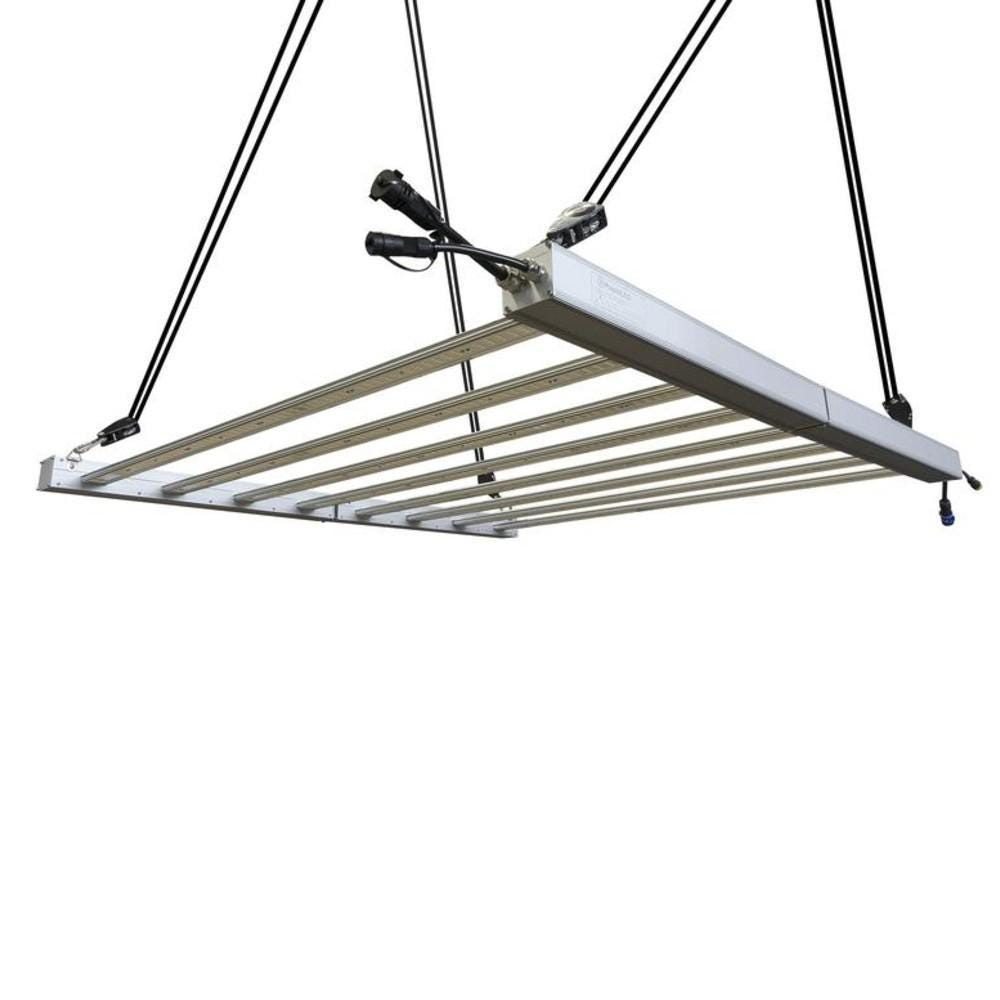
This Rapid LED grow light is easy to set up and install, making it ideal for people who want reliable, out-of-the-box lighting fixtures. This strong grow light is only 600 watts, which can provide healthy, full-spectrum light for your indoor garden and cultivate high-efficiency and high-yielding plants. The Rapid LED grow light has a system-level efficiency between 2.5–2.7 umol/J, and you can choose a color temperature of 3200K or 4000K. In addition, its unique slim profile design is suitable for space-constrained applications (such as vertical agriculture). It supports connecting multiple units together, so that you can save power and dimming socket space. And it can be dimmed by any 0–10V/1–10V dimming signal. This incredible fixture has the ability to cover all stages of growth and is perfect for full cycle/vegetable/rooting (4000K) or flowering (3200K).
Features:
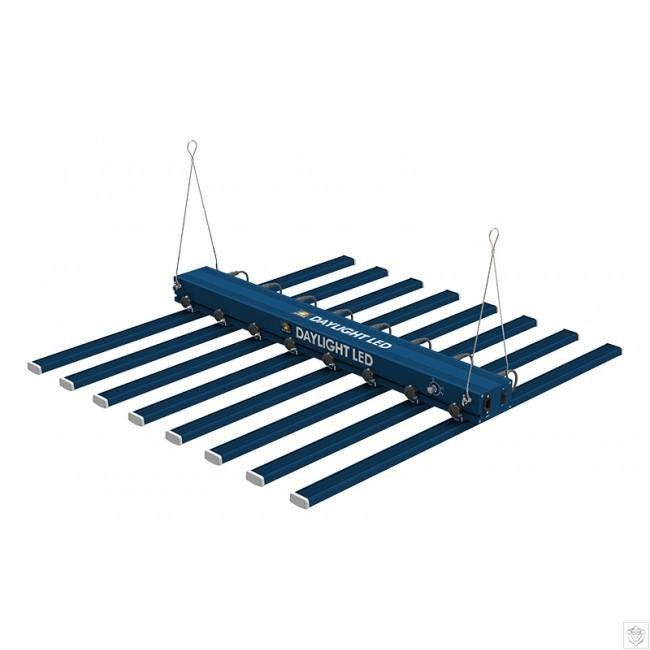
Using high-quality OSRAM and Lumileds LEDs, full-spectrum output LED lamps, with far red and ultraviolet light components, this Maxibright LED grow light can achieve uniform light distribution to help you achieve maximum quality and quantity, which is better than traditional growth systems. The advanced design effectively expands the light area. The light distribution is optimized for the 1.2mx 1.2m area, and the illumination is more uniform. The light bar can be tilted 30° to optimize light transmission, and the power can be adjusted from 30% to 100%. Excellent heat dissipation design-no needs to worry about heat dissipation even with high power. A passive heat dissipation design (without an internal cooling fan) achieves an excellent heat dissipation effect.
How To Pick A Grow Light
With the availability of numerous types of grow lights and systems, it can be overwhelming to find out which one will certainly fit your needs. Below is a guide to our most popular grow light lines, including their attributes and the advantages they offer.
5 Factors to Consider When Picking a Grow Light
Asking yourself these questions can help you make the very best choice.
What sorts of plants will you be growing?
Will you grow year-round or just start seeds in spring?
How high will the plants get?
Where will you place the light– in your living space, or hidden away in the basement?
Should the light be mobile (e.g. on wheels)?
The Right Color
Sunlight consists of the full spectrum of light consisting of all colors of the rainbow: red via yellow to blue and violet. Like plants growing outdoors in the sunlight, indoor plants grow best under full-spectrum light bulbs, which generate a balance of trendy and also cozy light that reproduces the all-natural solar spectrum. They’re excellent for seedlings and also with houseplants, cooking herbs, and other plants. All of our grow lights, stands, and substitute light bulbs are full-spectrum.
Is it LED or Fluorescent grow light?
Both generate full-spectrum light. Nonetheless, LEDs are much better for your wallet and the environment. Our product advancement team has crafted energy-efficient, economical, and effective LED lights to specifically meet the exact requirements of plants (unlike multi-purpose LEDs).
They deliver the brilliant, full-spectrum light plants long for, with an extra spike of blue light to promote more powerful root development, improve photosynthesis, and guarantee peak development. Enjoy your heartiest and healthiest seedlings, houseplants, succulents, orchids, and various other indoor plants!
What are LEDs?
LEDs (light-emitting diodes) create light when an electric current — a flow of electrons– travels through a special product called a semiconductor. As the name implies, a semiconductor enables some, but not all, of a current to pass through.
Crystals constructed from pure silicon do not conduct electrical energy. Yet when a small amount of an additional substance such as phosphorus is introduced into the crystal, it upsets the balance of the material and activates the electrons inside.
When an electrical current is related to the crystal, some of this activation energy is released in the form of light. NASA pioneered the use of LEDs for growing plants as a result of their research on the best illumination of modern technology to generate edible plants precede.
LEDs are fantastic for your plants. Sophisticated LEDs are calibrated specifically for indoor growing.
They’re super-efficient. LEDs make use of half the electrical energy and also last 5x longer than fluorescent light bulbs.
They’re eco-friendly. Mercury-free LED tubes will not ruin like glass, so less wind up in the garbage dump.
The Right Intensity
The strength of light that a plant receives is figured out by the brightness of the bulb and also by how close the plant is to the light source. Plants vary in their demand for light intensity.
Usually, those plants that are belonging to tropical jungles or shady forests do not need as much light as plants that developed in completely dry, bright environments, such as the Mediterranean or southern Mexico.
Some flowering houseplants, such as African violets and begonias, are happy being 10 to 12 inches away from a light source. Foliage plants, such as ivy or philodendron, can be put as long as 36 inches away from a light source. Yet numerous flowering plants, such as orchids, gardenias and also citrus, and many veggie plants, call for a much greater light intensity to flower and produce fruit.
The Right Duration
No matter the types of plants you are growing, you have to give them some rest. When it’s dark, plants respirate, which is an integral part of their growth procedure.
The balance of rest time to active development time impacts several biological processes, including the rate of growth, and the setting of buds and fruit. A power strip with a built-in timer makes it easy to get the duration right.
Conclusion
LED grow lights are becoming increasingly popular with home gardeners and commercial growers alike. With both the technology and price points becoming more and more attractive every day, LED lights might be a great choice for your next growth. Because quality and overall value can vary greatly, be sure to do your homework before purchasing by closely examining product specs, reading user reviews, and talking to other growers.
Mars Hydro SP 3000 LED Grow Light VS SpecGrade LED Linea Series 300 LED Grow Light
Looking for the perfect lighting system for a grow takes a lot of work between actual research and getting through the litany of marketing copy and reviews online. It’s a big industry these days, and especially so with LEDs.
To get the most out of an LED system you need a light that can provide the proper spectrums to your plant during all stages of growth. Plant tends to respond to different colors depending on whether it’s a seedling, vegetating or in the flowering stage.
Let’s take a look at the best LED grow lights we’ve found on the market for both general and niche use. Read on at your leisure and take the time to make an informed decision.
LED Grow Lights, why choose them?
There are different types of grow lights out in the market, but the LED ones have always been famous and preferred. LED grow lights are chosen and preferred for these number of reasons:
Smart energy costs
If you’ve grown with traditional grow lights, you know that electricity is often a grower’s largest ongoing expense. Although HPS and HID light intensity is higher, LEDs use about half the electricity resulting in significantly more light per watt. With LEDs, the energy savings alone can quickly pay off your investment, and the longer you own your system, the more you save!
Great cooling costs
Because HID and HPS grow lights run so hot (up to 600°!) both they and your plants must be air cooled with fans and, at times, air conditioning, adding even more energy demand to your system. While fluorescents are a little cooler, they still require external cooling and a watchful eye to avoid burning leaves. By contrast, LED grow lights are cooled internally so you save money on electricity and can have a quieter, fan-free grow space in the process! And, since LEDs run so much cooler, plants are happily growing closer to the fixture.
Low maintenance costs
While startup costs favor less expensive traditional grow lights, maintaining a grow room full of them can require significant ongoing costs. Apart from the need to purchase cooling equipment, traditional growers seeking peak performance must consistently invest time and money into their hardware as well. As the key statistic, compare the lifespan of an LED at a conservative 50,000 hours to the 10,000 and 18,000 hours of HID and HPS lamps. What’s more, traditional lamp efficiency begins degrading immediately and decreases quickly while LEDs maintain the majority of their potency over their long lives.
Environmental costs
While saving money on materials, LED growers are also benefiting the environment. With their quicker burnout rate, not only are HID, HPS and fluorescent lamps adding more mass to the landfill, they’re also adding toxins including mercury. And, not only is the lifecycle of traditional lights shorter, the large and fragile lamps are also easier to break during storage and handling, causing more waste and releasing yet more toxins. As we see all around us, the waste adds up. In the case of fluorescents, you need a lot of those “inexpensive” bulbs per fixture: with a max of 54 watts, a grower might need 10–20 bulbs for a 4’x4′ grow bed!
Quick setup and little maintenance
Like most traditional grow lights, LED fixtures are plug and play. However, unlike those other units that require special cooling and ventilation needs, LEDs are actually plugged and grow! And with lower electricity needs it’s much more likely that you can set up your grow room using your existing electrical outlets. LEDs offer two main advantages: One, they give off specific wavelengths of light that can be fine-tuned to the plant and its stage of growth. And two, they use way less energy, up to 60 percent less than traditional bulbs, by some accounts.
Mars Hydro SP 3000 LED Grow Light
Features:
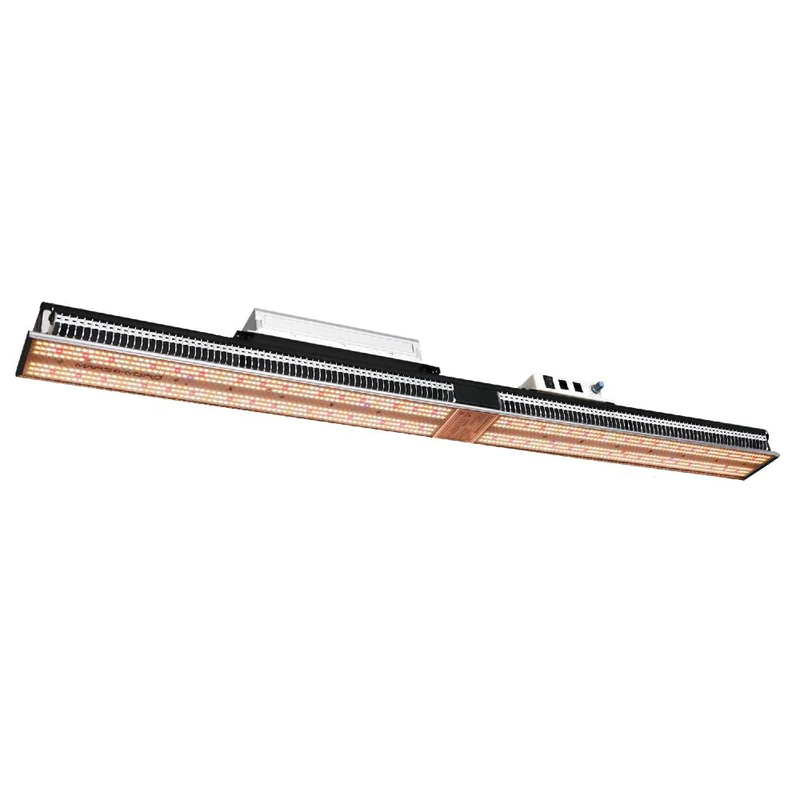
The Mars Hydro LED Grow Light can accommodate up to 2.5' x 5' flower areas and 4' x 5' plant growth areas. Mars Hydro has a great reputation in the grower community. The successor to the popular Mars Hydro SP250, the SP 3000 LED Grow Light offers a range of new and improved features that make it a reliable, effective and long-lasting tool for any indoor grower. Among other impressive features, the fanless grow light features full-spectrum LEDs, a waterproof body, and the potential to increase production by 50%. The master designers at Mars Hydro have created the SP Series LED Grow Lights as a top-of-the-line LED option that combines a variety of features to take the device to the next level. Full-spectrum grow lights cover all necessary wavelengths, mimic natural light from the sun, and have removable drivers to reduce heat output.
SpecGrade LED Linea Series 300 LED Grow Light
Features:
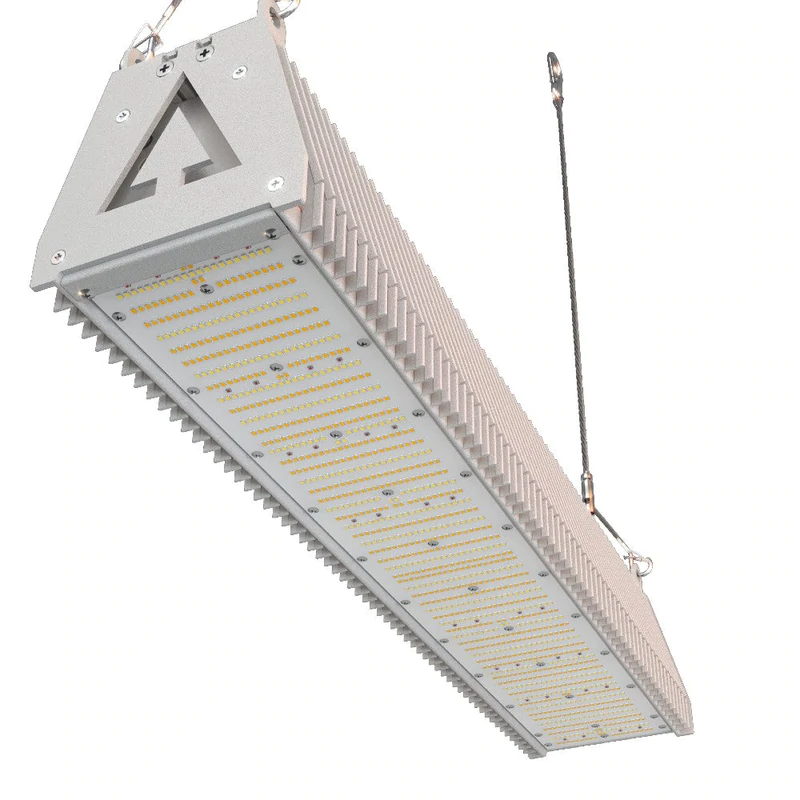
Designed for professional cultivators, SpecGrade LED grow light delivers exceptional photobiology and engineering. Whether your intention is to use this grow light as a supplemental or only light source, the next generation Linea will provide your crops with unparalleled uniformity and virtually no shadows. Their proprietary bi-fold aluminum heatsinks are engineered to ensure the LEDs operate at the lowest operating temperature, ensuring the longest lifespan. Finally, in the 300W version we can generate a layout that gives your crop the exact amount of micromoles to increase yield, quality and vegetables, fruits and flowers to hemp, our proven spectrum will be consistent. From optimizing your growing facility.
Buyers Guide: Choosing the Best Budget Grow Lights
There are several important aspects to consider when deciding on a grow light. Because your lights are like the “sun” to your plants, they are one of the most important purchases you’ll make. They will affect your yields, bud quality, and power consumption. The choice that you ultimately make will need to take into account the following factors.
Budget
You’ll need to weigh up light cost vs. yield, as well as the cost of production vs. yield. If you are using a power-hungry light, like HIDs, your big juicy buds will cost more to produce in the long term. LED lights in particular will dramatically lower your energy consumption and thus, your running electricity costs.
Light Spectrum
LED lights are the new standard for indoor grows. They save power and are usually full spectrum. Full-spectrum lights live up to their name by giving your plants the complete range of light they need for optimum growth, imitating the spectrum that the sun would give. They give the full range of light spectrums from red, blue, infrared, and violet in order to help your plants grow optimally and ensure maximum yield.
They are generally a more expensive light, though their wide use is driving the price down slowly but surely, as our list above demonstrates. There are good quality yet affordable LEDs available to new and budget-conscious growers.
Light coverage area
When buying lights, you also need to take into account your grow room size. Most budget lights will not give you a wide area of light spread. More plants need more light, and you’ll need to decide if you want a few high-output lights or several smaller lights.
Heat
Another consideration is heat output. LEDs typically pump out far less heat than their HID counterparts and so do not require much extra cooling. While lights like HIDs can save you money initially, in the long run, you’ll need extra fans and vents for cooling. Added to this is the fact that LEDs have a far longer lifespan than any other lights currently available.
LEDs do run the risk of burning your plants if placed too close, so they are more suited for bigger grow spaces. They can be used for smaller grows if you have enough height available above your plants.
Conclusion
Thank you for reading today! We hope we’ve made it easier for you to narrow down your options for LED grow lights and choose the light that’s the best fit for your particular grow. Best of luck with all your indoor growing adventures!
ECO Farm Z6–600 Samsung LM301B LED Grow Light VS SpecGrade LED Verta-6 Eco 640W LED Grow Light
When it comes to plants, all light is not equal. Unless you have a greenhouse or an unlimited number of south-facing windows, grow lights are your best option for providing the right light to your plants. Though nothing is better than natural sunlight, grow lights are designed to provide Photosynthetic Active Radiation (PAR) so the plant can undergo photosynthesis like outside in nature.
What is the Light Spectrum of an LED Grow Light?
An LED grow light has a vast color spectrum which is why many enjoy using them with their plants. Most are used based on their warm white, soft white, or bright white colors. These colors are exactly what their names imply, they either emit a warm, soft, or bright color in the space you burn it in.
However, while these lights might look like they only burn white colors, they have an intense spectrum inside unknown to the human eye. In fact, in most LED grow lights, you’ll find they also include red, blue, and green.
Red
Red light is known for its long wavelengths which help your plants to produce more blooms and leaves. It’s often recommended that you use red light toward the end of the growing cycle as it will prevent the plants from growing too quickly. While red is a popular spectrum, there is also a far-red spectrum which is even more powerful. When red light is combined with blue, it often makes a strong match. Because of this, they are usually combined together in an LED grow light.
Blue
Blue light is one of the most important LED light spectrums as it helps your plants stay energetic by producing enough chlorophyll. It also prevents water loss. Because of this, your plants usually need to have a lot of blue light in order to grow strong and healthy.
Green
Greenlight helps your plants to produce chlorophyll and photosynthesis. It’s also one of the only light spectrums the human eye can see.
ECO Farm Z6–600 Samsung LM301B LED Grow Light
Features:
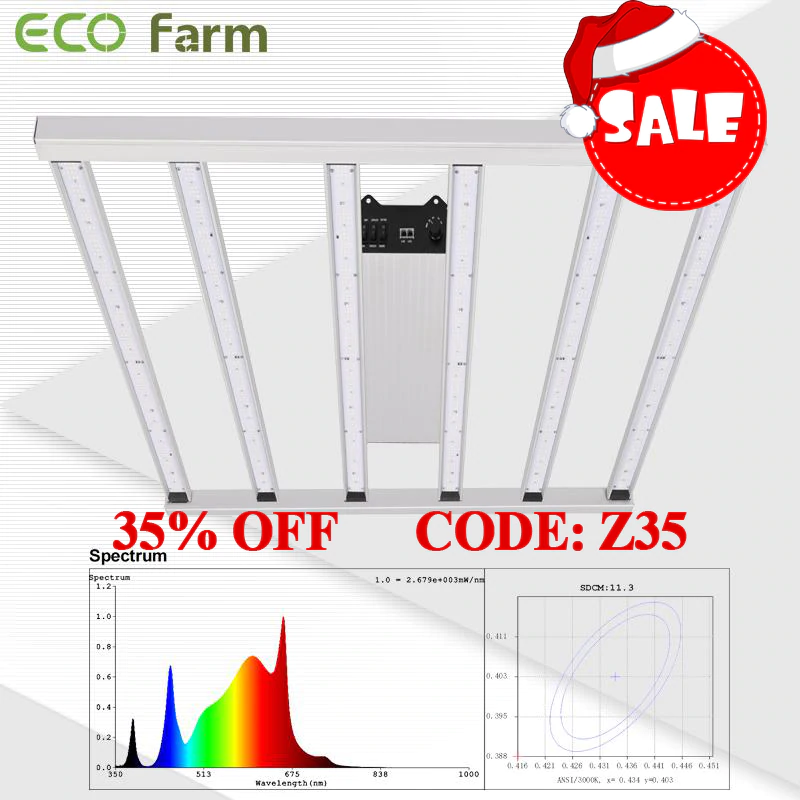
This ECO Farm LED grow light uses 1632pcs high efficient SMD leds, boast the market-leading efficiency to 2.7 µmol/J and 2.5g yield per wattage with 30% higher Average PPFD, the actual power is 600 watt, it can cover 4x4ft growing area in Veg stage and 5x5ft for flower stage. The intensity of light can be adjusted according to the needs of plants. The leds are all new technology SMD leds, It contains Samsung LM301B Full Spectrum White Light Diodes, 660nm Red Diodes, IR+UV Diodes on independent controls. And it also has removable and replaceable light bars. This low energy consumption grow light with 6 passive-cooled bars, aluminium heat-sink, excellent performance in heat dispersing & lifespan, dropping 50% in electricity bill than HID lights. This grow light maximizes every inch of your Garden with The Best Distribution of Light on the Market with Over 1000 PPFD corners to Corner. Attention: In Veg, place lamp 30in.+ above plants and run power at 50%, Increase power to 70% slowly as plants grow sturdier.
SpecGrade LED Verta-6 Eco 640W LED Grow Light
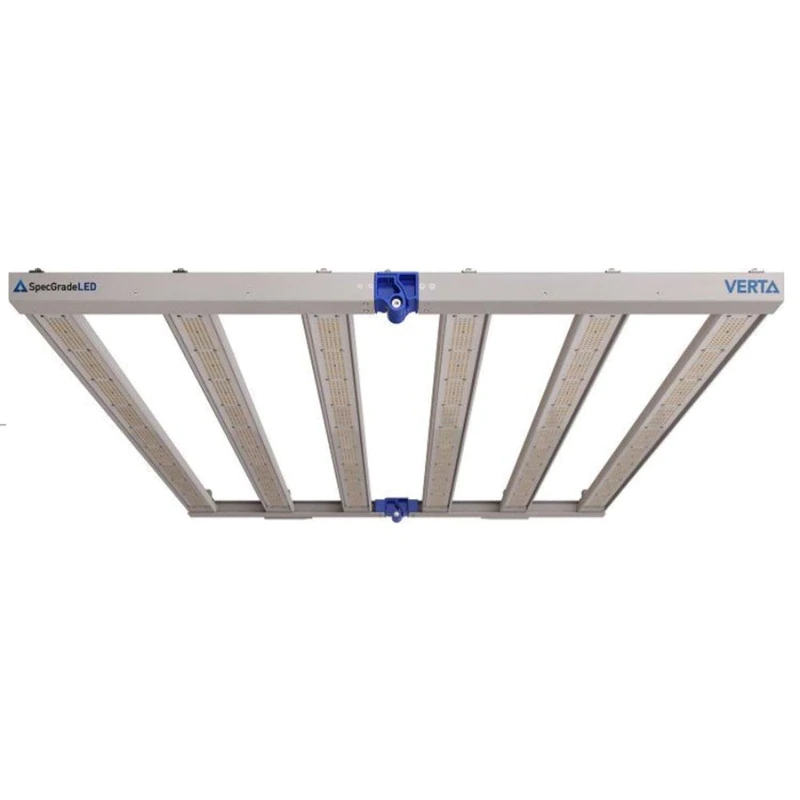
Features:
The modular design of the SpecGrade LED Grow Light allows you to repair any faulty components in the field without experiencing any downtime. A proprietary thermal management system radiates less heat to the plants while providing unprecedented light levels and uniformity. This LED grow light is designed for maximum PPFD while using less power than traditional light sources. The fine-tuned A1 “Full Lifecycle Spectrum” has been proven in universities and a variety of growing environments to improve tricolor and taste while reducing operating costs and shortening grow cycles. SpecGrade’s Grow-Connect is an easy-to-install daisy-chain cabling solution for wet locations in growing facilities. Multiple grow lights can be connected together in a plug-and-play sequence starting from the power source. This solution will greatly reduce installation costs and even allow you to quickly reconfigure your system without having to call an electrician.
Things to consider before buying an LED grow light
While just about every plant loves light, they don’t all have the same taste. Here are some things to consider when buying an LED grow light.
Power consumption
Even though LEDs are much more efficient than their older counterparts, they still require a constant stream of energy to run. And leaving them on all the time — especially if you’re running a lot of them — can really start to ramp up the ecological impact and your electric bill.
Older bulbs used to measure power in watts, but LEDs don’t quite work like that. Input power on an LED suggests how much power it’ll use, but not necessarily how bright it will be. High-efficiency LEDs can put out a lot of light with a few lamps, while other arrays use a higher number of smaller lamps.
Your needs are specific to your plants, but don’t go buying an LED light array just because it has a high wattage rating. Look for an equivalent wattage number or other methods of measurement.
Spectrum coverage
Full-spectrum lights can mean different things depending on the model. True full-spectrum lights include infrared modules that emit waves you can’t technically see. Different light wavelengths often serve different parts of the growing process, so you’ll want to match up the spectrum performance with the plants you’re trying to grow. If your plants aren’t picky, most “full spectrum” lights should do a fine job. But, it’s worth doing a little research about your specific plants to make sure the light you’re buying offers what they need.
Dimmability
Not all grow lights are dimmable. Some have either an on or off setting and not much else. Other LED grow lights can offer ten or even more different levels of illumination so you’re not always blasting them on full power.
Self-timers
Plants don’t need light 24 hours per day, so you’ll want to turn lights on and off as needed. Some lights have built-in timers that allow you to program in a custom schedule. That absolves you from having to remember to hit the switch, which can have a profound effect on plants, especially if you’re trying to start outdoor plants inside.
Conclusion
LED lights are a great addition to add to your growing space for a variety of reasons. Not only are they energy-efficient, but they work quickly at helping your plants to grow. If you’re on the search for a LED light to use in your growing space, definitely keep the models mentioned above in mind. They’re not only durable, but come with a handful of great benefits as well.
Spectrum King Phoenix 340W LED Grow light VS Grow Light Science PROGROW 320 LED Grow Light
With less light coming through your windows during these shorter winter days, you may be wondering if your plants are getting what they need to thrive. While the season’s weaker light may be enough for some houseplants, others need a boost to keep them growing. Still others, such as garden seedlings and flowering plants, may require more intense light than your home provides.
If you’re thinking about introducing artificial light into your home, here’s what you need to know.
Why Should I Use Indoor Grow Lights?
The uninitiated may believe that grow lights are sufficient for plants. However, even if you use LED lighting, it is almost certainly too weak to help a crop in a grow room. Remember, your home’s lights are designed for your eyes rather than plants. The light spectrum required to help us see is very different from what plants require for photosynthesis.
There are plants like microgreens that can flourish with a basic lamp. However, plants require fairly strong and consistent light to help them into the blooming phase. Remember, when you grow plants indoors, you’re competing with the sun in terms of light! This means you need high-power lights in your plants’ grow space.
These days, growers are spoiled for choice with grow lights. There is an incredible array of options, providing better safety, cost-effectiveness, and efficiency than ever before. Simply put, if you want a decent yield, you must invest in specific grow lights.
Spectrum King Phoenix 340W LED Grow light
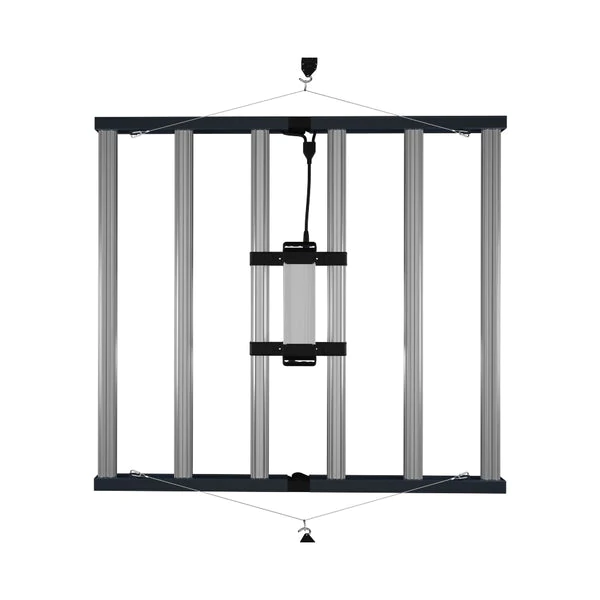
Features:
Spectrum King grow light is the most efficient LED light fixture on the market with a dedicated plant spectrum. SK Cryo-Therm cooling technology enables ultra-thin profiles, maximizes airflow and minimizes microclimates. It has unmatched performance and reliability in its class. It is optimized for single or multi-level planting near the canopy. The Spectrum King Phoenix 340W Veg sets a new benchmark for what’s possible with grow lights. The full spectrum is ideal for most light-loving plant seedlings, vegetation and the entire growth stage of flowering. IP65 waterproof horticultural lighting system, can be used in humid or water vapor environment, easy to use, plug and play.
Grow Light Science PROGROW 320 LED Grow Light
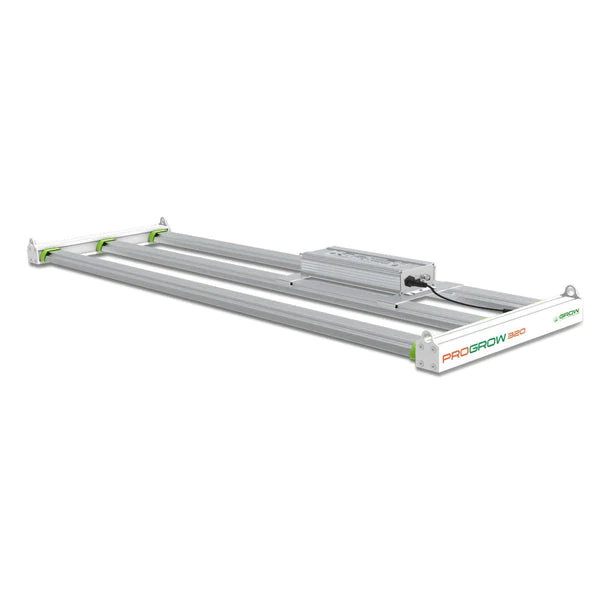
Features:
Grow Light Science Grow 300 320W LED Grow Light is a full spectrum, high performance lighting solution for commercial or home indoor garden or planting operations. The form factor of the Grow 300 allows for expandability and multiple grow room and tent configurations. The incredible light output (PPF), spectral distribution and efficacy of this grow light will give your plants amazing results at an affordable price. PPFD levels of up to 1,500 umols/m2/s will proportionally increase yield as long as other key factors such as CO2, water and nutrients remain in balance. The GROW 300 easily delivers PPFD levels in excess of 1,000 umols/m2/s, either individually or in multi-cell arrays.
What to Look for in a Grow Light
Size
When deciding what size grow light you need, think about how many plants you’ll need to cover. Also, if you’re planning to move your light from place to place, you might want something lighter and portable, whereas if you know it’s going to stay put, that might not be as much of a factor. Also, consider the space where you plan to put it, and make sure there’s room for it to operate safely and not up against furniture, drapes, or other items.
Type
There are various types of grow lights to consider, from panels to ones that hang overhead or screw into a regular light fixture. The type of plants you have, the amount of existing natural light, and where your plants are located will help you narrow down your choices. Hanging lights are typically larger, while desktop lights are smaller and easy to move around. If you want a complete system, consider a full garden kit that includes the planter with a built-in light.
Wattage
Wattage isn’t as important as you might expect when it comes to grow lights, but it’s still a factor worth considering. The more important metric is actually PPFD, or photosynthetic photon flux density, which measures the specific light emission a lamp gives off.2 Because this is a bit complicated to figure out, wattage is a useful tool to determine the correct fixture for your plants. The rule of thumb is that you need 32 watts per square foot, so most indoor plants (especially herbs) will do just fine with a lower-watt light.
FAQ
How far should grow lights be from plants?
Though it depends on the wattage and light wavelengths, grow lights should be placed at least 2 feet away from your indoor plants to avoid overheating. That said, LEDs and fluorescent lights typically have lower heat outputs, so they can be placed a little closer.
How long should grow lights be on for?
To effectively mimic the sun’s natural light, a grow light should be on for eight to 16 hours a day, depending on where you live, what time of year it is, and the type of plant. If your plants receive some natural light, they generally won’t need as much artificial light, whereas a plant that doesn’t get any natural light may need the full 16 hours.
Do you have to use LED lights?
LEDs are most often recommended for grow lights, though some fluorescent and incandescent bulbs can work. The most important thing is that the bulbs offer full-spectrum illumination and produce waves of red and blue light, which is often necessary for plants to thrive indoors.
Conclusion
When growing plants indoors, you have to decide what takes top priority. Do you care about your energy bills, the environment, secrecy, or efficiency?
If you’re looking for discretion, LED grow lights and fluorescent grow lights are the likeliest options. However, if you’re after efficiency, HID is probably the best grow light for plants available. That is, as long as you don’t mind the increase in your electricity bill.
Then again, if you have a grow space of less than five square feet, fluorescent light is enough when your plants are small. You can upgrade to a 250W HPS as the plants get larger. If you have space, an MH light for plants in the vegetative stage and HPS for the blooming phase works well. Using MH lighting throughout is fine but will have fewer flowers, more foliage, and a lower yield.
Different options work best for different solutions, so pick the one that’s right for you and work to its advantages. Once you have selected the right light for your needs, you can start growing plants. After choosing the soil type, your fertilizer preferences, and a few other things, of course!
ECO Farm ECOD Samsung UV+ IR 800W Dimmable LED Grow Light VS Kind LED X750 Grow Light
In this grow light guide, you’ll learn how to choose the best grow light, and how to use a grow light. Spoiler alert, regular light bulbs don’t work.
Growing plants indoors can affect all environmental factors. From Alaska to Florida, you can grow the most upright plants’ crop your neighbors have ever seen with the right grow lights.
What color light is best for plant growth?
Violet-blue light in the 400–520 nm range promotes chlorophyll absorption, photosynthesis and growth.
Red light in the 610–720 spectral range promotes flowering and germination.
Grow lights should provide the proper spectrum for photosynthesis, which is key to plant growth. Be sure to review the color spectrum provided before purchasing a lamp. Lights that offer a full spectrum are ideal for your grow space.
This is where LED lights come in handy. Most LED grow lights offer two types of color spectrum lighting, so you get all the benefits.
How to Use LED Grow Lights
Fortunately, it’s easy to learn how to use grow lights, and LEDs are very easy to set up — just plug them in. You can easily hang them over your plants for a simple setup and excellent crop. LED grow lights don’t run very hot, but you still need to set up exhaust fans and control airflow and temperature throughout the facility for professional production.
Ensure that the LEDs are far enough away from your plants to avoid light burns. Also, be sure to use a light that contains full-spectrum green and white light. Only red or blue light isn’t enough to nourish your plants.
ECO Farm ECOD Samsung UV+ IR 800W Dimmable LED Grow Light
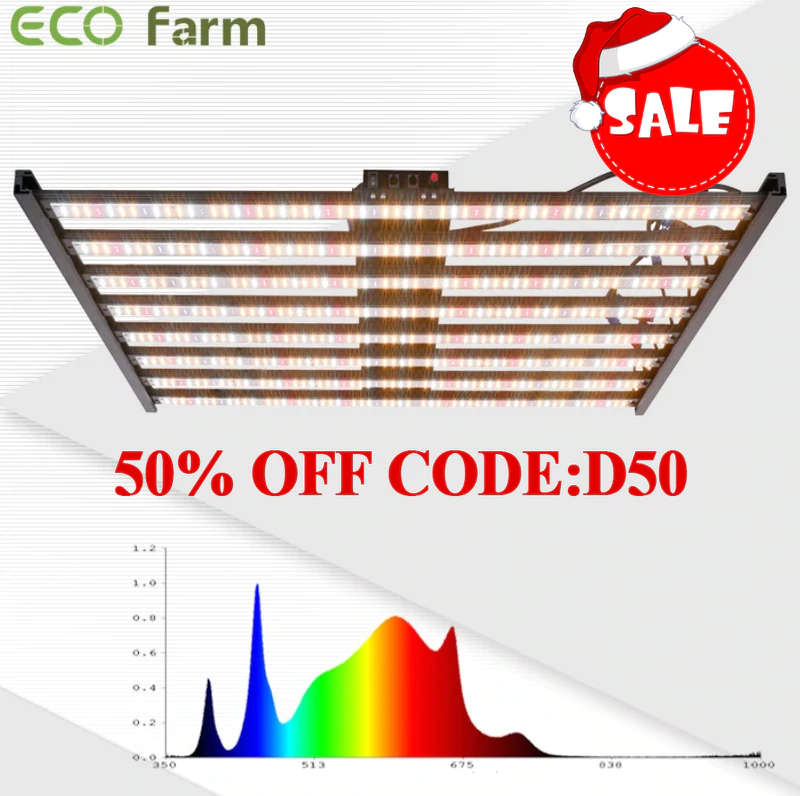
Features:
This ECO Farm LED grow light adopts the top quality equivalent diodes, producing a 800W PPF output of 2019.6 μmol/s and a PAR efficacy of 2.8umol/J, ideal for home and vertical farm planting. This full spectrum grow light meets the lighting requirements of every stage during the plant’s growth cycle. It consists of 660nm of red light, IR, 3000K and 6500K of the white light spectrum, providing plants in all stages from veg to flower with everything they need in the natural sunlight.LED plant lights enable cultivators to produce density buds, the 8-bar configuration allows widely application in the home grow (grow box and grow tents), climate rooms, commercial growing (horizontal and vertical), greenhouse cultivation, vertical racks, hydroponics. Thick aluminium board and IP65 waterproof wide 8-bar grow light provide even and wide canopy coverage, and long service life. Fanless design with a thick heat sink supports the excellent heat dissipation effect.
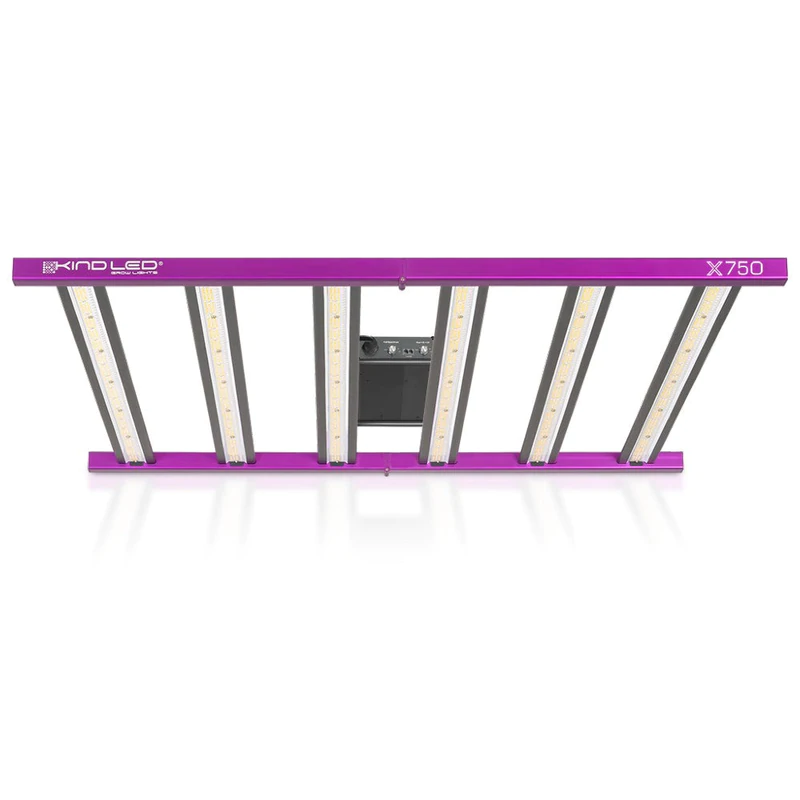
Features:
Kind LED grow light uses top-of-the-line Osram and Phillips diodes to produce targeted full-spectrum light as well as UV and IR to enhance your plants during flowering. The KIND X750 uses the full spectrum white LED diodes used by top LED companies. Kind’s Targeted Full Spectrum is designed for plants to maximize harvest weight and plant quality. Our spectrum is the result of hundreds of thousands of hours of field testing in the Northern California medicinal plant industry. With 750 watts of power and a 4' x 4' footprint, the X750 is powerful enough for commercial growers while still being compact enough for single planting.
Important Factors To Consider While Choosing LED Grow Lights
Don’t buy LED grow lights until you read these important factors.
1. Cost
This is the number one parameter to be considered. Of course, you must buy something that falls within your budget.
A grow light is available in the market at as low as $100. On the other hand, the cost may increase to as much as $2,000 for the lights equipped with the latest technologies.
How many times will you grow this plant per year? This question plays a key role in selecting the right product. If you have to grow plants multiple times a year, your investment will be recovered in a short span compared to if you grow it once a year.
Important Note: LED grow lights may be costly compared to HIDs, but they will cost you less electricity bills.
In addition, some lights get hot, and you need cooling equipment to cool them down. It requires more electricity which means more cost.
Don’t forget to consider all the parameters mentioned above to get the best cost-effective LED light to grow indoor plants.
2. Warranty
There is no doubt that LED lights are simple and easy to use. Moreover, you can easily maintain them. Still, it is always a better approach to check for the product’s warranty because you can claim either an exchange or refund if there is any built-in issue in the light you have purchased. A warranty secures your investment, and every reputed seller provides this service.
3. Number Of LED Grow Lights Required
Usually, the people who regularly grow indoor plants use 1 to 2 lights. Many states have allowed to grow up to only 6 to 12 Hemp or plants. So, 1 or 2 LED lights are enough for them. For instance, if you plan to utilize two different rooms, you can place 1 light in each room.
When it comes to how big an LED grow light should be, it depends on two different factors, i.e., the size of the space you want to grow in and the number of plants you want to grow.
If you have a small room to grow plants in, only a single LED light will do the job for you. But, if you have a bigger space, you can invest in big lights instead of installing multiple small lights. A light with more wattage will perform much better for bigger fields than many lights with less wattage.
4. Safety
Have you installed all the lighting equipment, and you are all set to grow plants? Great! You must consider that you should have a continuous power source to run the whole setup. To have a suitable power source, you need to closely monitor each component’s power requirements, e.g., air conditioner, fan, lights, etc.
Simply calculate the amount of power required by each component. Now, sum up all to find the total energy required for the complete system. Once done, purchase a power source or arrange the one that can provide you with slightly more power than the required threshold.
In addition, this system has to run every day for a series of months; therefore, ensuring a flawless and smooth power supply is a must. If your system performs well throughout the growing period, you will get an amazing product in the end.
Conclusion
There is no one-size-fits-all answer when it comes to using LED lights for plants. Different plants will have different light needs at different stages of growth, and you’ll need to experiment a bit to see what works best for your garden. When using LED lights, it is important to follow the instructions that come with the light and be careful of heat build-up. With the wealth of information available online, there’s no reason not to start experimenting with LED grow lights today.
Grow Light Science PROGROW 850 850W LED Grow Light VS TopoGrow Professional 800W LED Grow Light
We all want to ensure that our plant has the best possible growing conditions. From lighting to growing medium and watering, every aspect counts.
Today, we’ll concentrate on the lighting aspect of things–namely LED lights, which have taken the homegrown world by storm.
Let’s find out why grow lights are some of the most efficient. We’ll also investigate the what, why, and how of these stellar tools. Let’s get into it.
The Introduction of LED Lights
LED lights first arrived on the scene in 1962 but found agricultural use much later.
While the popularity of LED grow lights has skyrocketed over the last decade, using LED lights for plants is a relatively new idea.
Since the first attempt at growing plants with LED grow lights, the concept has rapidly gained momentum. The low cost of running LED grow lights offsets the cost of growing plants, which adds to the appeal.
Today, it’s not uncommon to find LED grow lights for producers. The worldwide attitude shift toward plants is widespread, leading to many companies optimizing their products for this market. One of these specific products is the LED grow light for plants.
Is it Good to Use LED Lights for Plants?
Are LED lights for plants a good idea? The short answer is yes. Under LED, plant grows exceptionally well.
Most manufacturers of this product type incorporate various settings. While you once needed multiple lights to complete a cycle, times have changed.
The best LED grow lights feature multiple spectrums, which allow you to change between color frequencies. You don’t need to use different light bulbs for the vegetative and flowering cycles. At the flip of a switch, you can choose the appropriate color spectrum.
Grow Light Science PROGROW 850 850W LED Grow Light
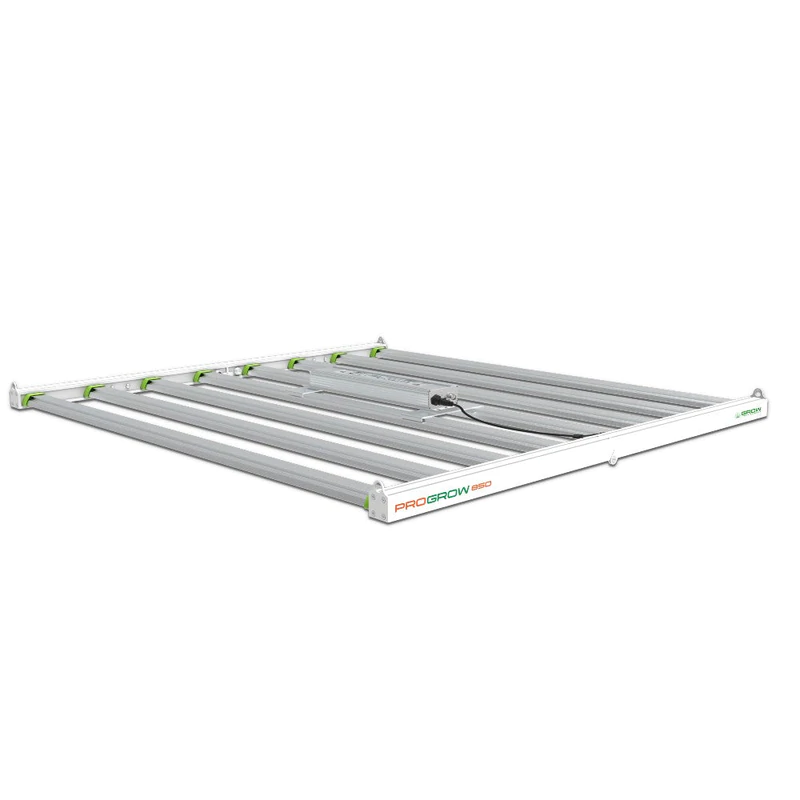
Features:
Grow Light Science LED grow light is a full cycle overhead lighting solution for commercial or residential plants cultivation. The 850’s form factor allows for expandability and multiple grow room and grow tent configurations where photosynthesis and yield maximization are the goals. PROGROW 850 provides high PPFD levels and can be used with CO2 supplements. Top light output (PPF), spectral distribution and efficacy will deliver amazing results with little impact on your wallet. PROGROW 850 will deliver PPFD levels of over 1,400 umols/m2/s, either individually or in arrays of multiple cells. We recommend that all growers conduct research and trials within their growing space to design the best combination of inputs.
TopoGrow Professional 800W LED Grow Light
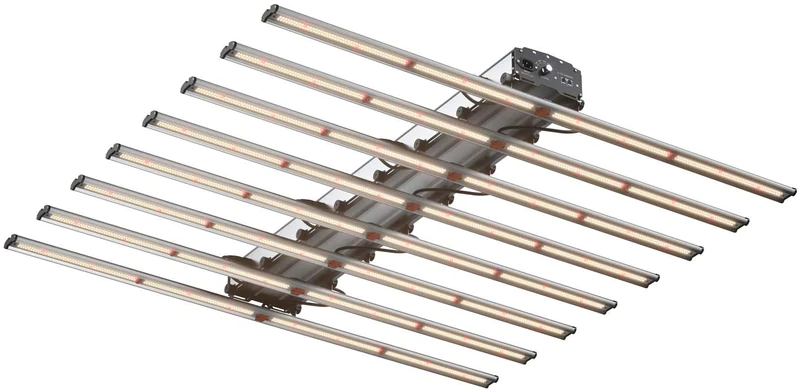
Features:
This TopoGrow LED grow light uses durable IP65 waterproof aluminum material used, Branded led chips and drivers provided. high Efficiency is 2.6 umol/J, delivers powerful light output and uniform canopy penetration to resulting maximum higher yields. PPF is 2080 umol/s, maximize yield with 50% higher Average PPFD, achieve 60% higher yield & quality compared with the traditional led lights. Consume power is 800W, make it a High-End&High-Performance commercial grow light.
This groe light utilizes the latest in high yielding LEDs technology today, max yield Spectrum with enhanced red 660nm led chips and warm 4000K led chips, it speed up blooming & fruiting stages, perfect for Density Buds.The light could be used for commercial,home,grow tent,grow room, hydroponic,soil growth. this 800W led grow ight is best for 6x6ft growth.
How to Choose the Best LED Grow Lights
Each kind of LED light has a specific set of ratings; lumens, watts, and kelvins.
Each of them tells you something different about how the light operates. You need to find the ideal combination of all three ratings to light your grow room effectively.
Let’s check out the essential elements of lighting your grow room and how each rating comes into play.
Consider the Size of Your Grow Room
Each type of LED light produces a certain amount of usable spectrum, measured in lumens. Lumens indicate how brightly the light shines and how far away from the plants you can place it.
You need to place lights with a low lumen count relatively close to the plants. Devices with a higher lumen count can be further away from your bushes.
If you have a small grow room, you could install a few lights with a high lumen count. Larger growing facilities require more lights with high lumen ratings or many smaller devices.
Energy Budget
With your energy budget, there’s one essential rating. The light’s wattage tells you how much electricity it uses and how quickly.
The typical standard for measuring electricity usage worldwide is the kilowatt-hour. You can calculate how many kilowatt-hours, commonly referred to as units, of electricity you’ll use.
To achieve this, follow these steps:
1 — Divide the wattage by 1,000 to find your ballast’s kilowatt usage.
I.E., a 50-watt unit uses 0.05 kilowatts.
2 — Multiply the result by the number of hours the light will be on each day.
0.05 ✕ 24 = 1.2 kWh each day.
3 — Multiply the daily amount by the number of days in the month.
1.2 ✕ 30 = 36 kWh per light each month.
4 — Calculate the total usage by multiplying the monthly total for each light by the number of lights.
36 kWh ✕ 15 lights = 540 kWh.
5 — To calculate the monthly financial outlay, multiply the overall total by the price per kilowatt-hour in your region.
540 kWh at $0.1331 each means a monthly expenditure of approximately $72.
Plant Type and Needs
Different types of plants have different lighting requirements. The top LED grow lights on the market are all-inclusive but have an exclusive price.
Ask yourself the following questions:
Which light colors do I need?
How many lumens do the plants need to stay healthy?
Does the strain I’m growing have any special lighting needs?
Overall Budget
The best LED grow light for you is the one that fits your overall budget. You need to calculate not only the initial expense but the ongoing costs.
If a part breaks, can you afford to replace it? Will the energy consumption fit your budget? Do you need to build a specific framework to house your lights?
These things, and more, affect your decision. Before you buy, ensure that you work out every outlay. You need a product that is both affordable and meets your needs.
Conclusion
LED grow lights are becoming increasingly popular with home gardeners and commercial growers alike. With both the technology and price points becoming more and more attractive every day, LED lights might be a great choice for your next grow. Because quality and overall value can vary greatly, be sure to do your homework before purchasing by closely examining product specs, reading user reviews, and talking to other growers.
