ECO Farm LM301B UV&IR 600W Quantum Board VS Phlizon 600W Dimmable Plant LED Grow Light
With the legalization of recreational plants use in states across the nation, many hobbyists have proceeded to grow the plant indoors. If you are only a starter in indoor growing, then you have a lot to learn regarding this plant.
Since you are growing plants indoors, you will need an artificial light that is bright enough to support the plant. I would advise you to go for LED grow light products since they are highly efficient and feature increased output per watt. Also, they last for long and typically cost less to operate. Compared to HID lamps, LED lights make a more favourable choice.
LED vs HID lights
Most indoor grow lights in use today are divided into two main categories — light-emitting diode (LED) lights and high-intensity discharge (HID) lights.
HID lights
HID lights include metal halide (MH) and high-pressure sodium (HPS) lights, and HID grow systems often use a combination of the two in order to increase yields. These lights tend to produce more heat and require more energy than LED lights. This means you may need more height in your grow space to keep the lights further from the plants.
LED lights
LED lights are typically more energy efficient and give off less heat. This can mean that they are more safe, but looks can also be deceiving. Because the lights don’t appear to be working as hard, it can be easy to underestimate the light your plants are receiving, potentially resulting in light burn. Also, they tend to have a higher price tag than HID lights.
Which grow light is best for you?
There is no black and white answer to this question. LED lights allow more customization in the light spectrum meaning that they can be easily adjusted for the vegetative and flowering stages. They also produce less heat, are more energy efficient, and last longer. At the same time, they can cost significantly more — even to an extent that exceeds what you may save in energy costs.
It’s important to note that many LED lights are relatively new in the market while HID have been reliable go to for indoor growers since the 1990’s.
HID lights produce great light coverage and penetration at a lower cost and are quite easy to set up and operate, but will require more energy for cooling and more attention to make sure your plants are getting too much light.
To answer the question, you’ll need to consider how much you’re willing to invest in your lighting system and energy costs, and how much technical know-how you have at your disposal.
ECO Farm LM301B UV&IR 600W Quantum Board
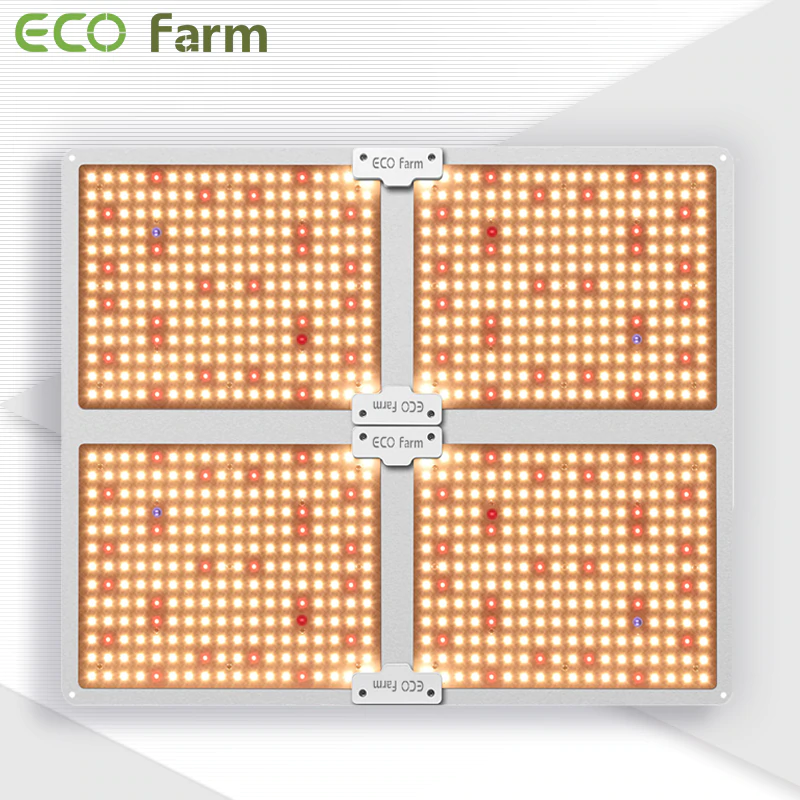
Features:
The ECO Farm LED grow light delivers a powerful light output and uniform canopy penetration to resulting maximum higher yields. Excellent full spectrum LED Grow Light is designed with Full spectrum(3000K), red light 660nm and IR 730nm and UV 395nm, infinite close to natural light, best for all plants all stages growing, rapid plant response from seed to flower and increase yield & crop quality.This grow light uses the most efficient and safe LED Grow Light, SAMSUNG LM301B diodes (2.7 umol / J), which will not emit a lot of heat, and efficiently save energy and your electricity bill. This Plants Growing lamp makes you get a 30% higher yield and saves up to 50% energy compared to old blurple led lights.It is designed for indoor growers, this LED light quantum board uses aluminum to make it cool down instead use fans, bring you a fanless quiet grow experience.
Phlizon 600W Dimmable Plant LED Grow Light
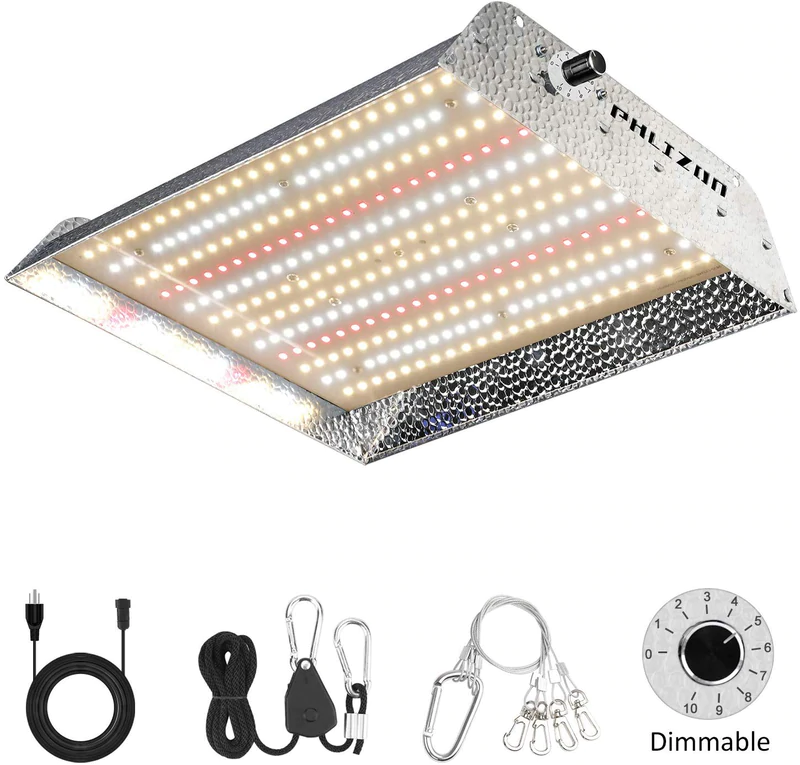
Features:
Over 90% highly reflective aluminium of this Phlizon grow light ensures the quickly flourish of your plants, light output PPFD value is 327 umol/m² hanging at 18".High reflectivity aluminium hood boosts reflectivity by 20% compared to standard aluminium reflectors; Contouring of the polished surface ensures no hot spots or dead spots. The newest high efficient SMD leds , higher light intensity, less light decay , better lumens and PAR values than ordinary lamp beads. It runs at a lower temperature and can bring higher energy conversion and longer life. This waterproof grow light is a full-cycle lighting solution for all growing environments. The intensity of light can be adjusted according to the needs of plants.
Factors to Consider Before Buying Grow Lights for Indoor Plants
Before we reveal the different grow lights for indoor plants, there are quite a few factors to consider. Therefore, we condense them into a handful of handy categories below.
Сost
First thing’s first; what is your budget? If it is under $100, you can still find something. However, you won’t get anywhere near the yield of what a $1,000+ high-quality LED system provides, for instance. Also, bear in mind that you need different lighting for the various stages of the grow cycle.
It is best to calculate how many plants you need each year. MMJ patients and regular recreational users are best served to make a one-off investment in decent standard lights. Also, the more harvests you intend to have, the quicker you ‘pay off’ the cost of lights. If you only plan to grow plants occasionally, HIDs may fit the bill because of their cheaper initial cost.
Ventilation
Certain lights run significantly hotter than others. HIDs, for instance, run extremely hot and need an air conditioning unit. Otherwise, the temperature of your grow room could become excessive and harm your plant’s growth. Please note this is an extra expense to add to the ‘cheaper’ HID setup.
Space
How big is your grow room going to be? If you don’t have much space, you should steer clear of ‘hot’ lights, or else the room’s temperature will increase rapidly. You also won’t have enough space to install an AC unit.
Safety
Check your breaker board to ensure there are plenty of outlets and enough power to handle your lighting easily. Next, go through your full list of equipment to determine its power usage. If you don’t have enough power capacity, the risk of electrical fires increases markedly.
Growth Cycle Stage
The lighting required by indoor plants varies according to their stage in the growth cycle. Young plants require a different light spectrum from their mature counterparts. For example, Metal Halide lights are associated with plants in the vegetative stage. In contrast, HPS lighting is frequently used in the blooming phase.
Conclusion
Finding a suitable LED grow light is not a simple process, especially with a lot of products available for purchase on the market. Hopefully, this LED grow light bulb review has helped to narrow your options. If you have just started indoor growing, you should consider taking small steps in the field to minimize your risks. Try to experiment with one of the grow lights above to see how well they work.
ECO Farm DBL3000 Full Spectrum LED Grow Light 320W VS Viparspectra KS3000 300W LED Grow Light
One of the elements necessary got the growth of plants is sunlight. Light is important for the growth of all plants for the purpose of photosynthesis. Light is also important for the production of buds.
When a plant is grown outdoors, you can harness the effect of the sun on the plant. However, when it is grown indoors, you need to make sure the right proportion of sunlight reaches it. This is usually achieved by using grow lights in the indoor space.
With plant grower lights, you can control the daily amount of sunlight the plant gets. Also, you do not need to worry about weather conditions, as the grow light would produce constant light for your plants with or without the natural sun.
Benefits of Using LED Strip Lights for Plant Growth
There are a few benefits of using LED strip lights for plant growth.
Energy-Efficient
LED strip lights are more energy-efficient than traditional grow lights. They use less power and last longer, so you’ll save money in the long run.
Long Lifespan
LED strip lights also have a longer lifespan since they last for 50,000 hours or more, so you won’t have to replace them as often.
Low Heat Output
LED strip lights produce very little heat. It means you won’t have to worry about burning your plants with the heat from the LEDs
ECO Farm DBL3000 Full Spectrum LED Grow Light 320W
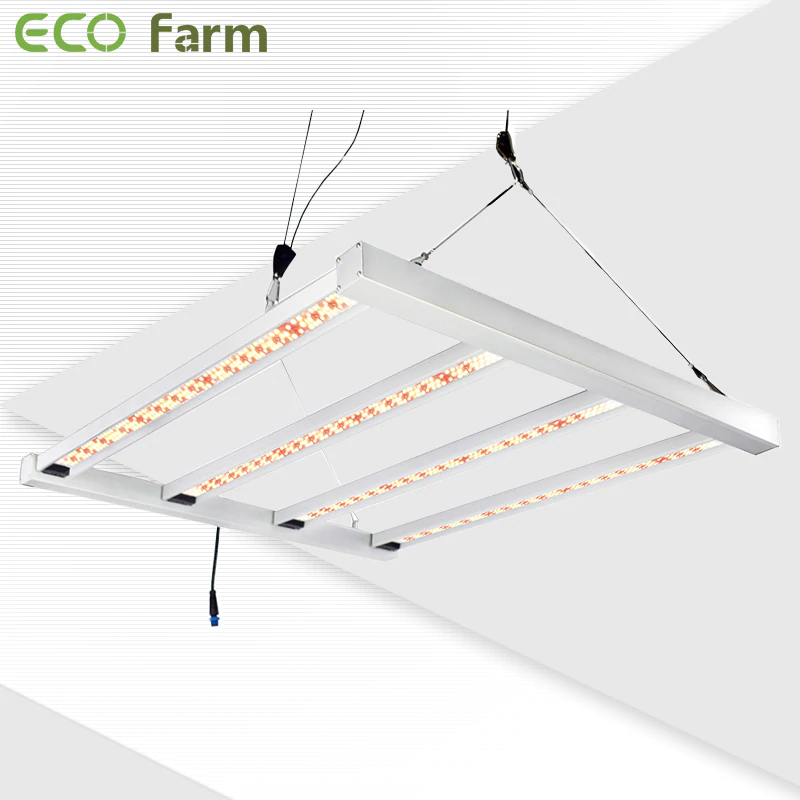
Features:
This ECO Farm led grow light is equipped with SAMSUNG LM281B diodes.It draws 320 watts achieving an impressive PPE of 2.5 umol/J, coverage for 3'x3′ of high-yielding full-cycle growth. Simple structure, no fan, no noise. Four aluminum light bars for better heat disappear and stay cool while enabling even light spread. Save you a lot at ventilation and exhaust. Proven high-yield full spectrum(3000K, 5000k, 660nmnm, 30nm) with enhanced deep red 660nm. Born for big buds, Rapid plant response from seed to flower speeds up flowering time and boosts yields. Easy dimming design meets the needs of indoor plants at different stages of growth. The most powerful daisy chain-max up to 15 DBL3000 growing light can be connected, controller available, especially beneficial for home, grow tent, grow room, greenhouse, garden.
Viparspectra KS3000 300W LED Grow Light
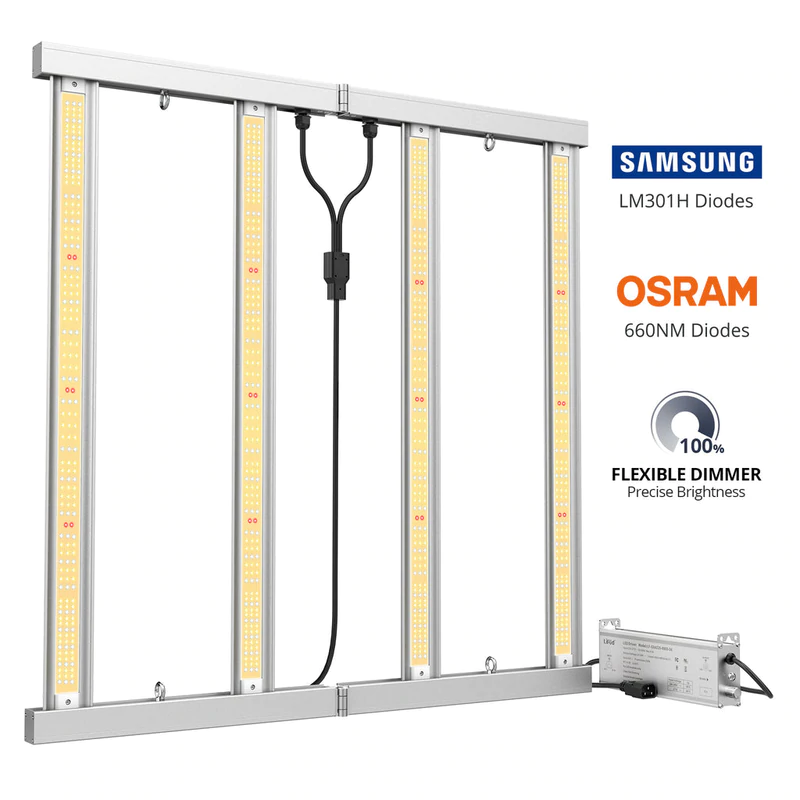
Features:
The Viparspectra LED Grow Light is a device that benefits both the grower and the plants. These grow lights are a beneficial and reliable option for your plants. Other brands distribute too much light to the centre and too little light to the outer edges. The larger size of the KS3000 ensures enough light for every plant from corner to center. The KS3000 also enables indoor farms to reduce energy usage. The full spectrum of this grow light includes 3000K warm white, 5000K neutral white and 660nm deep red, making it ideal for all stages of plant growth. It also has the industry-leading photon efficiency of 3.10 μmol/J SAMSUNG LM301H and OSRAM 660nm diodes. Finally, a flexible dimmer allows you to adjust the light intensity from 0% to 100%.
Before You Buy: How To Pick The Best Grow Light
If you’ve never bought a grow light before, it’s easy to make a mistake and get something that’s pricey but close to useless. Everyone’s done it, and some of my first lights were just overpriced paperweights.
However, you don’t have to learn from your mistakes — just listen to what I learned from mine.
Light Spectrum
This is the first thing I need to talk about since it’s definitely the most important one. Nothing else I talk about here will matter if you get a grow light which doesn’t emit light of the right spectrum and your plants will underperform.
Plants also require different types of light in different stages of development, so you’ll have to be careful about that as well.
Most budding plants and plants in the vegetative stage will require a lot of blue light and UV light. This is light of a wavelength between 400 and 500nm, ideally, and some ultraviolet light from 180 to 400nm.
On the other hand, plants in the flowering stage will require more red and infrared light, which is near the top of the spectrum. The light between 620 and 780nm is probably the best, though light slightly higher on the spectrum will also do well.
Most grow lights will list which type of light they emit in their product information so you can’t miss it if you just look carefully. If it’s not listed though, that’s a bad sign and the light is probably not effective, so steer clear of it.
The ideal thing you can do is to get a full-spectrum grow light where you can adjust the light spectrum to your liking, though that can be prohibitively expensive in certain cases.
As a stop-gap measure, some people will go for LED grow lights which feature both blue and red LED’s and can switch between the two instead of the whole spectrum.
It’s vitally important that you get a light which hits the required spectrums of light because that’s what will allow your plants to develop properly and maximize your yield.
Watts
Some people might tell you that the wattage of your lights is unimportant — and it might be, in certain cases, but it does matter, especially with HID lighting.
In short, the more wattage a light has, the more powerful it is, and the more electricity it spends. However, wattage is not directly reflective of the power of the light or the electricity it spends.
It’s most reflective of this for HID lights, less so for LED and fluorescent ones which use less power while having similar brightness to HID lights which use more power.
Manufacturers also tend to use deceptive wording when describing the wattage of their lights.
Don’t look at the wattage stated in large numbers to figure out how strong a light is — look at the “actual power” or “actual wattage” which will be listed somewhere in the product description. This will give you a good gauge of its real power.
Coverage
The size of the grow lights you’re buying, and the coverage they can achieve based on their placement are things you have to consider since you need to be able to cover all of the plants that you’re growing in order to get as much yield as possible.
You also need to consider the shape of the light and how easy it is to adjust. Achieving optimal coverage is not always easy and can become more difficult to do as the plants grow. You’ll definitely have to adjust your grow lights from time to time.
LED lights are usually the most adjustable ones due to having more individual lights, which means that they can be arranged in some non-standard shapes.
Stay Cool
One of the most common mistakes that beginners make is burning their plants with their grow lights and drying them out.
To avoid making that mistake, always check the temperature that a grow light produces at certain distances, compare that to the space you have available and the temperature preference of your plants, then make your choice.
LED lamps with heat sinks and fluorescent lights usually have low heat output and can be placed close to the plants, while HID lights tend to get quite hot, but this also varies from model to model.
Lifespan and Warranty
No grow light will last forever, and depending on the type and model, the lifespan can differ wildly. Some grow lights might not last for more than 3 or 4 seasons while others might last for years.
LED lights are the most long-lasting in general, while HID lights tend to lose their effectiveness the quickest. However, even LED lights can fail quickly if components other than the bulbs themselves are not well-made.
Most manufacturers will provide an estimate on how long their grow light should last. However, they’ll always give you the best-case scenario — cut their estimate in half, and you’ve got a more realistic idea of what the lifespan of the light will be.
No matter the lifespan of the light, always try to get one that has a good warranty attached to it, so you’re secured in case the light fails right out of the box, or something unexpected happens.
A good warranty should be lengthy, but it should also cover most parts of the light, especially the light bulbs, and cover a wide range of possible problems, not just extremely specific manufacturing errors.
Ideally, get a grow light from a manufacturer that allows you to return it for free within 60 to 90 days from the moment of purchase, no questions asked. That’s the best way to make your purchase risk-free.
Set a Budget
When you’re looking at different grow lights you can buy, it’s easy to get carried away and spend more money than you should.
That’s why you need to carefully consider how much money you can spend, set the maximum budget before you even start window shopping and work within that budget.
You can get a decent grow light at any price and getting the maximum possible yield isn’t always the most important thing, especially if you need grow lights well outside your budget to get them.
What about Accessories?
Most grow lights these days come with a lot of bells and whistles attached, which can be a good thing, but that’s not always the case.
Some accessories can be useful, for sure, but there’s no use for an auto-shut-off timer on a light that is too hot and doesn’t offer your plants the type of light that they need to grow.
However, a good rule of thumb is to never buy a grow light just because the accessories seem good. Always look at the core performance first and foremost.
Only look at accessories as the deciding factor if you’re in two minds about lights with similar performance but different accessories.
Conclusion
In conclusion, LED grow lights are the way of the future. They are more energy-efficient, last longer, and don’t emit much heat. It’s important for people growing their plants indoors. LEDs will help you save money on your electricity bill, and these savings will offset the additional cost you’ll pay for your LED grow lights.
ECO Farm MB4 880W Commercial LED Grow Light VS MARS HYDRO FC 8000 SAMSUNG LM301B OSRAM Commercial LED Grow Light
Indoor conditions are notoriously dim. While some plants quite enjoy this environment, there is a whole range of amazing-looking indoor varieties that thrive in bright, consistent full-spectrum light. If your home is dark or you wish to grow indoor plant varieties that enjoy consistent levels of light, your best solution is a high-quality set of indoor plant grow lights.
To help you find the options, this post will take you through the best grow lights for indoor plants that are sure to promote healthy, robust growth.
What are the best grow lights?
The best LED grow lights are electric lights that help plants grow. Grow lights either try to provide a spectrum similar to the sun, or a spectrum more suited to the needs of the plant. Simulate outdoor conditions with the different colors, temperatures and spectral outputs of the best LED grow lights, as well as the intensity of the lights.
Depending on the type of plant to be cultivated, the stage of cultivation (eg germination/vegetation or flowering/fruiting) and the photoperiod required by the plant, the specific spectral range, luminous efficacy and color temperature, the specific plant and time period needs to be used.
Why use the best LED grow lights?
The main reason to use the best led grow lights is that they reduce or eliminate your reliance on natural light (sunlight). Light is essential for plant growth, but is often in short supply (eg, indoors, in winter, or in densely populated urban areas). The best LED grow lights allow us to grow plants in different places or times of the year, which otherwise might not be possible. The best led grow lights are available for seed germination, houseplants, herbs, flowers, fruits, vegetables and more.
ECO Farm MB4 880W Commercial LED Grow Light
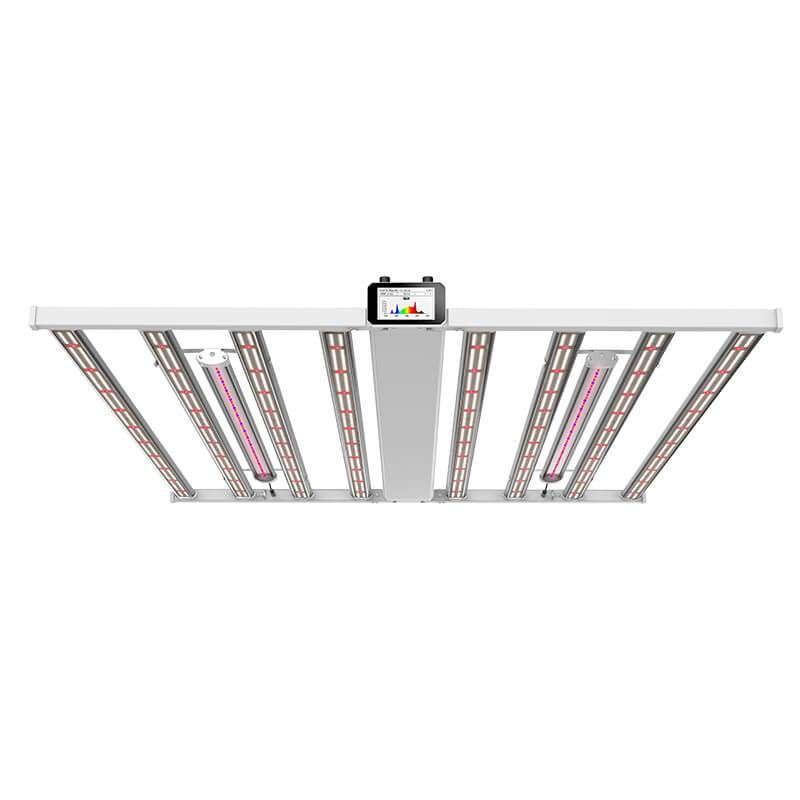
Features:
This ECO Farm LED grow light adopts 8 bars design with more even and complete canopy coverage. Equipped with high-efficiency Samsung LM301B diodes, extremely low thermal resistance. Grow lights no flicker and dim, and the life is up to 50,000 hours. Led grow light draws 880 watts with 2200 µmol/s, achieving a satisfactory PPE of 2.8 µmol/J, coverage for 5'x5’ of high-yielding full-cycle growth. Abundant types of wavelengths are consistent with the spectral range of plant photosynthesis. It can concentrate the light of a specific wavelength to irradiate crops in a balanced manner, and control the height of the plant and the nutrients of the plant. Speed up the synthesis of plant carbohydrates and vitamins, shorten the growth cycle. Indoor plant LED grow light uses advanced heat dissipation aluminium material and waterproof design. High-quality components ensure that the product works better during its life cycle. At the same time, it can also make you more at ease and more comfortable planting in the tent.
MARS HYDRO FC 8000 SAMSUNG LM301B OSRAM Commercial LED Grow Light
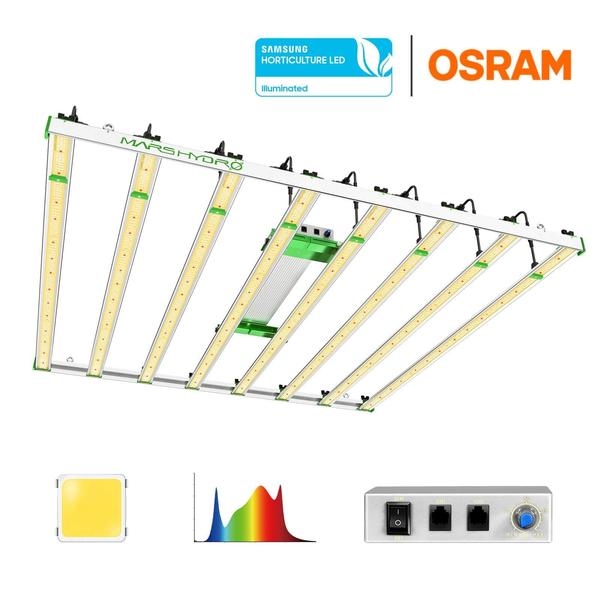
Features:
Mars Hydro grow light mounts 2968 pcs Samsung LM301B & Osram 660nm diodes. Make use of more than twice as many LEDs as comparable lights to drive the grow lights with a low current to stay away from overdrive. Quality guaranteed and high efficiency up to 2.9 μmol/j. This grow light has professional spectra for plant production to enhance blue and red light as a specific spectral combination, boosting plant growth while improving the year-round yield and product quality. Multi-light bar style and dense layout of light diodes enable FC8000 LED grow light to have PPFD values in the range of 1000–1500 μmol/m²/s throughout the effective coverage area. The dimming function is available for 0–100% variable brightness, adapts to different plant growth stages. Max 30 lights can be daisy-chained together and be controlled by one master light
How to Use Grow Lights for Your Indoor Plants?
Grow lights vary widely in the amount of radiation (PAR) available to their plants. At the same time, plants vary greatly in the amount of light they need. However, when it comes to grow lights, you need to consider two main variables, and they can usually be adjusted — they are distance and duration .
What is the Grow Light Distance to Plants?
Light decays very fast with distance. In fact, “point” light sources follow the so-called “inverse square law.”. This means that for every doubling of the distance from the light, the intensity decreases by a quarter. Therefore, the PAR value at 400 umol/m2/s from the growth lamp 4 inches (or 10 cm) may be enough to satisfy your basil plant, but when you move the grow lamp to 8 inches (20 cm) away from the plant, the PAR value will drop to about 100umol/m2/s, which may be too low.
Now there are ways to counteract this inverse square law — most commonly through lenses or optics that try to “direct” light in the direction of plants. While these are helpful and give you more flexibility in plant placement relative to light, the fact remains that the correct distance between the plant and the light will depend on the intensity of the light and the light requirements of the plant — and may be, in any case, from 2 inches (5 centimeters) to 6 feet (1.8 meters).
Can You Leave Grow Lights on 24 Hours A Day?
This question is easier to answer than the distance question, but it can still be very different. In “indoor grow light — how to measure it and understand watts, Par and DLI” (coming soon), we discussed the light measurement and daily light interval (or “DLI”) of plants.
But to introduce the concept, the light demand of plants is measured as a “volume” called DLI, which is equal to the flow (in PAR) times the duration. Therefore, a 400 umol / m2 / s light source operating 10 hours per day will provide the same amount of DLI as a 800 umol / m2 / s light source operating 5 hours per day. The DLI of both is 4000.
Generally speaking, the correct answer to grow lamp time is between 8 and 16 hours. You may choose the time suitable for your lifestyle and location. For example, if it is in the bedroom, you may not want 16 hours of grow lights. If you expect this lamp to be the core or characteristic of your living space, 8 hours may be too short.
Keep in mind that providing the same amount of DLI in a shorter time requires higher light intensity. That means more expensive lights. In addition, if the intensity is too high, you may burn your plants because of too much light — all plants have a limited limit on the speed at which they can comfortably absorb light.
If you exceed this speed, you will either damage them or even kill them. At the other end of the duration range, remember that plants (like us) do need “sleep.”. They have what’s called photorespiration. In fact, for many plants, dark ages are essential for flowering or fruiting.
Conclusion
You can produce indoor crops all year long by using artificial light from growth lamps. The truth is that there is no one-size-fits-all solution for the ideal growth light. When it comes to selecting a growth light for your situation, your budget and growing requirements should be the deciding factors.
Mars Hydro FC-E 4800 480W LED Grow Light VS PhotonTek X 465W PRO LED
Regardless of the type of plant, light plays a crucial role in photosynthesis and helps it grow effectively. The same is the case with the plant. If you grow these plants in an outdoor environment, the sun fulfils the light requirements.
But, if you are planning to grow your indoor plants, artificial light would be needed to provide a comfortable environment to maintain smooth growing conditions. This is where LED grow lights play their part. The best thing about using these lights is adjusting the amount of light required for better growth.
Choosing the ideal LED grow lights is not a piece of cake. Some are expensive, whereas others are not efficient enough to give the desired results. Similarly, some lights are lightweight, whereas others come with bulky spare parts. Do you intend to grow indoor plants? Looking for better LED grow lights? Don’t miss the discussion below.
What is the best colour spectrum for growing indoors?
Natural sunlight contains the full spectrum of light, including all colors of the rainbow and even non-visible light like infrared and UV. When we use LED grow lights for indoor growing, we want to mimic natural sunlight as closely as possible, to create the perfect growing environment for our plants, even better than what we could find outdoors. Because we want to mimic the perfect growing environment for our plant, we should copy the natural environment of our plant while using a light source that produces a full spectrum of light.
The color of the light is one of the most important aspects that affect indoor growing. The two colors red and blue are on either end of the spectrum, and they have different effects on your plant. Further, your plants will utilize certain colors at various stages in the grow cycle: for example, plants utilize blue light to grow new leaves and to stretch stems and branches, while they use red light to produce buds and flowers.
A good grow light will need to produce sufficient red and blue light as these parts of the spectrum are extremely important to plant growth, while plants reflect a lot more green and yellow light, which is what gives them their color. During the process of photosynthesis, plants usually respond to 400 and 700 nanometer wavelengths, which, coincidentally and very useful for growers, corresponds to the visible portion of the light spectrum.
Mars Hydro FC-E 4800 480W LED Grow Light
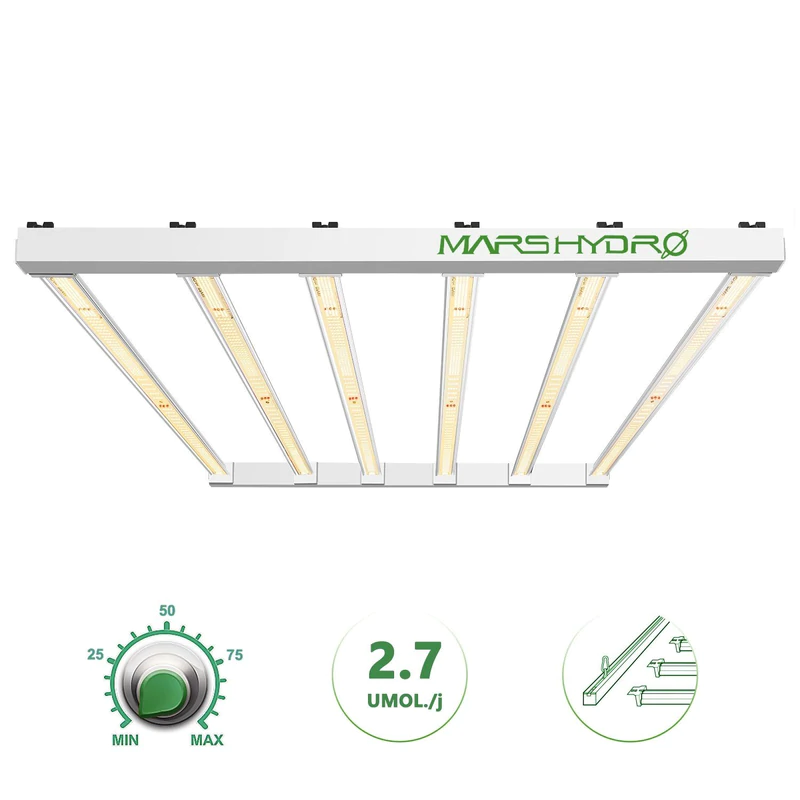
Features:
The Mars Hydro LED grow light consumes 480W input power. The FC-E4800 has 2646 high-quality BridgeLux chips, which can perfectly cover the growing space of 4x4 feet (flowers) and 5x5 feet (vegetables), which is more cost-effective than other lights of the same type. Not only the driver is removable, but the light bar is also removable for easy installation, storage and replacement of the light bar. At the same time, growers can freely adjust the light bar space according to their own growth needs to maximize the use of light. mars Hydro’s newly developed chip arrangement enables a more uniform and efficient light distribution, allowing growers to achieve a more uniform crop. The light is designed with a dimming knob, which is more convenient for dimming.
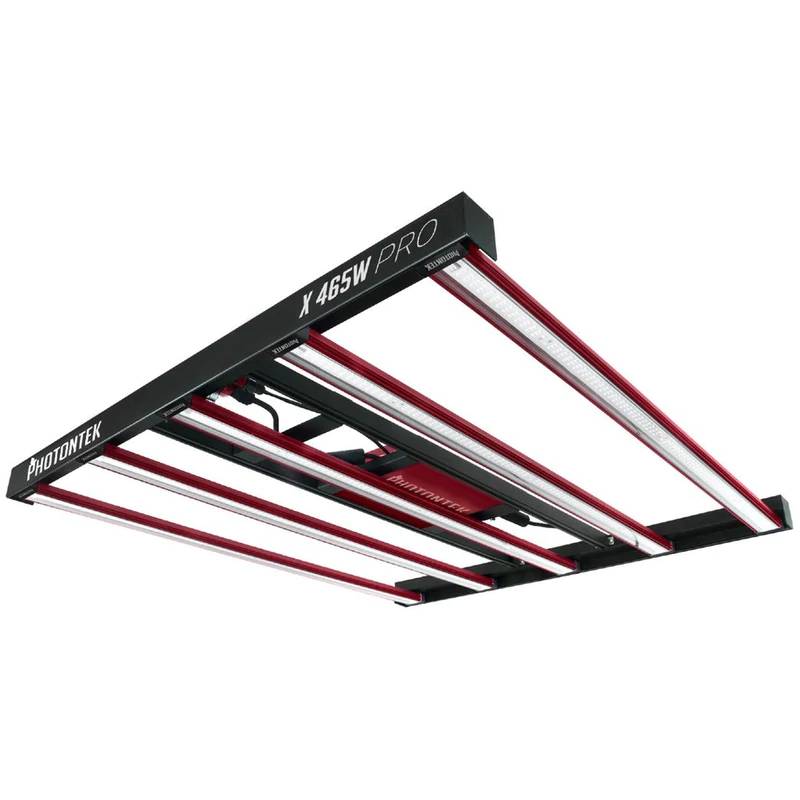
Features:
PHOTONTEK LED grow lights use only the highest grade materials and components and provide safe, reliable light PHOTONTEK luminaires feature industry-leading performance. Delivered through multiple linear designs with the perfect balance of high-quality full spectrum light and highest intensity PPFD. PHOTONTEK creates the ultimate light top for the entire plant growth cycle, making these LEDs the brightest choice for a higher and faster return on investment. The PHOTONTEK X 465W Pro LED produces a total PPF output of 1256 µmol/s and a photon efficiency (fixture efficiency) of 2.7 µmol/J, producing uniform light spread close to the crop canopy, ideal for use in indoor multi-layer cultivation systems, growing room and tent.
Factors to consider when buying the best grow light
Aluminum-plastic or plastic heat sink
The components that ensure the operation of the grow light are more likely to fail. The main danger for the chip is overheating. Good heat dissipation ensures the long and correct operation of the grow light chip.
Since the production and processing of metal is a relatively expensive enterprise, there has been a launch of aluminum-plastic radiators. The aluminum cup is placed inside the housing made of pressed plastic powder. The more powerful the light, the thicker this glass should be.
Unscrupulous manufacturers save on what is not visible to the eye and make the metal part not correspond to the light bulb’s power.
You can determine this by weight: take two similar lights with an aluminum-plastic housing and hold them in your hand. The better quality is the heavier one.
Wattage
There are a few rules for choosing the best grow light bulb based on wattage. It consumes 8–10 times less than incandescent light and 1.5–2 times less than a fluorescent light.
However, formula 1:10, declared by the manufacturers, is crafty. A 6W grow light will shine worse than a 60 W incandescent light because part of the energy will go to the heat sink.
In addition, the brightness of the grow light is dimmed by 20–30 % by a matte bulb.
To not miscalculate when changing a regular light to 60 W, it makes sense to take a grow light and choose the correspondence not by watts but by lumens, in which the luminous flux is measured.
You can easily find the correspondence table for different types of lights on the Web, and the light indicators are on the box.
The more lumens per watt output, the better. On average, 700 lm is enough for a bedroom and about 1000 for a living room.
Color temperature
When buying the best grow light, consider the color temperature. You can look for it on the package. Color temperature is measured in kelvins and conditionally divides light into warm (up to 3500K), neutral (3500–4500K), and cold (from 4500K).
What is the color temperature of grow light? The higher the number, the colder the shade, and the more intense the glow in the blue spectrum. This spectrum is the most unpleasant for the retina and can cause vision problems with prolonged exposure.
The lens of a child’s eye is even more susceptible to blue, so it’s best not to use cold white grow lights in a nursery. Optimal is 2700 to 3000K, corresponding to a conventional incandescent light or sunlight. The lamp’s location is also essential, and you need to ensure there is no direct light entering the eyes.
Cold light is good on the street and neutral in the office. This is because it invigorates and mobilizes brain resources. The color temperature above 4000K is ideal for public and educational buildings.
Ripple factor
This is the crucial factor to consider when buying the grow light. A warm white grow light can be a nuisance if it has a high (over 20%) ripple factor.
Life hacks will help determine the level of pulsation. First, move the pencil back and forth in front of the lamp. If the pulsation is high, the silhouette will fall apart, and if it is low, it will smudge.
The second method looks even more straightforward. Point your smartphone at the lamp with the camera turned on; the ripple will be visible in the image: the more blinks and more stripes, the worse.
However, there are nuances here. After a second of camera operation, many smartphones compensate for pulsations programmatically by launching the anti-flicker function. In addition, circuitry and firmware that processes light pulsations will be different at different cameras.
As a result, you can both miss strong ripples and panic because of very strong flickers, although they will be high-frequency and harmless to the eyes.
Color rendering index
Another important factor to consider when buying the best grow light is the color rendering index that affects lighting quality. This is between the natural color of an object and the color under the light.
The index is denoted by the letters CRI (Ra) and a number on a 100-point scale. Typically, the higher it is, the better the color rendering. Grow light for 3×3 with an indicator of less than 80Ra can significantly change the color of objects.
The color rendering index indicates how uniform the level of different color components is in grow light. At low Ra, shades are less visible. Such grow light is visually unpleasant, and it is challenging to understand what is wrong with it.
Merge different shades into one, so it is better not to install them in apartments and offices. Sometimes manufacturers hide CRI in a class from 1 to 4 or in a three-digit number. Class 1A is a range of 90–100Ra, 1B is a little worse, 80–89Ra, and 2A is already 70–79Ra.
The rest are best used outdoors. Three-digit number — for example, 927- indicates that the grow light has a color rendering index of 90Ra and a color temperature of 2700K.
Sound
This is the crucial factor if you want the best product. Some grow lights products a buzz, so it is vital to check them in the store. Even if the sound is quiet at home, it won’t be very pleasant.
And remember that any light under consumer protection law can be returned within 14 days. In addition, grow light has a guarantee of 1–5 years.
So save the receipt or take a picture of it with your phone. Therefore, consider the sound produced when looking for the best grow lights.
Conclusion
We hope you enjoyed our article on the best led grow lights. When it comes to growers, tend to need all of their help. With led grow lights, they can save a lot of money and time, and energy in the long run. We know that you’ll be able to use the information we provided to make the most out of your next growing session. So what are you waiting for? Start researching led grow lights today!
Mars Hydro FC 6500-H Commercial Full Spectrum LED Grow Lights VS FLORAFLEX® LED GROW LIGHT- 650–8 BAR LED Grow Light
Does indoor plant grow better in sunlight or artificial light? The longstanding debate continues to rage about whether indoor controlled-environment lighting or outdoor plants using natural sunlight is better.
Each camp has its firm and devoted legions that have already made up their minds. The question is: Which one is right for you?
Fortunately, there’s room for both cultivation methods in today’s growing space, and one method is unlikely to replace the other. Both types of lighting can provide excellent results. Generally, sunlight is preferred for better plant growth.
The indoor plant requires full sun or artificial radiation to thrive — it’s not a plant that enjoys a lot of shade. It soaks up the rays and grows at a fast rate. Both natural sunlight and artificial grow lights have their pros and cons.
Why Use LED Grow Lights?
Saving energy is one of the most important things
LED lights have a longer bulb life
HPS lights they emanate more heat than LED lights
Spectrum describes the different wavelengths
Saving energy is one of the most important things for anyone who is using grow light. LED Grow lights are preferred because they consume less electricity than HPS lights. According to market research, LED lights consume 90 percent less power than HPS grow lights. You have less load on your amperage and electric breakers at home because LED grow lights enhance the energy efficiency of your indoor garden.In comparison to HPS lights, LED lights have a longer bulb life. With time, HPS bulbs may become dimmer and lose efficiency. Even the actual operating cost over the lifetime of an HPS bulb increases with usage. On the other hand, LED bulbs offer a bit more power at the end of their lives.
When it comes to HPS lights they emanate more heat than LED lights, which often give you integrated heat sinks. Heat emanated from HPS lights requires ventilation which may cause additional costs. Whereas in the case of LED lights, the heat released is less than half than that of its counterpart, HPS.LED lights need less electricity to operate than HPS lights. This helps you reduce a major part of your indoor gardening expenses.Comparisons between LED and HPS lights clearly show that the LED bulb is the winner in a lot of factors. It saves you a lot of operating expenses due to built-in heat sinks. It also promises more energy efficiency than an HPS bulb. As they don’t lose efficiency quickly, they will only help you increase your savings over time.
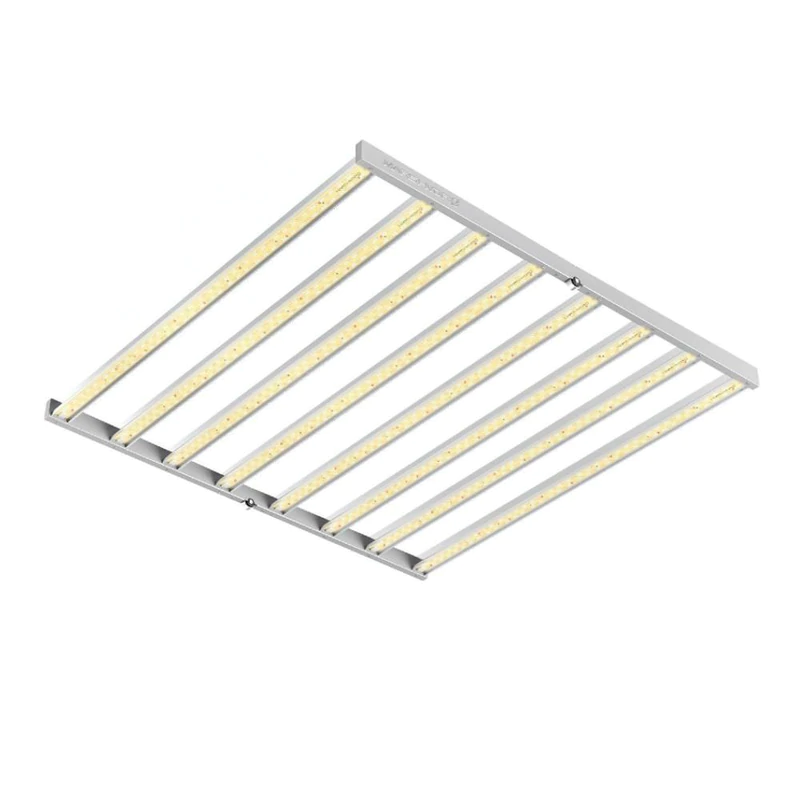
Mars Hydro FC 6500-H Commercial Full Spectrum LED Grow Lights
Features:
The Mars Hydro LED grow light uses the best-Selling Samsung LM301B LEDs- 2688Pcs Best-Selling Samsung LM301H and Osram 660nm LEDs chips, High Efficiency Up to 2.8 µmol/J. Upgraded Full Spectrum White. This High-intensity spectrum is beneficial for plants at all stages — from veg to bloom, and creates dense buds. Expect up to a 50% higher yield and higher quality compared with the old blurple lights and HPS. Max yield Up to 2.5g/W with 30% higher Average PPFD. The new model has a dimmer knob added which makes dimming more convenient. Up to 20 lights can be daisy-chained and controlled through just one light. No-Fan Design, Aluminum Heatsink, and Removable Driver. The no-fan design means no noise or moving parts to worry about. Optimal heat dissipation while using a thick, sturdy aluminum heatsink.
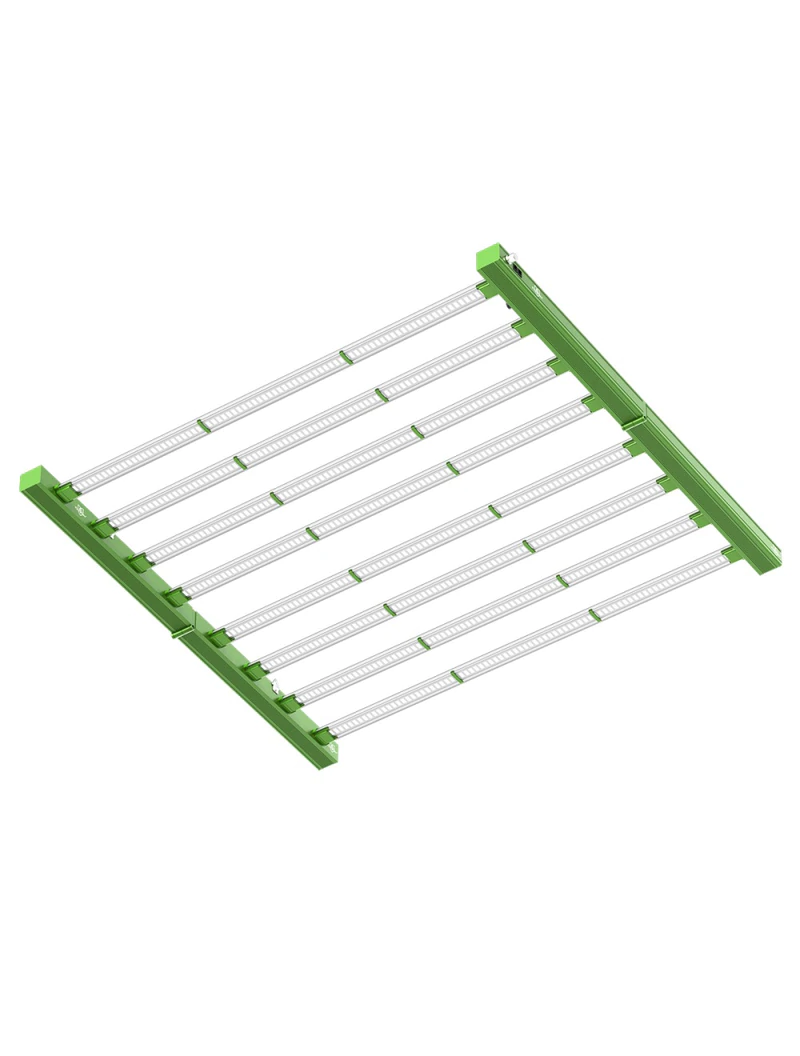
FLORAFLEX® LED GROW LIGHT- 650–8 BAR LED Grow Light
Features:
FloraFlex LED grow light is a high-performance and cost-effective lighting solution for indoor cultivation. Featuring a balanced spectrum, incorporating a 3K CMH Full Phase Spectrum for superior growing power. With onboard dimming function, growers can set the ideal strength for any stage of plant growth, giving total control. Professional customization and production using the latest technology. It is higher than ordinary lamp beads, the light attenuation speed is lower, and the luminosity is higher. It provides 2.6μmol/J high-efficiency, 1700μmol/s PPF output plant light. Increase production and best quality. The LED grow light is wattage adjustable. The range can be adjusted from 10W to 650W
How Many Grow Lights Do You Need?
When it comes to indoor growing, planning is key. And one of the many things home indoor growers want and need to know is how many grow lights they need for their plants. If you have a well-defined space for growing, it makes it easier to determine the number of lights necessary to cover it.
If you have more flexibility, you’ll want to begin with how many plants you want to grow. This will determine the size of your growing space, which, in turn, will determine how many lights needed to cover it.
Measuring Plant Canopy
Plant canopy is basically the area of the top of your plants grouped together. The depth of the canopy is the distance from the top of the canopy to the surface of the soil or planter. This is important because you want light to penetrate beneath the canopy to reach the whole plant.
You will need to research a few facts to determine the number of lights required.
The size of your plants at maturity
The total number you want to grow
The distance needed between the plants for full growth
Take the total number of plants plus the distance you want between them at maturity, then measure the length and width of what will be the total area the top of the plants will cover. That measurement is your plant canopy.
Discovering Light Coverage
Plants need visible light to grow — obviously. However, whereas household lights are measured in watts and lumens, when it comes to plants, you need to know PAR (Photosynthetically Active Radiation). In other words, the light that can be used by the plant for photosynthesis. Don’t make the mistake of trying to determine light coverage by watts alone.
PAR is actually measured as PPFD — the number of photons in the PAR area emitted each second over one square meter (µmol/m2/s). Take a second to recover from that information. Don’t worry–read on.
A good LED grow light will have this information in the form of a PAR map which shows the PPFD at various points over the entire area and indicates the distance from the light. PAR Map or Chart
Different plants need different PAR so you will again need to research how much your specific plants require for optimal growth and production. Once you know this, you can determine how many lights you need to provide that much PAR.
Note: Beware of lights indicating just a single PPFD or an average PPFD. This can be misleading since it is only measurement of what is centered beneath the light or data from only a few places inside the area.
Full-Spectrum LED Grow Lights
These days, most indoor growers, whether commercial or small-scale, are turning to full-spectrum LED lights to provide the most efficient and efficacious light for their plants. Here’s why.
Full-Spectrum Light: LED full-spectrum white light mimics sunlight more closely than any other bright white light. Plants get more of what they need for optimal growth and flowering.
Energy-Efficient: LED lights use much less energy to produce the same amount of light as high-intensity discharge HSP lights.
Cooler Operating: Producing significantly less heat, LED lights help reduce overall costs since HVAC or ventilation systems aren’t necessary, or can be used less frequently to cool the growing space.
Placement: LED lights don’t need to be suspended as far from plants as some other types, which makes vertical growing much easier and reduces the amount of overall space needed. It also allows more light to penetrate the canopy for better production.
Lower Cost over Time: LED lights have a long life so you aren’t constantly having to replace them. And while they may be a more expensive up-front purchase, they are more cost-effective in the long run.
Conclusion
During different growth stages, indoor plants require a specific amount and intensity of light per day. But at the end of the day, it’s not that difficult to care for them or to choose the best grow lights for indoor plants.
We hope that this review provides all the basic information you need to make your best buying decision. Thanks for reading!
ECO Farm LM301B UV&IR 600W Quantum Board VS Horticulture Lighting Group HLG 550 V2
With a huge variety of LED lights on the market today, with different specs and different technologies, you need to do a lot of research before buying if you want value for money.
When shopping for LED lights, you may notice significant price differences between similar products. It’s not a mistake, good LED grow lights, especially those from established manufacturers, can be expensive. That doesn’t necessarily mean cheap LEDs are fake or inferior, most of them are fine for growing other plants indoors.
While it’s nice to have top-of-the-line LED grow lights, if you’re a recreational grower, you don’t have to splurge on them. In most cases, you will be able to get decent yields with mid-level LEDs.
Why are LED Lights Better for your Plants?
In comparison to HID and fluorescent lighting, LED has the best brightness per Watt. This simply means that you get the best output at reduced electricity costs. They are cooler and are a source of reduced lighting and have a reduced risk of fire. There are also other things when you compare LED’s to Fluorescent.
Light-emitting diode lights tend to be better for plants being grown indoors.
LED lights also tend to come with inbuilt fans, and so in the majority of cases, additional ventilation may not be necessary. They do not require ballasts and return a much higher rate of yield per unit of electricity consumed. LED lights tend also to carry a broader spectrum of light which helps the plants become healthier, greener and have resilient looking buds.
Furthermore, innovative designs of the light have specialized lenses that point the light directly to the plant. This enhances penetration resulting in much better yields in comparison to light from older models.
HID lights are a pain in themselves as they are heavy and require support. Over time, these lights reduce brightness and may be necessary to run to the stores to acquire new ones. LED’s are consistently effective for a long time, and so you save your hard earned cash.
Flourescents, what about them?
There is usually a misconception that fluorescents are the better than LED. However, this can be forgiven as LEDs are relatively new in agriculture.
LED lights are the next best thing your plant can get after sunlight and are associated with better yields. Also, they are much cheaper when compared to other kinds of lights.
The grow lights have a much higher lifespan of 50,000, and so you will not need to replace for a very long time you will almost forget about them.
ECO Farm LM301B UV&IR 600W Quantum Board
Features:
ECO Farm LED Grow Lights provide powerful light output and uniform canopy penetration to maximize yields. Excellent full spectrum LED grow light designed with full spectrum (3000K), red light 660nm and IR 730nm and UV 395nm, infinitely close to natural light, best for all plant growth stages, fast plant response from seed to flowering, increased yield and crop quality . This grow light uses the most efficient and safest LED grow light, SAMSUNG LM301B diode (2.7 umol/J), which does not emit a lot of heat, effectively saving energy and electricity bills. This grow light allows you to get 30% higher yields and save up to 50% energy compared to the old fuzzy LED lights. Designed for indoor growers, this LED Quantum Panel uses aluminium to cool it instead of a fan, giving you a fanless and quiet growing experience.
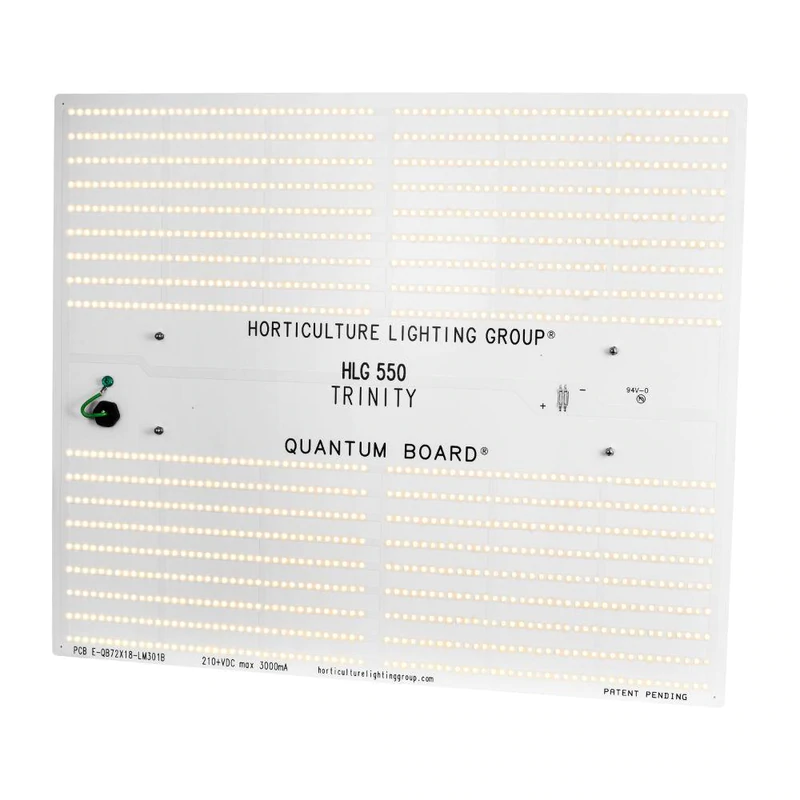
Horticulture Lighting Group HLG 550 V2
Features:
The HLG Quantum Board light is well made as it has a larger aluminium panel and a dimmable MeanWell driver to control the intensity of the light. You can replace a single-ended 1000 watt HID, with a white light quantum LED grow light, your plants will grow quickly at all stages and get higher yields than similar light models. Growers often use it to increase plants production in the grow room. Simply plug it in and enjoy the maximum harvest. The grow lights use aluminium heat sinks to manage and reduce heat without creating noise in the growing environment. At full capacity, it barely consumes 480 watts of power. Otherwise, the dimming option allows you to reduce power consumption by up to 200 watts.
Considerations Before Buying a LED Grow Light
Space Matters: Considering your space is a thing you should certainly do before buying a growing light. Space is a big factor. When choosing an LED growing light, its size and installation space must be properly checked in order to avoid the distorted growth of the indoor growing plant. Besides, when light is set too close to the growing plant, it will get destroyed and burnt. So, it is recommended to read the instruction manual to enable you to know the required distance of the light from the plant. Space and light’s size is key
Quality: product quality is very crucial as it helps determine efficiency. So, before selecting a product always take note of its quality. Some of those things to consider while choosing the best grow light are its appearance, durability, and internal and external hitting issues.
Pricing: price is a factor when it comes to getting a working and long-lasting LED grow light. Don’t need to bother with the price if you need quality. A good LED grows light for the large-scale purpose should be within the range of $500. However, for personal (hobby) use, you should spend $150–300.
Appearance: The look of the product always gives the first impression and either calls for an attraction or repels. When a product isn’t eye-catching then no matter how beneficial it’s working, the grow light might not attract you. It is important to consider the out-look of Led grows light before buying.
Durability: Durability is an indispensable factor to consider when buying an LED grow light. Knowing that a growing light is a big venture, which means you must embark on a sturdy product for greater efficiency and yield of your indoor growing plants. You can use a durable product for a long-living time. So, when selecting a grow light, take note of the longevity of it.
Lifetime of LED: This is another important factor to know. Before selecting the best LED growing light for an indoor garden or greenhouse, the lifespan of the LED bulbs contained in the growing light must be properly checked and guaranteed.
Conclusion
LED lights have recently become some of the most effective devices for increasing garden yields. The thing about them is that they mimic sunlight and help plants germinate and make food. If you want the best out of your garden, you need the best grow lights.
GeekBeast 630w Pro VS Fluence SPYDR 2i 40" LED Grow Light
Starting indoor plants from seed can be a fun and rewarding experience, but it can also be challenging. One of the most important factors in a successful seedling garden is providing the right amount of light.
Grow light for seedlings is an excellent way to supplement natural light and help your seedlings overgrow into healthy plants.
It cannot be easy to choose the best grow light for indoor plants with so many options available. But in this article, we’ll walk you through some of the best grow lights for seedlings and get you started on the right path.
We will cover what you need to know about these lights, along with reviews of our top recommended
What types of LED light are best for indoor growers?
The best LED grow light depends on an individual since the grower’s needs are different. Nonetheless, if you have a large indoor garden or plants that need more light, it would be best to consider a LED panel because it can illuminate a wide area. Conversely, ff you have a smaller indoor garden, you can consider a light bulb because they are more affordable.
What is the right wattage for LED grow lights?
The wattage needed to grow plants varies from one type of plant to another. For instance, plants that need high amounts of light, such as tomatoes, require about 40 watts per square foot for them to grow. Conversely, plants that require low light, such as lettuce, might only need around 20 to 30 watts per square foot. Furthermore, the wattage of different LED lights will determine the number of plants used under them. For instance, for a 450 watts LED grow light, the maximum number of plants grown under the light is nine.
Features:
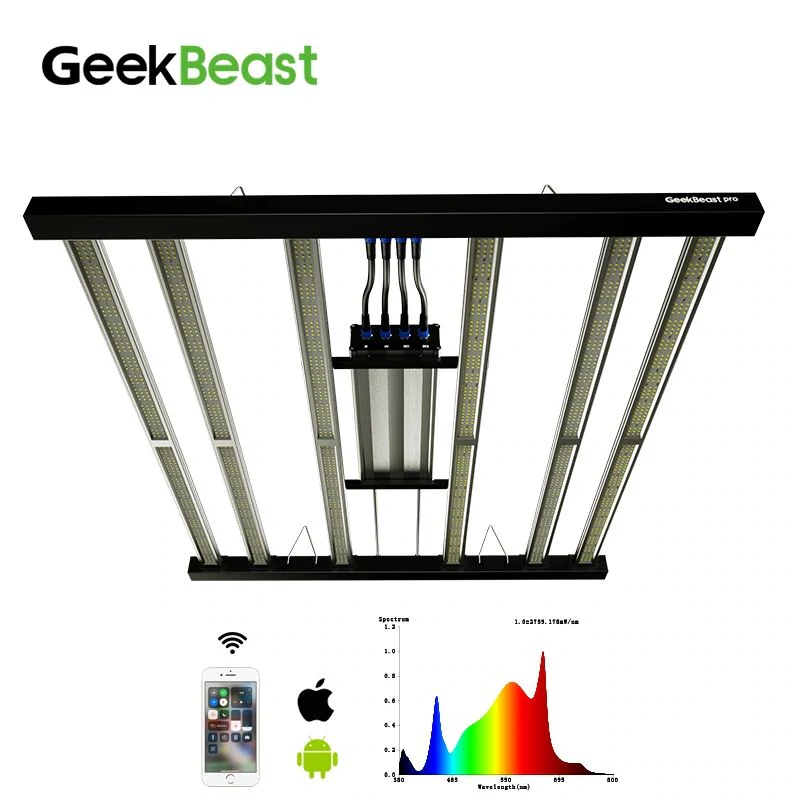
The GeekBeast 630w Pro LED Grow Light is a six-pole light fixture. Each LightBar consists of 272, including independently controlled Samsung full spectrum white light diodes, 660nm red diodes and IR+UV diodes. There are a total of 1,632 diodes per lamp. Geeklight GeekBeast Pro is a luminaire Quantum Bar LED Grow Light for full cycle commercial plant cultivation, from vegetable to flowering stage. The light features a unique Quantum Bar design that spreads light over a larger area while reducing excess heat. Geeklight GeekBeast Pro 630W Quantum Bar LED Grow Light is recommended for larger indoor spaces.
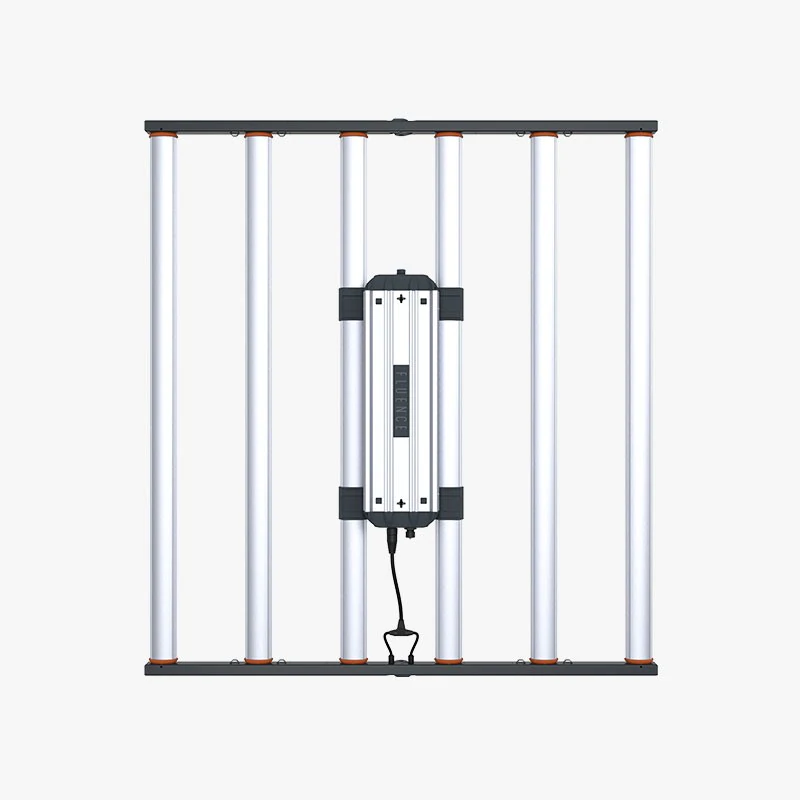
Fluence SPYDR 2i 40" LED Grow Light
Features:
The Fluence LED grow light is designed for multi-layer growing — from vegetable to bloom — 2i 40" has a PPF of up to 1,600 µmol/s. SPYDR 2i is a high-performance top lighting solution for commercial horticulture growing. Designed for growers growing through high PPFD Practice pushes the limits. Not suitable for planting without supplemental CO2. With an upgraded form factor, the SPYDR 2 series works out of the box for faster installation and is a plug-and-play solution. The SPYDR series is ideal for use For multi-layer and single-layer applications including vertical farms, grow arches, tables and tents with adjustable aisles. SPYDR 2i 40" provides excellent coverage on 4' x 3.5' canopies.
Factors to consider before buying grow lights
A grow light is an important part of most indoor growing setups. They emit the exact wavelengths of color necessary for plants to thrive and are great because they offer a convenient alternative to natural sunlight. Before you decide on which one to buy, there are some things that need consideration:
Power
When it comes to the power of LED vegetable grow lights, everything is simple. If you don’t need to cover a large area, you can go with a compact unit that isn’t stronger than 100W.
On the other hand, the output of grow lights can go to 1,500W, and specialized units even deliver up to 3,000W. If you come across a powerful system, it would be great if it comes with a dimmer. That way, you can adjust them depending on the vegetable’s needs.
Estimated lifetime
The good news is that indoor vegetable grow lights are long-term investments. That means they should last for a long time if you choose a reputable manufacturer and a reliable product.
The usual lifetime of these units is from 50,000 to 100,000 hours.
Warranty
You will receive a guarantee for the most products you purchase in the vegetable grow light market. The manufacturer’s warranty will usually cover the product for 12 months, although there are cases where the guarantee spreads to two years. The terms of the deal might vary, which is why it is essential to read them carefully.
Some manufacturers are ready to support their products with a different kind of deal. That includes a money-back period, which can go from 14 to 60 days. It allows you to try the product and see if it is a fitting solution for your garden. If you find it unsuitable, you can get your money back and find a better alternative. The only thing to ensure is that you find a reliable manufacturer that will honor the promised deals.
Ventilation
Ventilation can be a problem if you are cramming your grow space with equipment. You will need to make sure there is room for the hot light, but also enough air circulation so that it doesn’t get stale and moldy. One way of ensuring this is by installing an exhaust fan in between any lights or lamps used during growth cycle — these fans not only provide ample airflow, they help keep temperatures at bay too!
Plant Stage
What kind of grow lights do you need? The answer is different for vegetative and flowering plants. For example, LED lights are best suited to light up the plant’s leaves while HID (high intensity discharge) lamps can be used to paint a room with green hues that simulate sunshine.
Safety
If you’re choosing the location for your grow space, make sure to consider factors such as wiring and power supply. You don’t want a circuit breaker that’s going to shut down in the middle of an important harvest! To calculate how much electricity is needed for all pieces of equipment used during cultivation, start by calculating how many lights are being run at once and then add up their wattage requirements (is it 600W or 2×600 W?). Then take into account things like fans if they’re necessary or dehumidifier capacity; be careful not to overload circuits with these items. For safety purposes, never exceed more than 80% load on any single outlet when powering multiple devices simultaneously.
Conclusion
LED grow lights are currently the future and one of the most efficient lighting sources for your indoor plants. This technology can help your plant crops thrive and produce big, healthy yields. It can be hard to switch from a different lighting source, but it’ll be worth it in the long run.
Energy-saving, friendly for our environment, and affordable. LED lights for indoor plants are a game-changer, and once you get the hang of it, you won’t look back.
ECO Farm DBL5000 Full Spectrum LED Grow Light 480W VS Fluence SPYDR 2i 33" LED Grow Light
Grow lights are an essential piece of equipment for any indoor garden. There are many different types of grow lights available on the market, but LED grow lights have some distinct advantages over other types of grow lights. As indoor gardening becomes increasingly popular, so does the demand for quality LED grow lights.
LED grow lights have many advantages over other types of grow lights, such as they use less energy, produce little heat, and are smaller in size. If you’re a indoor plants grower, then you know that the quality and yield of your plants depend on the quality of your lighting. While traditional HPS and MH lights still have their place in the grow room, LED grow lights are becoming an increasingly popular choice for growers looking to get the most out of their plants.
In this article, we’ll take a look at the best LED grow lights on the market today. Armed with this information, you can make an informed decision about which light is right for you. In this blog post, we will take a look at the benefits of using LED grow lights and explain why they are becoming increasingly popular among indoor gardeners. Stay tuned for more information on LED grow lights!
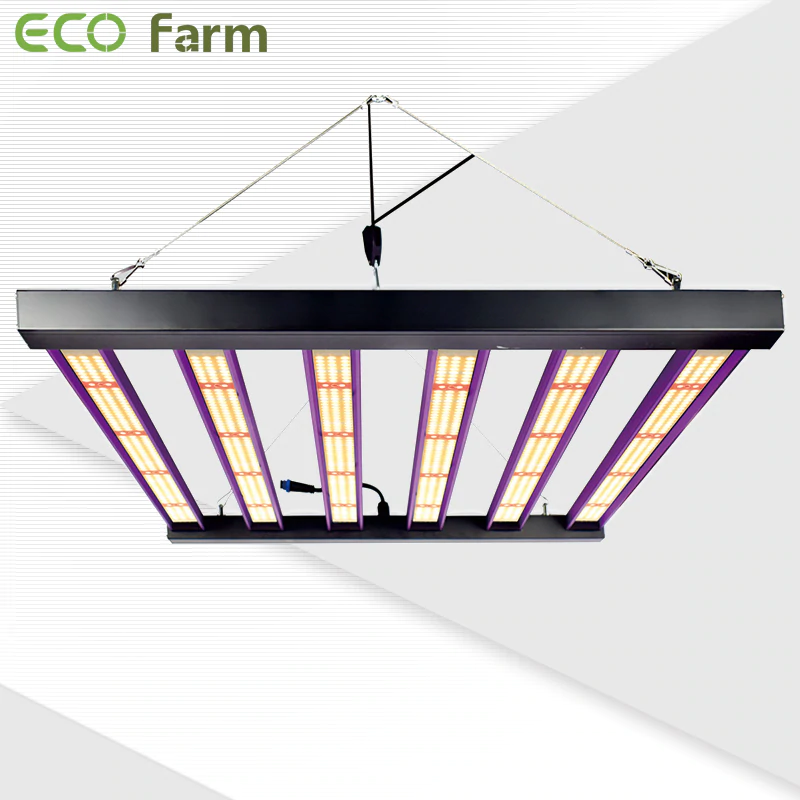
ECO Farm DBL5000 Full Spectrum LED Grow Light 480W
Features:
This ECO Farm LED grow light produces a full spectrum light (3000K, 5000k, 660nmnm, 30nm) is very suitable for vegetable blooming. The light uses 1296 SAMSUNG LM281B diodes with a power of 480 watts, achieving an impressive PPE 2.5 umol/J, covering A 4'x4' high-yield full-cycle growth. Compared with old plant lights, the average PPFD is increased by 30%, and the yield and quality are increased by 50%. 6 LED growth lights, each rod is covered with high-grade glue, waterproof and easy to clean, not easy to be filled with dust. This plant growth light also uses a special dimmer, which can precisely adjust the brightness. 0–10 levels are optional. This means that you can see clear brightness levels and record while adjusting. No need to worry about differences. The daisy chain function allows you to connect up to 15 DBL5000 grow lights-dimming multiple lights at the same time
Fluence SPYDR 2i 33" LED Grow Light

Features:
The Fluence LED grow light is designed for multi-layer cultivation — from vegetable to flowering — with a PPF of up to 1,250 µmol/s for the 2i 33". SPYDR 2i is a high performance toplighting solution for commercial horticultural cultivation. Designed for growers Pushing the limits with high PPFD cultivation practices. Not suitable for growing without supplemental CO2. With an upgraded form factor, the SPYDR 2 series is a plug-and-play solution that works out of the box for faster installation. All SPYDR models can be dimmed with our light intensity dimmers for precise control of PPFD , and provides flexibility to instantly adapt to new crop requirements with different light.
What should you pay attention to when buying LED grow lights?
When you’re considering buying your favourite plants to grow indoors, you need to consider the following features.
1. Wattage
You’ll need to consider the size of your grow room and the plants inside to determine the correct wattage for the light strip you’re buying. For a small grow room with just one or a few plants, you can already use the least powerful lights. If the grow tent is large, you will need more powerful lights or use multiple light strips.
2. Spectrum
Spectrum is the wavelength of light that plants need at different stages of growth. The spectrum required to grow indoor plants varies with different growth stages. Typically, plants require blue wavelengths during the germination and vegetative stages, and red wavelengths during the flowering stage. The optimal spectrum for growing plants varies at different stages of plant growth and what they need. Like all other plants, plants rely on the spectrum for signs of their growth. Blue light is especially useful during vegetative growth, while red light is especially useful during flowering. For best results, you’ll also want to complement these colors with other colors on the visible spectrum. Likewise, all other plants use different wavelengths of light at different stages of growth, but generally blue light is important for initial plant growth, while red light is important for flowering and bud formation.
3. Light quantity
Indoor plants are adapted to blue and red wavelengths for germination, vegetative growth, flowering and bud formation. So choose a light that provides the full spectrum of light your plants need. Even if you don’t grow indoor plants, it’s necessary to choose a full-spectrum light with the following wavelength ranges for your grow room.
UV (380–410 nm), blue (1st spectrum 440–450 and 2nd spectrum 450–460 nm), orange (605–610 nm), red (1st spectrum 620–630 and 2nd spectrum 655–660 nanometers), far red (730 nanometers).
4. Watts per square foot and coverage area
If you’re growing plants indoors, your grow lights should work for maybe 12–14 hours most of the growing time. Therefore, it is important to know the wattage and daily light consumption that the lamps you choose will consume. On the other hand, your choice must be based on future gardening plans, keeping in mind that these selected lights will be with you for a long time. Your choice must be based on the type of plants and the area they are likely to cover as they grow. Large spaces require more light, and growing 1 or 2 plants indoors should limit your purchases accordingly.
5. Low heat emission
High-temperature omissions can cause significant damage to your lovely plants due to burning issues. Choose only those lights that are durable and protect your plants from heat burns. The lights are kept close to the leaves of the plants, and high heat omission lights tend to burn the plants when they are left on for several hours during the day. So make a prudent choice by choosing lamps that ignore balanced heat.
6. Material quality
The quality of any material can only be judged after you use it. There may be several products with different capacities and prices, but you may not know the quality. Go check brand reputation, check reviews from existing users and check companies’ portfolios to understand their business history. Purchase after you are completely satisfied with the supplier’s products and services.
7. Energy saving
If you’re growing plants indoors, your grow lights should work for maybe 12–14 hours most of the growing time. Therefore, it is important to know the wattage and daily light consumption that the lamps you choose will consume. Choose energy-efficient options that don’t increase the production cost of a particular plant, especially if you’re a hobbyist and shouldn’t be growing commercially.
8. Longevity
LED lights should operate under normal conditions in your grow room for many years. Check the maximum feasible guarantee consisting of replacement options. Don’t sacrifice quality to buy cheap because it will hurt you in the long run.
9. Ease of use
Make sure the product you are buying is easy to handle, easy to install and operate.
Conclusion
Not all grow lights are perfect. Each has its own strengths and weaknesses. It really depends on the consumer what they are after and what they expect from grow lights.
You can go all out with an expensive plant light with all these great features. Or you can use affordable grow lights as supplemental lights.
So, what’s your pick for the best grow lights for indoor plants? Do you have a personal favourite that we didn’t include in the list? Please share them in the comments below.
ECO Farm ECO-Panel Samsung LM301B 480W Quantum Board LED Grow Light VS King Plus UL Series 4000 LED Quantum Board
Quantum boards are pieces of boards that are lined with LED chips. The chips are spread all over the boards. This way that they get their power supply simultaneously from the same source.
Quantum boards are popular in the manufacture of LED grow lights.
Quantum board LED grow lights are known to be more efficient and effective and other types of grow lights.
Most indoor growers buy quantum board LED grow lights to illuminate their plants and ensure they blossom well.
Why are LED Grow Lights the Best Choice for Growers?
There are a number of different options for growers when it comes to lighting up their grow tents or grow rooms. These include high-intensity lighting options such as HPS grow lights or Metal Halides. Then there are also CFL lights and other old-school types of lighting choices. However, most growers these days are preferring LED grow lights over these lighting solutions. This is because of a number of reasons — but the biggest benefit that growers get from using LED grow lights is that they are much more power-efficient. There’s a huge difference in the power consumption between LED lights and any of the other older forms of lighting.
While power consumption is the biggest reason as to why more and more growers are now using LED lights, there are some other reasons too. Heating is one such reason. LED lights generate much lesser heat when you compare them with older forms of lighting. LED lights are also non-toxic in nature as they do not carry any chemicals in them and can be disposed with a much greater ease. Lifespan is another major factor as LED lights can last you as many as 100,000 hours — which means 11 years of continuous use! Lastly, LED lights are easier to repair too — and even if some LEDs stop working it doesn’t affect much as there are many others on the panel which won’t be affected by one of them going bad! These are just some of the reasons as to why LED lights are being preferred over other forms of lighting these days. Let us now cut straight to the main story and look at what are some of the best options that you have –
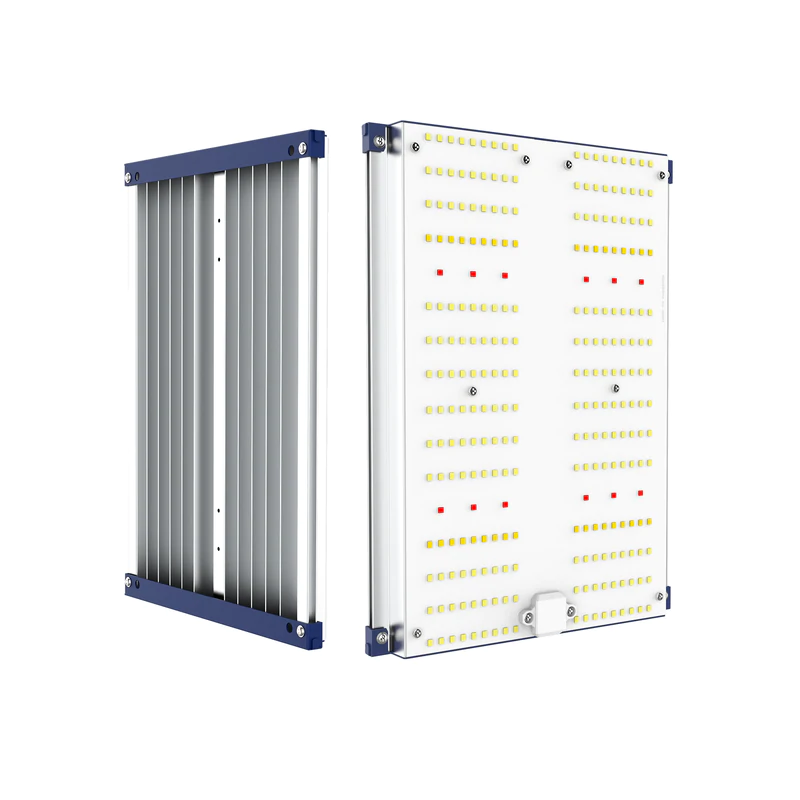
ECO Farm ECO-Panel Samsung LM301B 480W Quantum Board LED Grow Light
Features:
This ECO Farm LED grow light has a large footprint and a board size of 25.31"x23.14x1.32". Larger than other brands, it can significantly improve light coverage and planting efficiency and is ideal for 4'x4' plant cover and 3'x3' bloom cover. Featuring Samsung 301B diodes, this grow light provides high energy efficiency and high PAR output, increasing your plant yield by 50%. Consumes only 480w, saving 50% of electricity bills compared to HID/Blurple/HPS lamps. Coupled with a high-quality cooling system and a sturdy modelling structure, the cooling effect is increased by 30% and lasts longer, without worrying about burning plants. Composed of white 3000K, blue 5000K and red 660nm, this grow light provides everything you need in natural sunlight for plants at all stages from vegetables to flowering. Work evenly across the surface and deep into the roots and base of the crown for consistent, highest quality blooms.
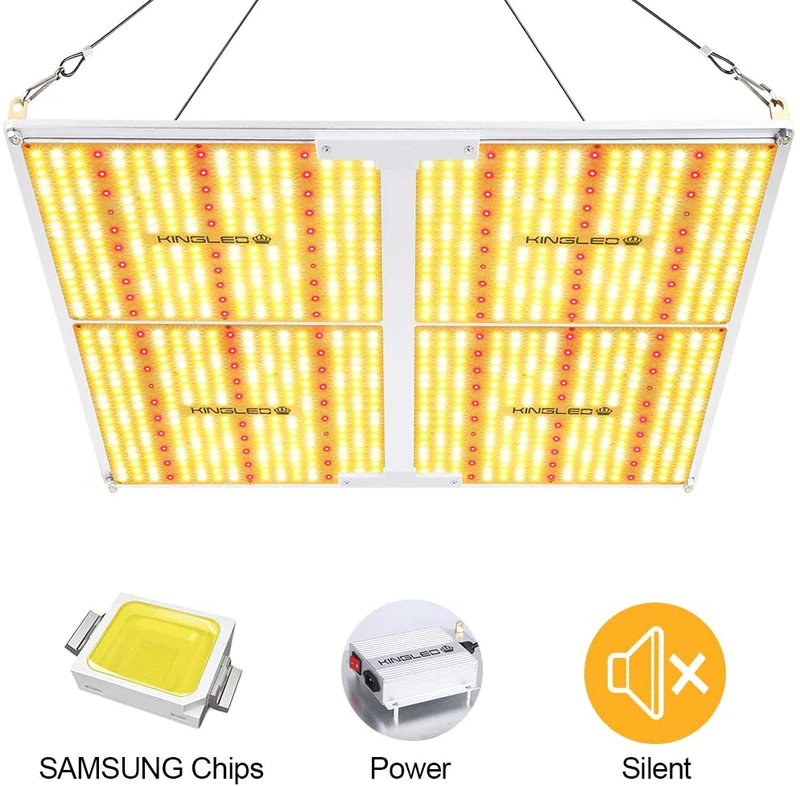
King Plus UL Series 4000 LED Quantum Board
Features:
KingLED has developed the most efficient and safe Quantum LED Grow Light, using SAMSUNG chip, UL power supply, high-strength aluminium alloy heating plate, and high-quality products to bring the best cost performance. No fan, no noise, simpler structure, lightweight, easy installation, special protective cover for cable, waterproof LED lampshade, far lower than the working temperature of traditional LED lamp, its service life is extended by 100%, high-quality products bring longer service life. Blue, White, Red and Infrared (660–665nm, 3000K, 5000K and IR 760nm), providing all the light spectrum plants need to thrive so your plants thrive, quality products lead to higher yields.
Buying Guide
There’s no shortage of quantum boards for sale, to be honest. Choosing the best LED grow light for a grow tent isn’t going to be a piece of cake either.
With the goal of saving you money, I put together this comprehensive buyer’s guide by listing the most critical considerations to think about before making a purchase. cling to your seat!
Types Of LED Grow Lights
Before you can even begin to consider your options, you need be aware of the different types of LED grow lights that are available. It is possible to classify LED grow lights in the following ways.
A. Spread Style
A LED light fixture with a spread design has a large surface area covered by a large number of small individual lights (hence the name). Because of their large lit area, they are ideal for illuminating multiple plants at once.
There is nothing special about quantum boards, which are simply a subset of this category that uses a larger area of LEDs. Other common features include full-spectrum white LEDs and passive cooling architecture, which allows users to place plants immediately below without exposing them to too much heat.
Another sort of light is the “spider-style” light, which has numerous LEDs on a thin open bar-like structure instead of a wide flat surface like quantum boards. Quantum boards are less expensive, but these units are more expensive.
B. Chip On Board (COB)
There are a specified number of tiny LEDs on a single chip that identify COB lights. Because of this, each of these luminaires can be thought of as a single, extremely potent light source. Because the plants under the central point receive the most light, other plants in the region may not get the same amount of sunlight.
Additional cooling may be needed due to the high concentration of lights in a single location.
C. Traditional
Traditional LED grow lamps, like COB lights, are small, making them ideal for growing plants in small locations. Typically, these LEDs come in a variety of colors and give medium power for the entire color spectrum. However, the bright colors may cause eye strain, so choose your location carefully.
Light Spectrum
All hues of the electromagnetic spectrum can be seen in natural light. Some LED lights only create a limited range of colors, but full-spectrum white LEDs are capable of producing all of them. In fact, you don’t even need to employ other colors like blue or red when using white light.
Any design you chose should have a complete spectrum output and a brightness control option, in my opinion (dimmer knob).
Power Consumption
Checking the “real power drawn” or “actual power consumption” will help you figure out how much electricity your LED grow light is using (measured in watts). In this regard, the power consumption of most quantum boards does not surpass 1000W.
Cooling Feature
You don’t want grow tents to be too noisy because they’re normally used indoors. As a result, most fixtures feature massive aluminum heat sinks for quickly and silently dissipating any generated heat.
Consider that plant you’re growing
This is quite important. Varying plants require different amounts of resources, such as heat, light intensity (lumens), and specific wavelengths. Because of this, the first thing to think about when purchasing LED grow lights is what kind of plants to cultivate.
Tomatoes need a lot more light than flowers, and the opposite is true. So you need to make a decision based on your own needs.
Installation
The majority of the best LED grow lights for a grow tent are simple to set up.
You should be able to install and utilize any of the ones on our list without too much difficulty.
However, if that’s the case, they come with step-by-by-step instructions.
If everything else fails, you may always hire an expert to help you with the installation.
Conclusion
Choosing the best LED grow lights can be a daunting task. With so many different options to choose from, it’s hard to know where to start. We have compiled all of our knowledge on this topic into an easy-to-follow guide that will help you find the perfect light for your needs! If you are looking for something very specific or want more information about any particular type of option before making a purchase decision, please contact us and we’ll do our best to answer any questions you may have!
ECO Farm DBL3000 Full Spectrum LED Grow Light 320W VS Spectrum King Phoenix 340W LED Grow light
Looking for the perfect lighting system for a grow takes a lot of work between actual research and getting through the litany of marketing copy and reviews online. It’s a big industry these days, and especially so with LEDs.
To get the most out of an LED system you need a light that can provide the proper spectrums to your plant during all stages of growth. Indoor plants tend to respond to different colors depending on whether it’s a seedling, vegetating or in the flowering stage.
Let’s take a look at the best LED grow lights we’ve found on the market for both general and niche use. Read on at your leisure and take the time to make an informed decision.
How to use LED grow lights to get better results?
LED grow lights have become the most widely used grow lights in recent years by virtue of their own advantages. Because compared with other traditional grow lights, LED grow lights have more advantages, such as: less heat, small space, low power consumption, etc. According to the survey data, LED plant lights can not only greatly increase the yield of crops, but also control the growth rate of crops and achieve multi-season yield increases. More and more relevant professionals choose to use LED plant lights to fill light, so how to use LED plant lights to achieve the desired effect?
The effect of plant lights on plant growth is very extensive, so in order to achieve better use effects, it is first necessary to select appropriate LED plant lights according to the different growth stages of crops. Different crops have different requirements for light time and light intensity, and different growth stages of crops have different requirements for light time and light intensity. Therefore, when choosing a plant light, pay attention to the spectrum and power of the LED plant growth light. For crops that need coloring and flowering and fruiting, you can choose LED grow lights that combine red and blue. For leafy vegetables, full-spectrum LED grow lights are best. For plants that like light, high-power LED grow lights should be selected.
When the lamp is working, it will generate a lot of heat, and the plant lamp is no exception. The plant lamp will generate a certain amount of heat when it is working. If the designed plant light is too close to the plant, it will burn the plant and cause certain damage to the plant. However, if the distance between the plant light and the plant is too far, the utilization rate of the light of the plant light will be greatly reduced, which will greatly affect the fill light effect of the plant light.
The use time of the plant light is closely related to the weather of the day. When the light is weak in the morning, it can fill the plant with light for 2–3 hours. In cloudy or dimly lit weather, you can use grow lights throughout the day to encourage plant growth and ensure normal plant growth later in the day. Of course, plant lighting is also time-limited, and 10 hours of light a day is ideal because plants also need to rest and breathe at night.
ECO Farm DBL3000 Full Spectrum LED Grow Light 320W
Features:
With 864 pcs SAMSUNG LM281B diodes, the ECO Farm Led grow lights draw 320 watts achieving an impressive PPE of 2.5 umol/J, coverage for 3'x3′ of high-yielding full-cycle growth. Excellent full-spectrum LED grow lights deliver optimal light-spectrum coverage for your blooms, Improved uniformity of PPFD, Uniform growth distribution and Highly efficient photosynthesis for increasing overall leaf chlorophyll levels, Full-spectrum is not only cost-effective but also produces better yields. The LED plant lamp has a dimming knob that makes it adaptable to different growing periods of your plant; For mixed vegetative /flowering environments and to tune the amount of light to the cultivars you grow, the fixture can be dimmed to 50% without any loss of efficiency. Can adapt to the growing needs of plants in different periods, the germination, seedling, veg and bloom stages, the first choice for a large area of indoor growing and commercial planting.
Spectrum King Phoenix 340W LED Grow light
Features:
Spectrum King’s Phoenix 340W Veg is the most efficient LED light fixture on the market with a dedicated plant spectrum. SK Cryo-Therm cooling technology enables ultra-thin profiles, maximizes airflow and minimizes microclimates. It has unmatched performance and reliability in its class. It is optimized for single or multi-level planting near the canopy. The Spectrum King Phoenix 340W Veg sets a new benchmark for what’s possible with grow lights. The full spectrum is ideal for most light-loving plant seedlings, vegetation and the entire growth stage of flowering. IP65 waterproof horticultural lighting system, can be used in humid or water vapor environment, easy to use, plug and play.
Important Factors to Consider
There are many mistakes newcomers make when it comes to indoor lighting. Here are important factors to consider for your lighting setup.
Different light types
Many industries are coming to terms with how standardised lighting has sustained unintended adverse consequences. From the film industry to the science world, sources of lighting were traditionally high-intensity discharge (HID) lights. These heat up very quickly and intensely, even to the point of endangering work environments. Such lights can also endanger your plants crop, burning them if a light gets too close. You are trying to achieve precise temperature control of your crop, but the heat from the lights is not helping, and it’s ultimately wasted energy. As a result, the industry in particular is starting to realise that this lack of energy efficiency has an unacceptable environmental impact. There are now more options available for low-heat lighting, like LEDs.
The Power Needs of Your Grow Lights
Once you have your lights set up, you need to make sure there is a reliable power supply. It has to be suitable for the wattage of your lights. Lights with higher wattage will deliver more powerful output. This, however, can be hard to gauge with precision, since different manufacturers will have different outputs from their lights. As a rough guideline, we could estimate — in terms of light hitting the plant — around 15,000–30,000 lumens per square metre is needed at a minimum during the vegetative phase. During the flowering stage, the rough figure to follow is 30,000–50,000 per square metre.
Grow Light Intensity
The intensity of the light itself will increase your yield. This is provided the amount of light available to your plants is optimal. This requires even distribution of the light, as well as an appropriate distance from the plants. The above calculations presumed a distance of 7–10cm from the plant.
It is possible to calculate the distribution of lumens, and therefore, how far they need to travel for best results. The Inverse Square Law states that the intensity of light changes in inverse proportion to the square distance. In other words, the further light travels, the less intense it becomes. Consider that the next time you feel the distant sun’s heat on your face. We advise using a few low-wattage bulbs rather than risking too much intensity from a high-wattage bulb. You will have multiple light sources for your plant that can be more easily adjusted for optimal light penetration.
Distance And Position of Lights
The distance and placing of lights will be especially important to consider when assembling your grow setup. Some growers prefer to arrange plants in tiered rows around a central light source. Others have vertical towers constructed around a central light source. Ideally, lighting from above gives you the best option for exposing light to as much of the plant as possible. You don’t want it too close to the plant and risk burning. You also don’t want the lights to be so far away that plants don’t reach their full potential.
Finding the sweet spot will depend on calculating the light’s intensity. This may require contacting the manufacturer for precise specifications. For example, LEDs can be hard to gauge. As ballpark figures, LED bulbs of 1W should be at least 30cm from the plant; 3W or 5W bulbs should be 45 centimetres away; high-wattage bulbs of 300W or more need 75cm. This is only a rough guideline however. Again, consult the manufacturer with any doubts.
Spacing of Indoor Plants
When cultivating multiple plants together, you will need to make efficient use of space. Once again, it’s all about balance. If you pack your plants too tightly together, you restrict airflow and run the risk of mould and other diseases. Furthermore, the amount of light exposure each plant receives will be cut down significantly due to crowding. Unless growing in a sea of green (SOG) setup, plants should generally not be touching or forced to compete for space. This will culminate in uneven results and fewer banger buds to boot.
If you can, ensure that the light hits the plant from top to bottom, as well as side to side. This way, the entire perimeter of the plant is exposed to adequate light. This allows for a much better chance of achieving optimal light penetration. If your plants continue to grow towards each other and start touching, prune and tie as necessary. Your yield may even be more successful with fewer, larger plants.
Hours of Light
When your lighting setup is finally in place, now is the time to start learning the key skill of indoor growing. Light cycles involve the hours of light exposure and darkness your plants receive over a 24-hour period. This can be a high maintenance aspect of growing plants, requiring a consistent regiment of turning on and off lights at regular times. However, this process can be automated with the right devices and a little overhead.
During the seedling stage, cultivators typically leave lights on for between 16–24 hours a day. Leaving lights on 24/7 is sometimes expensively done, even during the clone stage, although 0–6 hours of darkness is recommended. There is less room for adjustment as the plant starts to grow, with 18 hours of light and 6 of darkness needed for the vegetative state. During the flowering stage, an even 12–12 light cycle is recommended for best results. Do ensure the room is tightly sealed, with no light getting in during darkness. This is the crucial phase of “starving” the plant of light to encourage more robust blooming when the lights are turned back on. Of course, these light cycles only really apply to photoperiod plants; autoflowering plants don’t rely on specific light cycles to grow and bloom.
Using The Light Spectrum To Your Advantage
There is one more issue to consider that is often overlooked in lighting. Lights can vary greatly in terms of colour temperature. This means lights can actually project at very specific parts of the light spectrum, of which only a small percentage is visible to the human eye. Within the visible light spectrum, we can recognise that bluer colours have shorter wavelengths, or higher frequency. Colours closer to the red end of the visible light spectrum have longer wavelengths, meaning a lower frequency. Shifts in the frequency of light waves can alter so much about a plant. Scientists have actually experimented with cultivating strawberries and found they can change colour when the colour of their lighting was changed.
If you want vegetative growth to continue to delay natural flowering, then bluer lights will help achieve that. Towards the other end of the spectrum, red lights will encourage floral propagation and sturdier plants. It’s worth adjusting the colour temperature of your lights if it is possible to do so. It may be that extra tweak at delicate stages in the development of your plant that results in a perfect harvest.
Conclusion
The best grow lights are really important for plants grown in closed environments. However, not all lamps can prove promising. For example, you need to choose one based on the growth stage of the plant. To avoid regrets, limit your choices to the products mentioned in this article.
Grow Light Science PROGROW 320 LED Grow Light VS MAXSISUN MG3000 300W LED Grow Light
We all want to ensure that our plants has the best possible growing conditions. From lighting to growing medium and watering, every aspect counts.
Today, we’ll concentrate on the lighting aspect of things–namely LED lights, which have taken the homegrown world by storm.
Let’s find out why LED grow lights are some of the most efficient. We’ll also investigate the what, why, and how of these stellar tools. Let’s get into it.
Why Indoors?
Growing indoors offers a host of wide-ranging benefits when compared with outdoor gardening. Here are a couple of reasons why we believe indoor growing is the way to go:
Climate — not all of us are lucky enough to live in areas that provide the amount of sunlight our gardens need to thrive. With indoor growing, as long as you do your research, you’re guaranteed to be giving your plants exactly what they need.
Control — your plant’s wellbeing won’t be subject to inclement weather or any unforeseen changes in conditions when growing indoors. Thanks to indoor grow lights, you’re given total control over your garden’s growing environment so that they see optimal conditions all year round.
Remember though, with great power comes great responsibility. The control you hold over the growing conditions of your garden means it is so important to understand exactly what it requires to thrive. If you don’t get the basics right, you’ll be left with disappointing results.
Grow Light Science PROGROW 320 LED Grow Light
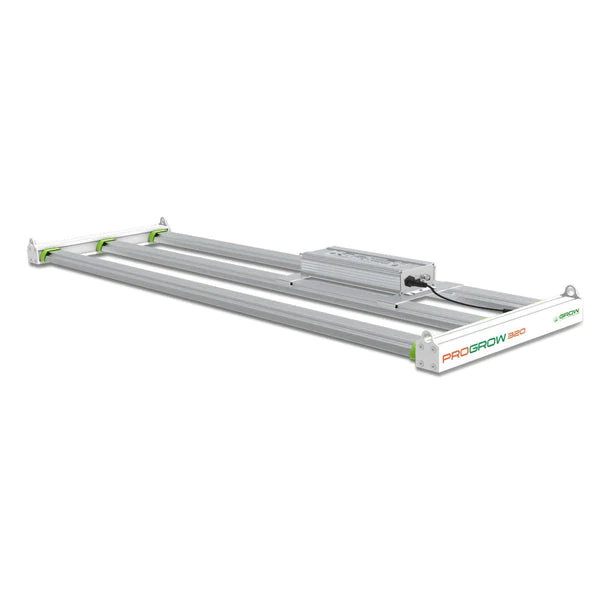
Features:
Grow Light Science Grow 300 320W LED Grow Light is a full spectrum, high performance lighting solution for commercial or home indoor garden or planting operations. The form factor of the Grow 300 allows for expandability and multiple grow room and tent configurations. The incredible light output (PPF), spectral distribution and efficacy of this grow light will give your plants amazing results at an affordable price. PPFD levels of up to 1,500 umols/m2/s will proportionally increase yield as long as other key factors such as CO2, water and nutrients remain in balance. The GROW 300 easily delivers PPFD levels in excess of 1,000 umols/m2/s, either individually or in multi-cell arrays.
MAXSISUN MG3000 300W LED Grow Light
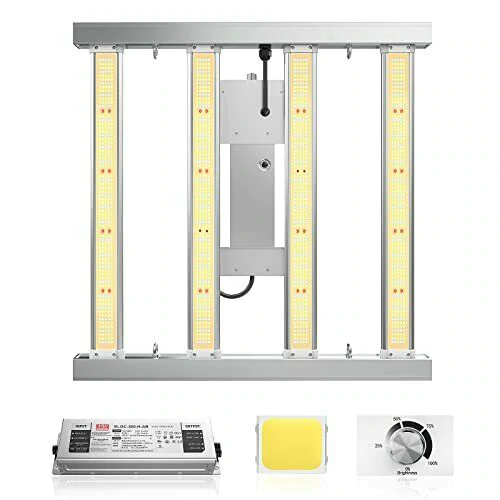
Features:
This MAXSISUN LED Grow Light uses top-of-the-line components with Samsung diodes and a MeanWell driver with a strip light design. The MG3000 provides plants with a rich and uniform PAR distribution with no hot spots, consuming only 300 watts, and delivering a true high efficiency rating PPF of 2.4 μmol/J per joule. Keep the same distance between the plant and the MG3000. Adjust its brightness for different growth stages. We provide PAR graphs including brightness, suspension height and power consumption. Smooth rotary dimmers provide flexibility to reduce energy consumption while reducing electricity bills. It helps you master light levels from normal daylight to super bright.
How to Choose the Best LED Grow Lights
Each kind of LED light has a specific set of ratings; lumens, watts, and kelvins.
Each of them tells you something different about how the light operates. You need to find the ideal combination of all three ratings to light your grow room effectively.
Let’s check out the essential elements of lighting your grow room and how each rating comes into play.
Consider the Size of Your Grow Room
Each type of LED light produces a certain amount of usable spectrum, measured in lumens. Lumens indicate how brightly the light shines and how far away from the plants you can place it.
You need to place lights with a low lumen count relatively close to the plants. Devices with a higher lumen count can be further away from your bushes.
If you have a small grow room, you could install a few lights with a high lumen count. Larger growing facilities require more lights with high lumen ratings or many smaller devices.
Energy Budget
With your energy budget, there’s one essential rating. The light’s wattage tells you how much electricity it uses and how quickly.
The typical standard for measuring electricity usage worldwide is the kilowatt hour. You can calculate how many kilowatt-hours, commonly referred to as units, of electricity you’ll use.
To achieve this, follow these steps:
1 — Divide the wattage by 1,000 to find your ballast’s kilowatt usage.
I.E., a 50-watt unit uses 0.05 kilowatts.
2 — Multiply the result by the number of hours the light will be on each day.
0.05 ✕ 24 = 1.2 kWh each day.
3 — Multiply the daily amount by the number of days in the month.
1.2 ✕ 30 = 36 kWh per light each month.
4 — Calculate the total usage by multiplying the monthly total for each light by the number of lights.
36 kWh ✕ 15 lights = 540 kWh.
5 — To calculate the monthly financial outlay, multiply the overall total by the price per kilowatt-hour in your region.
540 kWh at $0.1331 each means a monthly expenditure of approximately $72.
Plant Type and Needs
Different types of plants have different lighting requirements. The top LED grow lights on the market are all-inclusive but have an exclusive price.
Ask yourself the following questions:
Which light colors do I need?
How many lumens do the plants need to stay healthy?
Does the strain I’m growing have any special lighting needs?
Overall Budget
The best LED grow light for you is the one that fits your overall budget. You need to calculate not only the initial expense but the ongoing costs.
If a part breaks, can you afford to replace it? Will the energy consumption fit your budget? Do you need to build a specific framework to house your lights?
These things, and more, affect your decision. Before you buy, ensure that you work out every outlay. You need a product that is both affordable and meets your needs.
Conclusion
After a long search, we’ve finally found the best LED grow lights for your grow tent, but it’s not easy!
Although it was a tough process, we were able to narrow it down to the best options. From what I can tell, you found this article helpful in making the best choices for your cherished plants.
ECO Farm DBL3000 Full Spectrum LED Grow Light 320W VS Spider Farmer SE3000 300W Dimmable Full Spectrum LED Grow Light
If you’re on the hunt for the best grow lights, you’ve arrived at just the right place! Artificial light is an important part of the process for indoor growers. The quality and intensity of this artificial lighting can have a direct impact on how successful your harvest will be, come harvesting time, so it’s crucial to get grow lights that are appropriate for what you’re trying to do.
Grow lights are a great way to control the amount of light your plants receive. They provide them with an even source of illumination day in and out without having to worry about cloudy days or inclement weather outside, which is perfect for those who don’t have time to garden! Some grow lights can be expensive but they will save you money on electricity over the long term because it’s more efficient than other types. Find one that suits your plant needs whether you’re just getting started or need something powerful enough for mature plants as well.
Grow lights are a great way to ensure your plants get the right amount of lighting for their growth. Keep reading to find the best LED grow light!
Grow Light Basics
When using grow lights, there are a few primary considerations regarding quality: the color of light, the energy cost of light fixtures, and light intensity. Before we look at the best LED grow lights, let’s start by understanding the needs of your plants.
Color Of The Light
We all know that plants use light to grow — but have you ever thought about how the color of light affects your plant growth?
The sun emits the entire spectrum of seeable light, which includes red, orange, yellow, green, blue, indigo, and violet. This is what we call full-spectrum light or white light.
When it comes to artificial light, most indoor plants thrive under full-spectrum bulbs, which generate a balance of cool and warm light that mimics (or at least tries to mimic) the sun. They’re great for seedlings, houseplants, culinary herbs, and a variety of other plants.
In broad terms, blue light specifically helps support leaf and stem development. Red light benefits flower growth, so it’s essential for plants that produce fruit. That said, there’s a lot of information out there about the specific benefits of red and blue lights. And some of it is misleading.
Lumens vs. Par
While it may seem obvious, it’s easy to forget that plants and people perceive light very differently. Humans perceive color using photopic vision. Plants use photosynthetic active radiation (PAR), which is the wavelengths of light that drive photosynthesis. Here’s a wonderful article on the differences between PAR and lumens.
Grow Light Intensity
The total quantity of grow light produced by an LED, HPS, or other light source per second is measured in PPF (Photosynthetic Photon Flux). This is what we would call the grow light intensity. Micromoles per second (umol/s) is the unit of measurement.
How Much PAR Does The Light Produce?
PAR (photosynthetic active radiation) refers to the wavelengths of lights that drive photosynthesis in plants. To measure the amount of PAR produced by a system per second, we use Photosynthetic Photon Flux (PPF).We should point out that PPF does not tell you how much of the measured light reaches the plants, but it is crucial to know if you want to figure out how efficient a lighting system produces PAR.
How Much PAR Reaches Your Plants?
To measure the amount of instantaneous PAR that goes from your fixture to your plants, something called photosynthetic photon flux density is used (PPFD). This a measurement of the PAR that arrives at the plant from the lighting fixture.
To add more to this complexity, you need to take several PPFD measurements on a growing area and find the average. The reason for this is that grow lights are typically the brightest in the center, with the light decreasing toward the edges of the area. It’s possible (and likely) that a grow light manufacturer only provides the PPFD from the center space.
Overall Intensity
The strength or amount of light produced by a particular lighting source is referred to as light intensity. It is a measurement of a light source’s wavelength-weighted power.
The lamp source determines the light intensity, and there are high and low light intensity fixtures, lamps, and bulbs.
When it comes to indoor gardening, different light intensities have different purposes. Young plants, for example, typically need lower light intensity than vegetative and flowering plants.
ECO Farm DBL3000 Full Spectrum LED Grow Light 320W
Features:
The ECO Farm LED Grow Light utilizes SAMSUNG LM281B diode, to deliver spectacular PPF output up to 2.5 umol/J, The light intensity is higher, the light attenuation is smaller, and the lumen and PAR value are better than ordinary LED. Cover 3' x3' of high-yield full-cycle growth. It enables you to obtain a 30% higher output than HPS. This durably constructed LED grow light has 4 bar technology to deliver smooth, even light over the canopy. Remotely mounted driver technology allows for quicker and more efficient heat dissipation. In addition, the plant grow light uses an advanced waterproof power supply, installed in The outside of the lamp is easy to replace. This kind of growth lamp is a full-period lighting solution suitable for all growth environments (including humid environments), full-spectrum (3000K, 5000k, 660nmnm, 30nm) is very suitable for vegetable flowering and is an ideal choice for greenhouse or indoor lighting.
Spider Farmer SE3000 300W Dimmable Full Spectrum LED Grow Light
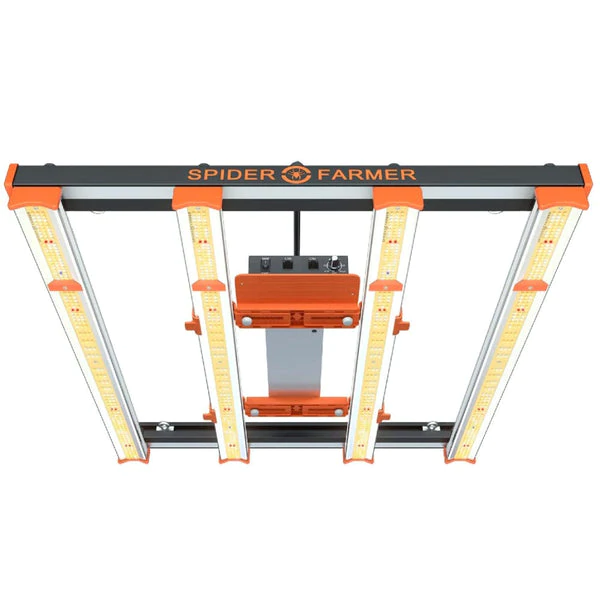
Features:
This Spider Farmer LED grow light features uniquely designed 4 LED strips that extend to the edge to provide more even canopy coverage, especially on the outer edges of the growing area. With 896 SAMSUNG LM301B diodes, the SE3000 Led Grow Light consumes 300 watts at 822.82 umol/s, achieving an impressive 2.75 umol/J of PPE, covering a high yield full-cycle growth of 3'x3'. The full spectrum (380–410nm, 660–665nm, 730nm, 3200–4200K, 4800–5000K) is ideal for vegetable flowering to suit every stage of the plant cycle. The dimmer knob is ideal for growers to adjust the light intensity for different growth stages. The SE3000 grow light comes with a detachable driver and long power cord to reduce ambient heat in the grow space for a longer lifespan.
Growing plants with LED lights: stages of the plants
The three main stages of a plant’s life are seedling, vegetation, and flowering. We’ll now take a closer look at these three phases to determine the impact that LED grow lights will have on them.
The recommended distances stated are general, and you should read your LED instructions to ensure you correctly position your plants from your lights.
Seedling
Remember, plants seedlings are vulnerable and will require less light intensity. Too much light can dry out the soil, so you should place your LEDs higher up and further away during this phase.
Always read the manufacturer’s guidelines to ensure you place your plants seeds at the correct distance.
It can be hard to determine the exact distance, as it depends on the wattage of your LED grow lights. Plants seedlings will be safe between 24–36 inches from your lights as a general rule of thumb.
Take a gentle approach, and when your plants mature, you can promote photosynthesis with more light intensity.
Vegetative
Your plants will need more light for photosynthesis during this stage, so place your LEDs closer. The tops of your plants crops should be between 12–24 inches from your LED source. If you can’t adjust the height, you should modify the light intensity.
As your plants grow, they’ll become less demanding on light intensity. If you don’t have full-spectrum LED lights for plants, blue LED lights are ideal for vegging. Blue LEDs promote healthy and sturdy leaves and stems.
Flowering
When your crops have completed the vegging stage, it’s now time for them to bloom. Place your LED lights between 16–36 inches from the canopy of your plants to maximize photosynthesis.
Be careful of placing your LED lights for plants too near, as this can damage plants crops’ growth.
Red LEDs are perfect for your plants’ flowering stage to promote bud development and stem acceleration. They also contribute to potency and resin production for a healthy yield.
Ensure you watch the distance carefully and raise your LED lights away from your plants canopy as they grow.
Things to Consider
There are so many variables when it comes to finding the right indoor grow lights for medicinal plants. What works for one grower might not necessarily work for you. The trick is to have a well-rounded understanding of what you need, as well as the requirements of your plants. If your plants are happy, you’ll be happy!
SPECTRUM
There are three main stages of growth that your medicinal plant will go through: seedling, vegetative and flowering. Different types of light will promote different growing stages, making the spectral light output of your grow light an important decision. Ideally, you will have a light that supports all stages of growth, such as a full spectrum LED grow light.
Full spectrum grow lights aim to mimic the natural light of the sun as closely as possible. This helps ensure the growing conditions of your garden are as close as possible to what it would experience in a wild environment. While some grow lights focus solely on specific frequencies, the best results will be obtained with a full spectrum grow light.
If you decide to go with HID or fluorescent lights, it is recommended to run a combination of bulbs that output different frequencies of light to promote all stages of growth.
BUDGET
It may seem like we’re stating the obvious, but by spending a little more money you’ll be rewarded with far greater results down the road. While top of the line LED grow lights aren’t cheap, they’re highly energy efficient and won’t need replacement bulbs as frequently as fluorescent and HID lights. This means you’ll save money in the long run.
On the other hand, if you’re just getting started with indoor growing you may not feel ready to splurge on a top of the line grow light. If this is the case, it’s especially important to do your research and ensure that your chosen light will give your plants the best chances of success.
Hot tip: you can’t go past customer reviews and recommendations when it comes to indoor grow lights. With the grow light industry and technologies rapidly advancing, choosing a light with customer-proven results is always going to be a safe way to go.
SPACING
Spacing is important both in terms of fitting the garden and lights into your space as well as getting the right amount of light coverage. Before you purchase your lights, you should know the dimensions of your growing space down to the last centimetre.
When it comes to light coverage, this will differ on a light-by-light basis. A good general rule is 400–600W per m2. You’ll find all the information you need in regard to light coverage in the light’s specifications when making your purchase.
Conclusion
Indoor gardening should always be viewed as a stress-free hobby, rather than a burden. With the natural lighting situation being not so ideal, do not panic — you are not totally out of options. Getting an LED grow light is an excellent way to make growing plants indoors a lot easier — and choosing a model that fits your specific location and setting does not have to be that hard. Whatever your choice is, the first step is always to get educated first. Sooner than later, you can cultivate your plants in any conditions and enjoy watching them flourish under these magical glows.
