Viparspectra KS5000 500W LED Grow Light VS ChilLED Tech Growcraft X3–500W LED Grow Light
LED lights are proving to be a revolutionary technology due to their low power consumption, fast startup time, reduced heat emissions and excellent light quality. These lights can actually help customers reduce energy costs and provide better lighting for their homes and business premises.
But most consumers aren’t sure which light to buy. Finding the right light can be challenging due to the wide variety of sizes, colors and lumens of LED lights. In this article, we’ll detail a buyer’s guide so you can find the perfect LED grow light.
Why Use LED Grow Lights?
Flowers growing vigerously under full spectrum LED grow lights.LED’s are some of the best options out there when it comes to indoor gardening, compared to traditional light systems like HID and HPS lights. Here are a few of the advantages:
Wide spectrums of light — Compared to HPS and HID lights, which are limited in their spectrums, LEDs offer more flexibility and a wide range of spectrum combinations. They’re also able to enhance specific wavelengths, like UV and IR, to target specific needs in your garden.
Lower heat output — LED grow lights run much cooler than other types of grow lights, thanks to the fact that they don’t need to burn anything to create light. This not only leads to lower electricity costs, but also protects your grow room from excess heat.
Increased efficiency — LED grow lights are much more efficient than HPS grow lights; they consume 60% less energy for the same amount of light. For example, the 680w lights we list offer more intense light than a 1000w traditional lighting system.
Longer lifespan — For lights that will last you a long time, go with LEDs. They can last over 50,000 hours thanks to their non-checmical construction and lower operating temperatures.
Viparspectra KS5000 500W LED Grow Light
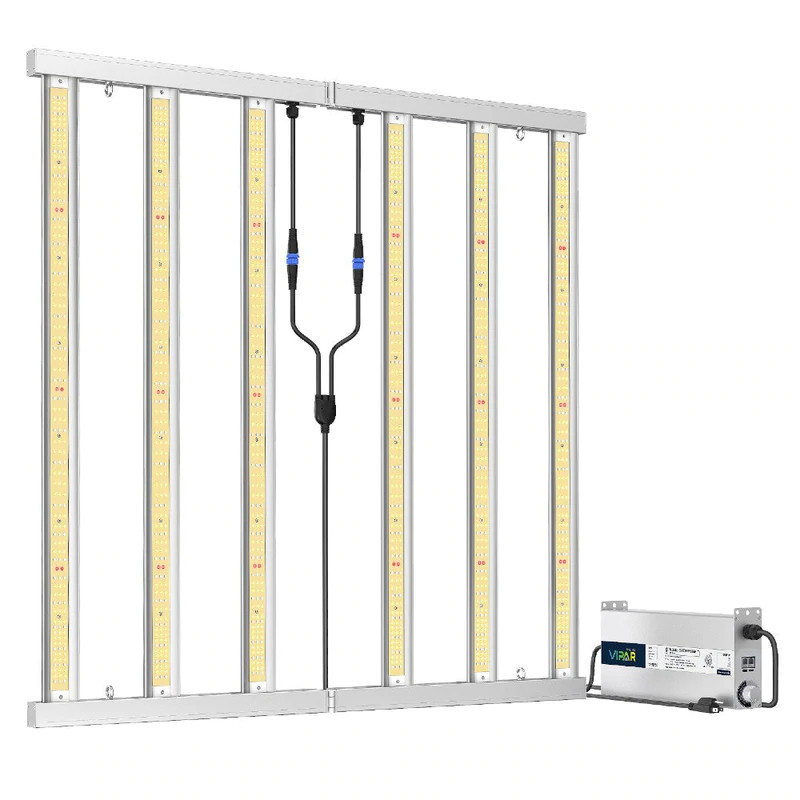
Features:
VIPARSPECTRA LED Grow Light uses market-leading Samsung LM301H diodes (3.10 μmol/J) and Osram 660nm diodes, more energy-efficient LEDs that increase crop yields and save operating costs. High-end components give the KS5000 incredible performance. The KS series is designed for individual or commercial growers who want to optimize their growing space for maximum crop yield while producing the highest quality crops. The KS5000 Dimmable Grow Light with Daisy Chain allows you to connect up to 100 KS5000 grow lights to your commercial grow, horizontal and vertical farming, greenhouse grow, pipe grow, hydroponics, 4x4 grow tent. A built-in dimmer allows you to dial in the perfect PPFD for your plants at all growth stages. The KS5000 features a detachable power supply that can be remotely mounted on the side of a rack or on an adjacent wall to dissipate heat from your grow space.
ChilLED Tech Growcraft X3–500W LED Grow Light
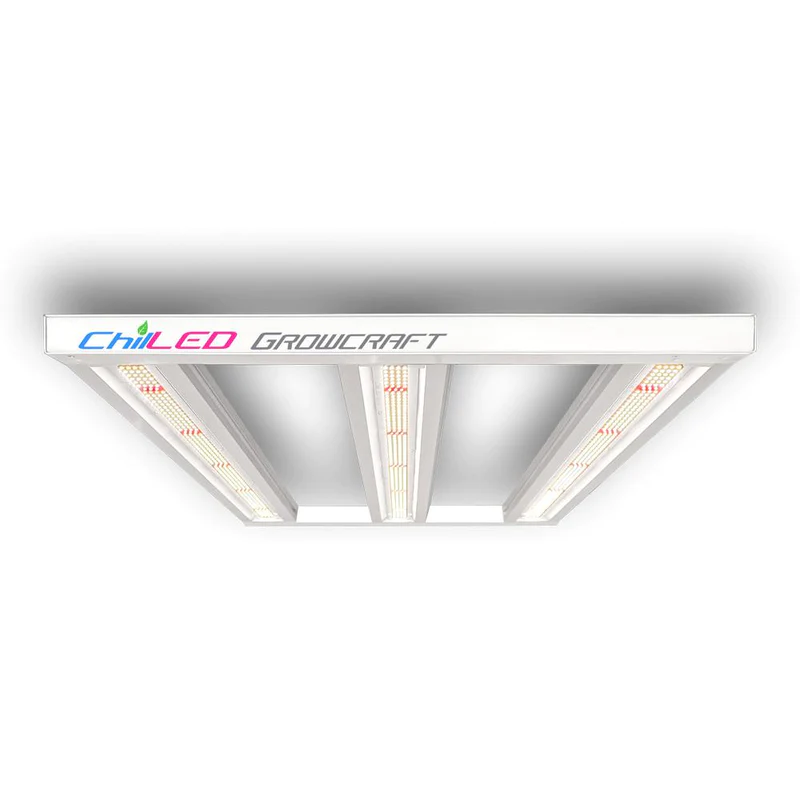
Features:
ChilLED LED Grow Light will maximize your yields and profits. Switch from HPS to ChilLED and increase your yields & profits 30–70+% without adding any additional heat, energy costs or cooling requirements. The market-leading efficiency combined with the tunable Yield Max spectrum equals unmatched performance. This grow light uses the highest build & component quality — never sacrificed for profits. ChilLED grow lights are built to last. Retrofit into your environment with ease. Hands down, ChilLED lights are the most versatile on the market. Growcraft lights have very high light output and unless your plants are already acclimated to high light intensity, it is best to start slow with the light hanging high and possibly also dimmed. Then monitor plant reaction over a few days and slowly adjust as needed.
How to choose LED lights
A good rule of thumb is to use 30–50 watts per square foot of growing space, especially on flowering plants. So if you have about 16 square feet of grow space, you will want to buy grow lights that are about 550 watts. That is, if we assume your plans are all in one region. However, plants that are still in their vegetative state only need about half the amount of light.
Full-spectrum lamps are recently available at reasonable prices. These lights mimic the sun’s spectrum, but usually add some extra light in the wavelength range that’s important to growing plants. We’ve done the job of picking the best full-spectrum lights, so we’ll help you choose the best LED grow lights for your needs.
Color is an important factor
Sunlight is more than just one color. Instead, it has a full spectrum of colors, which is why we see rainbows when it rains and the sun shines through (but that’s a conversation for another day). Regardless, colors range from red and yellow to blue and violet, and plants use this full spectrum to produce the photosynthesis they need. Red and blue light are the most critical for plants. Some people think that full spectrum LED lights are better because they ensure your plants get all the wavelengths present in natural light. According to this argument, wavelengths other than red and blue are also beneficial for certain aspects of plant growth.
Intensity is also a factor
The intensity of the light the plant receives is usually marked by the wattage of the bulb and the distance you place the light from the plant. Plants have different needs for certain colors, but their need for light intensity also depends on their growth stage. Unlike shade plants, indoor plants require high levels of sunlight. Likewise, when grown indoors, they require high-intensity LED lights.
However, these lighting needs will change throughout the life of the plant. For example, early germination of plants does not require light. However, once you have the early shoots, you need to start using the lights for about 18 hours, while the flowering period only requires 12 hours of lighting.
Conclusion
When growing plants indoors, you must decide what is your priority. Are you concerned about your energy bills, the environment, privacy or efficiency?
If you’re looking for grow lights, LED grow lights are the most likely option.
Different options are best for different solutions, so choose the option that works best for you and play to its strengths. Once you’ve selected the light that suits your needs, you can start growing plants. Of course, after choosing soil type, fertilizer preferences and a few other things!
ECO Farm ECOD Samsung UV+ IR 1000W Dimmable LED Grow Light VS Spider Farmer SE1000W Dimmable Full Spectrum CO2 LED Grow Light
Finding the best 1000-watt grow lights can be a challenging task. With so many brands and models to choose from, you’re sure to find it hard to find one that fits your needs. Today, all 1000-watt grow lights have different features and functions, which means manufacturers tend to try to give you something.
However, you may have a lot to consider when shopping for a 1000 watt grow light, but we think some things should be your top priorities.
If you’ve been trying to find a 1,000 watt grow light at an affordable price, this is the place for you! We take all the hassle out of choosing a 1000 watt grow light.
Advantages of LED Grow Lights
The first advantage of LED grow lights is their efficiency. Their high efficiency reduces energy bills and brings benefits in the long run.
Since most of the energy is converted to light, very little heat is produced. Temperature regulation is easier and harmless to plants.
The brightness of the LED can be controlled and adjusted according to the growth stage of the plant. In addition, the correct spectrum can be selected to ensure optimal growth.
LED grow lights can last a long time. Although the upfront costs are high, these are cost-effective in the long run. Depending on the quality, they can last 50,000 hours or more.
They are suitable for almost any indoor farm, big or small. These lights can even be used on a home/garage farm. They are very compact in size and easy to handle and place.
ECO Farm ECOD Samsung UV+ IR 1000W Dimmable LED Grow Light
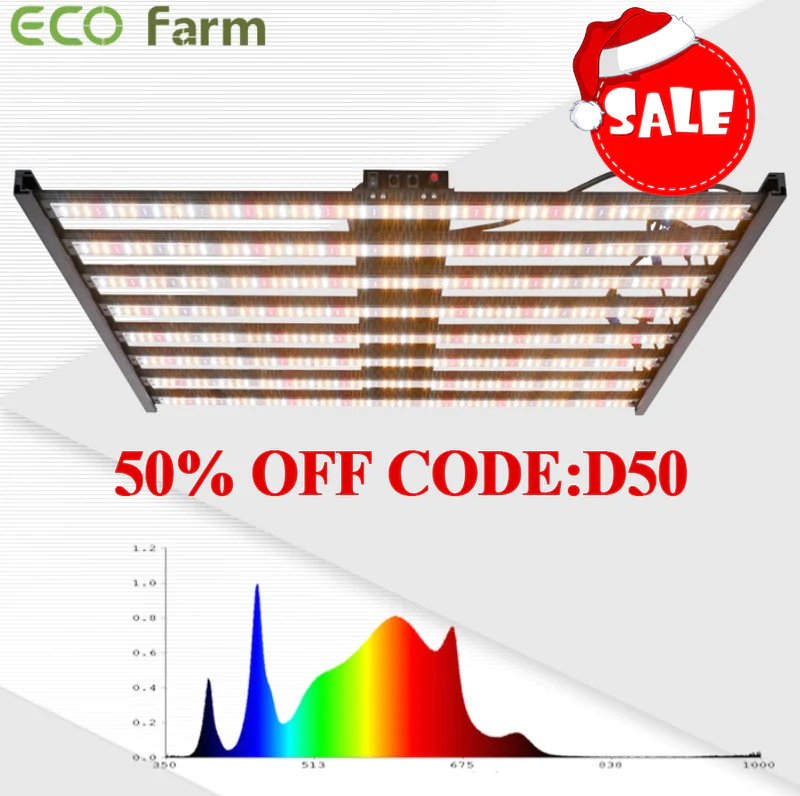
Features:
The ECO Farm LED Grow Light is powered by Samsung Full Spectrum LEDs that drive a wide spectrum from 395nm to 730nm and produce 144597 Lumens. The full spectrum coverage gives better results. Available in 3000K and 6500K. Full-spectrum light with higher intensity in the 395–730nm spectrum has been shown to perform better than the targeted spectrum for general use. The ECO Farm Samsung LED grow light produces a 1000W PPF output of 2524.5μmol/s and a PAR efficacy of 2.8umol/J making this fixture incredibly efficient compared to other commercial fixtures. LEDs generate far less heat than HPS and other HID lamps making them perfect for horticulture. Lights can be installed much closer to the plants themselves getting them all the light they need and increase your harvest. Less heat also means a lot less power used for cooling your grow area. Stack that with power saving on the light itself for a huge drop in your power expenses.
Spider Farmer SE1000W Dimmable Full Spectrum CO2 LED Grow Light
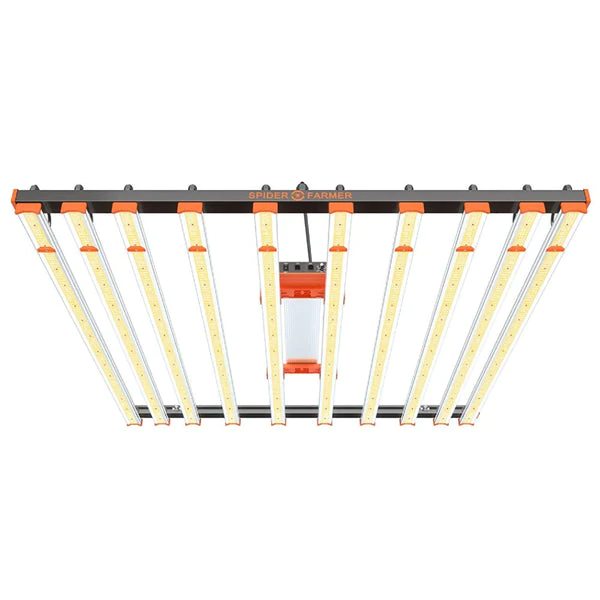
Features:
Spider Farmer LED Grow Lights feature a uniquely designed extension of 10 to provide more even and complete canopy coverage, especially in exterior growing areas. With 3710 SAMSUNG LM301B diodes, the SE1000W Led Grow Light consumes 1000 watts at 2955 umol/s, achieving an impressive PPE of 2.9 umol/J, covering a high yield full cycle growth of 4'x4'. The dimmer knob is ideal for growers to adjust light intensity for different growth stages. The SE1000W grow light comes with a detachable driver and long power cord to reduce ambient heat in the grow space and extend its lifespan. The LED diodes are coated with water repellent, so there is no need to worry about wet environment.
How to Choose the Grow Light for Indoor Plants?
Light Output
Lumens are used for describing the light output (brightness) of a particular bulb. The human eye struggles to judge the amount of light objectively, hence why it’s crucial to study the bulb’s characteristics before deciding on a model. Give preference to grow lights with a lumen rating between 300 and 800ft2.
Wattage
Wattage lets you know the amount of electricity consumed by the light and has nothing to do with its amount or quality. That said, the lumens per watt characteristic allows conveniently to conveniently compare how power efficient different models are. The bigger this specification, the better.
Full Spectrum
Light is represented by various wavelengths that humans perceive in different colors. Indoor plants usually consume blue light to grow and red light to bloom. While a lamp that sheds exclusively red and blue light is more efficient at its job, full-spectrum white models ensure the plant gets all the required light without making you endure irritating purple lighting.
Color Temperature
Color temperature is described in Kelvin units. Smaller values mean the light will be warmer, gravitating towards red, while higher values appear cooler, resembling blue color. Grow lights cover a color temperature range from 2200K to 7500K, but when it comes to choosing the best grow light for indoor plants, you should only consider models within the 3000K-6000K range.
Conclusion
Finding the best 1000W LED grow lights for a 5×5 tent never stops, especially since most of our LED technology is now better and more adaptable.
This year, though, I think these LED grow lights above are the best because of their overall construction and the savings they can definitely help you with.
Don’t worry — our team won’t stop giving you specific feedback and results, just to help you get the best LED grow lights in the industry for your indoor grows!
GrowPros HM240 LED Grow Light VS BESTVA BAT W200 Dimmable LED Grow Light
The way you grow plants indoors differs from traditional outdoor gardening. It requires different techniques and tools. The most essential aspect here is to create a naturally humid environment with the right light, temperature, and water to mimic the plant’s natural habitat. The integral part of organizing successful indoor gardening is to create optimal lighting conditions. However, it will be rather challenging to achieve appropriate lighting without large windows and exposure to sunlight.
To overcome this issue, you should purchase the best light for seedlings. Unfortunately, artificial lights aren’t identical. They offer different features and have specific upsides or downsides. If you want to pick the right light type, you need to take into account all aspects of the growing process. Read the expert tips on how to choose the most optimal light for your indoor garden to make an informed decision.
What are LED grow lights?
There are many options for indoor garden lighting, but no other option offers the energy efficiency and overall plant growth benefits that LED grow lights can. It wasn’t until scientists finally developed blue LEDs in 2014 that LED lighting became a viable option for indoor gardening. Until now, indoor growers have traditionally relied on two types of HID bulbs, high pressure sodium (HPS) and metal halide (MH), which provide the necessary light for flowering and vegetative growth, respectively.
Now, Full-spectrum LED grow lights have quickly become an industry standard for both the hydroponic hobbyist and the seasoned commercial growers.

Features:
Operating at just 240W, the GrowPros LED Grow Light is an LED rack lighting solution designed for commercial indoor and greenhouse applications that controls the plant cycle and is especially optimized for plant growth stages. The HM240 series has a crop yield of 1.8 grams per watt (dry). High PPFD and PAR indicate high efficiency, or light output per unit of power consumption. Compared to traditional HID and HPS light sources, the HM240 saves about 50% energy, and you can save a lot of energy over time. Thanks to the passive cooling thermal management system, the HM240 series systems run cooler, meaning your lighting system will last longer while maintaining high light output levels.
BESTVA BAT W200 Dimmable LED Grow Light
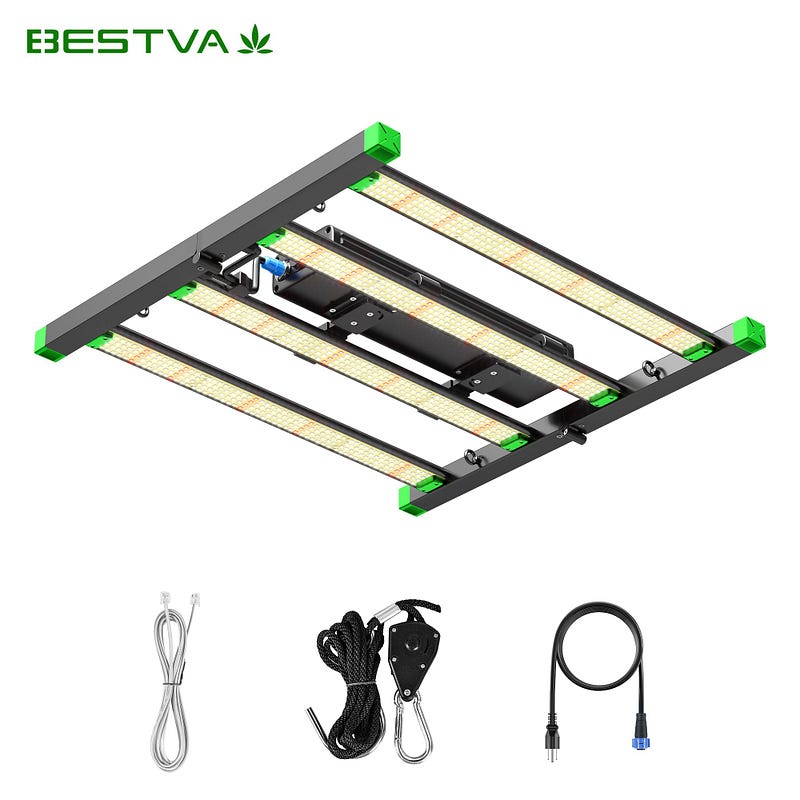
Features:
BESTVA grow light provides highly efficient full spectrum with a healthy red-to-blue ratio to drive photo synthesis. Light energy between 500–599nm, previously thought wasted, penetrates deeper into the plant canopy promoting photo morphogenic responses. High color rendering “white” light aids to rapidly identify potential threats to your crop and provides superior working conditions and safety for personnel. Ideal for both flowering and vegetative production. Bar light design and aluminium material on the back contribute to better airflow and great heat dissipation. This growing light comes with a detachable driver and long power cord, thereby reducing ambient heat in your growing space for extended lifespan. With the waterproof circuit board, worry free of the moist environment. Easy installation.
Best Grow Light For Indoor Plants Buyer’s Guide
The Most Important Features to Consider
Full Spectrum Light
While a natural light source is ideal, indoor gardens can’t always get sunlight regularly. One of the primary reasons to buy a dedicated indoor plant grow light instead of using a regular incandescent or fluorescent light is that normal bulbs and household lights don’t often provide full-spectrum light, or dedicated spectrum light, both of which are essential for the healthiest, most efficient growth cycles. Dedicated grow lights should always feature full-spectrum lighting, and preferably have options for partial spectrum lighting as well, allowing you to tailor your lighting to your plants’ needs.
Energy Efficient
Typical grow light cycles can be anywhere from 12 to 18 hours- and occasionally 24 hours. That can lead to an expensive electric bill if your grow lights aren’t designed for maximum energy efficiency. Fortunately, most consumers and nearly all commercial grow lights are designed explicitly to be energy efficient, regardless of the amounts of light they use. This is also why most grow lights employ LED instead of incandescent lights- although an added benefit is that they remain cooler over long periods of use and are thus safer.
Adjustability
No two growing setups are going to be the same, so it’s important that whether you’re looking for a high-powered 1200 watt grow light or a USB-powered 60 watt model for small plants and office use, the model you chose offers some degree of adjustability. This can include features like fully adjustable goosenecks for smaller lights and adjustable tripods for floor plants, but it also includes features like multiple brightness settings, auto on/off, multiple timer modes, and even multiple lighting type modes. Fortunately, these are all common features on a wide variety of popular models.
Conclusion
When you decide to invest in indoor growing, you definitely want to know about the best LED grow lights.
LEDs are considered to be one of the best indoor grow lights on the market, but with the sheer number of LED lights on the market, it can be difficult to weed out cheap, unreliable ones from legitimate brands and models.
Due to the price of some of these grow lights, it is crucial to do your research before purchasing.
Before you buy an LED, you should make sure it is suitable for your growth. Thanks for reading!
Mars Hydro FC-E 3000 300W LED Grow Light VS Spider Farmer SE3000 300W Dimmable Full Spectrum LED Grow Light
LED grow lights are a game-changer for the industry, which has revolutionized how plants are grown indoors. And it’s not just for those in the industry that are taking advantage of LED grow lights. They can be used in the horticulture market, in the industry, and even for people who want to grow at home indoors and save money doing so. This blog will look at the key benefits of the LED grow light and also how to choose a good one for your needs.
The Benefits of using LED grow lights
Many people think houseplants can live just by natural light coming through the window. However, if you would like your plants to grow healthy and beautiful and to produce a larger quantity of flowers or fruit, an additional light source will be helpful. Using LED grow lights for indoor growing is the most efficient way of replicating sunlight. So what are some benefits of using LEDs?
They are more efficient. LED grow lights use just half of the energy required for fluorescent grow lights. They are better for the environment and they are less taxing on electricity bill.
They have a higher light intensity. You won’t need to move your LED lights around as your plants grow as you might with fluorescent lights since they emit enough energy to sustain your plant through its entire growth cycle.
They create less heat. LEDs can emit less heat than fluorescent bulbs. LEDs operate 80% cooler than fluorescent bulbs. Why is this important? Because excessive heat leads to higher ambient temperatures, higher electricity bills, a higher potential to burn your plants, and more difficulty controlling the humidity. Additionally, when your lamp is cooler you can move it closer to your plants, which increases the amount of available energy for the plant.
Longer lifespan. LEDs live for up to 50,000 hours of use, that equals over 2,080 days of full-time use, Fluorescent bulbs, HPS, CMH, and MH bulbs last 1/5 the amount of time of the LED, making LEDs much more cost-effective over time and reducing harmful waste in the environment.
Mars Hydro FC-E 3000 300W LED Grow Light
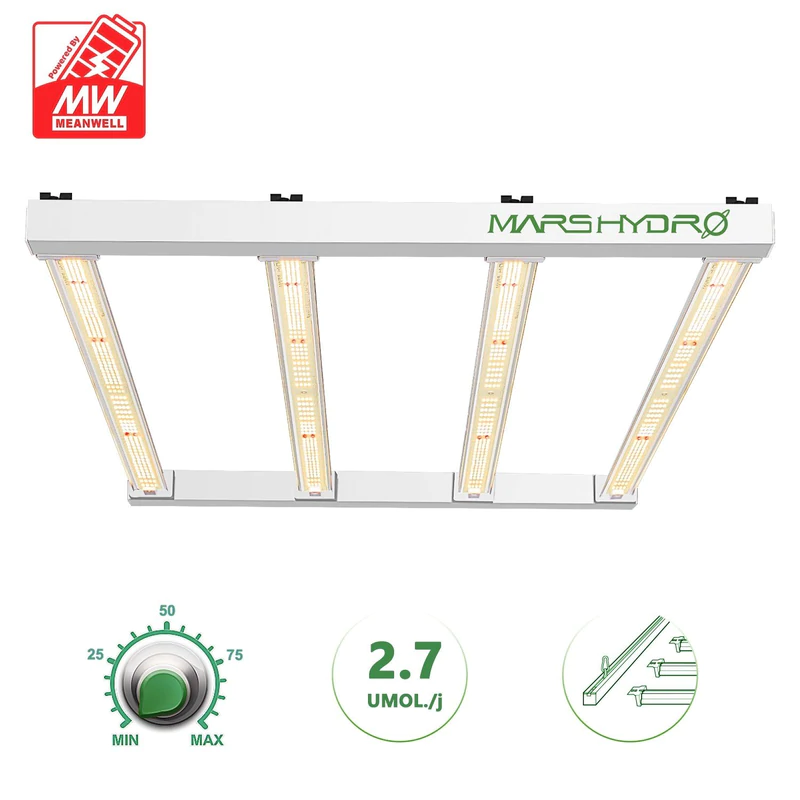
Features:
This Mars Hydro LED grow light with 1184pcs BridgeLux Diodes & Meanwell Driver, market-leading PPF 2.7 µmol/J, Max 2.5g yield/watt with 30% higher Average PPE, more cost-effective compared with other same type lights.Only consumes 300W, perfectly cover 3x3ft (personal), 2.5x2.5ft (commercial) grow space. Built-in removable bars interval & disability enable the exact & dynamic PPFD control over each of the plant growing stages, FC-E3000 detachable bars deliver highly uniform adjustable, PPFD levels throughout the plant canopy, best for more uniform Density Buds. Real Aluminum heatsink together with 4 slim profile passively cooled bars (THINNER & LARGER surface) and detachable Meanwell Driver, create less heat, save 50% energy than other old grow lights.
Spider Farmer SE3000 300W Dimmable Full Spectrum LED Grow Light
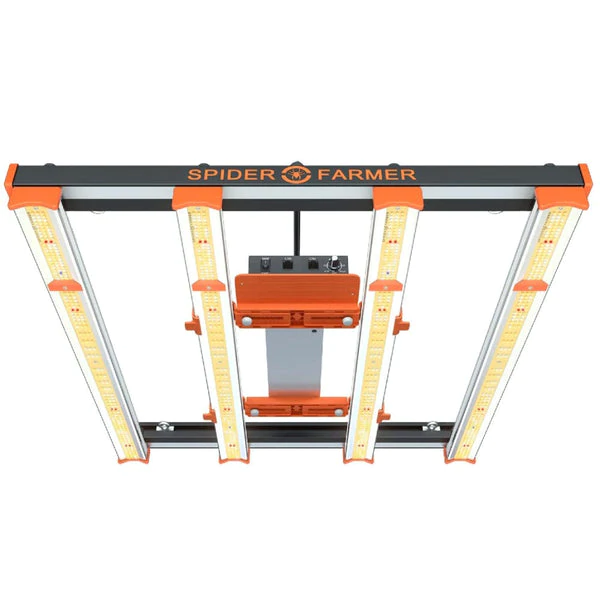
Features:
This Spider Farmer LED grow light features uniquely designed 4 LED strips that extend to the edge to provide more even canopy coverage, especially on the outer edges of the growing area. With 896 SAMSUNG LM301B diodes, the SE3000 Led Grow Light consumes 300 watts at 822.82 umol/s, achieving an impressive 2.75 umol/J of PPE, covering a high yield full-cycle growth of 3'x3'. The full spectrum (380–410nm, 660–665nm, 730nm, 3200–4200K, 4800–5000K) is ideal for vegetable flowering to suit every stage of the plant cycle. The dimmer knob is ideal for growers to adjust the light intensity for different growth stages. The SE3000 grow light comes with a detachable driver and long power cord to reduce ambient heat in the grow space for a longer lifespan.
Tips for Growing Plants With an LED Grow Light
Growing plants with an LED grow light is not difficult, but there are a few things you need to know to get the best results.
Choose the Right Light For Your Plants.
Different plants have different light requirements. It is important to choose a light designed for the plants you want to grow. For instance, if you want to grow plants, the light you choose should be designed for plants.
Follow the instructions
When using an LED grow light, it is important to follow the instructions that come with the light. Failure to do so can result in problems, such as heat build-up, which can damage your plants.
Be Careful With Heat
The heat build-up is one of the biggest problems with LED grow lights. Keep an eye on the temperature in your grow room and take steps to prevent heat build-up if it becomes a problem. If the temperature in your grow room gets too high, it can damage your plants.
Place the Light at the Right Distance From the Plants
The distance between the light and the plants is important. If the light is too close to the plants, it can damage them. If the light is too far away, the plants will not get enough light. It is important to place the light at the right distance from the plants.
Turn the Light Off When Not in Use.
When you are not using the light, turn it off. Leaving the light on when not used can cause heat build-up and damage your plants.
Conclusion
Are you interested in growing plants at your home? Want to purchase LED grow lights to provide a better growing environment? Don’t have an idea for choosing the perfect LED grow lights? Just relax and read through the above discussion. Always keep in mind these important factors, and you will be able to buy a potential LED grow light at an affordable price.
MARS HYDRO FC-E8000 800W Commercial LED Grow Light VS Spectrum King Phoenix 840W LED Grow Light
If you’ve recently decided to try your hand at indoor farming, setting yourself up for success is imperative; after all, you want to produce the highest quality yields you possibly can. In order to achieve that goal, investing in the right tools and equipment is an absolute must.
While there are several supplies that you’re going to want to put on the list of things you’ll need, lighting is arguably the most important. After all, every plant, no matter the species, needs light in order to grow. Typically, with outdoor-grown plants, that light would come from the sun; however, if you’re growing indoors, you obviously aren’t going to be able to access the sunlight, which means you’re going to need to invest in artificial grow lights.
While there are several different kinds of grow lights, there’s one type that today’s growers seem to love the most: LED.
What is the benefit of LED grow light VS HID and fluorescent grow light?
HID stands for high-intensity discharge lamp, which includes metal halide, high-pressure sodium, and mercury vapour.
These lamps contain a quartz tube filled with gas and electrodes on either end. An arc of electricity is sparked between two electrodes inside the tube to generate visible light.
Metal halide grow light and high-pressure sodium grow light have different light spectrum patterns, so usually, growers would have mixed use for their purposes, e.g. for vegging and for flowering
MH produced a blueish light spectrum(over 5500K), has little red light, better to use for lettuce, herbs vegetation or early vegetative stage of flowering plant, while HPS’ hue is yellowish-orange with little blue light(under 3500K), better for tomatoes, orchids, indoor plant that can flower.
MH Spectrum VS HPS Spectrum
In other words, there is no better choice than the other, the decision to make which type of grow light to go is based on what you grow.
However, if you must say which one is better than the others, it is LED grow light that can emit the full spectrum wavelength that the plant need for photosynthesis, It has a red light, blue light, and all other light spectrums just like the sunlight.
LED plant grow light has over 100,000hrs lifespan, five times longer as opposed to metal halide (ceramic metal halide), high-pressure sodium & fluorescent grow light 20,000hrs lifespan, with higher efficacy and less heat produced, no high power cooling system needed, you can save a lot of electricity bill all the year around, plus cutting down the maintenance cost & labor force fee.
Another edge is that the LED grow lighting has less lumen decay than MH or CMH, HPS, t5 or t8 fluorescent grow lights, it is still more powerful to thrive the plant when the rest HID or fluroescent grow lights are dead.
The biggest advantage of LED grow light fixture over the old MH HPS fluoresccent is that it offers more controlability. It can be dimmable by a PWM dimmer switch or it can be connected in a row with lead plug, adjusted brightness and light spectrum by smartphone app at one time in greenhouse or big hydroponic room.
Therefore, it is time to get rid of these outdated grow light fixtures and adhere to the most efficient LED grow lamp for growers in horticulture lighting.
MARS HYDRO FC-E8000 800W Commercial LED Grow Light
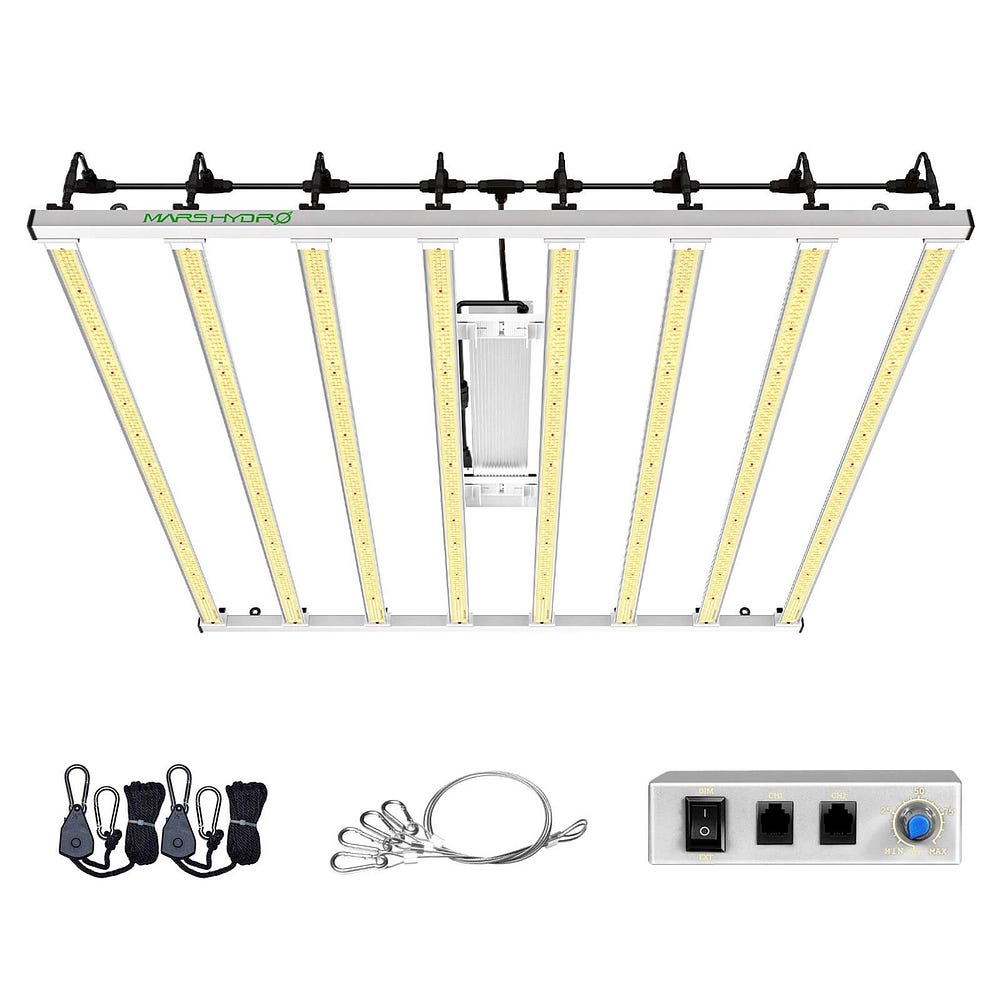
Features:
This MARS HYDRO LED grow light is an affordable alternative lighting solution for commercial cultivation in supplemental CO2 applications, delivering uniform PPFD around 1500μmol/m²/s at 10inch height, standard commercially-viable LED grow lights for all indoor horticulture adding extra CO2 like vertical farms, indoor houses. Featuring 3928 pcs BridgeLux chips and a special chip arrangement that allows a more even distribution and efficiency of 2.7 µmol/j, FC-E8000 can take care of every plant well and grow the best results. In a special combination of spectra, the FC-E8000 is a full spectrum LED grow light which beneficial to the entire plant growth cycle, with more red light added contributing to flowering.
Spectrum King Phoenix 840W LED Grow Light
Features:
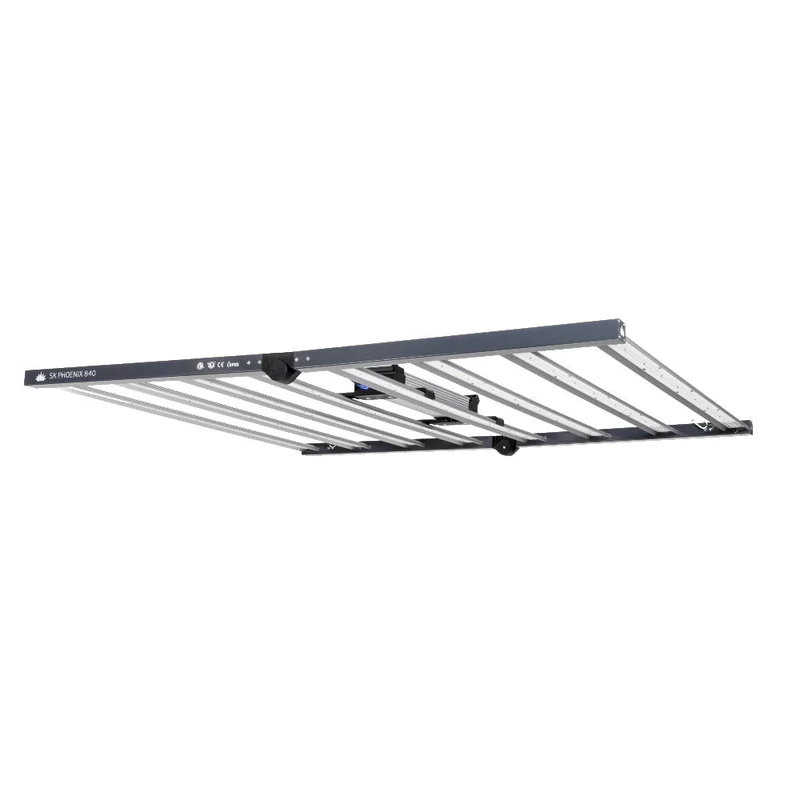
Spectrum King’s Phoenix 840W is ideal for photon-hungry crops that can handle strong light. With 16% less wall power than standard HPS fixtures, the 840 provides some decent output compared to other fixtures while still saving electricity and heat. Spectrum King’s custom spectrum is tested and customized to maximize plant and flowering cycle growth. The intensity of this dimmable light can be as low as 10%, enabling growers to simulate a sunrise/sunset effect. Spectrum King’s innovative Cryo-Therm cooling technology features an ultra-thin profile that maximizes airflow and minimizes microclimates. The Phoenix 840 grow light is optimized for single or multi-level planting close to the canopy.
What to Look for in a Grow Light
Size
When deciding what size grow light you need, think about how many plants you’ll need to cover. Also, if you’re planning to move your light from place to place, you might want something lighter and portable, whereas if you know it’s going to stay put, that might not be as much of a factor. Also, consider the space where you plan to put it, and make sure there’s room for it to operate safely and not up against furniture, drapes, or other items.
Type
There are various types of grow lights to consider, from panels to ones that hang overhead or screw into a regular light fixture. The type of plants you have, the amount of existing natural light, and where your plants are located will help you narrow down your choices. Hanging lights are typically larger, while desktop lights are smaller and easy to move around. If you want a complete system, consider a full garden kit that includes the planter with a built-in light.
Wattage
Wattage isn’t as important as you might expect when it comes to grow lights, but it’s still a factor worth considering. The more important metric is actually PPFD, or photosynthetic photon flux density, which measures the specific light emission a lamp gives off.2 Because this is a bit complicated to figure out, wattage is a useful tool to determine the correct fixture for your plants. The rule of thumb is that you need 32 watts per square foot, so most indoor plants (especially herbs) will do just fine with a lower-watt light.
Conclusion
With the rapid development of LED technology in recent years, more and more growers are now turning to LEDs for indoor operations. Just a novelty a few years ago, LED grow lights now perform just as well, if not better, than HID lights, and they’ve become more affordable. Because LEDs offer many benefits, from consuming less energy to being stronger and longer lifespan, they are now an excellent choice for indoor cultivators of all skill levels. Thanks for reading!
ECO Farm ECO D700 700W Samsung LM281B Chip LED Grow Light VS HEO 1700Pro 700 Watt LED Grow Light
The indoor plant requires light to grow, and unless you live in a sunny Mediterranean climate, it is best to grow plants indoors with artificial light. The good news is that indoor lighting allows you to control exactly how much light your plants receive each day — regardless of the weather outside. But should you use LED grow lights? Keep reading!
Why do you need the best LED grow lights?
Setting up LED grow lights is essential for a variety of reasons. There are many ways to make your plants glow, but how did you realize this is the most skilled method? How do you realize you’re not really overheating your plants, trying to bring more light into them and increase your yields?
The reality remains that LED lights are the most efficient grow lights. First, LED grow lights have 75% more power than traditional grow lights.
By using less electricity, you’ll spend less cash on your electricity bills, so you’ll have more cash to use to collect from all the rewards for your hard work, rather than spending a major portion of it running the growth task itself.
Just as importantly, the best LED grow lights utilize the specific wavelengths of light that plants need most. Traditional grow lights flood your plants with light, and a large portion of the light is then wasted.
Likewise, LED lights only utilize blue and red wavelengths to give your plants everything they need without wasting power and light on things that don’t work out. There are some LEDs that make up both, and special cases, which make it possible to practice and customize lighting according to the needs of the factory.
LED grow lights are also somewhat cooler due to the reduced power utilization. The problem with many grow lights is the warmth they provide, which also leaves you burning money at different parts of your growing task.
The hotter your grow room, the more air you should be passing through the room, and the more you should think about sustained temperatures.
This also means that LED grow lights have a much greater impact on the environment. Given ecological concerns, global temperature changes, and the ultimate fate of the world, it’s hard to understand why individuals might gravitate toward greener alternatives.
This is where LED grow lights succeed. Despite the use of electricity, the dramatic reduction in carbon dioxide emissions means the planet will be taken seriously. LED grow lights also don’t need to be discarded in a specific way like HPS lighting frames.
Due to the short time span of availability, grow lights containing mercury should be professionally discarded after a few years in a manner that requires special consideration. LED grow lights can last for a long time and are discarded after nearly ten years of use, without worrying about harming the earth at the same time.
The last thing about the advent of LED grow lights is that they don’t need to be replaced all the time. Many grow lights for personal use have been replaced in a short period of time because they break down fairly quickly.
Relatedly, most of the best LED grow lights can last over 50,000 hours, which means they should be replaced after the most punctual 7–8 years.
The cost can put some people away from using them, but once you factor in their longevity, it’s hard to see how much cash you can really save over time.
ECO Farm ECO D700 700W Samsung LM281B Chip LED Grow Light
Features:
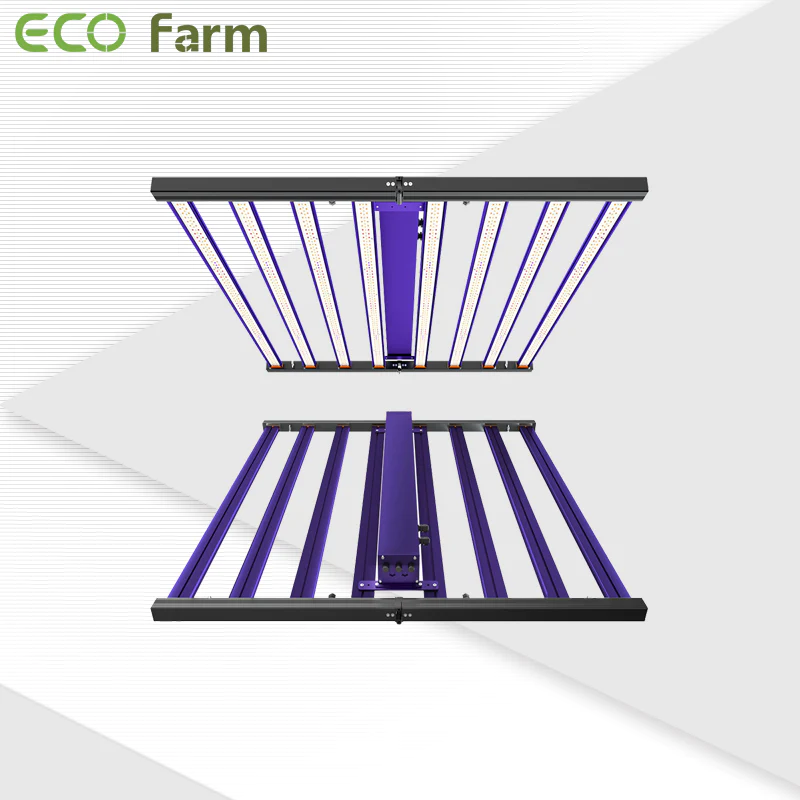
This ECO Farm LED grow light has the highest output of white chip and Osram chip, with high energy efficiency of 2.6 umol/J, PPF 1820 µmol/s, LED grow light provides plants with powerful and high quality light to maximize the Yield. The vegetable footprint is 5 x 5 feet and the flowering footprint is 4 x 4 feet. With an excellent full spectrum (3000K, 5000K, 660nm, 730nm IR, 395nm UV), it can make the light more uniform, truly simulate sunlight, and perfectly meet the entire growth cycle of all plants from seed to harvest, resulting in higher yields. The dimming knob can adjust the light intensity at will (from 0% to 100%), and the daisy chain can be up to 100 units, which easily meets the plant development process, including germination, nutrition, flowering, and fruiting. Foldable for easy placement and portable installation, the adjustable adapter has an RJ45 interface, which can control multiple plant lights in series, which is convenient for you to plant in a large area.
HEO 1700Pro 700 Watt LED Grow Light
Features:
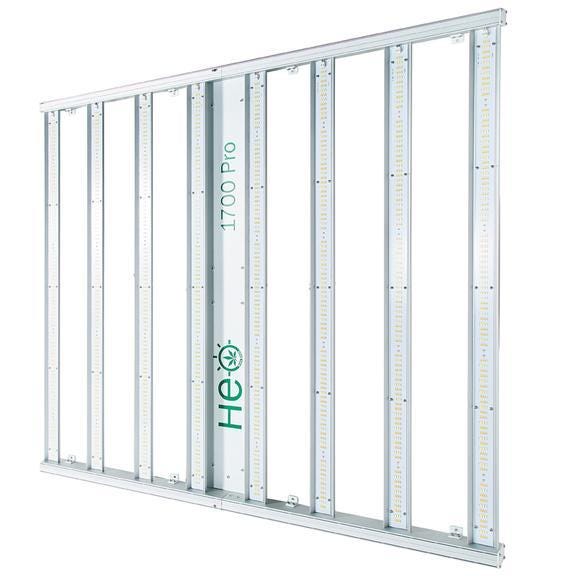
The HEO 1700Pro 700 Watt LED Grow Light is an excellent light for any and all phases of a plant growing lifecycle, whether you’re using it in a tent for your personal indoor garden or chained together in a large commercial operation. The 1700 Pro’s 8 powerful lighting bars focus their intense light evenly across your plant canopy for healthy, potent, high-yielding plants. The HEO 1700Pro 700 Watt LED Grow Light delivers full-spectrum light to a 4'x 4'area for flowering and a 5'x 5'area for veg. The high efficacy of 2.4 µmol/j and up to 630–700 wattage power consumption make this a productive and affordable indoor grow lighting solution.
What should you look out for before buying?
Wonderful. I think we all agree that buying an LED lamp for growing plants at home is worthwhile. Nowadays, in my opinion, there is no other lamp that can keep up in terms of cost or performance.
But that also leads us directly to the next legitimate questions: How do you rate an LED grow light? What are the most important criteria for an LED grow lamp test? After all, you can’t just go by watts or lumens. Just not according to the price anyway.
In the following, I will explain the most important points to consider before buying a grow light. Here we go:
PAR / PPF
PAR (Photosynthetically Active Radiation) or PPF (Photosynthetic Photon Flux) simply describes how many light particles with a wavelength of 400nm-700nm (i.e. the spectral range that can be used by plants for photosynthesis) is emitted by a lamp. It is given in µmol/s . This value actually says more about the actual consumption of the LEDs than the number of watts of the lamp.
LED Watt Quality
As with conventional lamps, the light output of LEDs is given in watts. Due to the nature of the LEDs, however, they need fewer watts than conventional lamps for the same lighting output. You should also pay attention to the quality of the built-in LEDs. Good manufacturers are, for example, Epistar or OSRAM.
Light Spectrum
For plants to grow without sunlight as they do outside, the light of the LED lamps must be adjusted depending on the phase of plant development: In the growth phase, blue light tones should dominate, while in the flowering phase a red light spectrum is required. An LED lamp that is used for the growth and flowering phase should therefore cover both spectra. Generally, LED grow lights perform better with the broadest possible spectrum.
Lighting Height
When lighting plants, you must ensure that there is an appropriate distance between plants and lamps: if the distance is too large, the plant will not grow normally. If it is too small again, there is a burning risk or fading. The higher the efficiency of the LED light, the greater the distance. You should definitely pay attention to the manufacturer’s information about the best lighting height.
Conclusion
Your plants are living things just like you are. You wouldn’t mind someone taking you to a buffet, so why not do the same for your plants. Choose wisely and see what our requirements are. If it’s a larger operation or commercial project, you’ll have to spend the extra money for a larger lamp. Anyway, we hope this is a useful guide. We wish you the best of luck in finding the best LED grow lights for indoor plants.
ECO Farm ECO D700 700W Samsung LM281B Chip LED Grow Light VS AgroMax AFS 1830 LED Grow Light
In the past, lighting was one of the most expensive aspects of growing plants. A good set of HID or CFS lights can set you back hundreds of dollars on all the necessary equipment. Now, thanks to LED lights, grow lights are more affordable and make growing plants at home easier.
How many watts per square foot do I need when using Led grow lights?
Using watts per square foot to size LED grow lights is the most efficient and reliable method. However, determining the power consumption of LED grow lights can be challenging because there are many variations in lamps and many manufacturers provide inaccurate specifications for marketing purposes.
For example, a 5 x 5 foot grow tent is 25 square feet in total. Given that our LED grow lights require 30W per square foot, you’ll need a total of 750W. If you want to use a 400W LED fixture, you’ll need two of them to effectively cover the entire area.
However, this method does not consider the efficiency of light as a factor. Therefore, the efficiency of two bulbs of the same wattage may differ in terms of output power. This feature can cause you to give your plants too much or too little light. Wattage shows the amount of light that grow lights provide, while their output will vary by lamp brand.
ECO Farm ECO D700 700W Samsung LM281B Chip LED Grow Light
Features:
This ECO Farm LED grow light has the highest output of white chip and Osram chip, with high energy efficiency of 2.6 umol/J, PPF 1820 µmol/s, LED grow light provides plants with powerful and high quality light to maximize the Yield. The vegetable footprint is 5 x 5 feet and the flowering footprint is 4 x 4 feet. With an excellent full spectrum (3000K, 5000K, 660nm, 730nm IR, 395nm UV), it can make the light more uniform, truly simulate sunlight, and perfectly meet the entire growth cycle of all plants from seed to harvest, resulting in higher yields. The dimming knob can adjust the light intensity at will (from 0% to 100%), and the daisy chain can be up to 100 units, which easily meets the plant development process, including germination, nutrition, flowering, and fruiting. Foldable for easy placement and portable installation, the adjustable adapter has an RJ45 interface, which can control multiple plant lights in series, which is convenient for you to plant in a large area.
Efficacy: 2.6 umol/J @220V AC
Light Output PPF: 1820umol/J
Power Consumption: 700W AC
Input Voltage 100–277 VAC
Light Distribution: 120
Dimming: 0–100%
Lifetime: >50000hrs
IP Rating: IP65
Total Harmonic Distortion: <8%
AgroMax AFS 1830 LED Grow Light
Features:
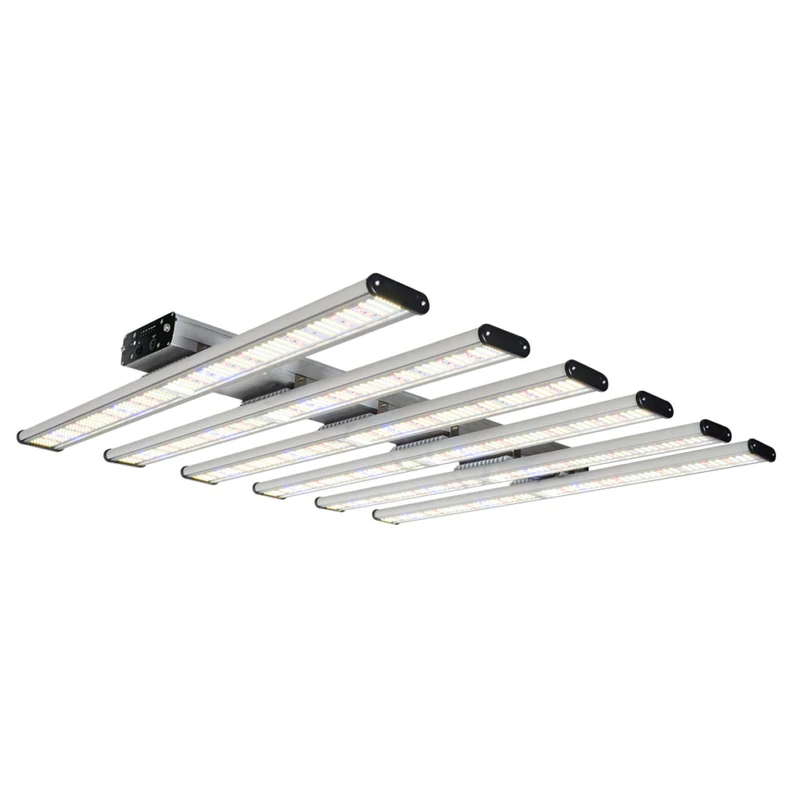
The AgroMax AFS 1830 LED Grow Light features a spanning 6-bar design offering an advanced full spectrum of 1830 µmol/s and an impressive light footprint. Samsung LED chips combined with added red, blue, UV and IR LED chips provide complete nutrition for horticultural applications. The system offers the flexibility of onboard dimming and external control functions. Designed for home and commercial use, the AFS-1830 achieves an extraordinary 2.54 µmol/watt using 720 watts and operates on a 120–277v power supply. AFS 1830 targets critical areas of peak photosynthetic activity, supports vigorous plant growth and maintains spectral coverage from 380–780nm.
Max Wattage: 720w
Input Power: 120–277v 50/60hz
Amperage: 6.0@120v, 3.0@240v, 2.7@277v
Chip Model: Samsung LM561C — 5630
Driver Model: Mean Well XLG-240
PPF (400–700nm): 1830 µmol
Spectrum: AgroMax Advanced Full Spectrum
Dimensions: 35.5″ x 35.5″ x 2.5″
Weight: 37lbs
Warranty: 3 Year
Suitable for Damp Locations
Things to Consider Before Buying the LED Grow lights
Buying a good and right grow light is the most important. Unfortunately, If you pick the wrong Grow to light for your plants, then not only your money but also your passion for growing hard work all would suffer.
So, what should you keep in mind while purchasing the LED grow light?
Following are some essential factors to look for ahead of deciding the best led grow light for grow tents:
Brand Value:
Most people ignore this part. But seriously, it is one of the most critical factors. You must consider how much is the manufacturer is reputed in this indoor-growing world. Of course, you should get the value of every penny.
We have included this point while researching the best led grow lights.
Light Spectrum:
The spectrum of the light chosen should either be a full spectrum or uniform one to produce the best light intensity uniformly to all the plants.
Energy Efficiency:
This is the most vital point to look for. Energy Efficiency is the term used to judge the ability of the LED grow light of how much energy the light saves per input voltage while using its best efficacy.
Thus, look for a light with maximum energy efficiency.
Lifespan:
The grow light must be working at least for 50,000 hours. Else you will end up wasting all your money.
Coverage area:
The coverage area should be your concern when choosing the LED Grow light. Plants need different coverage in their vegetative stage and flowering stage. Please check that the light is covering well in the whole growth cycle of the plant.
Conclusion
In the right lighting, plants will grow faster, produce more food, and look better. However, not all lights are created equal. We introduced some best LED grow lights above that can help you grow your favorite plants just the way you like them. Thanks for reading!
Maxibright JUNO PRO - 720W LED Grow Light VS Lumii Black 720W LED Grow Light
Every manufacturer has the right to say that they offer full spectrum LED grow lights as part of their marketing campaign, but this is not the case because the best full spectrum LED grow lights are substitutes for sunlight and allow users to customize their needs Make adjustments to change the intensity of the light.
It must be a full-spectrum light source, evenly distributed, with the highest PAR and LUMEN during prolonged continuous operation. Many manufacturers claim to have the best full-spectrum LED grow lights, but performance matters when using them in a grow room. Read on to find the best LED grow lights.
What color light is best for plant growth? (from plants, seedlings, calculators, during flowering)
When placed at different distances from plants, seedlings, lights of different colors play different roles and play an important role in flower development. Blue light is most effective in promoting vegetative growth of leaves and formation of shoots. On the other hand, red light combined with blue light promotes plant flowering. Red light is also very helpful during the fruit ripening stages of different plants.
Maxibright JUNO PRO — 720W LED Grow Light
Features:
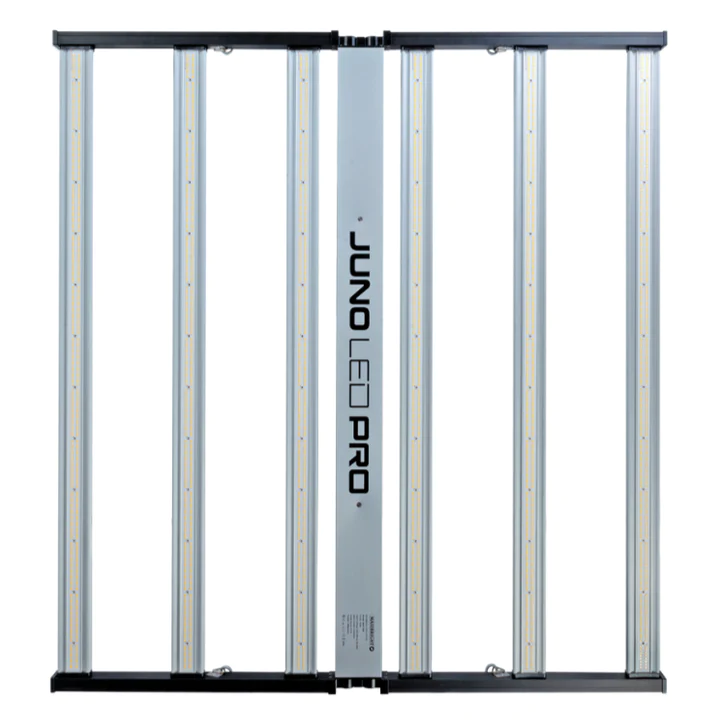
The Maxibright LED Grow Light is an affordable and powerful 720 watts, has an output of 1800 micromoles per second (PPF), and is optimized to cover an area of 1.5 m x 1.5 m. 6 LED strips to provide uniform full spectrum light with added red spectrum for enhanced blooming. The whole luminaire folds in half, is very easy to transport, and unlike other LED units on the market, it is truly plug-and-play and requires zero assemblies of any kind. At only 40mm high, it maximizes the usable height in any growing space. Juno uses all-new MaxiLED chips. These high-quality chips are hand-picked by Maxirow and will provide the perfect spectral output for high-yielding plants. Each unit comes with a remote dimmer that allows you to adjust the light from 25% — 50% — 75% — 100% power. This is especially useful for growing young plants that don’t require as much light as more mature flowering plants.
Lumii Black 720W LED Grow Light

Features:
This 720W rated Lumii LED grow light is an excellent choice for stimulating your space to flourish. To power the lamp, you will need the LUMii Black 600W digital ballast sold separately. This is the same ballast used for the LUMii Black HPS kit. These lights are lightweight and easy to install, and with the LUMii cord ratchet, you can adjust the fixtures’ height according to the canopy’s height. Just plug in, adjust the height, choose your output settings, and relax.
What to look for when buying LED grow lights?
You need to consider the following features when you are considering a purchase for growing your favorite plants, indoors.
Wattage
You need to consider the size of the grow room and the plants that are inside to determine the right wattage of the light strips to buy. For a small grow room with only one or a few plants, you will already be good with a light that has a minimal wattage. If the grow tent is large, you need a more powerful light or use several light strips.
Light spectrum
The light spectrum is the wavelength of light that the plant needs at different stages of growth. The light spectrum needed to grow indoor plant varies for different growth stages. Usually, plant needs blue wavelength during germination and vegetative stages and red at flowering stage The best Light Spectrum for growing plants differs during different stages of growth in plants and what they need. The indoor plants, like all other plants, rely on the light spectrum for signs about their growth. Blue light is particularly useful during vegetative growth, while the red light is particularly useful during the flowering stage. For the best results, you will also want to supplement these with the other colors on the visible light spectrum. Similarly, all other plants use the light of different wavelengths during different growth stages but generally, blue light is important for initial plant growth and red for flowering and bud formation.
Amount of light
Indoor plants are adaptable to blue and red wavelengths for germination, vegetative growth, flowering, and bud formation. So, select a light that delivers the entire range of the light spectrum that your plants need. Even if you are not growing indoor plants, it is necessary to select a full spectrum light for your grow room that exhibits the following wavelengths range.
Ultra Violet (380–410 Nanometer), Blue (1st Spectrum 440–450 and 2nd Spectrum 450–460 Nanometer), Orange (605–610 Nanometer), Red (1st Spectrum 620–630 and 2nd Spectrum 655–660 Nanometer), Far Red (730 Nanometer).
Wattage per square foot and coverage area
Your grow lights are supposed to be operative most of the growing time probably 12–14 hours if you are growing plants. So, it is import to know the wattage and the daily light consumption your selected lights will consume. On the other hand, your selection must be based on future gardening programs keeping in mind that these selected lights would go a long time with you. Your selection must be based on the type of plants and the area they might cover during their growth. Large spaces need more lights while growing 1 or 2 plants indoor should limit you buy accordingly.
Low Heat Emission
High heat omission may be of substantial damage to your lovely plants due to burning issues. Choose only those light that is durable and protect your plants from the heat burns. The lights remain close to the plant’s foliage whereas high heat omission lights are prone to burn plants when kept lightening for several hours during a day. So, make a careful choice by selecting a light that omits a balanced heat.
Quality of materials
The quality of any material is judged only after you use it. There might be several products with different capacities and prices but you may not aware of the quality. Go and check the brand repute, check existing users’ reviews and check the portfolio of the company for their business history. Make purchases after you are fully satisfied with the product and services by the supplier.
Conclusion
Just five years ago, LED grow lights were still inferior to HIDs in many ways. Most professional growers prefer to use HPS lighting. More modern clothing is turning to CMH.
But these days, LED grow lights have far surpassed other types. Their prices have come down. all the way down. You can now get incredible LED fixtures, not just good HID systems. The cost savings from operating the lights quickly made up for the difference.
ECO Farm ECO D700 700W Samsung LM281B Chip LED Grow Light VS Grower's Choice ROI-E680 LED Grow Light
Growing plants indoors using grow lights, a self-contained hydroponic system, and growing media can help grow plants in a small area of your home. They have long been grown in kitchens on windowsills with artificial light. Standard fluorescent bulbs can help plants in winter and even produce certain crops. They can be kept alive by placing them two or more feet away from the light.
If you have the right gardening tools, it will be easier for you to grow strong, productive herbs. If you’re looking for guidance on growing plants indoors, keep reading.
How Light Helps Indoor Plants’ Growth
Plants photosynthesis is caused by light. As a grower, your main goal is to obtain high-quality buds. However, this is due to the amount of light you give the plant. The size and quality of a flower is affected by the number of lumens you provide to the plant. For optimal plant yield, a minimum of 30,000 lumens per 10 square feet of grow room is required, while still maintaining the proper balance of the environment. When a plant gets enough light, it will focus on producing calyxes rather than flowers. When it doesn’t get enough light, it grows more leaves, resulting in a poor harvest.
The duration of light received by the plant is also important. During the growth stage of your plant, you should expose the plants to light for 18 hours and keep it in the dark for 6 hours. During flowering, you can switch the time to 12 hours of light and 12 hours of dark. It’s perfect for indoor growth because you have complete control over the light.
ECO Farm ECO D700 700W Samsung LM281B Chip LED Grow Light
Features:
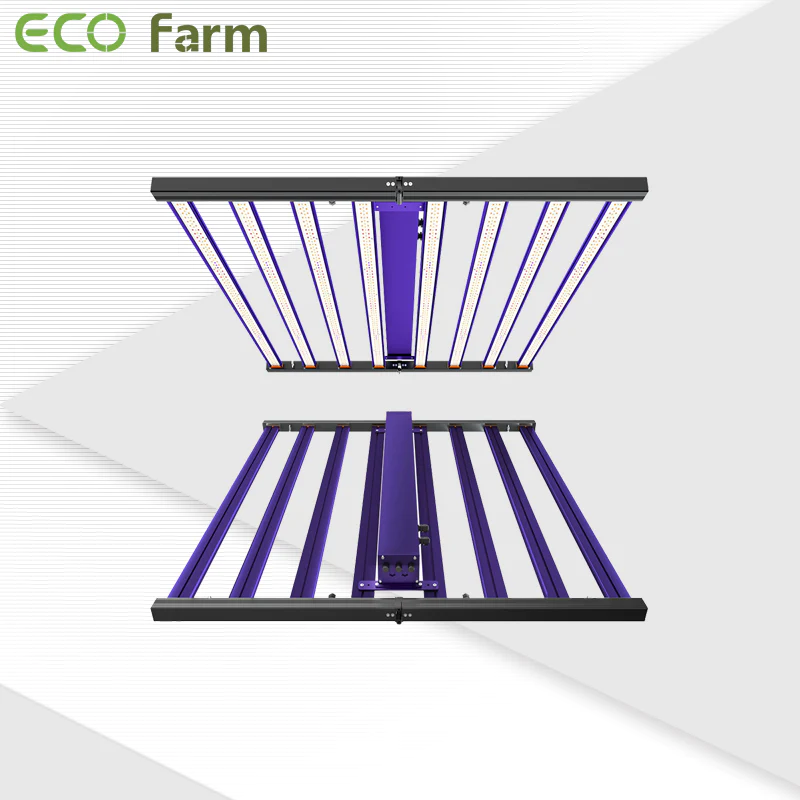
This ECO Farm LED grow light features the highest output white chips and Osram chips, with a high energy efficiency of 2.6 umol/J, PPF 1820 µmol/s, LED grow lights provide plants with powerful and high-quality light to maximize yield . The vegetable footprint is 5 x 5 feet and the flowering footprint is 4 x 4 feet. This grow light has an excellent full spectrum (3000K, 5000K, 660nm, 730nm IR, 395nm UV) and is ideal for all growth stages (germination, cloning or cuttings, mothering, vegetative and flowering applications) for higher yields . The dimming knob can adjust the light intensity at will. Designed with daisy chain function, up to 100 lights can be connected. Multi-light connections with uniform dimming are especially beneficial for large-scale indoor and commercial cultivation.
Grower’s Choice ROI-E680 LED Grow Light
Features:
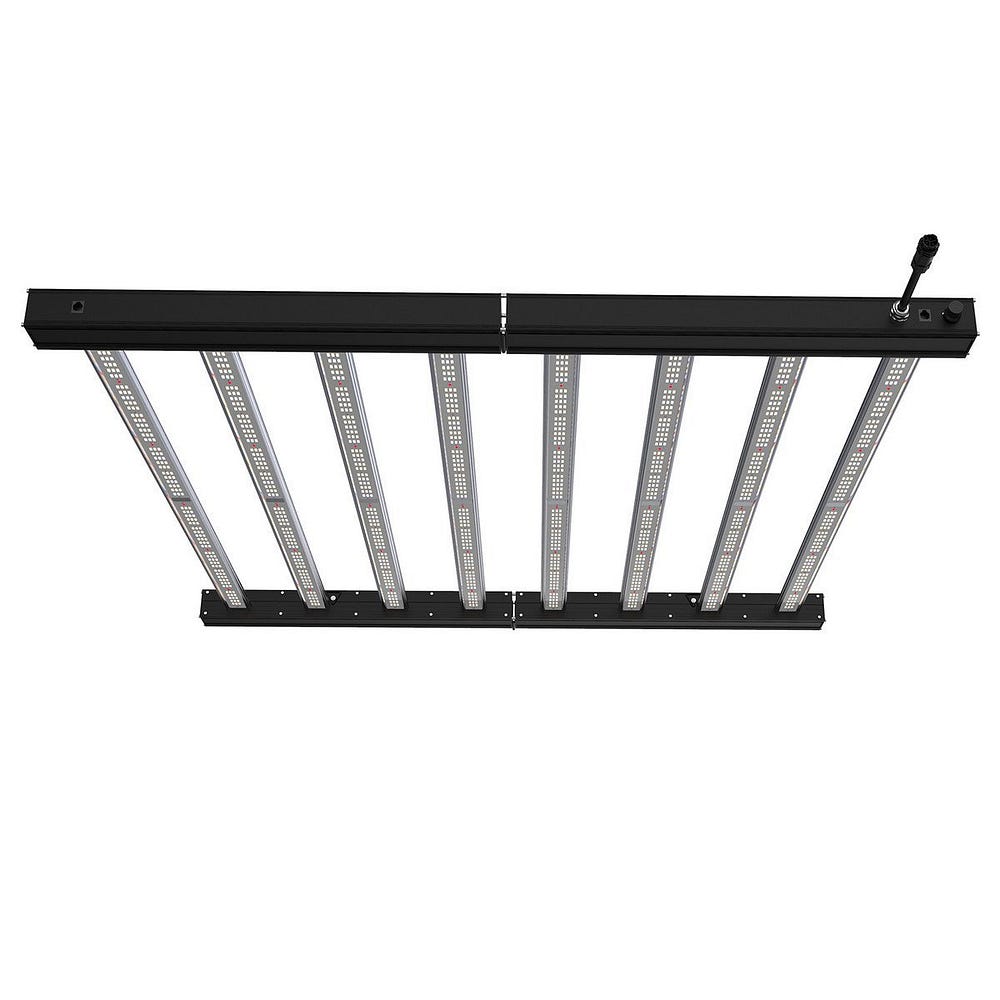
The Grower’s Choice grow light produces a PPF output of 1700 umol/s and a PAR efficacy of 2.5 umol/J making this fixture incredibly efficient compared to other commercial fixures. Balanced Spectrum, incorporating Growers Choice famous 3K CMH Full Phase Spectrum for superior growing power with best possible LED diodes available. This fixture provides you with total control over everything. With onboard dimming function, growers cans et the ideal intensity at any stage of plant growth for optimal photosynthesis activation. The Growers Choice ROI E680 provides its users with an average 40% reduction on energy and HVAC costs. This is the ultimate combination of increasing the amount of light energy reaching your plants while also shrinking costs. The Growers Choice ROI-680 LED grow light allows for even light distribution, and is precisely designed to deliver uniform levels of photosynthesis flux density, or PPFD.
What to look for under grow lights before buying
There are a few things to consider before buying grow lights. The quality of feminized seed pots can be compromised by a lack of understanding of growing light. Before purchasing grow lights, consider the following considerations.
Grow light prices
Before buying grow lights, you must decide how much you are willing to invest. As more states legalize adult-use plants, home cultivation is becoming more common, and cultivation techniques are improving rapidly. Depending on your needs, you might spend as little as $100 for a low-quality LED light, or $2,000 for a high-quality, state-of-the-art LED light.
If you only grow plants like grain milk strains once a year, the expensive lights will take longer to pay off than if you harvest them once a year. This is because if you want to harvest more regularly, you need to invest in more lights. In addition to the cost of the lamp, you also need to consider the monthly cost of electricity it consumes. LEDs are more energy efficient and less expensive than high intensity discharge lamps (also known as “HIDs”). On the other hand, LEDs are more expensive to purchase but consume less power.
Some lights (like HIDs) run hotter than others, so the cooling system for the grow room may need to include more fans or AC units. Your utility costs will increase by adding equipment.
Number of grow lights
For most home growers, one or two lights will suffice. Most states limit the number of plants that can be grown to six to twelve, and one or two lights will suffice. If you run two separate rooms, you will need two lights, one for vegetative plants and one for flowering plants.
The size of the light depends on the number of plants to be grown and the space available. Unless you are growing in a large greenhouse, you will be limited to a little light. If your basement is large and open, one prominent light fixture may be preferable to two smaller ones.
The more watts you have, the more pounds you can produce. Professional LEDs start at 200 watts and increase power as you use them. A single high-watt bulb may have more than twice the output of multiple low-watt lamps.
Color spectrum of light
Before making a final decision on indoor grow lights, here are a few things you need to know about the spectrum. Depending on the stage of development of the strain, plants require several forms of lighting. For example, during the vegetative phase, plants need blue light. The red spectrum is most effective during flowering. Therefore, you should look for those with a wide range of colors.
Ventilation
Another problem is ventilation. You need a fan to use the heat lamp in a small place, which takes up more space. If there isn’t enough room for the lights and fans, you may have to use LED lights.
Maintain
Maintenance of indoor grow lights is essential to ensure the proper development of plants. The control voltage requires a high level of power stability. Grow lights, such as HIDs, can lose their quality over time. Also, the lamp’s battery life will drain. Therefore, when the lamp does not provide sufficient illumination, the lamp must be replaced.
Safety
Make sure your breaker board has enough outlets and power to support all the equipment in your grow space. Identify all the equipment needed for the project and work out how much electricity they will need. If you don’t have enough power to operate this device every day for months, it can be fatal. Never put too much pressure on the power outlet.
Heat dissipation
LED grow lights, like HID and MH, produce heat in addition to light. The extra heat may damage the quality and texture of the plant. This is because plants such as the Banana Cream Pie strain require a specific temperature range. In other words, if you deal with temperature and humidity independently, you need to change it.
Depending on your preference, you can choose from a variety of indoor grow lights. LED grow lights are an affordable and effective solution when growing plants indoors.
Conclusion
In conclusion, it’s important for your plants and your wallet to choose the best LED grow light. Before you buy something, make sure to read reviews and compare prices. Lastly, don’t forget to check on your plants to make sure they are getting enough light.
ECO Farm ECOZ PRO 700W Samsung 301H Chips LED Grow Light VS GrowPros HM660 LED Grow Light
You may not even be that much closer to buying any lights -maybe you’ve been put off entirely.
We get it, the process isn’t easy. Most of what you’ve seen up to this point has probably felt “samey”. Never mind the reviews. How many times have you felt as though you’ve landed on the perfect product only to be put off by the reviews?
Basically, we understand how tough it’s been for you up to this point. But that’s all about to change.
In this article, we’ll put your hours of frustrating research to an end by providing you with quality and energy-efficient LED grow lights.
Introduction to LED Grow Lights
Let’s start at the beginning and make sure we understand the basics of the grow lights themselves. Grow lights are usually indoor plant lights, artificial light sources designed to simulate natural sunlight, which are then converted into the energy (photosynthesis) needed for growth and good plant health.
Naturally, plants need plenty of light to thrive. Outdoor plants receive plenty of natural light from the sun during the day, and the amount and quality of light varies according to location and season. These changes in light are important in different ways for different plants, such as fruiting plants, which use these photoperiods to initiate fruiting, some prevent fruiting, and other types of plants will use these cycles to initiate or prevent vegetative cycles.
Controlling the type, quality, type and length of cycles, and other factors in the light you provide your plants, will allow you to enhance or extend the growth cycle, or simply grow your plants outside of the regular farming season.
Indoor grow lights are designed to provide a spectrum similar to the sun by fluctuating the lumens (intensity), color and temperature of light. Studies have shown time and again that different plants respond to different colors and intensities of light, so indoor growers quickly realized that grow lights that let you control these factors could produce healthier, higher-yielding plants. This is where LED grow lights step in and start glowing. (Pun)
ECO Farm ECOZ PRO 700W Samsung 301H Chips LED Grow Light
Features:
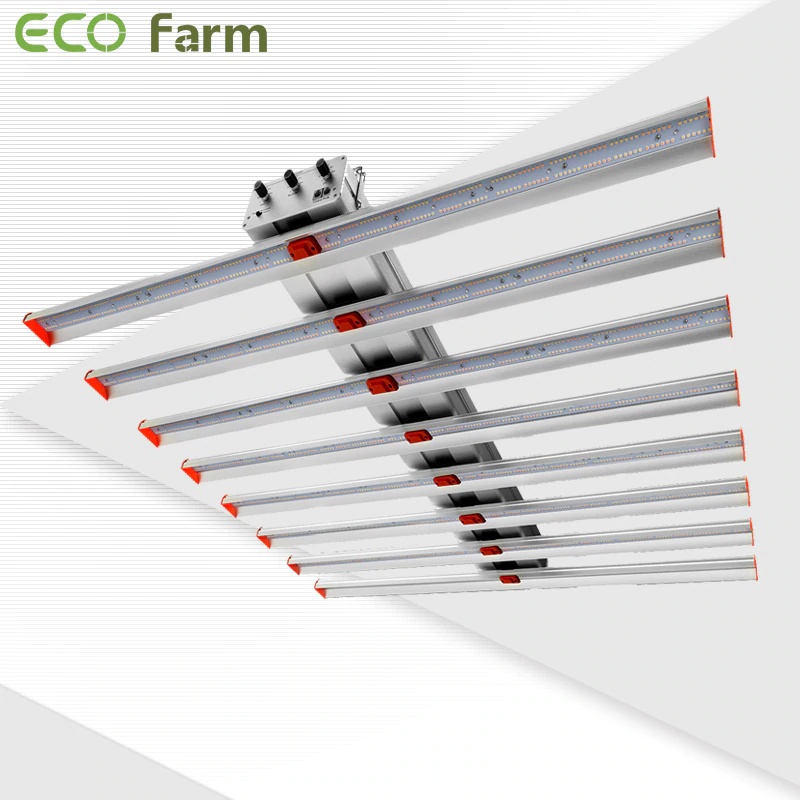
The ECO Farm LED grow light with unique designed extended 8 bars LED grow light provides more even and full canopy coverage, especially to the outer edges cultivation areas. With 2784pcs SAMSUNG LM301H& Os-ram Chip, This Led grow lights draw 700 watts with 1960 umol/s, achieving an impressive PPE of 2.85 umol/J, coverage for 4’x4’ of high-yielding full-cycle growth. Full-spectrum is perfect for veg to bloom, to adapt to each phase of the plant cycle. The dimming knob is ideal for growers to adjust the light intensity according to different growing stages. Bar grow light design and aluminum heat sink on the back contribute to better airflow and great heat dissipation. This plant-growing light comes with a detachable driver and long power cord, by reducing ambient heat in your growing space for an extended lifespan. With the waterproof coating on the LED diodes, worry-free of the moist environment.
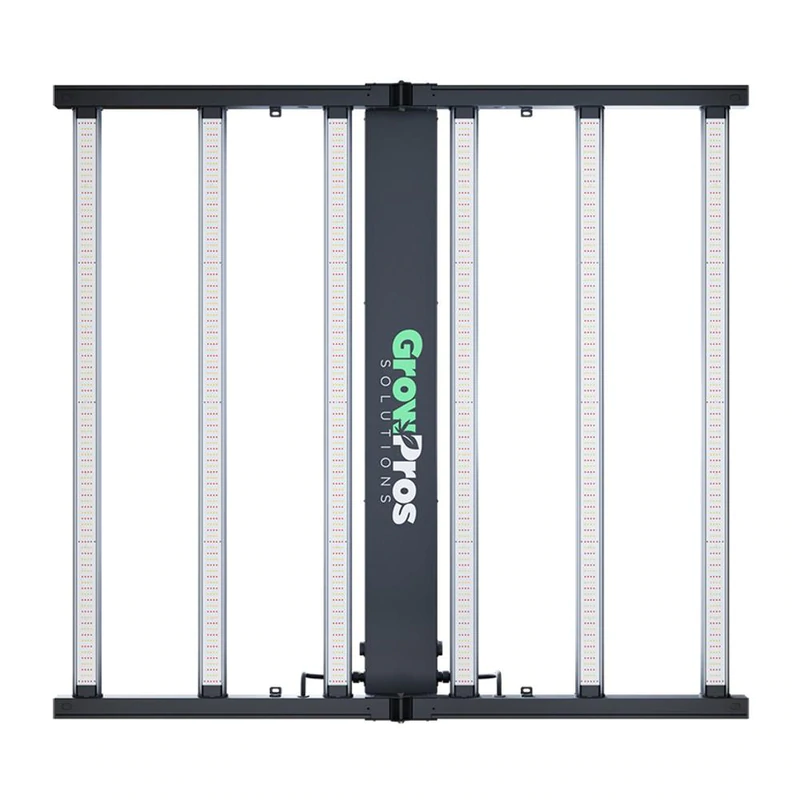
Features:
Compared to traditional HID and HPS light sources, the GrowPros LED grow light saves about 50% energy, and you can save a lot of energy over time. Without CO2 supplementation, the same results will not be produced. The HM660 lighting system is a complete pre-assembled LED grow light that reduces installation time with a variety of wiring techniques and connectors. HM660 series systems run cooler with passive cooling thermal management, meaning your lighting system can last longer while maintaining high light output levels. Longer life means you can grow crops for years without having to replace your lighting system, reducing costs. Indoor plants grow best under full-spectrum lights that replicate the sun’s natural spectrum. The HM660 series lasts longer than traditional grow light sources, resulting in healthier, happier plants.
What to Look for When Choosing an LED Grow Light
Spectrum
Generally speaking, plants absorb and utilize light in the blue and red spectrums the most when progressing through the various stages of growth. Light in the blue and red spectrums is where most photosynthetic activity occurs, making full spectrum grow lights incredibly efficient. Some growers maintain that white LED grow light is best because it’s closest to natural sunlight. However, white LEDs include light in the yellow and green spectrum that isn’t usable by plants and is simply wasted, making your grow lights less efficient and your power costs unnecessarily higher.
PAR
In simple terms, Photosynthetically Active Radiation or “PAR” is the light emitted by a bulb or fixture that’s actually usable by plants. LED grow lights PAR values will vary from brand to brand, but a higher PAR value isn’t necessarily better because if your plants aren’t using it, the energy require to produce it is being wasted.
You’ll notice on manufacturer PAR charts that PAR is higher in the center and decreases as you move to the edge of the light coverage area. This means that the plants directly under the light will receive more PAR than those further away from the center. The more evenly distributed that PAR is from center to edges the better, so that plants get a more even distribution of valuable PAR. This is not only better for your plants but makes the light more efficient since the power isn’t concentrated in the center but is instead distributed more evenly.
Wattage
It’s easy to make the mistake of thinking more is better when it comes to wattage, but bigger isn’t always better. While spectrum and PAR play as big or bigger role in the health and yields of your plants, wattage is important to consider in terms of cost and preventing damage to your plants such as leaf burn and bleaching.
There is a commonly used rule of thumb that says you need 30–40 watts per square foot of plant coverage (not the growing space itself, but the current or predicted size of the plant canopy) for flowering and light loving plants, and 10–20 watts per square foot for low-light plants. These rules of thumb can be a place to start, but remember, these do not take number of plants, plant height, density and other factors into consideration so remember to weigh factors such as PAR and PPFD more heavily into your buying decision.
Power Consumption
Look for the power draw as opposed to power output. If you use less power to produce the same amount of light, you spend less on your power bill and the LED lights can usually pay for themselves with savings within 2–3 years.
Durability
Ensure that whatever LED grow light you choose is well made and manufactured from heavy duty materials. Solid, durable construction is important for the durability of your light, especially wiring, which can not only be a fire hazard, but can produce unnecessary heat, making controlling your grow space environment more difficult.
Temperature
One of the many advantages LED grow lights have over other types is their lower operating temperature. LEDs don’t completely eliminate the need for additional cooling and ventilation, they produce far, far less extraneous heat than compatible HID lights which can produce temperatures in excess of 95°F, which can be detrimental to many varieties of plants. These additional cooling and ventilation systems that HID and other traditional lighting systems require add extra power costs to your power bill as well as taking up valuable space in your grow area.
Ventilation
Because LEDs run at lower operating temperatures, they do not require the same ventilation as equivalent HIDs to maintain acceptable temperatures in your grow space. Lower operating temperatures means less hot air to be moved, which means lower operating costs, equipment needs and space requirements.
Cooling
While LED grow lights run cooler that comparable HID and HPS lights, they still need well designed cooling system to dissipate what little heat they do produce. A well-designed LED light should include an effective heat sink to move the heat created by the lights away form the fixture and the plants.
Lifespan
Old-school HID bulbs typically last up to 20K hours before needing to be replaced, but since their peak performance range is usually within the first 3K — 5K hours many growers will replace the bulbs much sooner because plant growth can slow significantly under older HID lights. Contrast that with LED grow lights, whose lifespan is typically in the 50K hour range, more than 5X that of HIDs.
Space
Since LEDs are generally smaller, thinner, usually only have a single cable, and eliminate the need for extra fans or ventilation ductwork, they require far less space in your grow area. This allows for more space to move around within the garden to monitor and care for your plants.
Conclusion
The new generation of lights are LEDs, and they require less electricity to generate less heat output. That’s why these lights are mainly used for indoor gardening.
Photonican Aurora 2000 680W LED Grow Light VS GROPLANNER LED Grow Light 640W
With so many types of grow lights and systems available, it can be overwhelming to find the one that best suits your needs. Here’s our guide to our most popular line of grow lights, including what they do and the benefits they offer.
How much do grow lights cost?
The first thing to consider before buying a grow light is how much you want to spend. Home growing is becoming more popular as more states come online with adult-use legalization, and evolving technology is getting better and more efficient all the time.
You can find lamps for under $100, but they may be of poor quality and don’t produce the correct spectrum, and you can easily spend $2,000 on state-of-the-art large LEDs.
Consider how often you plants and how long it will take to recoup your initial investment — if you plant once a year, it will take a lot longer to pay off expensive lights than if you plant multiple harvests a year.
In addition to the price of the actual lights, also consider utilities — all lights add to your electricity bill each month, but some more than others. High-intensity discharge lamps (called “HIDs”) can be cheaper, but consume electricity, while LEDs are more efficient and less power-efficient, but are generally more expensive to purchase.
Another cost consideration is that some lights run hotter than others — HIDs, for example — so they may require additional fans or AC units to cool the grow space. Additional equipment means more electricity, which can also increase your utility bills.
Photonican Aurora 2000 680W LED Grow Light
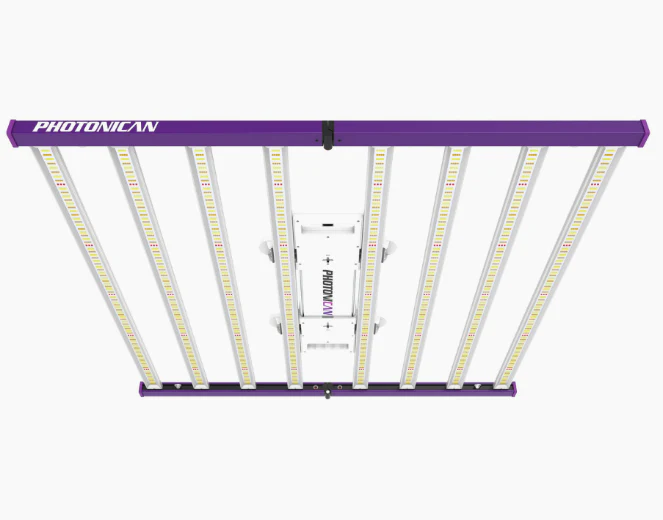
Features:
The Aurora 2000 is a full-spectrum output luminaire that provides consistent energy savings while also delivering an ultra-high red output. The Aurora 2000 is a full spectrum output luminaire that delivers consistent, energy-efficient results. At the same time, it provides ultra-high red output in spectral performance. A 30% increase in red results in better crop quality, higher yields and an increased cycle of the year. Equipped with 8 passively cooled 6063 aerospace-grade aluminium LED strips, the Aurora 2000 provides high-intensity light distribution and uniformity, remarkable PPFD readings compared to other similar luminaires. High PPFD is used in combination with CO2 to maximize plant potential.
GROPLANNER LED GROW LIGHT 640W- GROPLANNER I SERIES
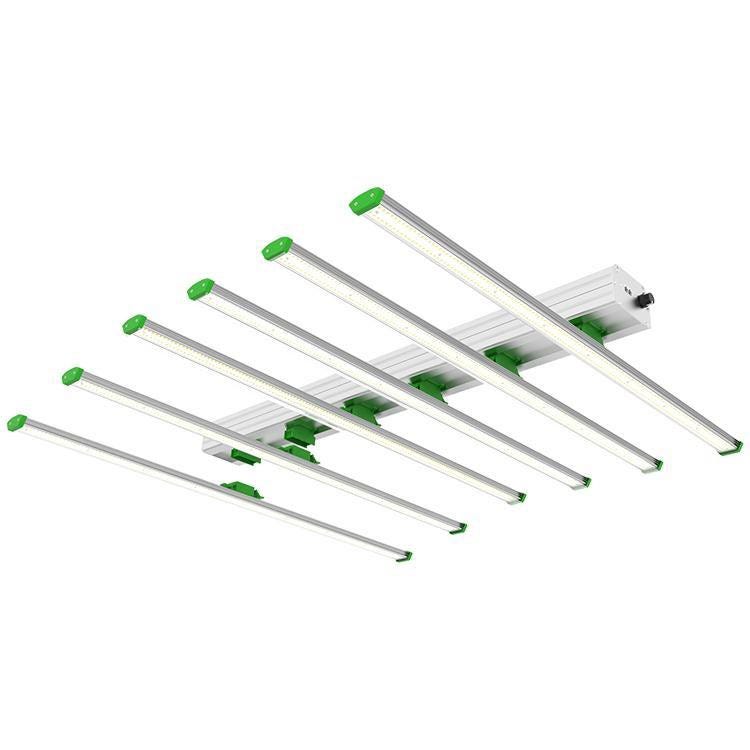
Features:
This GROPLANNER LED grow light has a balanced lighting design, which is enough to cope with complex indoor use environments. The actual power is 640W, and it provides PPF output (1750μmol/s), allowing you to obtain a higher output of 30% to help you achieve maximum quality and Quantity, better than the traditional growth system. It is very suitable for 5'x5' plant coverage and 6x6 reduced coverage, which greatly improves the light coverage. The advanced design effectively expands the light area. At the same time, the lighting is more uniform. With a high energy efficiency of 2.75 umoll/J, it also provides a high-quality and complete natural spectrum from 400nm to 700nm. There is no need to worry about heat dissipation even with high power.
How to choose the right grow light considering the relevant factors?
When choosing grow lights for your hydroponic plants, the specific needs of the plants must be considered.
Some factors you may want to consider include:
The size and type of plants you are growing
The size and type of plants you grow will determine the size and type of grow lights you need. Make sure to choose the right light for the plants you are growing.
The amount of space you have available for growing plants
If you are growing small plants in a limited space, LED grow lights may be sufficient. If you are growing large plants or multiple plants, you may need fluorescent or LED grow lights.
The stage of growth the plant is in (seedling, vegetative, flowering)
It is also important to consider the growth stage of the plant. Seedlings and seedlings require less light than mature plants. Therefore, you may want to choose a grow light with a lower intensity. Also, seedlings require different light than flowering plants. Vegetative plants require different light than seedlings.
The amount of light (intensity and spectrum) that plants need
If you want your plants to be as large and healthy as possible, you need to make sure they get enough light. Grow lights can help with this, but only if they are placed in a location that allows them to reach the plants. The amount of light your plants need will also determine how much space you have to grow them. If you don’t have enough space, you may need to get smaller light or emit shorter wavelengths of light.
Once you have considered all of these factors, you will choose the right to grow light for your hydroponic plants. Plant lights can be an important part of a healthy hydroponic garden, and choosing the right light will help your plants reach their full potential.
Conclusion
There are many factors to consider when looking for the best grow lights, and that’s where we’re here to help point you in the right direction.
They can be a handy solution for growing houseplants, especially if you don’t have as much light where you live, and when light levels are reduced in winter, no matter what.
The first key thing to note is the price. Some grow lights are affordable and therefore a great option for everyone, while others can be a bit pricey, so it’s worth weighing how much you want to spend on some.
Spider Farmer SE3000 300W Dimmable Full Spectrum LED Grow Light VS Grow Light Science PROGROW 320 LED Grow Light
You may already be familiar with LED lights because they are very popular these days and are often used for different purposes. Whether you want indoor lights or outdoor decorative lights, you’ll find plenty of options for using LED lights. If you’re a gardening enthusiast, you might want to add one of the best-reviewed grow lights of 2022 to your collection. Because full-spectrum grow lights are as good as natural light, they are widely used. LED bulbs, like fluorescent lights, produce light that provides much-needed warmth to indoor plants.
There are many types of grow lights on the market, and it can be overwhelming to decide which one is best for your needs. We have listed some popular LED grow lights, including what they do and the benefits they offer.
When to use grow lights
There are three main uses for using grow lights, so if you’re still hesitant, these are the things you need to consider when considering buying a grow light:
seeds germinate
plant development
Seeds germinate
Grow lights are especially useful because climate allows us to grow most crops year-round, the downside is that many of these crops require specific conditions to germinate, such as long summer days.
Using grow lights to replicate summer light levels can help stubborn plants because peppers sprout more successfully indoors before they are planted into the garden.
Plant development
As seedlings develop, they need at least six hours of sunlight a day. Most grow lights are advertised as “full spectrum” grow lights, which can be a little confusing since they’re not technically UV bulbs.
Full spectrum means your grow lights produce light in the visible spectrum, replicating most sunlight. Older grow lights only used blue light, but modern science has proven that plants need a mix of red, blue, and white light to develop at all growth stages.
Spider Farmer SE3000 300W Dimmable Full Spectrum LED Grow Light

Features:
This Spider Farmer LED grow light features uniquely designed 4 LED strips that extend to the edge to provide more even canopy coverage, especially on the outer edges of the growing area. With 896 SAMSUNG LM301B diodes, the SE3000 Led Grow Light consumes 300 watts at 822.82 umol/s, achieving an impressive 2.75 umol/J of PPE, covering a high yield full-cycle growth of 3'x3'. The full spectrum (380–410nm, 660–665nm, 730nm, 3200–4200K, 4800–5000K) is ideal for vegetable flowering to suit every stage of the plant cycle. The dimmer knob is ideal for growers to adjust the light intensity for different growth stages. The SE3000 grow light comes with a detachable driver and long power cord to reduce ambient heat in the grow space for a longer lifespan.
Grow Light Science PROGROW 320 LED Grow Light
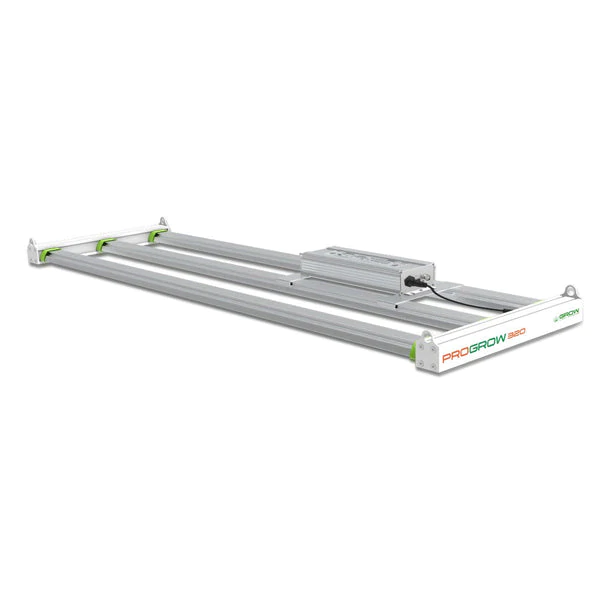
Features:
Grow Light Science Grow 300 320W LED Grow Light is a full spectrum, high performance lighting solution for commercial or home indoor garden or planting operations. The form factor of the Grow 300 allows for expandability and multiple grow room and tent configurations. The incredible light output (PPF), spectral distribution and efficacy of this grow light will give your plants amazing results at an affordable price. PPFD levels of up to 1,500 umols/m2/s will proportionally increase yield as long as other key factors such as CO2, water and nutrients remain in balance. The GROW 300 easily delivers PPFD levels in excess of 1,000 umols/m2/s, either individually or in multi-cell arrays.
What are the key considerations when buying grow lights?
Energy used
Your LED bulbs run for 10–12 hours on a regular basis, which can lead to increased electricity bills.
Read the brand description about the product carefully, as it may help you choose the best option and save you trouble later. Also, always check how many units the total output is.
Plant growth space
Always remember that the space in your home is an important factor to be aware of when buying a light fixture, as the size of the light fixture depends on the space available in your production area.
Assuming if you are planting in a room, first measure the exact size of your room. Then, measure the size of the illuminated area of the lights you are considering for plant production. The size of your room will also determine how many lights are used in that particular area.
Also, you should consider that as a general guideline you only need to use 32 watts of actual power per square foot if you are growing high light plants, but 11–18 watts per square foot for low light plants like lettuce.
Low heat output
This factor is important because lights with low heat output can guarantee that you won’t cause any damage to your houseplants, but it is necessary to keep a small distance between the lights and the plants. In contrast, lamps with high heat output may burn your plants faster.
Flexibility and Ease of Use
Sometimes, you may have some trouble adjusting the lights because it won’t stay level, so you have to prop them up to keep them away from the plants. When you buy the highest quality lights, these are more efficient and easier to use.
Additionally, the tunable nature of wavelength and light intensity is an essential part of choosing the best-LED grow light for your plants.
Conclusion
Having LED grow lights enables you to bring your favourite herbs, flowers and plants indoors. It’s convenient, and you have complete flexibility in what you can grow. With so many different price points of lights, your decision really comes down to personal preference, what you want to grow and where you want to grow. Once you know the type of grow light that is best for your plants and space, you can start growing indoors.
