TotalGrow MH Lumyre 480W LED Grow Light VS HYPHOTONFLUX HPF4000 Full Spectrum Led Grow Lights
Indoor grow lights can help you grow a variety of houseplants throughout the year. These lights mimic the sun’s natural light to give your houseplants or indoor garden the range of colors they need for photosynthesis. There are so many options to choose from, our reviews can help you determine the best grow lights for your plant-growing needs.
What is the power consumption of LED grow lights?
LED grow lights are more energy efficient than traditional grow lights. A single LED light can replace an entire HID system and the savings in energy consumption are enormous.
Generally speaking, LED grow lights consume about 50% of the electricity consumed by HID lights. So if you have a 1000 watt HID light system, you can replace it with a 500 watt LED system and see similar results. Of course, there may be some differences depending on the exact make and model of LED lights you choose. But overall, switching to LED grow lights can save a lot on your electricity bill.
TotalGrow MH Lumyre 480W LED Grow Light
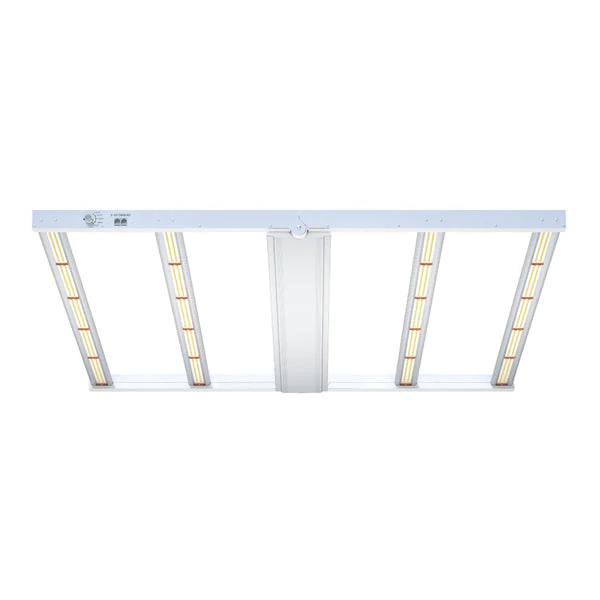
Features:
TotalGrow LED grow lights feature multiple high-intensity light strips in a slim profile and built-in power supply to distribute the ideal light intensity evenly across your growing area to meet your growing goals. Superior, customizable full spectrum supports efficient, high-quality growth of any life stage and crop variety. This plug-and-play solution with direct daisy chaining is easy to implement, has low up-front and ongoing costs, and sustainably produces high-quality crops. The efficacy of this LED grow light is as high as 2.8 μmol/J to meet the light intensity your plants need. Robust, reliable, ideally shaped design for ease of use and excellent uniformity.
HYPHOTONFLUX HPF4000 Full Spectrum Led Grow Lights
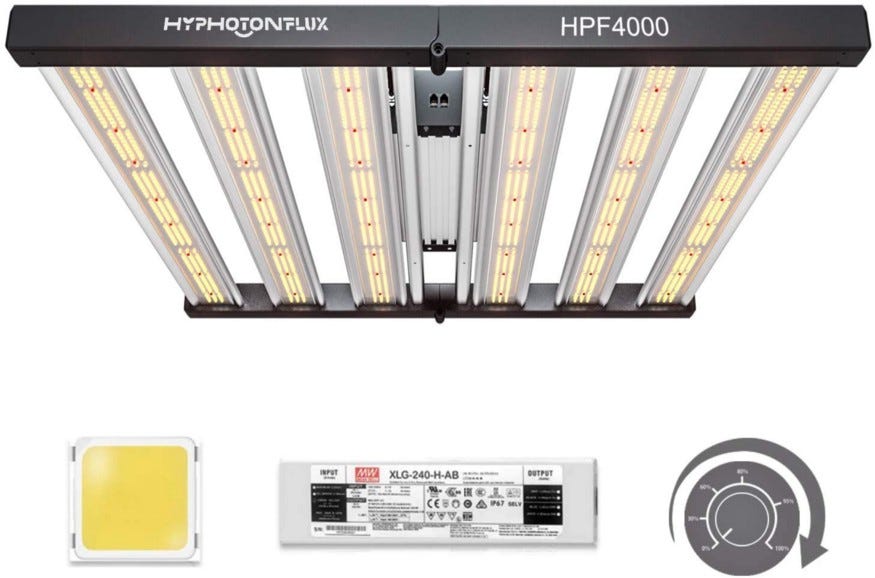
Features:
Hyphotonflux 480w led grow light utilize the latest in high yielding LEDs technology today-lm301b diodes,it is equivalent to 1000w HPS grow light. The led plant grow light have 1224 pcs lm301b leds(3000k+4000k) and 48pcs deep red leds(660nm),provides the plant with the full spectrum from seeding to flowering. Ideal for indoor plants all stages growing, rapid plant response from seed to flower,speeds up flowering time and boost yields. HPF4000 grow lights have a six-level dimming knob to provide ideal light for plants at different stages.Besides, You can connect up to 80 lights through the RJ14 port ,adjust the light intensity and timing with the controller or app (HPF4000 compatible with most brand controllers),especially beneficial for large area of indoor growing and commercial planting
Precautions for purchasing plant growth lights
Spectrum
All visible and invisible light exists in a spectrum measured in nanometers. Visible light falls between 400 and 700 nanometers in the spectrum and is also known as photosynthetically active radiation (PAR). PAR is the wavelength of light that plants can actually use for photosynthesis.
When it comes to grow lights, you’ve probably heard the terms “blue light” and “red light.” These two types of light refer to different parts of the PAR that plants use for specific purposes during photosynthesis. “Blue light” exists in the 400–490 nanometer range and helps support plant growth, while “red light” exists in the 580–700 nanometer range and helps support flowering and fruiting.
Many grow lights on the market today are “full spectrum” lights, meaning they cover the entire PAR spectrum, plus a little extra. However, you’ll also see purpose-built grow lights that also cover the blue or red range, which can help you tailor the light to your specific growing goals if desired.
Light Output
Light output refers to the intensity and intensity of light emitted from a light source, measured in lumens. The higher the lumen rating, the brighter the light. For succulents, grow lights with a lumens per square foot rating between 2300 and 9300 (similar to full daylight) will suffice.
Power and Efficiency
The amount of electricity used by grow lights is measured in watts. To understand the efficiency of your grow lights, you need to know the lumens per watt (light output factor). The higher the number, the more efficient the light is in terms of energy consumption.
Conclusion
There are many factors to consider when choosing LED grow lights. You need to make sure that the LED grow lights emit enough light to stimulate the growth of the particular plants you are growing. With the product reviews and guides above, you should be able to choose the best LED grow light for your growing needs.
ECO Farm ECO NET 680W Samsung 301B Chips LED Grow Light VS Street Light 680w LED Grow Light
Grow lights are quickly becoming an essential part of indoor gardening. They can help you grow plants that would not normally grow in your home. You must first understand how to use LED grow lights for your indoor plants to get the best results.
Can You Use LED Grow Lights In Your Greenhouse?
LEDs, in addition to being used as a supplement to other types of artificial light, can also provide a single light source for greenhouse operations. Before turning to LEDs, you should consider a few things.
Plants must get the right amount of light to thrive. Greenhouse grow lights can help supplement natural light to grow plants year-round. Slow growth, whitish leaves and stems, yellowing leaves and foliage, and defoliation are some of the signs that your plants aren’t getting enough sun. The amount of light received by the plants is determined with the aid of a light sensor. Incandescent bulbs have a lower upfront cost, but are also more prone to failure. Fluorescent bulbs are more efficient and last about 10,000 hours after installation. High intensity discharge or HID lamps are also popular for greenhouse lighting.
However, too much light can cause problems. If used incorrectly, LED lights emit intense light that can irritate plants, causing them to overheat or even burn. Plants have to grow in a variety of environments and have to balance light and heat because light causes them to grow differently. If you’re not sure where to start, contact a professional.
ECO Farm ECO NET 680W Samsung 301B Chips LED Grow Light
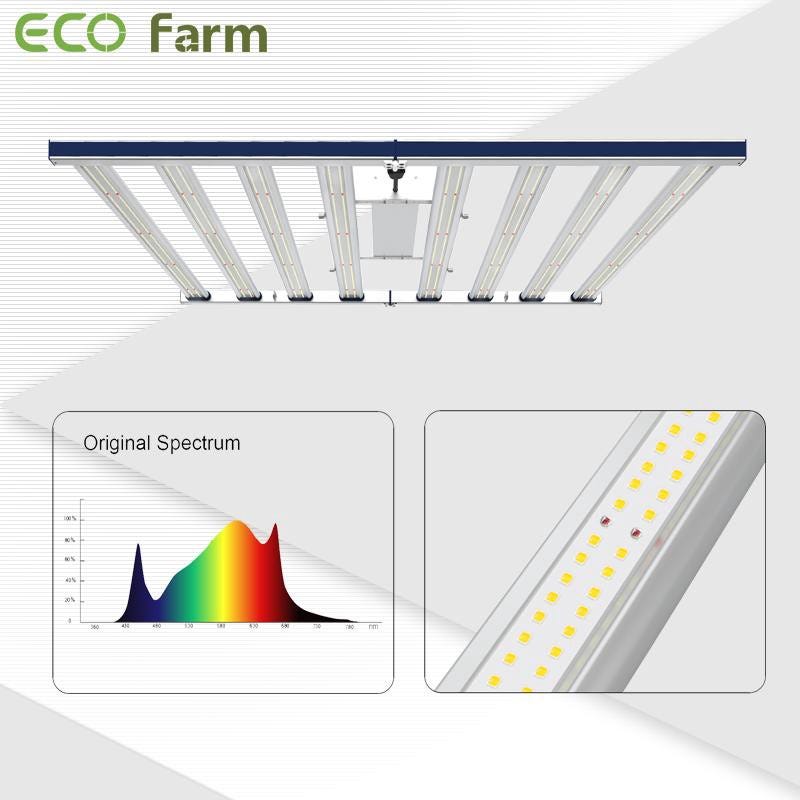
Features:
This ECO Farm LED grow light used a foldable design, can be easy to adjust the angle between the lamp and the plant, and according to your plant stage to adjust the illumination area. which is more effective to promote plants growth. Designed for home growers, fans get noisy when long time use, but this LED light board use aluminium to make it cool down instead use fans, bringing you a FANLESS QUIET grow experience. High Safety performance driver and Pure Aluminum light bars for better heat disappear and stay cool, never burn your plants like other low quality led grow lights.
Street Light 680w LED Grow Light
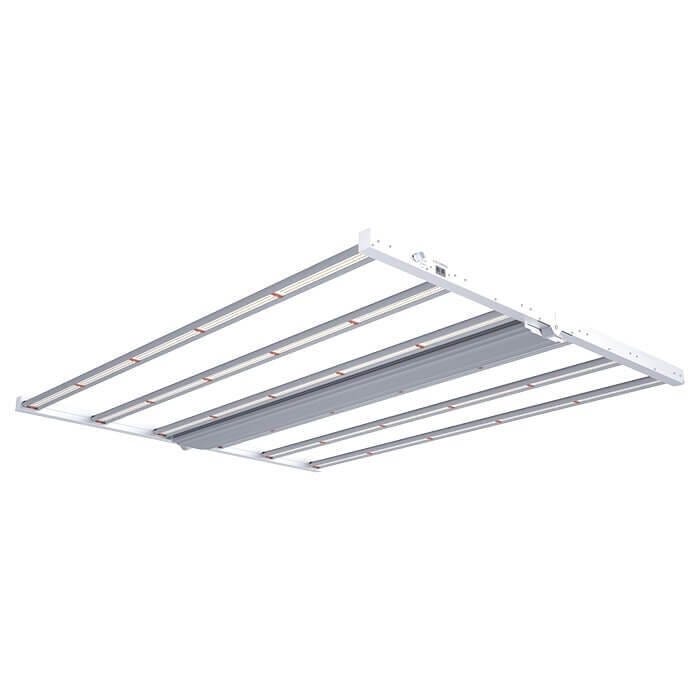
Features:
Designed to deliver an astonishing 2.7µmol/J and 1750µmol/s PPF, Street Light LED grow light uses premium Osram and Samsung LED chips to deliver powerful full-spectrum light across six LED strips. Designed for use from the vegetative plant stage to the harvest stage, the Street Light SL-680 offers growers great convenience with an easy-to-use plug-and-play setup that eliminates the need to switch lighting or move plants mid-growing. With a single LED covering the full spectrum 3000K 5000K 660nm 760nm IR, our grow lights are perfect for all growth stages. In addition, it works and supports all growth stages such as bloom and tall growth. This grow light has a dimming knob that powers the unit via an ON/OFF switch and dims it from 0–100. This customization makes LED strip lights ideal for different plant stages and growing environments.
600W Grow Light Buying Guide
1. Budget
You can buy 600 watt LED grow lights on a budget, you may think it is a bit expensive, but no, you are getting grow lights at an affordable price. Inexpensive 600-watt LED grow lights can do similar things, and good quality lights don’t have to be expensive. You can get a mid-range product that’s affordable but works well. Check your requirements, then check the prices.
2. Quality
A lamp should install all qualitative items. For example, you’re using a lamp and it’s facing a short circuit, that’s not acceptable, right? Now, imagine your lights are on but not doing the job they’re supposed to be, another unacceptable thing to do! You should only plan to invest once. Therefore, you must pay attention to the quality before buying. In the end, it’s you who uses it.
3. Yield
Make sure the light provides high yield. Yield is the same thing that nourishes and nourishes plants like sunlight. You have to be careful because Lumen/PAR and PPFD will give higher yields. Other than that, confirm that these outputs are actual. Check with the seller that the light has all of these outputs. Once you buy it, it’s the light that does the work for your plants.
4. Wattage
Once you purchase grow lights, the wattage will determine your electricity bill. Check how many watts the lamp provides per 600 watts. Check the wattage consumption of the lights. Ideally it has to be a maximum of 100 watts per 600 watts. Still have to check with the seller. Therefore, it is very important to check the required wattage.
Conclusion
Gardening can be a very rewarding activity, whether you choose to do it indoors or out. If you prefer the former, you’ll need to invest in the right equipment, which means good indoor lighting. Make sure you understand all the important performance factors involved in choosing the best grow lights for your indoor garden.
ECO Farm UI2 690W Samsung 301B Chips LED Grow Light VS Spectrum King Phoenix 680W LED Grow Light
LED grow lights have become more and more popular in recent years. Although growers find the initial investment higher than HPS, LED grow lights are more efficient.
LED grow lights are more efficient because they have a wider spectrum, use less energy to produce the same amount of light, provide better uniformity and coverage, last longer, cost less electricity, and emit less heat 40%, and more importantly provide higher yields and compare quality yields.
How do LED grow lights work?
Indoor plants do not have access to direct sunlight. Therefore, they require an artificial light source, which is where LED grow lights come in. LED grow lights are special devices powered by LED chips and electricity to produce light particles or photons. These light particles are made up of light energy of visible and invisible wavelengths, which are equivalent to the photons from the sun.
LED grow lights come in different color variations depending on the intended use. But a full spectrum LED grow light is one that produces light comprising of all the four wavebands — blue light (400–500 nm range), red light (600–700 nm range), green light (500–600 nm range), and ultraviolet (UV) light (280–400 nm range). Full spectrum grow lights are better stimulators of growth in plants.
How are LED grow lights rated?
Most of the growing community adopts the “watt per square feet (or square meter)” principle when rating grow lights. The watt/sq ft principle is often a reasonable means to assess the ability of a bub to light up a grow area. This principle is premised on Photosynthetic Photon Efficacy (PPE), which shows how efficiently a lamp or bulb converts electricity (watts) into light (photons). LED chips generally have higher PPEs, which is why they require fewer watts to emit higher amounts of light compared to other types of lamps or bulbs with lower PPEs.
ECO Farm UI2 690W Samsung 301B Chips LED Grow Light
Features:
This ECO Farm LED grow light is designed with 8 strips for a more even and complete canopy coverage. Equipped with high efficiency Samsung LM301B diode with extremely low thermal resistance. The plant light is flicker-free and dim, with a lifespan of 50,000 hours. The LED grow light consumes 690 watts at 2240 µmol/s and achieves a satisfactory PPE of 2.8 µmol/J covering high yield full cycle growth of 4'x4'. Each full spectrum LED grow light uses custom 2244 Samsung LM301B diodes. The abundance of wavelength types is consistent with the spectral range of plant photosynthesis. It can concentrate specific wavelengths of light to illuminate crops evenly, controlling plant height and plant nutrients.
Spectrum King Phoenix 680W LED Grow Light
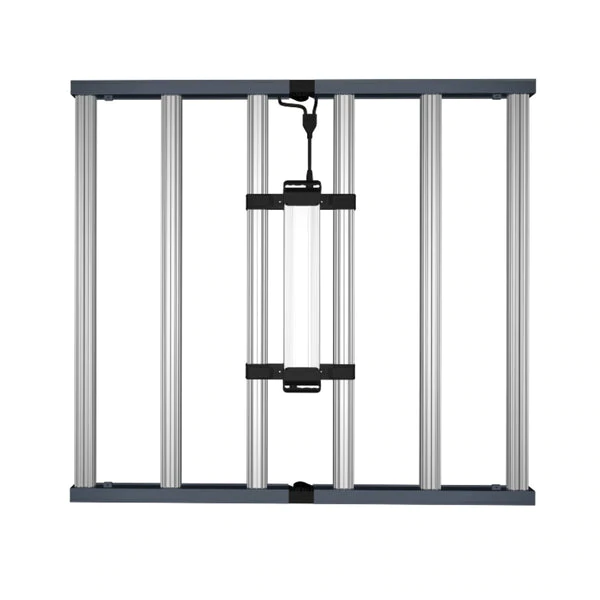
Features:
The Spectrum King LED grow light is the new LED standard for a 1:1 1000W DE HPS replacement that consumes 36% less power while offering the highest reliability in the industry. SK Cryo-Therm cooling technology enables an ultra-thin profile that maximizes airflow and minimizes microclimates. This grow light is optimized for single or multi-level planting close to the canopy. Many growers are switching from heat-generating HPS lights to ultra-high performance LED strip lights. SonoFarm LED grow lights utilize the latest technologies on the market — from intensive research for optimum performance, to customizing the spectrum for the highest possible yield.
How to Choose the Right LED Grow Lights
Because plants can’t photosynthesize in regions with long winters, they can have a hard time growing during cold seasons. You may also opt for LED growing lights if you live in an area where your species doesn’t thrive naturally. In a nutshell, you can always use LED grow lights if you want to grow plants but don’t have enough natural light. Here are some tips for choosing the right LED grow lights for your crops:
Power
Manufacturers employ a number of measures to evaluate wattage and the amount of light they generate, making it difficult to compare LED greenhouse lighting. However, the standard metric is lumens, used to measure the brightness. To flourish, seedlings require approximately 2,000 lumens per square foot, while blooming plants may require up to 10,000 lumens.
While lumens measure visible light, biologists frequently employ photosynthetic photon flux (PPF) or photosynthetic photon flux density (PPFD) to quantify light intensity in terms of the light plants absorb. The quantity of photons of light released per second is measured in mol/second, the unit of measurement for PPF. The density of light dispersed per square meter per second is measured in mol/m2/s, while the PPFD is measured in mol/m2/s. The more efficient the light is, the greater the PPF and PPFD.
Look for a light’s “real power draw” or “actual power consumption” to determine how much electricity it consumes. This is measured in watts and provides you with an idea of how powerful the light is. However, keep in mind that because LEDs are meant to be energy efficient, bulb wattage isn’t always a useful metric.
Light Spectrum
All of the colors in the electromagnetic spectrum are present in natural sunlight. However, some LEDs can only replicate a limited range of colors, whereas white full spectrum LED grow lights can generate all hues required at every step of the growth cycle.
Here are the most important color wavelengths to keep in mind when selecting your growing lights:
Plants need blue light to grow in the early stages of their lifecycle. In their vegetative cycle, it’s the first hue plants can absorb.
Purple light is also employed in the vegetative state, although it’s less effective than blue light for photosynthesis.
Red light is beneficial in the last stages of growth and is required for buds to bloom.
All of the hues of the spectrum are represented by white light. It can be useful at any developmental stage when used alone.
Heat
When using industrial grow lights, one of the hazards is the heat generated by bulbs can harm your plants and disrupt their cycle. This is why LED grow lights are the preferred indoor lamp, as they generate extremely little heat compared to the quantity of light they produce. However, because they generate some heat, many come with built-in cooling systems to maintain adequate temperature management.
Connectivity
Most LED grow lights are designed to connect with other units in order to cover greater areas, a process known as “daisy chain connection.” This feature allows light systems to be interconnected, linked to one another from a single outlet, reducing the number of cables necessary for setup.
Conclusion
Indoor gardening is a great way to get fresh produce without the worry of growing it outdoors.
It takes a lot of effort to make these indoor gardens thrive: proper ventilation, constant temperature levels between day and night, and enough light for the photosynthetic reactions that create food from minerals, water, and air. Grow lights are essential for indoor gardens because they provide the light that plants need to grow.
Grow lights can be tricky to use, but following these simple tips will help you get the most out of your grow lights and increase your yields. With a little patience and care, you’ll have fresh fruits and vegetables in no time.
ECO Farm ECOZ PRO 1000W Samsung 301H Chips LED Grow Light VS GrowPros HM960 LED Grow Light
Full-spectrum LED grow lights are one of the most advanced types of grow lights.
These lights produce the highest PAR of any light source.
LED grow lights usually contain heat sinks and built-in fans. They also work well in wet environments because they have a constant DC current.
If you’ve been looking for the perfect way to keep succulents and other houseplants alive through winter, consider growing them under grow lights.
These grow lights plug into an electrical outlet and can be adjusted to suit the needs of your plants.
Grow lights are especially useful when seeds are germinating.
A grow light is basically a bright light designed to give your plants a specific amount of light.
It’s important to note that these lights can be very powerful, but may emit some harmful light.
So you should always choose the correct one.
How many wattage LED grow lights do I need?
A minimum of 32 watts of actual power is required per square foot of growing space.
The actual watts are the power the grow light draws from the wall outlet.
Most manufacturers don’t advertise the total wattage of the LED chips in their product names, so be careful not to confuse the LED chips.
If you plan to grow 4 plants, you will need a lamp with a practical power of at least 128 watts to match the corresponding area required.
Note: In addition to actual wattage, it is also important to know the PAR value of your light output, as some LED lights may have high actual wattage and low PAR output due to lens angle, efficiency, etc. — so keep an eye out for high PAR output!
ECO Farm ECOZ PRO 1000W Samsung 301H Chips LED Grow Light
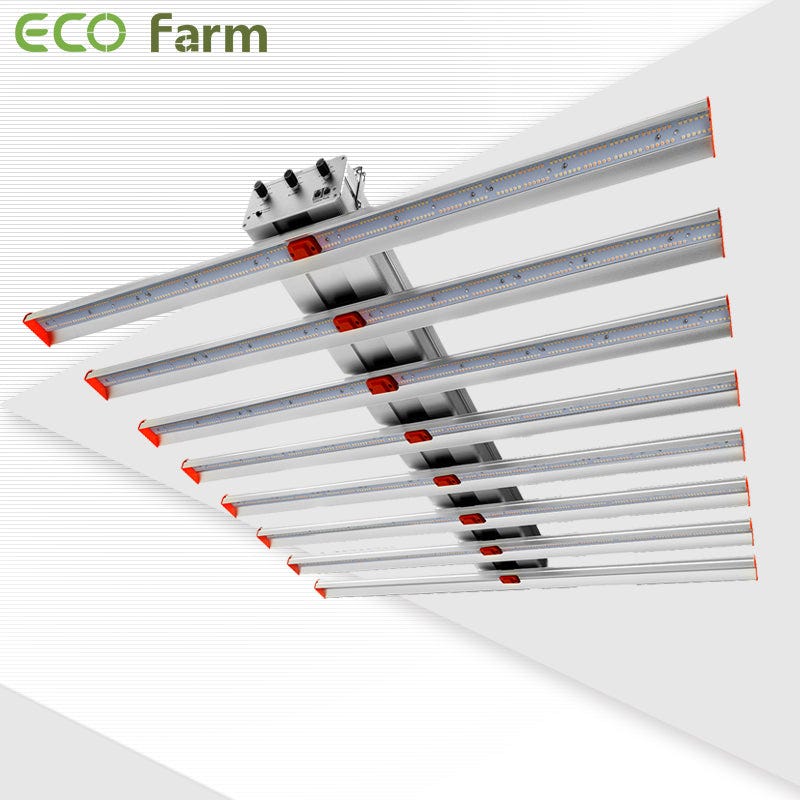
Features:
This ECO Farm LED Grow Light adopts 3480 diodes, high energy efficiency driver, a photon efficiency of 2.9 umol/J, and actual power of 1000W, providing a sufficient light source for plant growth. It’s perfect for a 7 x 7-foot plant area or a 6 x 6-foot flowering area. Composed of 660nm red light, IR, 3000K and 5000K white spectrum, this LED grow light provides everything plants need in natural sunlight at all stages from vegetable to flowering. It has a daisy chain feature that allows you to connect up to 100 lights. You only need to operate one controller (not included) to dim multiple lights at the same time, which is a great convenience for large commercial growers. The 8-bar light design and the aluminium on the back contribute to better airflow and good heat dissipation while ensuring the long life of the lights. Quiet fanless design.
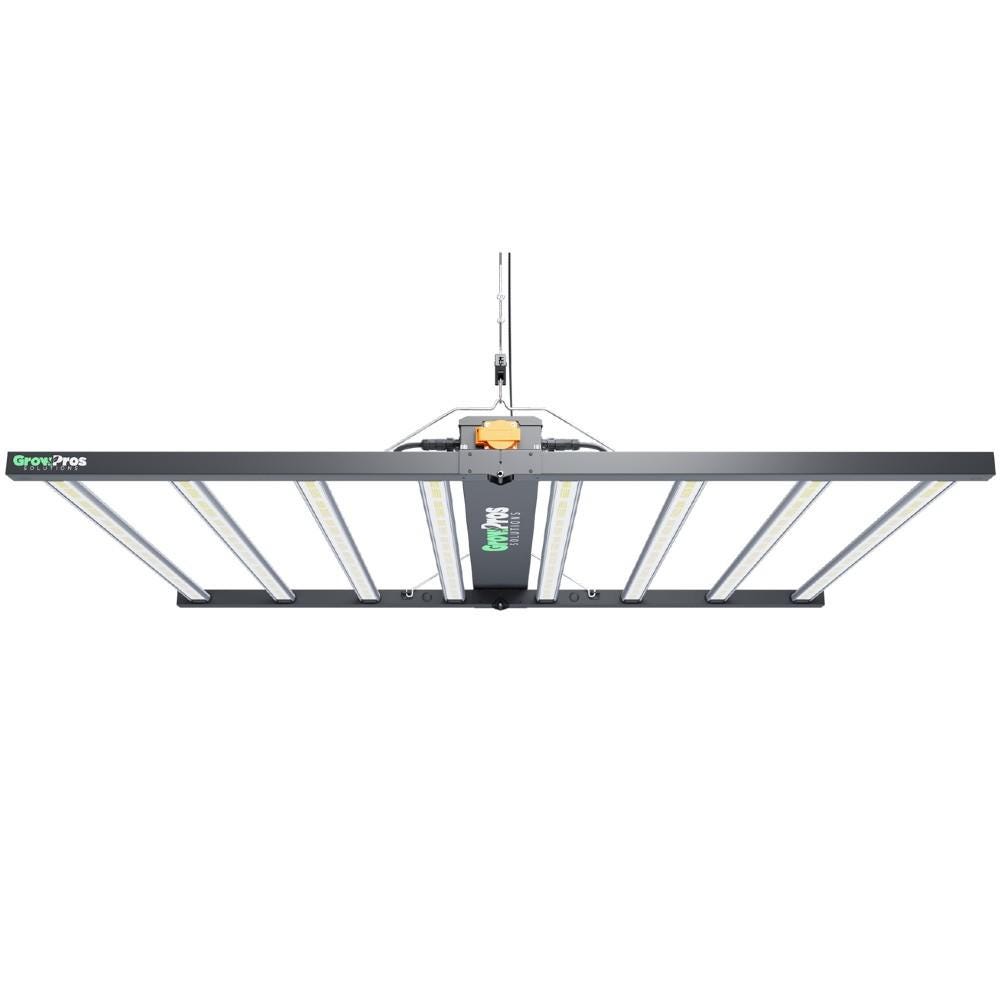
Features:
The GrowPros LED grow light, with a longer lifespan than traditional grow light sources, produces healthier, happier plants. The grow light yields 1.8 grams of crop per watt (dry). High PPFD and PAR indicate high efficiency, or light output per unit of power consumption. Compared to traditional HID and HPS light sources, the HM960 saves about 50% energy, and you can save a lot of energy over time. Almost 100% of energy consumption is converted into light energy for growth. The HM960 lighting system is a complete pre-assembled LED grow light that reduces installation time with a variety of wiring techniques and connectors. This grow light systems run cooler with passive cooling thermal management, meaning your lighting system will last longer while maintaining high light output levels.
What to Pay Attention to When Choosing LED Grow Lights
Spectrum
In general, plants absorb and utilize light in the blue and red spectrum the most during their various stages of growth. Light in the blue and red spectrum is where most photosynthesis occurs, making full-spectrum grow lights very efficient. Some growers believe that white LED grow lights are the best because it is the closest to natural sunlight. However, white LEDs contain light in the yellow and green spectrum that plants cannot utilize and is simply wasted, reducing the efficiency of the grow light and unnecessarily increasing electricity costs.
PAR
Simply put, Photosynthetically Active Radiation, or “PAR,” is the light emitted by a bulb or fixture that is actually available to plants. PAR values for LED grow lights vary from brand to brand, but a higher PAR value is not necessarily better because if your plants aren’t using it, the energy needed to produce it is wasted.
You’ll notice on the manufacturer’s PAR chart that the PAR is higher in the center and decreases as you move to the edges of the light coverage area. This means that plants that are directly in the light will get more PAR than those that are farther from the center. The more even the PAR distribution from the center to the edge the better, so that the plant gets a more even distribution of valuable PAR. Not only is this better for your plants, but it makes the light more efficient because the energy is not concentrated in the center, but distributed more evenly.
Watts
When it comes to wattage, it’s easy to make the mistake of thinking bigger is better, but bigger isn’t always better. While light spectrum and PAR play an equal or greater role in plant health and yield, wattage is an important consideration when it comes to cost and preventing damage to plants such as leaf burn and bleaching.
There’s a common rule of thumb that says you need 30–40 watts per square foot of plant coverage (not the growing space itself, but the current or projected size of the plant canopy) for flowering and light-loving plants, and 10- 20 watts per square foot. These rules of thumb can be used as a starting point, but keep in mind that these rules do not take into account plant count, plant height, density, and other factors, so remember to weigh things like PAR and PPFD more in your buying decisions.
Energy Consumption
Look for power draw not power output. If you use less power to produce the same amount of light, you’ll spend less on your electricity bills, and LED lights typically pay for themselves within 2–3 years.
Durability
Make sure that any LED grow light you choose is well-made with heavy-duty materials. Sturdy, durable construction is very important to the durability of the lights, especially the wiring, which not only can cause a fire, but can also generate unnecessary heat and make it more difficult to control the grow space environment.
Temperature
One of the many advantages LED grow lights have over other types is their cooler operating temperature. LEDs don’t completely eliminate the need for additional cooling and ventilation, and they generate far less extraneous heat than compatible HID lights, which can generate temperatures in excess of 95°F, which is harmful to many plant species. These extra cooling and ventilation systems required by HIDs and other traditional lighting systems can add to your power bills and take up valuable space in the grow area.
Ventilation
Since LEDs operate at a lower operating temperature, they do not require the same ventilation as equivalent HIDs to maintain acceptable temperatures in your grow space. Cooler operating temperatures mean less hot air needs to be moved, which means lower operating costs, equipment needs and space requirements.
Cool Down
While LED grow lights run cooler than HID and HPS lights, they still require an elaborate cooling system to dissipate the small amount of heat they generate. A well-designed LED light should include an effective heat sink to dissipate the heat generated by the light away from the light fixture and plants.
Lifespan
Older style HID bulbs can typically last up to 20,000 hours before needing to be replaced, but since their peak performance is typically in the first 3,000–5,000 hours, many growers replace bulbs sooner as plants grow in Older cases will slow down hidden lights significantly. In contrast to LED grow lights, which typically have a lifetime in the 50,000 hour range, more than 5 times longer than HIDs.
Space
Since LEDs are typically smaller and thinner, often have only one cable, and don’t require additional fans or ventilation ductwork, they require far less space in your grow area. This allows more room to move around the garden to monitor and care for your plants.
Conclusion
Whether you’re a houseplant enthusiast or someone with a passion for growing your own food, indoor grow lights are a valuable tool. No matter where you live, high-quality grow lights can keep indoor plants growing year-round. Most importantly, they’ll help you grow healthier, happiest plants than ever before.
I hope this article has given you a better idea of which grow lights are best for your indoor gardening needs. Happy gardening!
ECO Farm ECO NET 1000W Samsung 301B Chips LED Grow Light VS Mars Hydro FC-E1000 Bridgelux 1000W LED Grow Light
There are many advantages to growing indoors, and more and more people tend to grow fruits or vegetables indoors. However, many beginners overlook the importance of light for plant growth. Plants use light to make their own food through photosynthesis for better growth. For indoor plants, plant growth lights are specially used to replace natural sunlight, allowing plants to perform photosynthesis and grow well, so it is necessary to add plant growth lights to seedlings. Here’s a helpful beginner’s guide to indoor grow lights to help you choose the right light quickly. Read on to find out.
How much area can a 1000 watt LED grow light cover?
In general, the answer is still the same: A 1,000-watt LED grow light covers an area of about 5 by 5 feet, or 25 square feet.
You may see people insisting that it only covers 4 x 4 feet. They say a 4 x 4 foot pallet. If you fill the tray with plants, the plants will grow outward past the border of the tray and into the 5 x 5 area.
ECO Farm ECO NET 1000W Samsung 301B Chips LED Grow Light
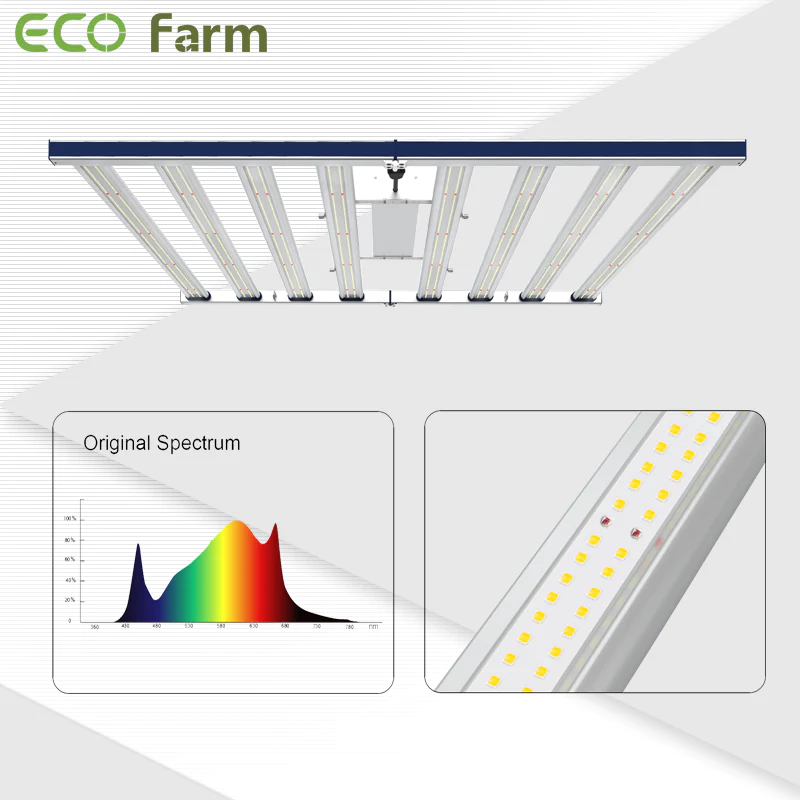
Features:
This ECO Farm LED grow light’s cover the full-color spectrum 3000K 5000K 660nm our grow lights are ideal for all growth stages. Perfect for indoor, greenhouse planting, personal and commercial growth. This grow light is designed for the full plant life cycle. The light intensity can be adjusted by the knob. The sun-like light is best for indoor hydroponics and soil cultivation, such as potatoes, peppers, tomatoes, etc. The SMD LEDs used in this LED grow light are professionally customized and produced with the latest technology. Higher light intensity, lower speed of light decay, and higher PAR values than ordinary lamp beads. It provides 2.7μmol/J high efficacy output plant light. Maximize yield and optimal quality. Saving up to 50% energy and 30% cooler than other grow lamps. The latest aluminium radiator has a special surface treatment that doubles the heat dissipation area. IP65 Waterproof. High power, low heat, and low failure rate grow lamp.
Mars Hydro FC-E1000 Bridgelux 1000W LED Grow Light
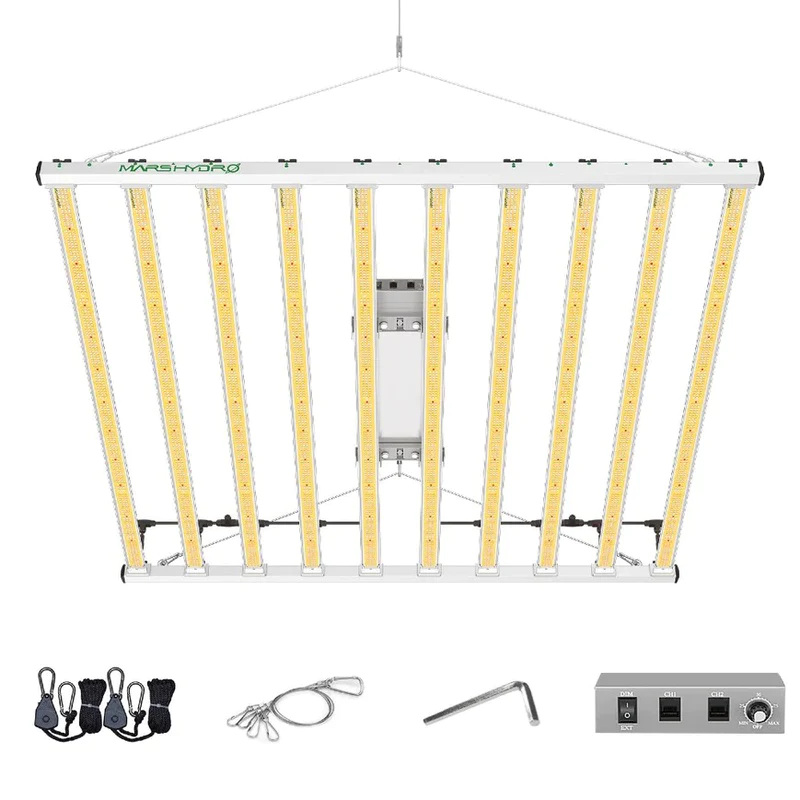
Features:
The Mars Hydro LED Grow Light has a full spectrum for full cycle plant growth. FC-E1000W is specially designed for high PPFD culture (such as high concentration CO2 growth). It is by far the most powerful grow light with a high PPF of 2,766 umol/s and an average PPFD of over 1,300 umol/m2/s. The FC-E1000W is slightly different from other FC-E LEDs because of its scalable flexibility, allowing for customization and configuration. Typically, 10 light bars are arranged on 2 support bars to provide an unusually high amount of power for an area of 4x4 feet.
How To Choose Led Grow Light
If you have a desire to grow plants but live in an area where natural light isn’t sufficient, you can opt to use LED grow lights. In some areas where there could be long winters, plants have difficulty growing because they can’t photosynthesize. Using LED grow lights is the next best thing, so if you plan to buy some, here are some tips for you:
Determine the Plants You Are Growing
Before buying indoor grow lights, you must know what you’ll use them for. Since their primary purpose is to provide the light that plants can use to photosynthesize, you need to know the kinds of plants you’ll be growing. You won’t be using it to provide bright lights to your home or anywhere else.
When you already know which plants you want to grow, do some research. Find out what kind of conditions they thrive in so you can provide their needs. LED grow lights can have different features that affect plant life, and different plants also react differently to various conditions.
Know the Surface Area
If you plan to grow plants inside your home, then you may not need plenty of LED grow lights. However, in the case of large greenhouses, you’ll need to have several units. You need to know the surface area so you can calculate how much light you should provide.
If the surface area is extensive, then consider getting several units so each plant can receive plenty of light. The ones directly under the lights won’t have problems photosynthesizing because they get sufficient light. However, those farther away from the single light may have difficulty growing healthy.
Find Durable LEDs
LED grow lights are a cutting-edge solution for today’s indoor plant growing, especially for biology greenhouses. So, when buying LED grow lights, you need to consider their durability. The construction should be of high quality. If not, then you’d just be wasting your hard-earned money.
Aside from price worthiness, you need to find units that don’t flicker or produce too much heat. For plants to thrive, they need sufficient light, so if your light keeps going on and off, then the plant won’t receive as much light as it needs. Excessive heat can also damage not just the unit but also the plant. Poor quality construction can cause overheating.
Consider the PAR
PAR is the light that is beneficial to the plants. It is the alternative to sunlight that plants use so they can photosynthesize. LED grow lights can have different PAR values depending on the manufacturer. With that said, a higher PAR value does not necessarily mean the bulb is better.
The PAR should be evenly distributed among the plants, which is the reason why you need to know the surface area of your garden because those that are directly under the light will receive more PAR while those further away won’t. The best LED grow lights you should consider are those that can evenly distribute PAR.
Ensure It Has a Proper Cooling System
The LED grow light can overheat, especially if you use it for at least 15 hours a day for sufficient light for the plants. As mentioned, excessive heat can be harmful to your plants and the unit itself. So, your LED grow lights should have an efficient cooling system.
The heat in LED bulbs happens at the back, so that area should have a heat sink. It moves the heat away, so it doesn’t overheat the units or the plants.
Look for Lights that Offer Programmability
Choosing what LED grow light is difficult since many different brands manufacture a wide range of variants. Each of the products will have various features that may or may not be beneficial to different users.
The best kind you may find are those that offer programmability. Programmable LED grow lights are efficient because you can adjust them according to what you need. You can set schedules of when the light should turn on and off, so you don’t have to do it manually. Some may even allow you to adjust the intensity of the light as well as the spectrum so it would be suitable for the kinds of plants you’re growing.
Don’t be Cheap
LED grow lights don’t come cheap. Regular LED bulbs for home lighting use are not as cheap as incandescent or fluorescent bulbs, so for LED grow lights that provide a life for plants, you can expect that these would cost a lot.
While you may find cheaper variants of LED grow lights, consider if it’s really worth it. Sometimes, cheap doesn’t always save money because of poor quality, which may even make you spend more on repairs or replacements. So, always choose the one that gives the best value.
Conclusion
LED grow lights can be a big deal, so it’s crucial to take the time to choose the lights that best suit you and your growing needs. We hope our buying guides and curated lists have given you the foundation you need to make the best decision possible — and that you’ve found a pair you’d like to learn more about.
ECO Farm 120W LM301B/LM301H Classic Quantum Board VS Viparspectra Pro Series P1500
As Led technology has exploded over the past year, it has created a market for powerful yet affordable LED grow lights. This is great news for beginners, as it has never been cheaper to start growing indoors. For a Led Grow Light under $200, you can start growing one, two, or even three plants.
What are LED lights?
LED stands for Light-emitting Diode.
LED light is a solid-state light with a semiconductor chip called an LED die.
The chip turns electrical current into photons by electroluminescence.
A LED light is configured as a single-die emitter mounted over a circuit board or multiple dies mounted over a circuit board called chip-on-board (COB) directly.
Currently, LED lights produce wavelengths that give a natural light effect.
You can adjust them to produce ideal wavelengths for different plants with different needs.
LED lights also give an extra cooling system to increase their ability.
ECO Farm 120W LM301B/LM301H Classic Quantum Board
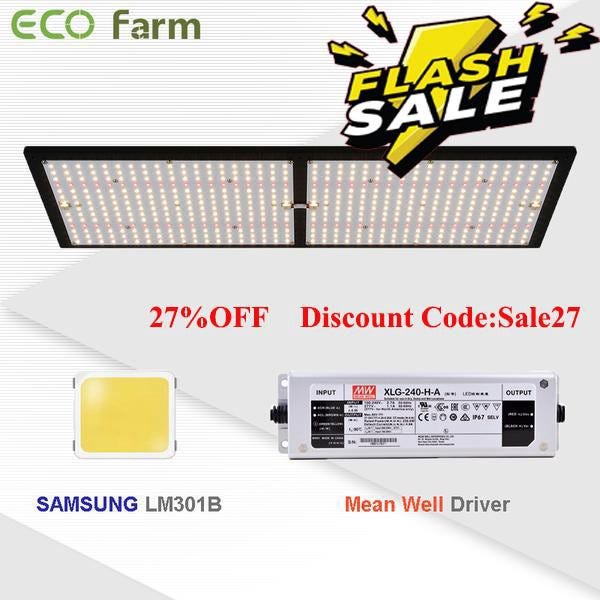
Features:
This ECO Farm LED grow light uses full-spectrum white light and 660nm red light and 730nm far-red light and 395nm ultraviolet light to promote seed germination and improve the health of indoor plants. Suitable for all growth stages of indoor plants, herbs, vegetables, and flowers. This LED plant growth light panel consumes only 100 watts of energy, providing lower operating costs for indoor gardening and hydroponics. Full-spectrum LEDs also have a long life span, over 50,000 hours, they generate less heat and will not dry out your plants. High-quality components and zero fan noise make our plant grow lights very suitable for indoor gardening, planting tents, planting houses, vertical agriculture, and hydroponics. It is very ideal for a 2 x 2-foot plant area. And it is dimmable, so as to obtain the ability of higher light intensity from vegetative growth to flowering. It is designed for individuals and commercial indoor growers seeking higher-quality products.
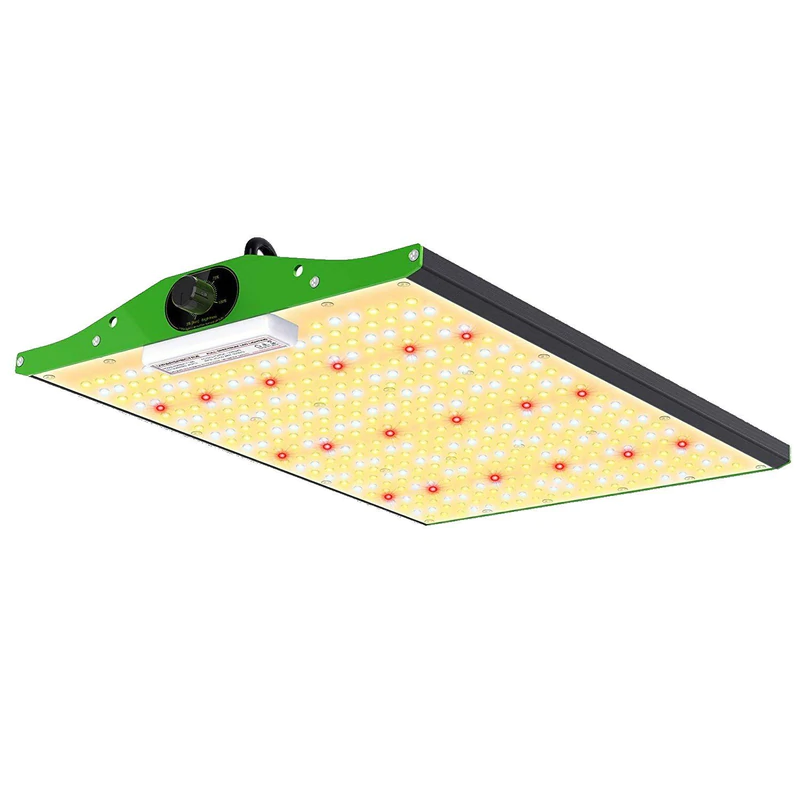
Features:
The VIPARSPECTRA LED Grow Light uses the latest SMD LED technology to increase efficiency and longevity while increasing light penetration. An additional dimming knob controls the brightness level of the entire light from 5%-100% for the flexibility to achieve perfect growing performance. This lamp can replace a 400W HPS/MH lamp while only consuming 150W. The spectrum includes 660nm red and 730nm IR, and 3000K and 5000K white. The P1500 provides excellent full-spectrum lighting that is perfectly suitable for all factory stages. The light also features a reliable UL listed waterproof driver. No internal fan means zero noise when operating the lighting system. The P1500 has a built-in aluminum heatsink, which is critical for heat dissipation and ensures a long luminaire life.
What to look for when buying LED grow lights?
You need to consider the following features when you are considering a purchase for growing your favorite plants, indoors.
Wattage
You need to consider the size of the grow room and the plants that are inside to determine the right wattage of the light strips to buy. For a small grow room with only one or a few plants, you will already be good with a light that has a minimal wattage. If the grow tent is large, you need a more powerful light or use several light strips.
Light spectrum
The light spectrum is the wavelength of light that the plant needs at different stages of growth. The light spectrum needed to grow indoor plants varies for different growth stages. Usually, plant needs blue wavelength during germination and vegetative stages and red at flowering stage The best Light Spectrum for growing plants differs during different stages of growth in plants and what they need. The indoor plants, like all other plants, rely on the light spectrum for signs about their growth. Blue light is particularly useful during vegetative growth, while the red light is particularly useful during the flowering stage. For the best results, you will also want to supplement these with the other colors on the visible light spectrum. Similarly, all other plants use the light of different wavelengths during different growth stages but generally, blue light is important for initial plant growth and red for flowering and bud formation.
Amount of light
Indoor plants are adaptable to blue and red wavelengths for germination, vegetative growth, flowering, and bud formation. So, select a light that delivers the entire range of the light spectrum that your plants need. Even if you are not growing plants, it is necessary to select a full spectrum light for your grow room that exhibits the following wavelengths range.
Ultra Violet (380–410 Nanometer), Blue (1st Spectrum 440–450 and 2nd Spectrum 450–460 Nanometer), Orange (605–610 Nanometer), Red (1st Spectrum 620–630 and 2nd Spectrum 655–660 Nanometer), Far Red (730 Nanometer).
Wattage per square foot and coverage area
Your grow lights are supposed to be operative most of the growing time probably 12–14 hours if you are growing plants. So, it is import to know the wattage and the daily light consumption your selected lights will consume. On the other hand, your selection must be based on future gardening programs keeping in mind that these selected lights would go a long time with you. Your selection must be based on the type of plants and the area they might cover during their growth. Large spaces need more lights while growing 1 or 2 plants indoor should limit you buy accordingly.
Low Heat Emission
High heat omission may be of substantial damage to your lovely plants due to burning issues. Choose only those light that is durable and protect your plants from the heat burns. The lights remain close to the plant’s foliage whereas high heat omission lights are prone to burn plants when kept lightening for several hours during a day. So, make a careful choice by selecting a light that omits a balanced heat.
Quality of materials
The quality of any material is judged only after you use it. There might be several products with different capacities and prices but you may not aware of the quality. Go and check the brand repute, check existing users’ reviews and check the portfolio of the company for their business history. Make purchases after you are fully satisfied with the product and services by the supplier.
Energy Savings
Your grow lights are supposed to be operative most of the growing time probably 12–14 hours if you are growing plants. So, it is import to know the wattage and the daily light consumption your selected lights will consume. Go the energy-saving options that will not increase your cost of production for the particular plants especially if you are a hobbyist and not supposed to grow commercially.
Lifespan
LED lights are supposed to operative for the years under normal conditions in your grow room. Check for the maximum viable guarantee that consists of years with the replacement options. Don’t compromise on quality for cheap purchase as it would harm you in the long run.
Easy to use
Be sure that the product you are going to purchase is easy to handle, easy to install and operate.
Conclusion
With technology advancing every day, caring for your plants has never been easier, which is why we must take advantage of these benefits and buy only the best for our plants. That means, get one of these amazing grow lights on our list.
ECO Farm ECO D700 700W Samsung LM281B Chip LED Grow Light VS Spectrum King Phoenix 680W LED Grow Light
Agriculture has grown rapidly over the years, and greenhouses have quickly become a popular trend in the industry. The need to grow plants in this way has led to the creation of outstanding grow light innovations to meet the basic growing requirements of plants.
Greenhouse LED Grow Lights are one such innovation that will undoubtedly help improve plant development and shorten the growth cycle of plants in the greenhouse.
This article will help you choose the best grow lights for your greenhouse and show you what factors you need to take to improve the growth of your plants.
Are LEDs Really the Best Grow Lights for Small Greenhouses?
LED grow lights haven’t been around for long, but they’ve made a lasting impression in the greenhouse community. When you compare the capabilities of LEDs to other common grow lights, it’s easy to see why gardeners are interested in these diodes.
First, LEDs are the most energy-efficient option on the market. These panels will emit high-intensity, full-spectrum light without consuming a lot of power. LED models are easier to set up and maintain than HIDs. As a bonus, LEDs don’t dissipate ambient heat.
The main reason greenhouse gardeners do not use LEDs is their high initial cost. While LEDs can save growers in the long run, many are reluctant to pay extra for this new technology.
Also, because LEDs are so powerful, gardeners must make sure they have enough space in their greenhouses. Unlike fluorescent lights, it’s impossible to place LEDs a few inches above a plant and expect good results. You usually need a few feet of clearance to give your plants LED lights without burning them.
ECO Farm ECO D700 700W Samsung LM281B Chip LED Grow Light
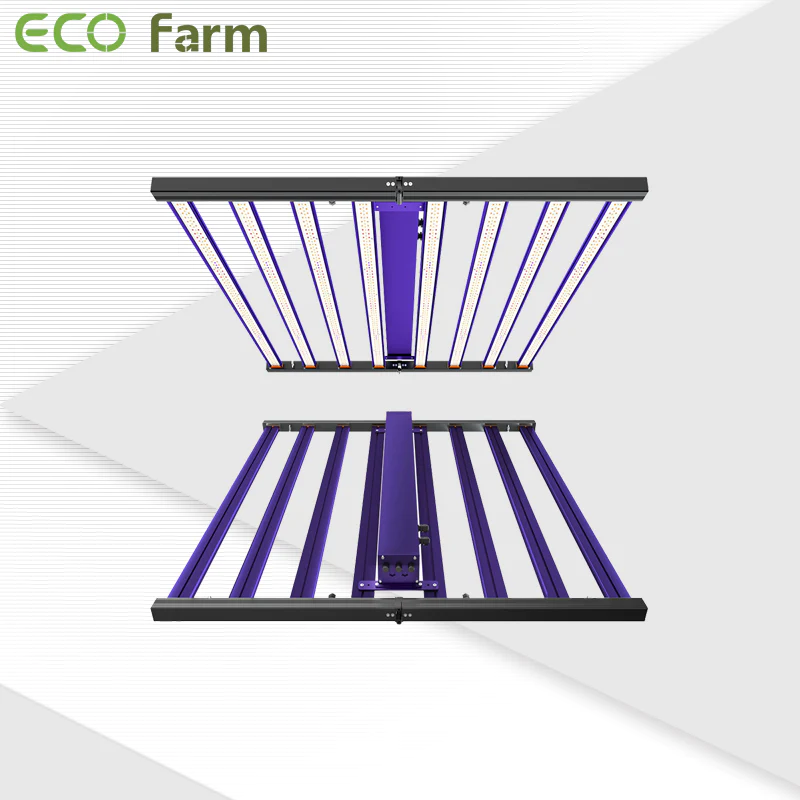
Features:
This ECO Farm LED grow light features the highest output white chips and Osram chips, with a high energy efficiency of 2.6 umol/J, PPF 1820 µmol/s, LED grow lights provide plants with powerful and high-quality light to maximize yield . The vegetable footprint is 5 x 5 feet and the flowering footprint is 4 x 4 feet. This grow light has an excellent full spectrum (3000K, 5000K, 660nm, 730nm IR, 395nm UV) and is ideal for all growth stages (germination, cloning or cuttings, mothering, vegetative and flowering applications) for higher yields . The dimming knob can adjust the light intensity at will. Designed with daisy chain function, up to 100 lights can be connected. Multi-light connections with uniform dimming are especially beneficial for large-scale indoor and commercial cultivation.
Spectrum King Phoenix 680W LED Grow Light
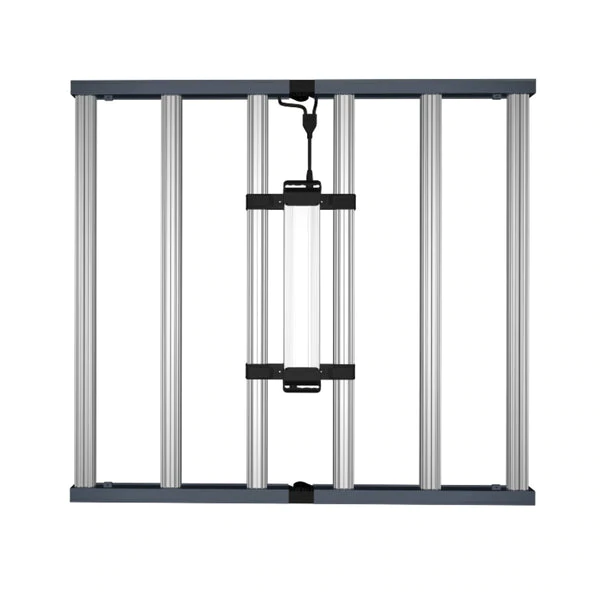
Features:
The Spectrum King LED grow light is the new LED standard for a 1:1 1000W DE HPS replacement that consumes 36% less power while offering the highest reliability in the industry. SK Cryo-Therm cooling technology enables an ultra-thin profile that maximizes airflow and minimizes microclimates. This grow light is optimized for single or multi-level planting close to the canopy. Many growers are switching from heat-generating HPS lights to ultra-high performance LED strip lights. SonoFarm LED grow lights utilize the latest technologies on the market — from intensive research for optimum performance, to customising the spectrum for the highest possible yield.
Features to Consider When Buying Grow Lights for Your Greenhouse
Grow lights must also be chosen based on the climate in your area. Grow lights prove to be the main light source for plants in areas with harsh and overcast weather.
Not sure what features you must consider when buying grow lights for your private greenhouse? This section will help!
1. Consider the plants you want to grow
To ensure that grow lights provide the maximum benefit to your plants, it is important to choose the right product for the right crop. For example, LED grow lights can provide features that affect the growth rate of plants and their longevity, responding differently to changing environmental conditions.
2. Measuring Surface Area
Common sense these days is that having one grow light in a large greenhouse is not enough. Therefore, before purchasing grow lights, measure the surface area of your greenhouse. This will help you determine the number of light units and the distance between them.
3. Check the PAR value of LED grow lights
PAR, short for Photosynthetically Active Radiation, is a measurement tool used to calculate a certain type of light radiation that is very beneficial to plants. It is safe to say that PAR can replace sunlight during natural photosynthesis.
But it should be noted that the higher the PAR value of the LED grow light does not mean that it is better. What you should focus on is an even distribution of PAR to help each plant grow at its optimum rate.
4. Check the cooling quality
Grow lights can create a warm environment in a greenhouse. Therefore, you must check that the grow lights you want have proper self-cooling capabilities. If you choose grow lights without cooling technology, consider installing vents and radiators to avoid overheating your plants.
5. Don’t exceed budget constraints
The next thing you should pay attention to is your hard-earned cash. There are many grow light sellers on the market, and not all of them are reliable. While they may offer authentic products, they may charge additional fees for installation, shipping, and service.
Conclusion
If you plan to grow your plants indoors and want to ensure the highest quality yield possible, any of the full spectrum LED grow lights on our list will do just that. Powerful, efficient, reliable and environmentally friendly, each light has been carefully designed to help you grow robust crops.
ECO Farm ECOD Samsung UV+ IR 800W Dimmable LED Grow Light VS Spectrum King Phoenix 840W LED Grow Light
Which LED grow lights are best for indoor plants? LED grow lights are fast becoming a necessity for indoor plants, and they happen to be a must for most gardeners to keep their plants healthy.
There is no doubt that LED grow lights are highly efficient, not only do they illuminate your indoor plants, but they also offer you a low energy-efficient option compared to fluorescent and incandescent lights.
There are several reasons to choose LED grow lights, and there are many LED grow lights on the market today. However, you need to make sure you choose the right plants that are good for your houseplants.
LED grow lights are not only effective, but very effective. They can last up to 50,000 hours. Equipping indoor plants with LED grow lights is ideal, as most indoor plants are susceptible to pests and diseases. You also need to make sure your plants get enough light.
The plants you grow indoors will determine the type of LED grow lights you need. So, to make this easy and help you grow any type of plant in any situation, we’ve compiled some of the best LED grow lights.
The importance of grow lights
If you decide to start growing plants indoors, one of the major steps you need to take to complete the setup is getting the best LED grow lights. Indoor plants require different wavelengths of light for photosynthesis — the process by which the plant makes its own food. They use blue light to support growth and leaf formation and red light to support stems and flowering.
Outdoors, the sun provides these wavelengths at different times of the day to ensure continued crop growth. However, in an indoor setup, you have to manually provide light and wavelength changes. You can do this by using LED lights that simulate sunlight. Quality LED lights for grow pots contain many diodes that can be adjusted over time to provide blue and red light so your plants can grow as if they were outside.
ECO Farm ECOD Samsung UV+ IR 800W Dimmable LED Grow Light
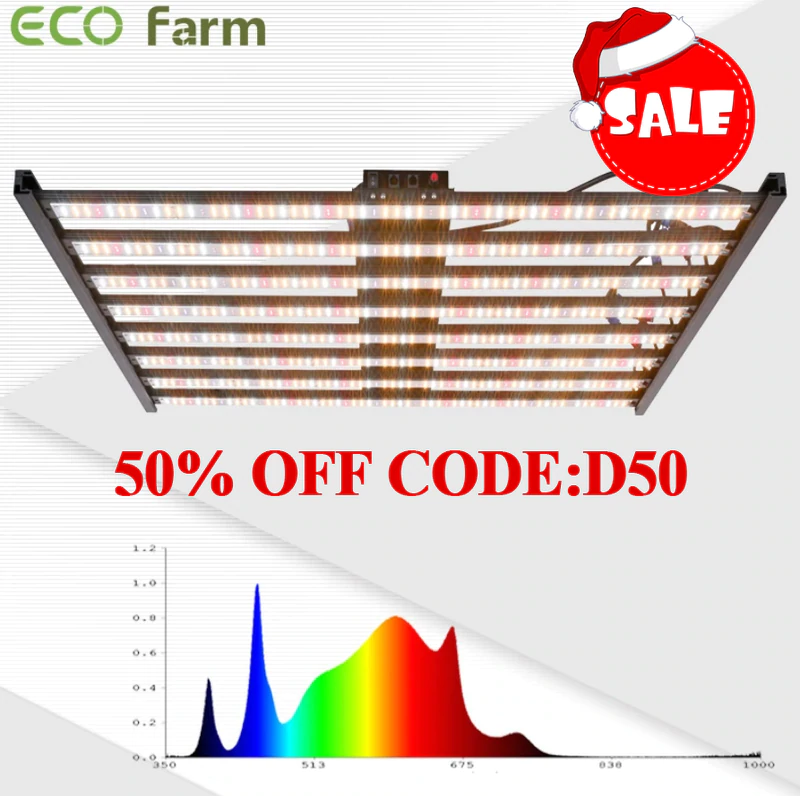
Features:
This ECO Farm LED grow light adopts the top quality equivalent diodes, producing a 800W PPF output of 2019.6 μmol/s and a PAR efficacy of 2.8umol/J, ideal for home and vertical farm planting. This full spectrum grow light meets the lighting requirements of every stage during the plant’s growth cycle. It consists of 660nm of red light, IR, 3000K and 6500K of the white light spectrum, providing plants in all stages from veg to flower with everything they need in the natural sunlight.LED plant lights enable cultivators to produce density buds, the 8-bar configuration allows widely application in the home grow (grow box and grow tents), climate rooms, commercial growing (horizontal and vertical), greenhouse cultivation, vertical racks, hydroponics.
Spectrum King Phoenix 840W LED Grow Light
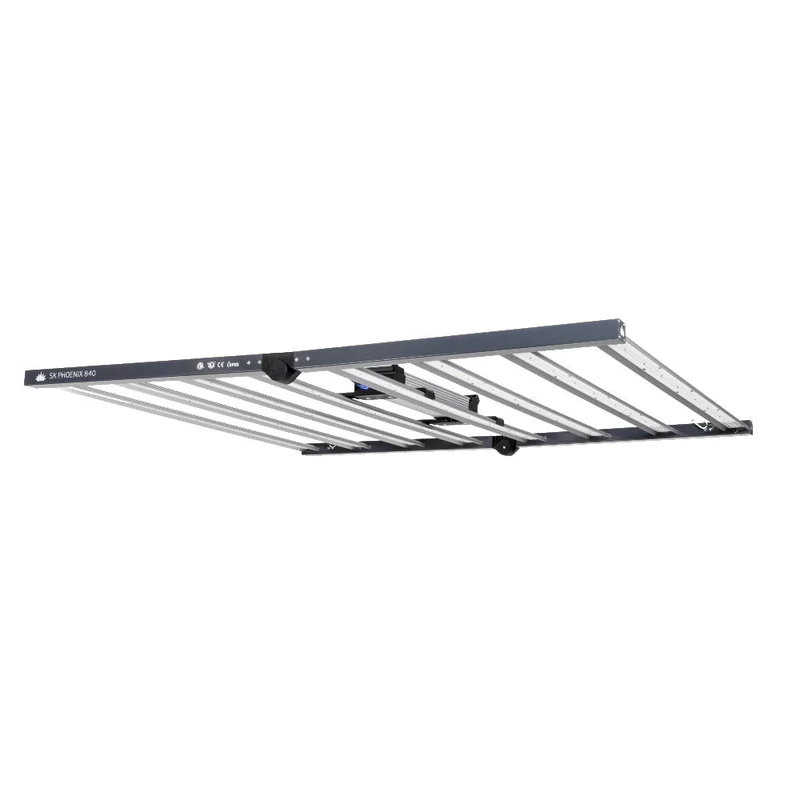
Features:
Spectrum King’s Phoenix 840W is ideal for photon-hungry crops that can handle strong light. With 16% less wall power than standard HPS fixtures, the 840 provides some decent output compared to other fixtures while still saving electricity and heat. Spectrum King’s custom spectrum is tested and customized to maximize plant and flowering cycle growth. The intensity of this dimmable light can be as low as 10%, enabling growers to simulate a sunrise/sunset effect. Spectrum King’s innovative Cryo-Therm cooling technology features an ultra-thin profile that maximizes airflow and minimizes microclimates. The Phoenix 840 grow light is optimized for single or multi-level planting close to the canopy.
What to Consider When Buying an LED Grow Light
So what should you look for when purchasing a grow light? In this section, we will discuss the various factors that lead to finding a good grow light. Some of the language in this section may be technical, so we will link to definitions for your convenience! Let’s take a look at the various factors you should consider when purchasing your next LED grow light.
Wattage
Wattage determines the potential energy available to plants. The “wattage” listed on the sales page of an LED light (or other type of grow light) refers to the watts that are drawn from your home outlet, but in reality that is not the amount that is emitted and arrives at the surface. Instead, look for a conversion rate, rated in micromoles per Joule (µmol/J). A good amount conversion rate is around 2.5µmol/J.
Now, something important to remember when we are talking about light is that light is subject to the laws of physics and all the strange, quirky reality that comes with it like the fact that light is both a wave and a particle simultaneously! Light arrives as a “photon,” which is essentially is the carrier of the electromagnetic force, and is the quantum form of all electromagnetic radiation, whether that be from the Sun or your grow light.
When light is delivered (falls or pours) to a surface, it arrives as a photon, or a packet of electromagnetic radiation, and we can measure this arrival to help us see how effective our grow lights are at covering a surface!
We measure the amount of photons that arrive in a given area through a term called the Photosynthetic Photon Flux Density (PPFD for short), which is then mapped onto what we call a Photosynthetic Active Radiation (PAR) map. Big terms, but both of these are quite important for growers! Let’s take a look why that is.
Coverage Area
PPFD measures the number of photons that arrive in an area over a given amount of time. PPFD is measured in micromoles per square meter per second (µmol/m2/S). Usually, the higher the number the better.
A PAR map shows a comparison of PPFD spread across an area. One of these maps should be included with every grow light and they will look like the one below.
This PAR map is from the VIVOSUN VS4000. It says that the VS4000 was hung at 12 inches above the floor and covers a 5×5-foot space. In the center of this map, we can see the PPFD is very high, while near the edges the PPFD is much lower, which is to be expected as the light coverage is weaker. An analogous example would be shining a flashlight in the dark and noticing that the light looks weaker around the edges of the coverage.
Light Intensity
Since the height of the LED grow light determines the intensity of the light, you might be wondering how high you should hang your light. It’s a great question because it depends on the kind of light and the stage of growth your plant is in. Ideally, we want intense coverage over a large area, but this is only possible with very high-end equipment, so we need to find a balance between the two and a couple factors play into this: heat produced by the light, brightness, and stage of plant growth.
Light Spectrum
Light spectrum is a crucial factor for grow lights. In the most general sense, there are three categories of LED grow light spectrums available: targeted (meaning blue light or red light focused) and broad (meaning white light focused). These days the majority of LED systems are full spectrum. This is because full spectrum contains enough variation in light that allows it to cover the entire grow cycle of a plant and spectrums can be adjusted to match the current stage of growth. These tunable LEDs usually have a switch that says “Bloom/Veg” that allows you to emphasize coloration. Newer models can be programmed using controllers that can control schedules, light intensity, and spectral range.
Plants mainly utilize light that is within the visible spectrum or just outside of it. Therefore, grow lights aim to produce the exact coloration that plants desire — this allows for the most efficient use of electricity while having the best results.
We measure color wavelength in two ways: nanometers (nm) and Kelvin (K). Nanometers refers to the actual wavelength of the light, measured from peak to trough, while Kelvin refers to the “temperature” of the light.
Plants go through four main stages of growth: germination, when the seed sprouts its taproot and first shoot; seedling, before the seed grows its first set of true leaves; vegetative growth, when the plant has its first set of true leaves until it matures to being ready to flower and reproduce; and flowering, when the plant produces flowers for reproduction and is mature enough to spread its fertilized seeds.
Price
Price is the most crucial component in decision making for a new hobby. LEDs tend to be a little more expensive than HID or T5 systems but the cost saved in electricity over time is worth the initial startup. Let’s take a look at the price range for various types of LEDs — the price is a range because the larger the grow light, the more expensive it will be.
Conclusion
LED grow lights for plants are a relatively new phenomenon in the field of plants cultivation. Nonetheless, they continue to rapidly gain popularity due to their efficiency, low power usage, and ability to stay cool and generate high yields. When looking for LED lights for your interior setup, it’s best to consider factors like your pressure, space, and budget. That said, here are some of the best LED grow lights you can try.
Rayonled GLMF400W LED Grow Light VS Mammoth Lighting Fold Series MF04 LED Grow Light
If you are growing indoors, your plants may lack the natural sunlight they need. Therefore, you need grow lights to meet the light requirements of your houseplants.
There is a lot of confusion on the internet about indoor gardening. Choosing the best LED grow lights for your plants can be daunting, especially for beginners in indoor gardening.
There are various famous brands of plant lights. Hundreds of conflicting views exist for each.
People spend hours online trying to figure out which grow lights to buy for their plants. Often, they end up getting more confused and then indecisive.
But don’t worry. We’ll help you choose the best grow lights to start growing your plants indoors.
Are LED grow lights more efficient?
This is where LEDs excel: There’s no warm up time needed so your plants can enjoy the full illumination as soon as they’re switched on. They also have one-directional lenses meaning the light goes directly to the plants in a much more efficient way. HPS lights are omni-directional, meaning light and heat can be wasted if it’s not properly reflected around the space.
All of this generally makes LED lights much more efficient than HPS lighting.
Rayonled GLMF400W LED Grow Light
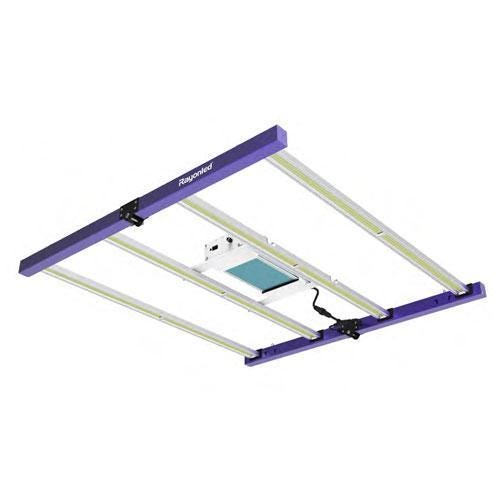
Features:
This Rayonled LED Grow Light’s Input Power is 400w but has High PPFD. It redefined engineering real full spectrum led grow light strips hydroponics from veg to bloom for indoor plants grow. It is ideal for beginner or professional growers choice. The full spectrum design of this grow light provides nutrients for each stage of plants, which is perfect for germination, seedling, indoor growing. One 400W grow light is equal to a complex 800W HPS grow system, making indoor planting become more convenient. It is also a noise-free fanless LED grow lamp for indoor plants. All casing is a heat sink. This LED grow light will provide high performance, long-lasting and energy-saving for general purpose use.
Mammoth Lighting Fold Series MF04 LED Grow Light (Veg)
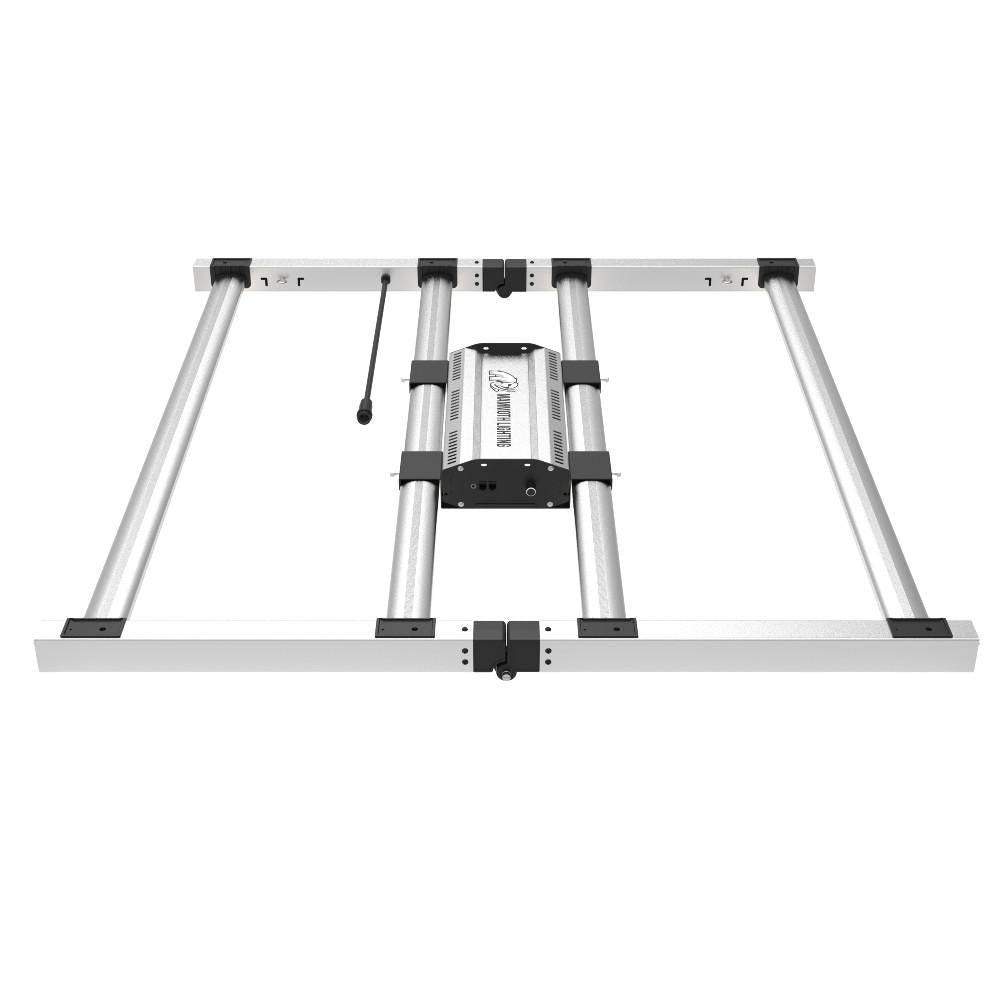
Features:
Mammoth Lighting was developed by indoor growers after years of careful trial and testing. Scientifically engineered to provide the highest level of PAR output and balanced coverage in LED growth markets. Mammoth LED grow lights are made of high-quality Samsung diodes. The light contains a continuous range of wavelengths from blue and green to red, creating a light mix that matches natural sunlight. Mammoth customizes its spectrum to optimize plant growth and increase yields while consuming less energy and reducing operating costs compared to traditional gardening techniques.
What to Consider When Searching for the Best LED Grow Lights
When trying to find suitable LED grow lights, there are many aspects you need to think about.
Don’t worry though:
And once you go through the most important factors, you will understand what you need exactly. Here’s what you should pay attention to:
Budget. LED grow lights can be quite expensive, and that’s the main issue users typically have with them. However, LED lights will serve you longer, which means they can be a worthy investment. The price will depend on the quality of parts, spectrum, and the light intensity. But remember that the most expensive lights might not be the best ones. You need to pay attention to the characteristics first, and only then — the price.
Warranty. Typically, the warranty for LED grow lights ranges between 1 and 7 years depending on the brand. A 3-year warranty is probably the most common coverage option. Of course, most users want longer warranty as it can be an indication of good quality. However, it’s also important to check what aspects the warranty covers. Fixing LED lights can be expensive, so if your warranty covers that, you would save more money in the long run.
Durability. The durability of the LED grow lights should be of utmost consideration when you are searching for the best LED grow lights, so you will not waste your hard-earned money on something that will not last. Ensure you always purchase what will stand the test of time.
Heat output. Your plants will be at significant risk if you do not consider the heat emitted from your LED grow lights. You may even spend extra to cool the room. Hence, it is essential always to consider the heat output of your LED grows light when searching.
PAR. For a grow light that suits every stage of your plant growth, you should consider PAR when searching. PAR which means Photosynthetically Active Radiation is the amount of light your LED panel is emitting that contributes to the photosynthesis process of your plants.As you already know, not all types of light aids in photosynthesis. The reason why the plant in your sitting room will die even though it is being exposed to the lamps there. The type of light emitted by sitting room lamps is not ideal nor does it aid photosynthesis.
So, the PAR value of your LED grow light is very essential. This value is actually more important than the wattage of the LED grow light.
Conclusion
Growing these plants indoors can be challenging in low-sun areas or when these plants are grown indoors in low-light areas.
For plants grown indoors only, LED grow lights are a great way to increase light levels and manage any light deficits that may arise.
ECO Farm ECO NET 680W Samsung 301B Chips LED Grow Light VS Grower's Choice ROI-E680 LED Grow Light
Having the right equipment to grow your plants is more important and effective than anything, but with so many LED grow lights in Canada, how can you choose the best LED grow light for your plants? Or through this article, you can get some reliable information and better buy your favorite LED plant growth lights.
The benefits of choosing LED grow lights
Of all the lights available today, LEDs are the most energy efficient for growing plants. In a comparison of day-to-day operating costs and power output, they handily beat fluorescent lights — even the HID lights that have dominated the indoor growing scene for decades.
A big advantage of this efficiency is that they operate at a lower temperature. With very little heat released during the lighting cycle, using LED grow lights often allows you to eliminate ventilation systems entirely. Even if you prefer to keep the ventilation fan for humidity reasons, you can still place the LEDs closer to the plants without worrying about getting burned by the light.
While LED grow lights are often a more costly initial investment, their return on earnings is only the beginning of their payoff. Overall, we always choose LED grow lights for cultivation because they just make things easier.
Plug them directly into an outlet (unlike the ballasts required for HIDs), and their low-heat operation will allow you to water less and add nutrients…and prune and harvest more.
ECO Farm ECO NET 680W Samsung 301B Chips LED Grow Light
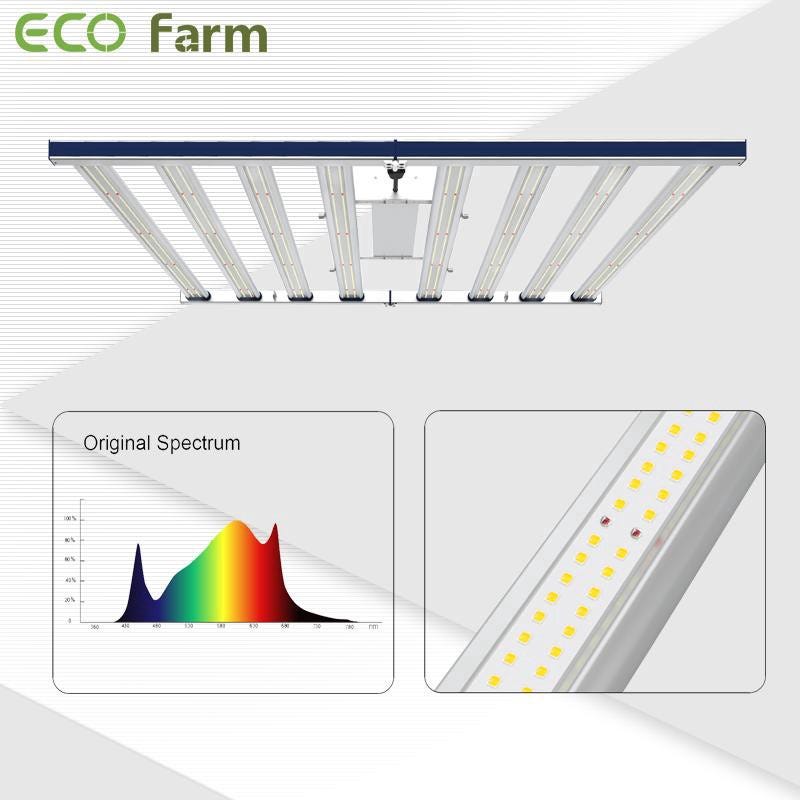
Features:
This ECO Farm LED grow light used foldable design, can be easily to adjust the angle between the lamp and the plant, and according to your plant stage to adjust the illumination area. which is more effectively to promote plants growth. It is designed for home growers, fans get noisy when long time use, but this LED light board use aluminum make it cooling down instead use fans, bring you a FANLESS QUIET grow experience. Simple structure, no fan,no noise. New folding design for a fast installation.High Safety performance driver and Pure Aluminum light bars for better heat disappear and stay cool,never burn your plants like other low quality led grow lights. Full Spectrum Led Indoor Growing consisists Red 660nm / White 3000K, 5000K, infinite close to natural light, best for all plants all stages growing, rapid plant response from seed to flower and increase yield & crop quality, improve the nutritional value of plants.
Grower’s Choice ROI-E680 LED Grow Light
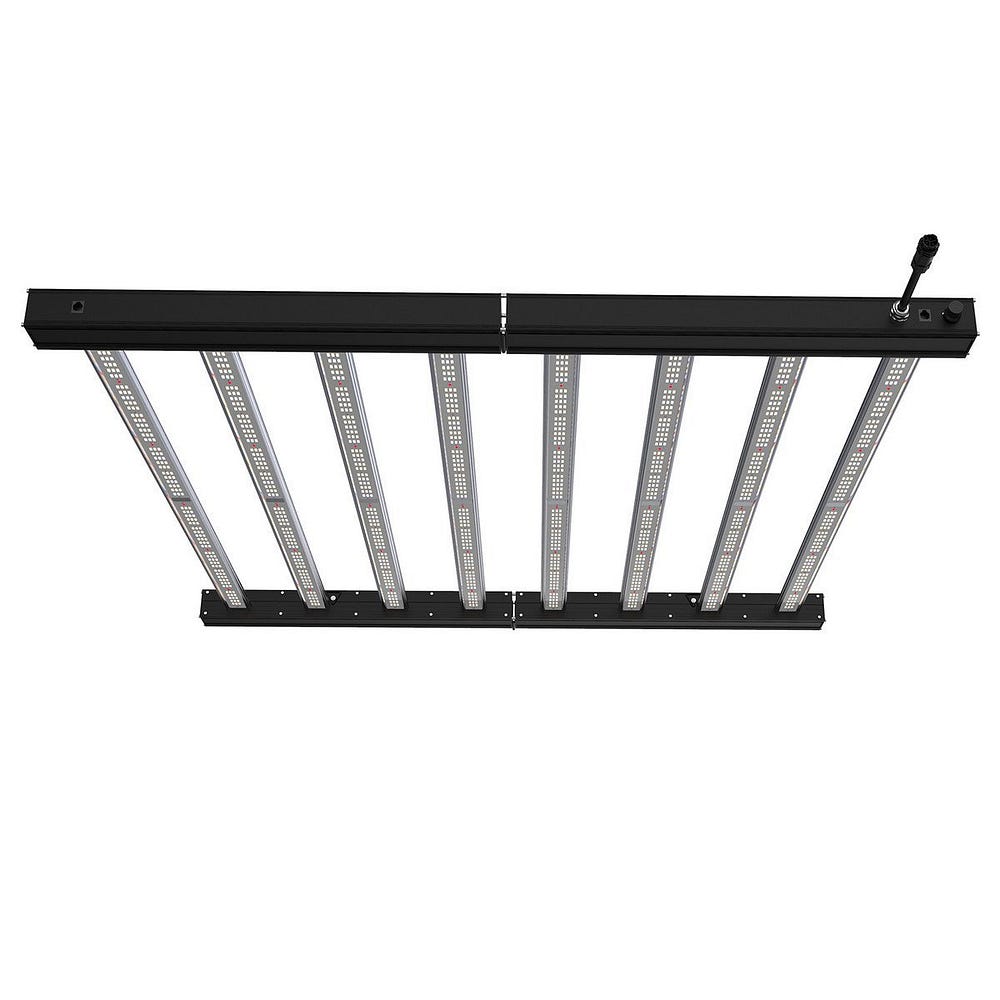
Features:
The Grower’s Choice grow light produces a PPF output of 1700 umol/s and a PAR efficacy of 2.5 umol/J making this fixture incredibly efficient compared to other commercial fixures. Balanced Spectrum, incorporating Growers Choice famous 3K CMH Full Phase Spectrum for superior growing power with best possible LED diodes available. This fixture provides you with total control over everything. With onboard dimming function, growers cans et the ideal intensity at any stage of plant growth for optimal photosynthesis activation. The Growers Choice ROI E680 provides its users with an average 40% reduction on energy and HVAC costs. This is the ultimate combination of increasing the amount of light energy reaching your plants while also shrinking costs. The Growers Choice ROI-680 LED grow light allows for even light distribution, and is precisely designed to deliver uniform levels of photosynthesis flux density, or PPFD.
Things to Consider When Buying an LED Grow Light
Before you buy your first LED grow light, you should consider these factors and how they will affect your purchase. Remember that the best grow lights for your friend’s garden may not work in your garden.
What Kind of Plants Are You Growing?
Different plants have different light requirements and will therefore need different LED light types. You want to pick the right grow light for your plant’s particular needs. Some plants will need a strong light, while others may need a light with more reds than blues — it all depends on the type of plant you’re growing.
Take for example flowering plants. Most flowering plants need a low light spectrum so the blossoms will not be damaged. On the other hand, green, leafy vegetables need a higher spectrum with a more balanced amount of blue and red to produce vibrant and healthy leaves. How effective your LED grow light use will be, depends on choosing the correct light for your plants.
How Big is Your Grow Space?
The size of your indoor grow space is also an important factor in the type and number of grow lights you’ll need to buy. LED grow lights come in a wide variety of sizes, shapes, wattages, and spectrums designed for a variety of spaces and plants, so it’s important to carefully measure your space (including height) and choose the light that’s right for you and your garden so everything fits comfortable, you do not damage your plants, and they can thrive and be healthy.
There are dozens of websites that will tell you how powerful of a light or how many lights you need based simply on the square footage of your grow space. These grow light calculators or lists of recommendations typically don’t take enough variables into consideration such as plant height or the goals of the grower.
Answering the question, how many grow lights do I need for a 3’ x 3’ space, for example, is similar to asking how much food does a teenager need or how long is a piece of string? There are many, many more variables to consider, such as, where is the grow space placed in relation to the sun, heat, etc.., are the plants in just one box; how big do you plan for the plants to grow; among many others.
The best option when deciding how many lights you need and how many watts, is to refer to the footprint recommendations for the light you’re considering.
What Growing Style Will You Use?
You will also want to think about how you’re going to grow your crops. Are you looking for the best hydroponic grow lights? Do you want the best grow lights for seedlings or for flowering plants? Are you looking for the best LED to grow plants with the sea of green (SOG) method? The answers to these questions is another factor in determining what LED grow light is best for you.
Conclusion
Thanks for reading this review of the best LED grow lights for growing plants! We are passionate advocates and loyal users of indoor growing LED grow lights and hope we can provide you with all the information you need to navigate this complex field. As always, good luck in all your growing adventures!
ECO Farm G3 MARS 800W Samsung LM301B LED Grow Light VS Spider Farmer G860W Full Spectrum LED Grow Light
If you are new to indoor growing with no experience, we recommend you to start growing indoors with inexpensive LED grow lights.
LED grow lights don’t mean they’re useless or ineffective.
When someone uses the word cheap, we think it’s junk or invalid low-quality stuff. But in this case, that’s not the case. Our experts spent 5 days choosing a top low-priced grow light that emits high-quality light and produces great results.
It’s better to call you cheap LED grow lights than to call them cheap LED grow lights.
The following are good value-for-money plant lights for their low price.
In this article, we’ll tell you about our favorite grow lights that we’ve used in indoor gardens over the years.
Why Should You Use LED Lights?
There are a huge number of reasons to use LED lights.
Bear with me and I will take you through some of them:
They are environmentally friendly — substances such as mercury, that is harmful to the environment is not used in the production of LED lights
Efficient — They save up to 90% in energy compared to conventional lights
Long Life — they generally last between 35,000 and 50,000 hours
Light tailored to your plants needs — LEDs emit a full spectrum of light. The light wavelength is usually tailored to remove those wavelengths (such as green and yellow) which plants don’t use.
Quicker Growth — because of this your plants will grow quicker and be healthier
ECO Farm G3 MARS 800W Samsung LM301B LED Grow Light
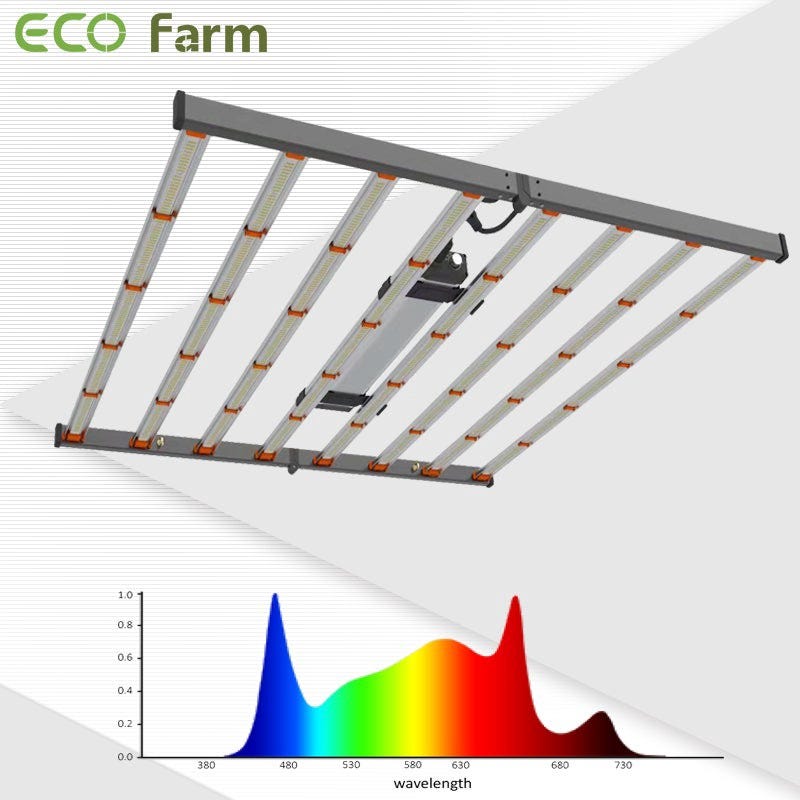
Features:
The ECO Farm Full Spectrum LED Grow Light 800W is one of the most Advanced Multi-Bar Led Grow Light with 1–10V Dimmnig. This grow light has full spectrum (Samsung LM281B/ LM301B(3000k+6500k) with OSRAM red 660nm and OSRAM 730nm)with Light Intensity measuring up to 2240 µmol/s, matching the natural sunlight, using Samsung LED package. It just consumes about 800w power. High Efficiency PPF LEDs make you cost less but get more. High-end & high performance self-heating dissipation construction for long lifespan. Re-defined & Wide coverage light design, benefit your plants everywhere. Real full spectrum(sunlight) for plant from veg growth to bloom, no need to change your light source. No Fan design and make grow room so quiet.
Spider Farmer G860W Full Spectrum LED Grow Light
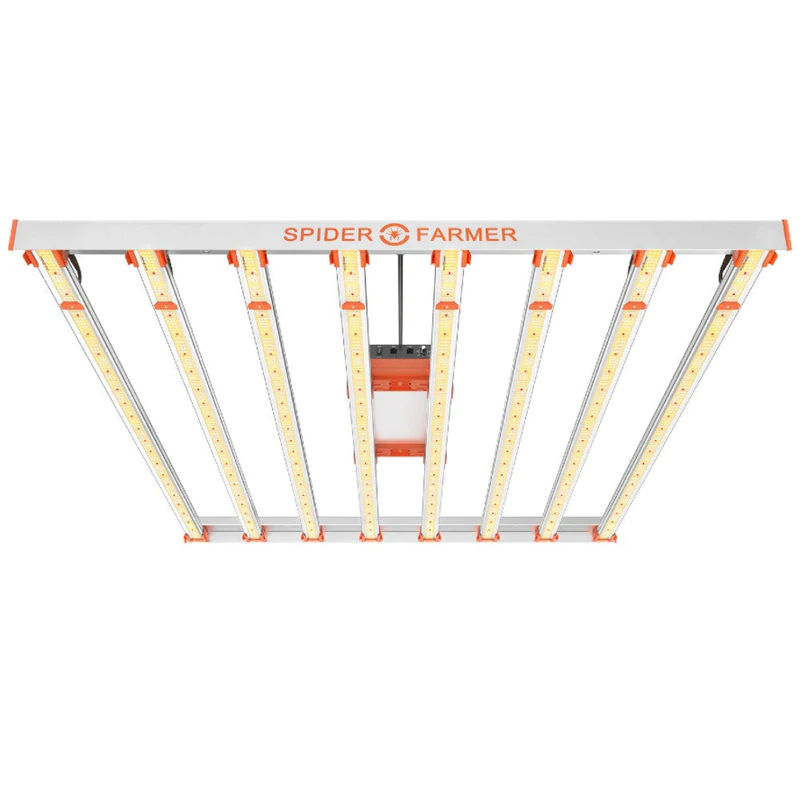
Features:
This Spider Farmer LED Grow Light features an even peripheral PPFD score for even coverage, ensuring maximum light per plant. The elongated light bar design also ensures a more even distribution of light, reaching all edges and corners. The strip grow light design and the aluminium heatsink on the back contribute to better airflow and good heat dissipation. The G860W Garden Light features a detachable driver and 6.56" long power cord to reduce ambient heat in the grow space for longer life. The LED diodes are coated with water repellent, so they are not afraid of a wet environment. Dimming daisy-chaining allows you to link up to 60 G680W Series grow lights together — dimming multiple lights simultaneously. Widely used in commercial cultivation, vertical farming, home gardens, home cultivation, CO2 systems and hydroponics.
Buyers Guide: Choosing the Best Budget Grow Lights
There are several important aspects to consider when deciding on a grow light. Because your lights are like the “sun” to your plants, they are one of the most important purchases you’ll make. They will affect your yields, bud quality, and power consumption. The choice that you ultimately make will need to take into account the following factors.
Budget
You’ll need to weigh up light cost vs. yield, as well as the cost of production vs. yield. If you are using a power-hungry light, like HIDs, your big juicy buds will cost more to produce in the long term. LED lights in particular will dramatically lower your energy consumption and thus, your running electricity costs.
Light Spectrum
LED lights are the new standard for indoor grows. They save power and are usually full spectrum. Full-spectrum lights live up to their name by giving your plants the complete range of light they need for optimum growth, imitating the spectrum that the sun would give. They give the full range of light spectrums from red, blue, infrared, and violet in order to help your plants grow optimally and ensure maximum yield.
They are generally a more expensive light, though their wide use is driving the price down slowly but surely, as our list above demonstrates. There are good quality yet affordable LEDs available to new and budget-conscious growers.
Light coverage area
When buying lights, you also need to take into account your grow room size. Most budget lights will not give you a wide area of light spread. More plants need more light, and you’ll need to decide if you want a few high-output lights or several smaller lights.
Heat
Another consideration is heat output. LEDs typically pump out far less heat than their HID counterparts and so do not require much extra cooling. While lights like HIDs can save you money initially, in the long run, you’ll need extra fans and vents for cooling. Added to this is the fact that LEDs have a far longer lifespan than any other lights currently available.
LEDs do run the risk of burning your plants if placed too close, so they are more suited for bigger grow spaces. They can be used for smaller grows if you have enough height available above your plants.
Conclusion
All of the above best LED grow lights have been tested by thousands of users. All were pleased with the quality and durability. We choose all of the above lights very carefully so that our viewers get the best stuff at a reasonable cost.
We hope you can find the best affordable grow lights for your indoor garden from our list.
Spectrum King 600W LED LowPro Flower VS Fohse F1V 600W (277–480V) LED Grow Light
With the advancement of modern technology, we also need to protect the environment. Businesses can benefit from investing in sustainable lighting options, as can homeowners. LED grow lights are a good example. They are getting more and more popular every year. In this article, we’ll discuss the benefits of using LED lighting in your garden.
Advantages Of Buying The LED Grow Light
Have you wondered what are the exact benefits you get from high-quality LED lights? Check out the list below.
You’re saving energy
We’re sure this isn’t groundbreaking news to you — LED grow lights are the most energy-efficient of them all!
Unlike the power-consuming incandescent bulbs that use heating to give electricity, all LED grow lights need to light is an electric current. This way, the energy consumption is minute.
You’re saving money too
Just think about it — with energy-efficient LED grow lights, your electric bill won’t go through the roof anymore. And let’s face it, any money-saving opportunity is always welcome!
LED grow lights last longer
Generally speaking, different light bulbs have different lifespans.
Although LED grow lights cost a tad more than others, you get your money’s worth considering they also last way longer (up to five times actually!) than any other bulbs.
This is largely due to the fact that LED grow lights aren’t affected by constant switching on and off that makes other bulbs short circuit and burn the light filament.
A variety of options to choose from
The LED light comes in a wide range of shapes and colors so you can choose according to your preference.
This is particularly amazing when you remember that different plants require different lighting.
In a nutshell, the fact that they come in so many options means you’re able to get the best LED light regardless of the type of plants.
That’s the great thing about LED — even the smallest bulbs can produce maximum light. And we don’t have to tell you how handy small bulbs are when space consumption is a must.
Spectrum King 600W LED LowPro Flower
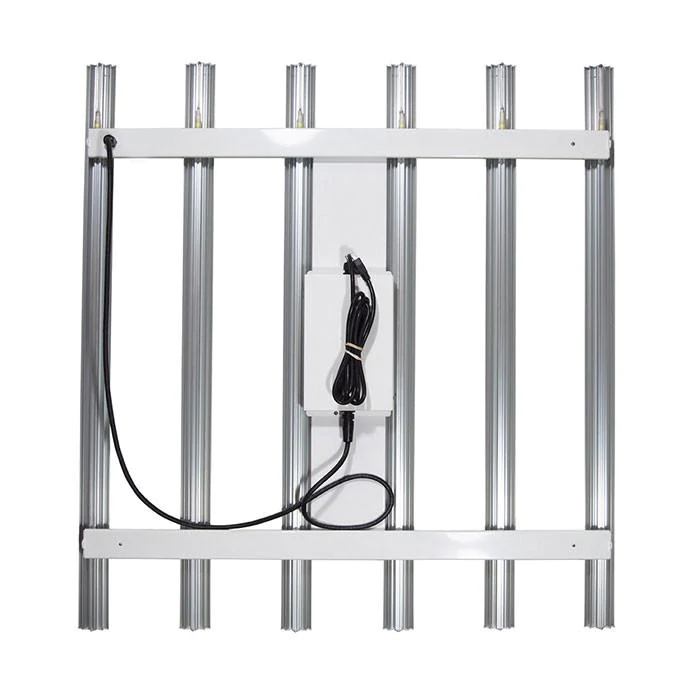
Features:
The Spectrum King LED grow light is a 660W grow light system with an efficiency equivalent to a 1000W LED. The grow light system is designed for vertical shelving solutions; you mount the lights 3 inches from the plants. Grow lights offer a 4X4 footprint. It offers 141.57 efficacy and a lumen output of 102,000 lumens. LED grow lights feel like plants are getting closer to the sun. The planting system is designed for a 3" tall vertical racking solution. The LED grow light system is the shortest and brightest LED grow light system on the market. The LEDs are rated at 50,000 hours to ensure long life. So don’t worry about spending unnecessarily on grow light fixtures.
Fohse F1V 600W (277–480V) LED Grow Light
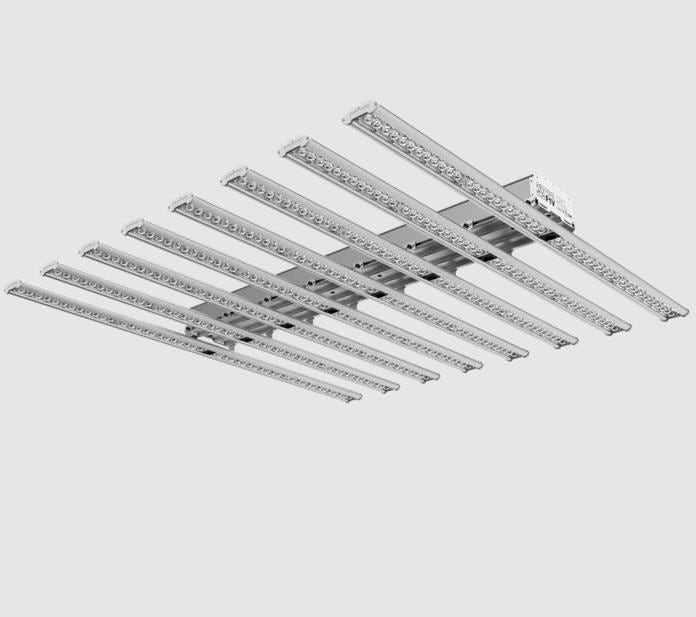
Features:
The Fohse LED grow light is typically suited for vegetative growth in vertical environments. Every F1V is custom made to order, which means it is build them to suit the specific parameters of your cultivation environment. While low cost HID systems like ceramic metal halide or high-pressure sodium systems are attractive, dig a layer deeper into the accumulating costs of perpetual bulb maintenance and the ugly truth becomes readily apparent. Eliminate ongoing and perpetual maintenance costs entirely with the F1V. The F1V form factor is a dual-purpose design. It utilizes passive cooling to keep the diodes operating at peak efficiency. It also disperses heat so efficiently that you’ll be able to bring your ambient room temperatures up.
Factors to Consider When Buying the Best Grow Tent
How many plants will you be growing?
The size of the best grow tent will be determined by the quantity of plants. The best grow tents are available in a variety of sizes and heights. A height of 80 inches will be sufficient to accommodate the plants as they develop without obstructing the grow lamp, which is usually suspended a foot above the tent’s ceiling. The plant must be at least 18 inches away from the grow light.
Characteristics
To achieve great plants growth, the best grow tents should contain a few key elements. These feature viewing windows, which eliminate the need to constantly enter the tent and disrupt the environment for inspection. Also, look for tents with wide entrances to make entering and exiting the tent simple and pleasant. Waterproof floor trays and exhaust ducting vents should also be included.
Materials
The best grow tents are made with tough and long-lasting materials. The material, for example, should be tear-resistant and the seals should be of excellent quality. Because you’ll be in contact with the best grow tents on a regular basis, even the zippers and joints can’t be cheap.
Plant’s negative reputation is steadily fading as more individuals learn to use it properly. For the plant to live and grow, it takes patience and continuous care.
Conclusion
Yes, outdoor farming is actually overrated!
Your indoor plants don’t necessarily need direct sunlight to develop well and blossom.
All you just need are the best lamps for indoor plants to facilitate the photosynthesis process of your plants.
Before purchasing any of these lights, be certain it is just the right one for your plants.
