ECO Farm Z8–800 Samsung LM301B LED Grow Light VS Gavita Pro RS 2400e 800W LED Grow Light
Grow lights allow you to garden almost anywhere and in every season. While grow lights are popular when the spring garden is starting to seed, you can also use them to grow herbs, houseplants, and vegetables year-round.
When you’re looking for the right grow lights for your needs and space, remember to always look for the most environmentally friendly lighting options. Even small efficiencies like placing lights near sunny windows or finding lights with timers can really add up over the years. You’ll feel good knowing you’re starting a green habit like gardening while reducing your overall carbon footprint.
Think of grow lights as a long-term investment. You’ll be able to use them every season to grow delicious herbs or any other plant. They are especially good for growing seedlings before the weather is warm enough to grow outdoors. Growing your own plants from seed can also help you save money compared to buying from a nursery. Perhaps most importantly they bring life and light to those dark months of the year. Here are some of the best grow lights when you start your own indoor setup.
The importance of grow lights for indoor plants?
Grow lights are important for houseplants because they provide the artificial light plants need to grow and thrive. Indoor plants may not get enough natural light to support their growth, so grow lights can help make up for that.
Grow lights can also be adjusted to provide different wavelengths of light, which is important for different stages of plant growth. Using grow lights can help ensure your plants get the light they need to grow and thrive even indoors.
ECO Farm Z8–800 Samsung LM301B LED Grow Light

Features:
The ECO Farm LED grow light is equipped with SAMSUNG LM301B chip and 8 high-efficiency aluminum rods to ensure high-efficiency PPE 2.7umol/J, better heat dissipation, and long service life. Compared with old plant lights, the average PPFD is increased by 30%, and the yield and quality are increased by 50%. 8 LED growth lights, each rod is covered with high-grade glue, waterproof and easy to clean, not easy to be filled with dust. This plant growth light also uses a special dimmer, which can precisely adjust the brightness. 0–10 levels are optional. This means that you can see clear brightness levels and record while adjusting. No need to worry about differences. At the same time, it also has an ideal full-spectrum and amazing heat dissipation: excellent full-spectrum mixing of white, blue, red, and ultraviolet light, IR LED (3500K, 660nm and IR 760nm & 396nm UV), close to natural sunlight. The spectrum applies to the entire stage of indoor planting.
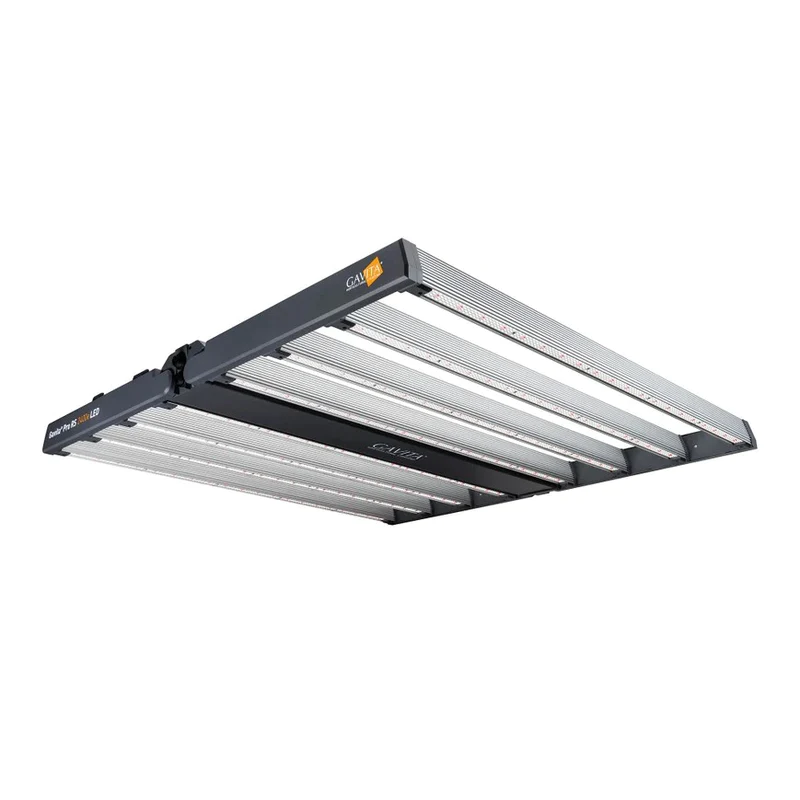
Gavita Pro RS 2400e 800W LED Grow Light
Features:
Gavita LED grow lights produce 2400 μmol/s at an impressive 3.0 μmol/J efficiency and provide a broad spectrum of white light and enhanced blue light to help enhance flavor and aroma. This powerful full-spectrum light source is designed for all aspects of plant growth — from the vegetative stage to the end of flowering and when higher light levels are required. Using the Gavita Master EL3 controller, the luminaire can be dimmed by up to 10% without any loss of efficiency. The RS 2400e is built with high quality components including Gavita drivers and custom Gavita branded diodes to deliver the performance and longevity you’ve come to expect from a trusted brand.
How to Choose the LED Grow Lights?
Expected Coverage Area
This is an important point you should be aware of. People often ask which kind of plant grow lights is the best? it depends. Many grow lights do not fit in the same grow space.
What is the optimum suspension height? It depends on what stage of plant growth you are in. First select the system size, then select the fixture size and output.
Watts per square meter (W/m2)
Typically for hemp we recommend 300 to 400 watts per square meter. That’s the level of a hungry light plant. But, of course, this will depend on the kinds of plants you want to grow.
Instead of adjusting the canopy height distance, you can always dim the light to achieve the desired intensity, depending on your growth stage. If you intend to increase light intensity to high levels of PPFD (eg: >1000 µmol/ms/s during flowering), you may need to increase the CO2 level of your growing system.
Light Spread and Uniformity
It is also important, when purchasing grow lights, to ensure that the photons are evenly distributed throughout the canopy. Some companies specialize in the dead spots of the growing canopy.
For example, 900 PPFD in the center, but if you see the edges have a smaller PPFD value, say 200. Therefore, uniformity plays an important role in your planting system to avoid uneven canopy.
Efficacy (µmol/J)
It is described as how efficiently a grow light can take incoming wattage and convert it into usable PAR. This is an important factor. If the manufacturer does not provide this specification, growers can calculate it by simply dividing the total PPF output by the total input power. Some LED grow lights may have 1000 watts, but are less efficient.
Spectrum
Another big thing to watch. There is a spectrogram with all available colors. If a grower wants to grow indoors, from sowing to harvesting, he should choose full-spectrum lighting.
Almost 20% of the light spectrum is blue from white LEDs, perfect for plant growth stages. About 48% of them are red, with greater influence during flowering.
Energy consumption
In the past, growers only focused on wattage. Higher values are better.
Watts are a measure of energy expenditure. If you consider a single 1000 W luminaire, that means an energy consumption of 1 kW per hour. With this, you can predict your future electricity bills.
If you want to make a profit from the plants you grow, you should calculate whether the profit will cover these costs.
Diode
Growers must be aware of these. There are many manufacturers of diodes, but not many top-notch ones. Industry leaders such as Lumileds and Osram should always be considered.
These are efficient and well-cooled LEDs that can run for a long time because electronics work more efficiently at lower temperatures.
The cooler the LED grow lights, the better their performance, durability (lifetime, >60000 hours) and reliability.
CRI (Color Rendering Index)
This parameter represents exactly how the light renders the plant in its natural color. There are LED lights that can illuminate your canopy with a more purple color, which will reduce the detection of problems with growing plants.
The higher the CRI, the closer the crop will appear to its natural color. Growers don’t want to work in purple. A higher CRI value indicates more white light from the fixture.
Naterial Quality
The overall quality of the materials from which the luminaire is made is another aspect. The chassis must be strong and durable. Aluminum radiators also have the advantage of exchanging heat more efficiently.
Conclusion
Getting quality LED grow lights for your houseplants and home garden is crucial to ensuring the health and vitality of your plants. With the right grow lights, you can give plants the light they need to photosynthesize, even in low-light environments.
Whether you want to grow a lush indoor garden or extend the growing season of your outdoor plants, grow lights are a powerful tool. With so many options available, it’s crucial to research and choose the right grow lights for your plants and budget. With proper setup and care, your plants will thrive, bringing life and beauty to your home and garden.
ECO Farm ECO D700 700W Samsung LM281B Chip LED Grow Light VS Spectrum King Phoenix 840W LED Grow Light
LED grow light technology is changing rapidly, begging the question, “What is the best LED grow light in 2023?”. We decided to take a look at the LED market in 2023 and let you know which ones are the best. If you’re looking to buy LED grow lights, we think this article will be a great resource for improving your indoor gardening.
How do grow lights work?
Grow lights are synthetic light sources that stimulate plants to receive natural light from the sun, allowing them to grow without relying entirely on natural sunlight.
Light-emitting diodes (LEDs) produce light in LED grow lights. Micro-reflectors and other specialized components help enhance and focus the light in premium LED grow lights.
All grow lights emit photons (particles of light) that plants can use for photosynthesis, just as plants use photons from the sun. Plants use photons of these specific wavelengths to generate energy.
“Photosynthetically Active Radiation,” or PAR, refers to the wavelength range of photons available for photosynthesis. The amount of PAR produced by the light per second, called PPF, determines the output of the grow light (photosynthetic photon flux).
PPFD quantifies the PPF density of the area under the grow lights and is another statistic you may come across. This is one of the most important numbers to keep track of, as it indicates how much light is going to reach the plants you are producing.
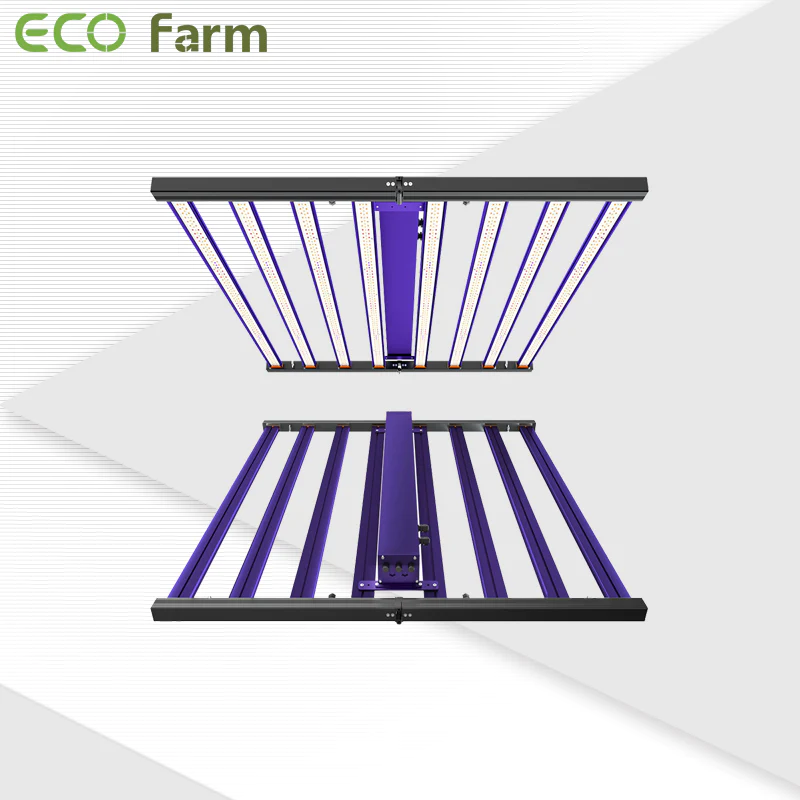
ECO Farm ECO D700 700W Samsung LM281B Chip LED Grow Light
Features:
This ECO Farm LED grow light features the highest output white chips and Osram chips, with a high energy efficiency of 2.6 umol/J, PPF 1820 µmol/s, LED grow lights provide plants with powerful and high-quality light to maximize yield . The vegetable footprint is 5 x 5 feet and the flowering footprint is 4 x 4 feet. This grow light has an excellent full spectrum (3000K, 5000K, 660nm, 730nm IR, 395nm UV) and is ideal for all growth stages (germination, cloning or cuttings, mothering, vegetative and flowering applications) for higher yields . The dimming knob can adjust the light intensity at will. Designed with daisy chain function, up to 100 lights can be connected. Multi-light connections with uniform dimming are especially beneficial for large-scale indoor and commercial cultivation.
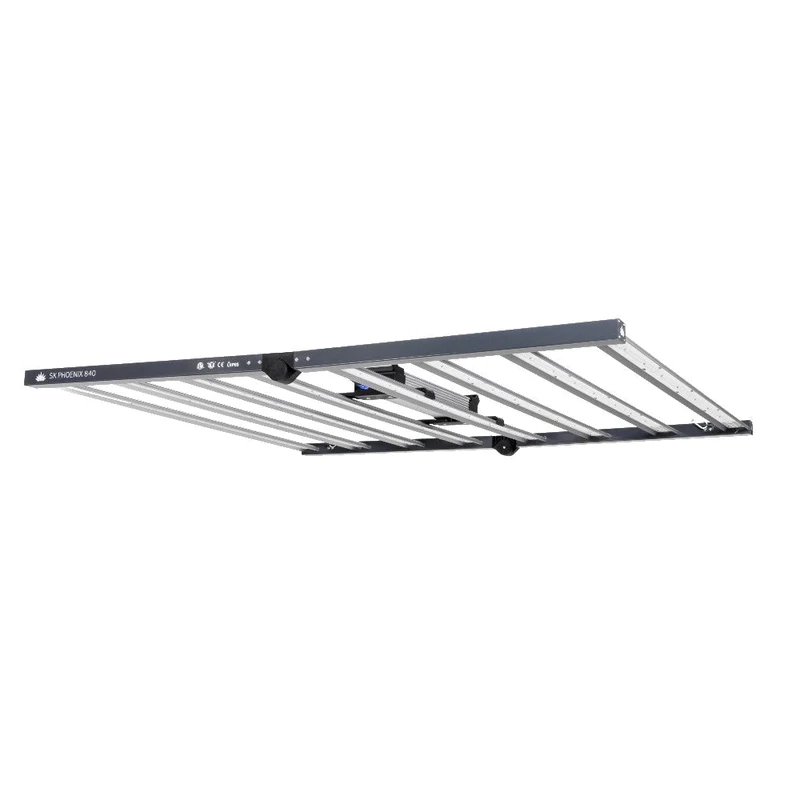
Spectrum King Phoenix 840W LED Grow Light
Features:
Spectrum King’s Phoenix 840W is ideal for photon-hungry crops that can handle strong light. With 16% less wall power than standard HPS fixtures, the 840 provides some decent output compared to other fixtures while still saving electricity and heat. Spectrum King’s custom spectrum is tested and customized to maximize plant and flowering cycle growth. The intensity of this dimmable light can be as low as 10%, enabling growers to simulate a sunrise/sunset effect. Spectrum King’s innovative Cryo-Therm cooling technology features an ultra-thin profile that maximizes airflow and minimizes microclimates. The Phoenix 840 grow light is optimized for single or multi-level planting close to the canopy.
Factors to Consider When Buying LED Grow Lights
So, now that you know what LED grow lights are and the benefits they provide, it’s easy to understand why so many indoor growers choose to use them. If you decide you want to use them for your setup too, you’ll want to make sure you choose the highest quality lights.
Finding LED grow lights is not a problem because there are so many different options to choose from; the hard part is trying to sift through all the different options and then deciding which one is best for your specific needs. So, how do you do it? Consider some key factors before making your final choice.
Here are some of the most important factors to consider that will help you choose the right LED grow lights for beautiful, rich, sticky, fragrant and potent plants.
Heat output. One of the most important factors to consider is the heat output of the lamp. If you are going to plant in a small space and the light is very hot, you may end up killing the plant.
Face value. All plants — use a specific range of light called photosynthetically active radiation (PAR) for photosynthesis. PAR values for lamps refer to electromagnetic wavelengths ranging from 400 to 700 nanometers. LED grow lights produce a large number of different wavelengths of light, plants may not absorb all of these wavelengths, they reflect light that is not used. Simply put, PAR refers to the amount of light produced by LED lights that plants can use. The PAR value of the LED grow light indicates the effectiveness of the light. PAR values are measured in micromoles of light per square meter per second. The higher the intensity of the PAR value, the better the effect of the grow light.
The shape of the lamp. You also need to consider the shape of the light. LED grow lights come in many shapes, including bulbs, panels, strips, and saucers. Different styles are better suited to different needs, so be sure to do some research before deciding which shape is best for your growing space.
Number of lights. Typically, home growers only need one or two lights, since in most states the legally permitted number of plants to grow is between 6 and 12 plants, and one or two lights will do just that. However, if you plan to grow more plants, you may need more LED lights, as you want to make sure that all the buds are receiving the light they need to thrive. Likewise, if you give your plants too much light, you can end up doing more harm than good.
Programmability. Some LED grow lights are programmable, which is a very convenient feature because you can just set it and forget it; however, that doesn’t mean programmable lights are for everyone. Before you start shopping, it’s important to determine whether programmable LED lights are right for you.
Price. Last but not least, you need to consider the price of the lights. The price of LED grow lights can vary widely, so it’s important to set a budget before you start shopping so you don’t overwhelm yourself.
Conclusion
Indoor gardening can be a rewarding and fun hobby. It’s easy to be successful when you have the right tools at hand. LED lights designed for houseplants make the process a joy. There are many systems to choose from at different prices, so there’s something for you.
Have you tried indoor gardening? Please share your tips and experiences in the comments.
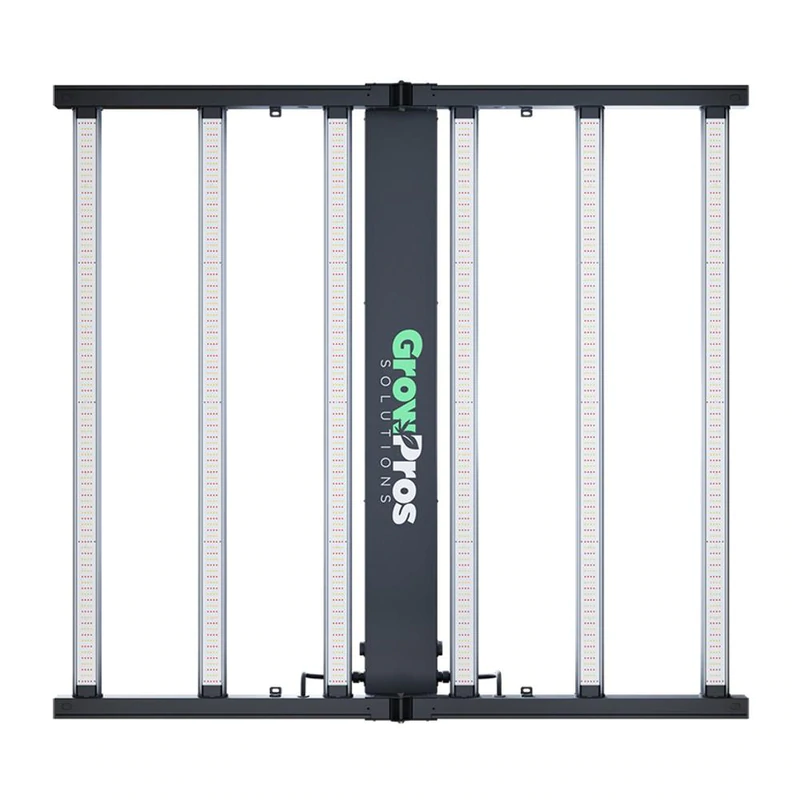
GrowPros HM660 LED Grow Light VS TotalGrow MH Lumyre 720W LED Grow Light
Using the best indoor plant grow lights can help your green plants thrive in any season and in any sun.
Providing your plants with the right amount of light is important for photosynthesis, healthy growth, flowering, fruiting, germination and more!
Why Choose LED Grow Lights?
LED bulbs are very energy efficient. This means they provide more light per watt than any other type of light. Almost all of the electricity they use goes to provide lighting, and hardly any of it is wasted in the form of heat or sound. Because of this, LEDs also run much cooler than other lights, again saving money on electricity bills, and it also keeps your grow lights from overheating and keeps your plants from drying out.
LED lights are generally easier to install and use. The bulbs have a long life (typically up to 50,000 hours), so you’re unlikely to need to replace any bulbs or chips, even after years of consistent use.
Features:
Compared to traditional HID and HPS light sources, the GrowPros LED grow light saves about 50% energy, and you can save a lot of energy over time. Without CO2 supplementation, the same results will not be produced. The HM660 lighting system is a complete pre-assembled LED grow light that reduces installation time with a variety of wiring techniques and connectors. HM660 series systems run cooler with passive cooling thermal management, meaning your lighting system can last longer while maintaining high light output levels. Longer life means you can grow crops for years without having to replace your lighting system, reducing costs. Indoor plants grow best under full-spectrum lights that replicate the sun’s natural spectrum. The HM660 series lasts longer than traditional grow light sources, resulting in healthier, happier plants.
TotalGrow MH Lumyre 720W LED Grow Light
Features:
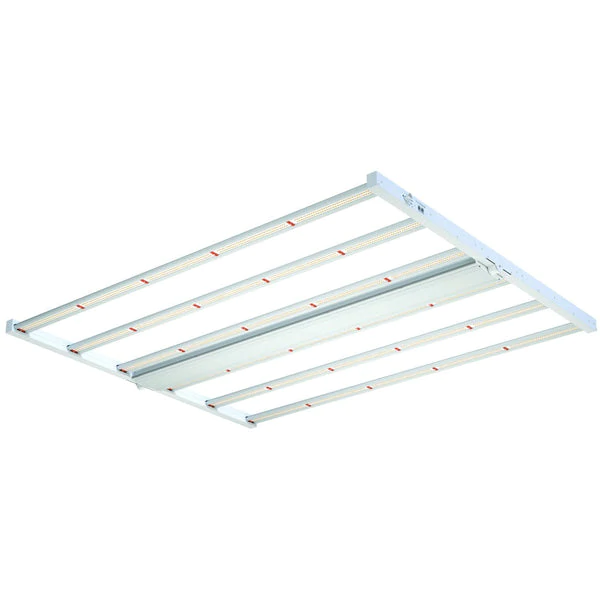
The TotalGrow LED grow light bars in a slim profile with a built-in power supply that evenly distributes the ideal light intensity across your growing area to meet your growing goals. Superior, customizable full spectrum supports efficient, high-quality growth of any life stage and crop variety. This plug-and-play solution with direct daisy chaining is easy to implement, has low upfront and ongoing costs, and sustainably produces high-quality crops. 720W power, 2.6 μmol/J, meet the light intensity required by your plants. The high-efficiency and low-power LED configuration with 6 LED strips reduces the temperature of the LEDs, with no fans or moving parts, significantly reducing the number of possible points of failure compared to other grow lights. It works out of the box, reducing installation costs.
What To Look For When Selecting a LED Grow Light
When selecting a LED grow light there are a number of factors you need to consider for yourself, which include:
Materials
Durability is key when selecting your new lighting rig. A good quality lamp will be around for at least a decade.
And with products that last longer, you can invest more into them. Electrical Output and Consumption
Your LED hydroponic grow light will need to be on for around 10–11 hours a day. Depending on your hydroponic unit, you’ll want to ensure that your unit is drawing the least amount of power.
Low Heat
LED lights that get too hot will damage themselves and the plants. You need to be sure that the unit is pumping out the least amount of heat.
And if it does overheat, the heating management system should do its job well.
Space and Plants
A major factor will also be the space you’re growing your plants in.
Spaces with little to no ventilation will cause mold to form on the plants.
And if you share a space with the LED lights, you’ll want to consider noise issues.
Ease of Use and Daisy Chain
Your LED hydroponic grow lights need to be simple to operate. Otherwise you won’t utilize all the great features.
Ease of use also extends to installation. An easy to install unit is one that gets to work faster.
For ambitious growers, you will want the option to expand your grow project. Make sure you’re happy with the amount of units you can link up to one another.
Warranty
None of these options are especially cheap. Thus each unit should come with a warranty or return policy.
Don’t purchase a unit if there’s no warranty or return policy.
Conclusion
Hopefully, this guide has given you more information on why LED grow lights are so popular, and the reviews have given you an insight into what’s currently on offer. Good luck with your LED grow light purchase and happy growing!
Maxibright Daylight 300W PRO LED Grow Light VS Mars Hydro FC-E 3000 300W LED Grow Light
These days, it’s easier than ever to keep your plants free from excess, no matter what the weather is like outside. From the herbs you use in the kitchen to other leafy greens and flowering plants, you can now bring them indoors. This is thanks to the latest technology that we have today, allowing us to provide artificial light to houseplants.
It will be easier for you to find top-quality LED grow lights that suit your plants’ needs. Without wasting time looking elsewhere, here are the top products to keep your plants healthy.
Why are grow lights so great?
If you want to grow indoors, you may need a grow light.
There are some major benefits to using grow lights. They will keep your plants growing even with other changes in the weather outside.
Plants need sunlight to grow. Once it’s bedtime, they have to stop growing for a few hours until the sun comes out. With LED Light you can create an always sunny environment for your plants — so they keep growing and you can harvest them faster.
The biggest benefit is flexibility. Grow lights really open the door to a world of gardening adventure. Whether you want to grow pineapples in the Antarctic or leafy greens in the desert, grow lights can create the perfect environment for your plants, no matter where you are.
Another benefit is that you can create an even distribution of light. In a garden, plants may be prone to shade for most of the day; this means they don’t get as much light from the sun. Grow lights, on the other hand, can help distribute light evenly throughout the plant’s canopy.
To complicate matters, however, there are different types of grow lights, and they all have different benefits. Knowing the strengths of each grow light will allow you to choose the perfect kit for your space and plant type.
Maxibright Daylight 300W PRO LED Grow Light
Features:
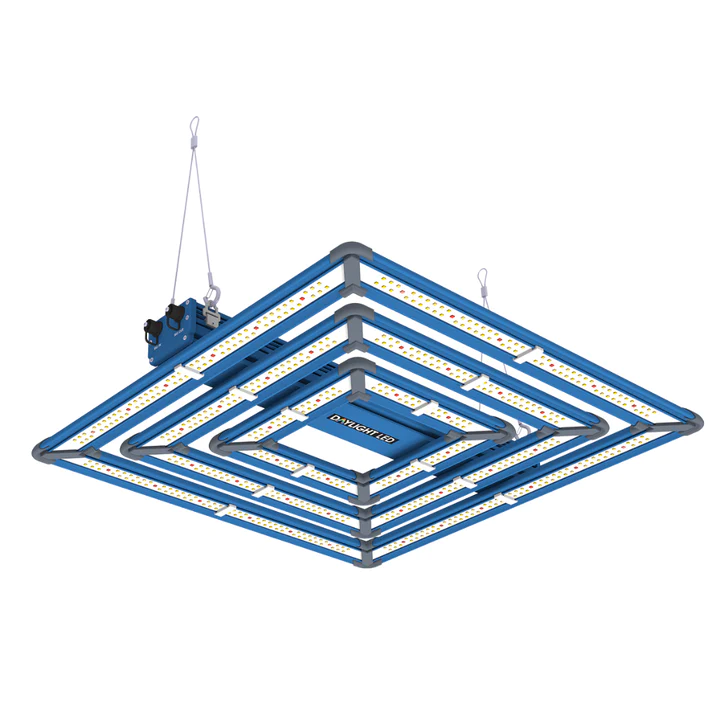
Maxibright LED grow lights provide the same full spectrum of light in a single energy and thermally efficient unit. They are perfect for smaller grow spaces/tents of 1 x 1 meter. This LED light gives your plants all the light they need from seed to harvest. These units feature dimmable light output, so you don’t need to change the light fixtures depending on the growth stage of your plants. The 300W Pro version is able to control multiple units via an iLink cable or DAYLIGHT lighting controller, which means you can tailor your lighting needs, including sunrise and sunset settings, specifically to your plant. The 300W LED brings you onboard dimming to ensure full spectrum while maintaining the enhanced red region of the PAR curve for consistently high levels of quality and yield every harvest.
Mars Hydro FC-E 3000 300W LED Grow Light
Features:
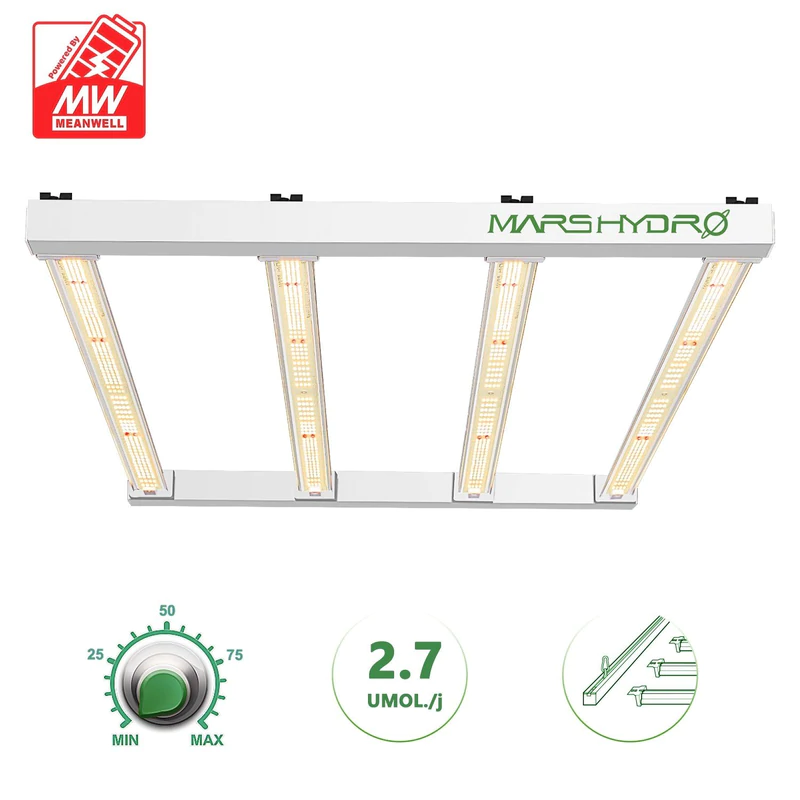
This Mars Hydro LED grow light with 1184pcs BridgeLux Diodes & Meanwell Driver, market-leading PPF 2.7 µmol/J, Max 2.5g yield/watt with 30% higher Average PPE, more cost-effective compared with other same type lights.Only consumes 300W, perfectly cover 3x3ft (personal), 2.5x2.5ft (commercial) grow space. Built-in removable bars interval & disability enable the exact & dynamic PPFD control over each of the plant growing stages, FC-E3000 detachable bars deliver highly uniform adjustable, PPFD levels throughout the plant canopy, best for more uniform Density Buds. Real Aluminum heatsink together with 4 slim profile passively cooled bars (THINNER & LARGER surface) and detachable Meanwell Driver, create less heat, save 50% energy than other old grow lights.
What kind of LED grow lights is the best?
The best LED low light for you is the one that is most responsive to the needs of your plants, which may have blue and red wavelengths. This means you should look for the color temperature that works best based on whether you are concerned with flowering or plant growth.
A great option to allow for different stages of the growth cycle of indoor plants is to get LED grow lights that can be adjusted. This means, for example, if your plant is close to flowering, you can make the light warmer to encourage flowering. It’s also good to get LED grow lights where you can adjust how long they are lit.
My top picks for LED grow lights have all the features you need, including:
Full color spectrum, meaning you can choose the color temperature of the light
Self-timer so you can keep your lights on for 4 hours, 8 hours or 12 hours depending on factors like how much light your plants need and whether they also get natural light
Dimmable brightness, if your plants don’t need that much spotlight, you can turn down the brightness
Retractable stand, which means you can set it tall, short or in any orientation you need depending on the room the plant is in
The remote has been tweaked for those looking for houseplants that don’t require getting up to tend to them
Conclusion
If you’re still reading and need our expertise, figure out your room to grow, nail down your budget, and get the absolute best lighting possible within your budget. If you can’t get a steady light the first time around, plan to come back and upgrade it ASAP, as this is where you’ll see the biggest increase in yield and quality.
Mammoth Lighting Fold Series MF08 LED Grow Light VS Spectrum King Phoenix 840W LED Grow Light
Do you want to grow organic vegetables and flowers at home? Or, do you want to brighten up a dull interior with some greenery? If so, then you need to invest in quality grow lights to create a peaceful atmosphere in your home.
Grow lights allow you to grow a variety of plants in any environment and time of year. These lights are specifically designed to replace natural sunlight, boost photosynthesis and provide the ideal color spectrum for plants to develop and thrive.
These grow lights are an essential tool for successful indoor gardening. Unfortunately, shopping for grow lights can be challenging as you may come across confusing jargon. But don’t let that scare you, because this list of the best grow lights 2023 will help you grow plants at home with ease.
The Impact of Different Light Colors on Plants
Sunlight contains the full spectrum of light. Plants use this entire spectrum for photosynthesis; blue and red light seems to be the most crucial. Here’s how they help plant growth: Blue and red light seems to be the most crucial. Here’s how they help plant growth:
Blue light: It is needed during the germination phase of the plant. Stronger blue light concentrations encourage the development of healthy roots. Besides, blue light regulates plant growth, making it ideal for growing stocky, short seedlings and foliage plants.
Red light: It positively affects the growth of a plant in multiple ways, particularly during the blooming and flowering phases. Certain red wavelengths increase the hormone production in the vegetation of a plant to prevent chlorophyll breakdown. As a result, the plant grows taller, generates more nutrients, and grows more leafy vegetation.
Apart from red and blue lights, research also suggests that white light can be great for plants, particularly when used with other colors. To ensure that your indoor garden lights have all these colors in the spectrum, you can invest in LED grow light modules.
Mammoth Lighting Fold Series MF08 LED Grow Light
Features:
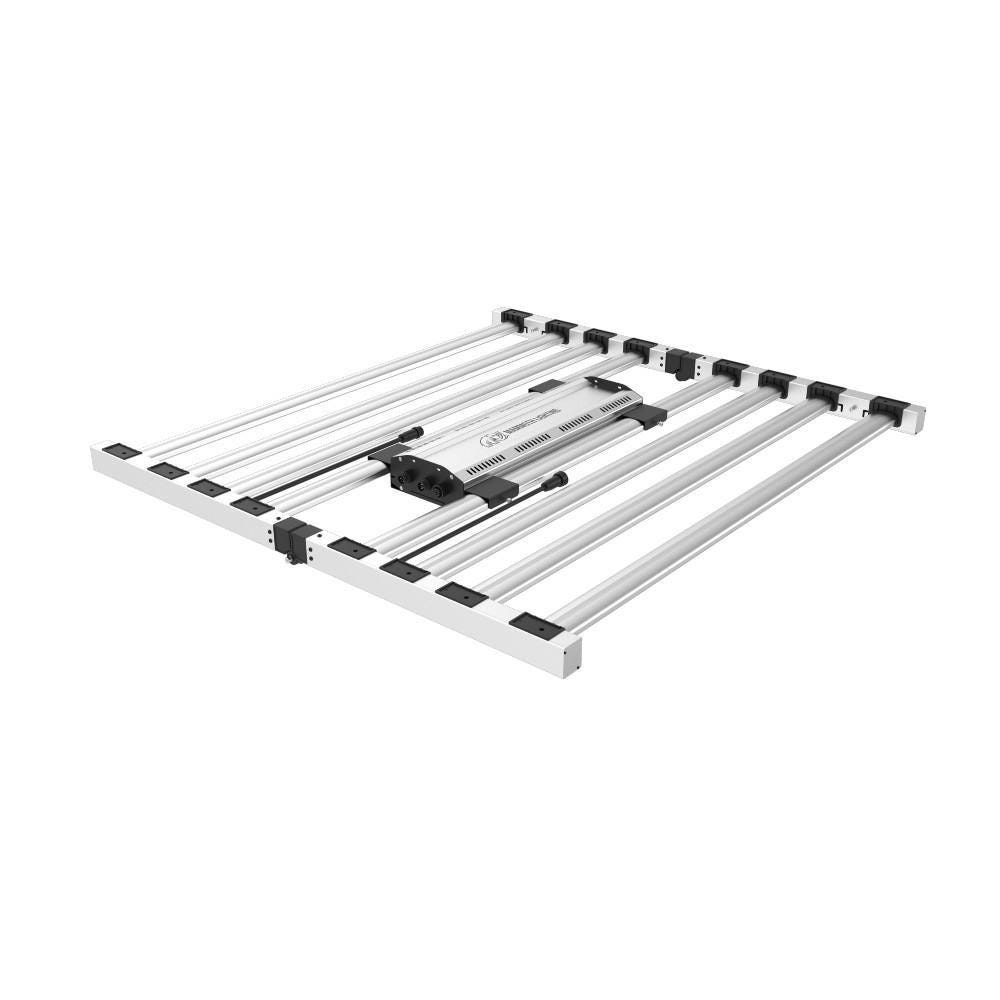
The Mammoth LED grow lights are built with high-quality Samsung diodes. The lights encompass a continuous range of wavelength from blue and green to red, creating a light blend matching the natural sunlight. 469 Samsung LM301B diodes per bar delivers the industry’s Highest PPFD and Yield. Mammoth customized their light spectrum to optimize plant growth and increase yields while consuming less energy and reducing operating costs compared with traditional horticulture technologies. With a proprietary blend of 3000k+5000k+660nm+730nm, for full cycle growth. 730nm speeds up flower (~5 days) and adds up to 5% more yield. Up to 5x5 flower coverage, 7x7 veg coverage. Strategically designed bars/spacing delivering more even lighting coverage (and growth) over a 5'x5'.
Spectrum King Phoenix 840W LED Grow Light
Features:
Spectrum King’s Phoenix 840W is ideal for photon-hungry crops that can handle strong light. With 16% less wall power than standard HPS fixtures, the 840 provides some decent output compared to other fixtures while still saving electricity and heat. Spectrum King’s custom spectrum is tested and customized to maximize plant and flowering cycle growth. The intensity of this dimmable light can be as low as 10%, enabling growers to simulate a sunrise/sunset effect. Spectrum King’s innovative Cryo-Therm cooling technology features an ultra-thin profile that maximizes airflow and minimizes microclimates. The Phoenix 840 grow light is optimized for single or multi-level planting close to the canopy.
What to Consider When Buying an LED Grow Light
Wattage
Wattage determines the potential energy available to plants. The “wattage” listed on the sales page of an LED light (or other type of grow light) refers to the watts that are drawn from your home outlet, but in reality that is not the amount that is emitted and arrives at the surface. Instead, look for a conversion rate, rated in micromoles per Joule (µmol/J). A good amount conversion rate is around 2.5µmol/J.
Coverage Area
PPFD measures the number of photons that arrive in an area over a given amount of time. PPFD is measured in micromoles per square meter per second (µmol/m2/S). Usually, the higher the number the better.
Light Intensity
Since the height of the LED grow light determines the intensity of the light, you might be wondering how high you should hang your light. It’s a great question because it depends on the kind of light and the stage of growth your plant is in. Ideally, we want intense coverage over a large area, but this is only possible with very high-end equipment, so we need to find a balance between the two and a couple factors play into this: heat produced by the light, brightness, and stage of plant growth. We have a handy chart for your reference that corresponds with LED wattage and light height.
Light Spectrum
Light spectrum is a crucial factor for grow lights. In the most general sense, there are three categories of LED grow light spectrums available: targeted (meaning blue light or red light focused) and broad (meaning white light focused). These days the majority of LED systems are full spectrum. This is because full spectrum contains enough variation in light that allows it to cover the entire grow cycle of a plant and spectrums can be adjusted to match the current stage of growth. These tunable LEDs usually have a switch that says “Bloom/Veg” that allows you to emphasize coloration. Newer models can be programmed using controllers that can control schedules, light intensity, and spectral range.
Plants mainly utilize light that is within the visible spectrum or just outside of it. Therefore, grow lights aim to produce the exact coloration that plants desire — this allows for the most efficient use of electricity while having the best results.
Conclusion
There are a lot of factors to consider when looking for the best LED grow lights, which is why we’re here to help point you in the right direction.
They can be a handy solution for growing houseplants, especially if you don’t have as much sunlight where you live, and during winter when light levels naturally decrease.
Optic LED Slim 650S Dimmable LED Grow Light 650w VS BIOS Endeavour™ 650W LED Grow Light
Interested in learning about LED grow lights?
LED grow lights are becoming more and more popular in indoor growing.
They offer several advantages over other types of grow lights, such as lower energy consumption, smaller size and longer lifespan.
We’ll provide some tips on how to choose the best LED grow lights for your needs.
So whether you’re a beginner or an experienced grower, read on to learn more about LED grow lights!
How do LED grow lights compare to other types of grow lights?
LED grow lights are becoming increasingly popular for growing plants indoors because they offer several advantages over other types of grow lights.
First, LED grow lights use a fraction of the energy of other types of grow lights, making them more cost-effective in the long run.
They also generate very little heat, which is good for indoor gardens that need temperature control.
Additionally, LED grow lights can be customized to the specific needs of a plant, making them ideal for those who want careful control over plant growth and development.
Optic LED Slim 650S Dimmable LED Grow Light 650w
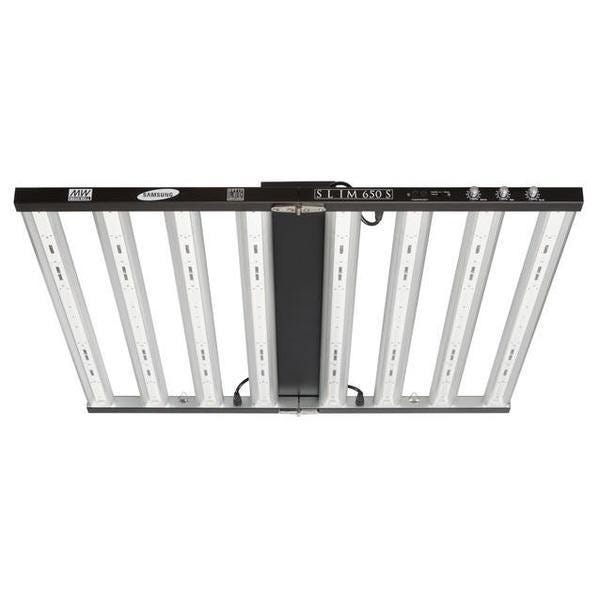
Features:
The Optic LED grow light gives you more flexibility than the usual LED grow lights. Featuring individual dimmers that control different LED colors, the Slim650S gives you full command over how bright each color can get. Switch from vegetating to blooming with a twist of a knob. You won’t need to adjust the height of the Slim650S when shifting phases, thanks to the independent dimmers. The independent dimmers of the Slim650S also let you change the way your plants grow. Turn up the dimmers to increase the potency and quality of your plants. The Slim650S doesn’t scrimp on components, as it uses 3,098 LEDs from Samsung and a Meanwell Driver. It can also work with the Optic LED Master Controller for a more centralized system.
BIOS Endeavour™ 650W LED Grow Light
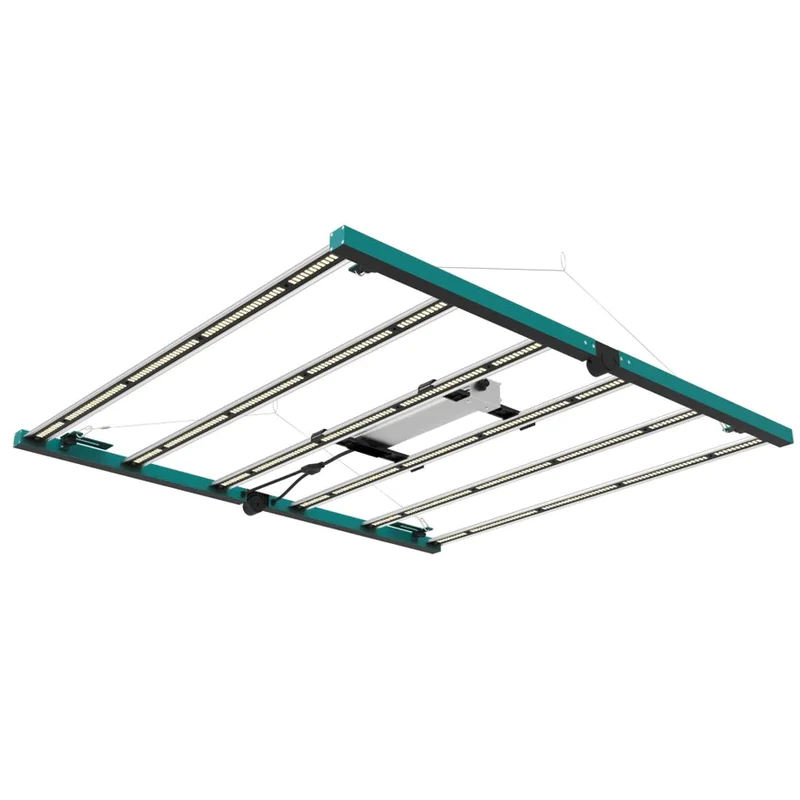
Features:
The BIOS LED Grow Light has a slim, lightweight design that optimizes space and allows repositioning on plant canopies in various applications. The optimized broad spectrum maximizes photosynthesis and plant growth while also providing ideal conditions for a comfortable viewing experience and accurate crop assessment. It is a cost-effective solution for a variety of grow light applications, where multiple light poles can be daisy-chained and placed individually to maximize coverage.
How do I take care of my LED grow lights?
LED grow lights are a great way to grow plants indoors, and with a little care they can last a long time. Here are some tips on how to care for your LED grow lights:
Clean the lenses regularly with a soft cloth. Dust buildup can reduce light output and shorten lamp life.
Avoid getting water on the lamp. Water can damage the circuitry and shorten the life of the lamp.
Avoid direct sunlight. Excessive heat can damage the LED grow light.
Turn off lights when not in use. This will help extend the life of the lamp.
Conclusion
I hope you have found a rundown of some of the most useful LED grow lights.
Don’t assume that just because you don’t have a garden means you can’t grow plants and vegetables. There are many other options besides using LED lights, such as vertical gardening.
ECO Farm FLD 320W Full Spectrum Dimmable LED Grow Lights VS Spider Farmer G3000 300W Full Spectrum LED Grow Light
When you decide to invest in indoor growing, you definitely want to know about the best LED grow lights.
LEDs are considered one of the best indoor grow lights on the market, but with the sheer variety of grow lights out there, it can be hard to sort out cheap, unreliable makes and models from the legitimate offerings.
Considering the price of some of these grow lights, it’s vital that you do your research before buying.
Before you buy an LED, you should make sure it’s right for your grow.
Why Plants Need the Best LED Grow Lights
LED grow lights, also known as dedicated artificial lights, can enhance the growth of plants and their environment in a number of ways.
Here are some of the main reasons why extra lighting can help plants grow:
Grow Lights Extend the Growing Season
Grow lights are a good investment for the amateur farmer who wants to extend the growing season.
If you live where you have a cold season, that will greatly limit growing outdoors year-round.
However, using supplemental lighting for houseplants or plants in a greenhouse means you can grow successfully year-round.
LED lights allow flowers to bloom early or late, depending on demand
When you can control the intensity of light and the type of light they have, you have more control over how they grow.
This can be especially useful when growing sensitive plants like orchids and roses in large numbers.
Grow during less sunny and low light intensity seasons
With LED lighting, even when the days are short, you can still enjoy year-round blooms.
This is defined as less than 13 hours of light.
Photoperiod lighting is ideal for low-intensity lighting to create long days when daylight hours are short.
It can also be used after transplantation.
Grow lights to promote growth
Photosynthetic lighting is a higher intensity lighting.
You can use it to promote root and shoot growth, improve plant quality and increase plant yield.
You can also create long days with photosynthetic lighting.
ECO Farm FLD 320W Full Spectrum Dimmable LED Grow Lights

Features:
Equipped with SMD 3030 chip, this ECO Farm LED grow light has a maximum yield of 2.5 grams per watt, 30% higher average PPFD, and 50% higher yield and quality compared to other similar lights. Consumes only 320W. This LED grow light has a Yield Max spectrum (3000k, 6000k, 660nm red, 730nm IR LED), which can make the light more uniform, truly simulate the sunlight, and perfectly meet the entire growth cycle of all plants from seed to harvest, including Medicinal plants, flowers, vegetables, etc. Newly designed fast heat dissipation material aluminium with 4 slim cooling strips, produces less heat and saves 50% energy than other old grow lights! The whole plant grow lights are waterproof. No need to worry about wet growing conditions. LED grow lights can be folded 180°, easy to install and move.
Spider Farmer G3000 300W Full Spectrum LED Grow Light
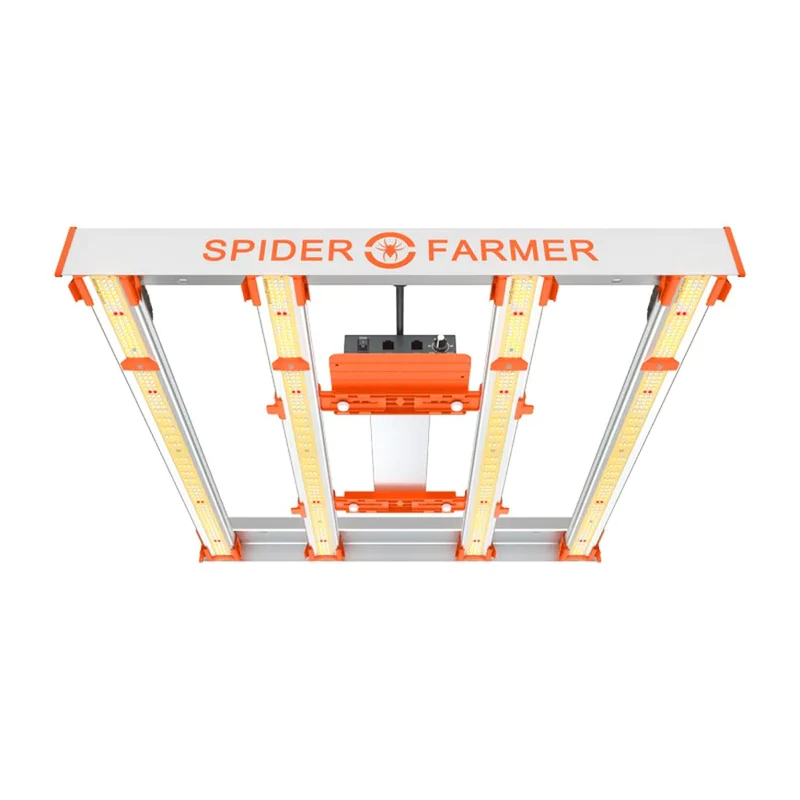
Features:
Spider Farmer LED grow light is designed with a unique elongated light bar to provide more even and comprehensive canopy coverage, especially at the edge of the planting area. With 896 Bridgelux diodes, the G3000 Grow Light is able to draw 300 watts of power, achieve an impressive 2.75umol/J PPE, and cover 3×3 feet of plant growth over a full cycle.
Things to Consider When Buying LED Grow Lights
Power
The first thing you need to look at is the power provided by the LED fixture. When it comes to power, this includes not only wattage, but also other specifications such as photosynthetic photon flux (PPF), efficacy, and average photosynthetic photon flux density (PPFD).
PPF and PPFD
PPF
PPF is the amount of light produced per second by a light source, in this case an LED grow light; it is measured in umol per second. Now, if your growing area is 36 square meters, and your strain needs about 500 umol per square meter, then your growing area needs 1,800 umol/s of light.
So you need an LED grow light that produces 1,800 umol per second. You can use several in series to get the desired PPF. Note that PPF does not automatically equate to the amount of light received by the plant, but to the amount of light produced by the light source.
PPFD
Meanwhile, PPFD is the efficiency with which plants use photons. You’ll want something evenly distributed throughout the planting area.
If you run a commercial-scale facility, you will need a PPFD of approximately 1,500 to 2,000 umol/s per square meter per second, which can be supplemented by a CO2 enrichment system and other environmental control systems.
However, if you have a small acreage, 1,000 is too much as it wastes energy as small growers or individual growers rarely use control systems to increase environmental and CO2 levels. Finally, power efficiency relates to how many photons can be obtained for the same power consumption.
Spectrum
Some LED grow lights are full spectrum, which makes them adjustable for different growth stages. Ideally, you’ll want full spectrum, which includes UV lighting. This will help you save even more because you can do most, if not all, of your growing stages with one set.
Full Spectrum LED Grow Lights feature red and blue spectrums, as well as infrared and ultraviolet lighting. These light colors are important as they aid in the different stages of growth, inducing photosynthesis and bud opening.
Cooling System
It is also important to have an efficient cooling system on your LED grow lights. While LEDs are much cooler than traditional lighting, keep in mind that growing plants emit more heat than other types of plants. This is why many grow light manufacturers emphasize building cooling systems into their products. In most cases, modern LED grow lights have built-in passive cooling. There are many good options for LED grow lights, and they have excellent heat dissipation designs.
Conclusion
There is no doubt that using LED grow lighting has its advantages.
The spectral output of LEDs is superior to any other type of light.
LED grow lights are the newest option for lighting plants and vegetables.
With the best LED grow lights for indoor greenhouses, you can extend the growing season and maximize the potential of each plant.
ECO Farm Z6–600 Samsung LM301B LED Grow Light VS BIOS Endeavour™ 650W LED Grow Light
There are some peaceful greenery that can really brighten up your home. But what do you do if you live in a suburb with no garden space? While there are many ways to liven up your interior space, one of the best ways is to grow your own plants with grow bulbs. This bulb is a specially designed light bulb that helps plants grow indoors by providing just the right amount of light they need for photosynthesis.
Why Grow Lights Are So Important
As a plant lover, you already know that light is what nourishes plants, without which plants cannot survive, let alone thrive. The more light you provide, the happier and healthier your plants will be. More light from grow lights helps your plants photosynthesize more, grow faster, and produce larger leaves and more sugar for their development.
The upside is that if you’re not lucky enough to have large windows with unobstructed views of the sky, you can get grow lights that equal bright indirect light or even direct sunlight, especially if you use a quality, tested grow light.
To get the best results from the best indoor grow lights, you need to be aware of the importance of choosing a quality grow light that produces light of sufficient intensity to keep your plants alive.
ECO Farm Z6–600 Samsung LM301B LED Grow Light
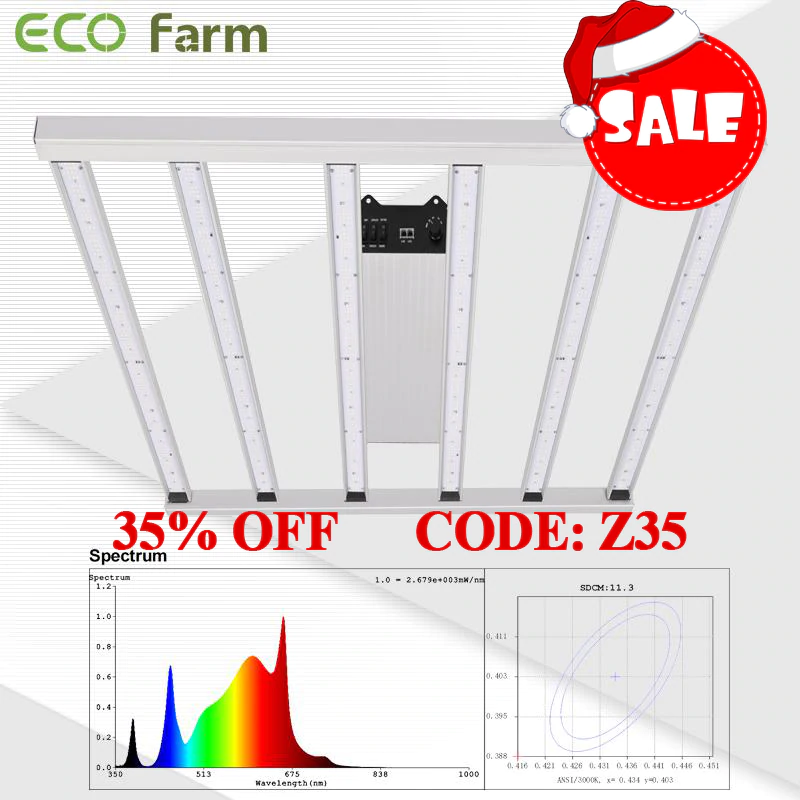
Features:
The PPE of the ECO Farm LED grow light is 2.7umol/J and the PPF is 1752umol/s, providing a high yield for light-loving plants. Energy saving and low heat compared to other types of grow lights. This is a LED grow light with 6 strips design, the light size expands to 4*4 feet. This will confirm evenly distributed coverage throughout the canopy, including the plant edges. Everbright coverage can reach 4*4~5*5 feet. The full spectrum is ideal for most light-loving plant seedlings, vegetation and the entire growth stage of flowering. IP65 waterproof horticultural lighting system can be used in humid or water vapour environments, easy to use, plug and play.
BIOS Endeavour™ 650W LED Grow Light
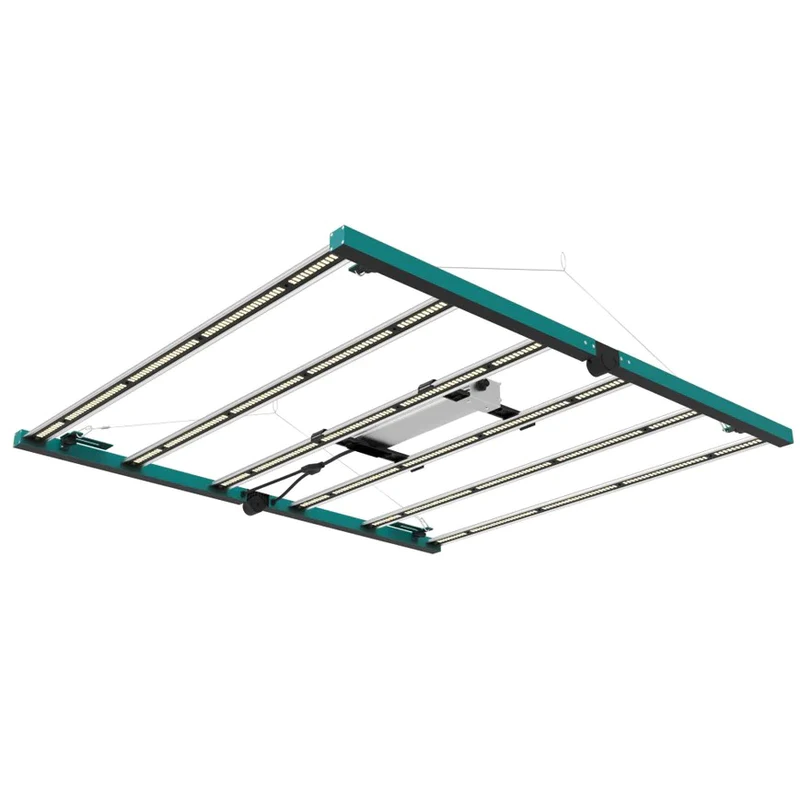
Features:
The BIOS LED Grow Light has a slim, lightweight design that optimizes space and allows repositioning on plant canopies in various applications. The optimized broad spectrum maximizes photosynthesis and plant growth while also providing ideal conditions for a comfortable viewing experience and accurate crop assessment. It is a cost-effective solution for a variety of grow light applications, where multiple light poles can be daisy-chained and placed individually to maximize coverage.
How to Choose the Best Grow Lights for Your Houseplants
There are many aspects to consider when choosing grow lights. Here are some you should know:
Light Intensity: You need to know how much light your plants need. This is usually measured in lumens and it’s a good idea to make sure you know how many lumens your plants need. If you don’t know what they are, ask the experts at your local garden store. They should be able to give you a rough estimate based on the type of plants you want to grow.
Full Spectrum Lights or Colored Lights? Many people use full-spectrum grow lights that mimic natural sunlight. However, you can also purchase lanterns if you want to change the color of your plants. These are sometimes used in botanical photography and design. Some plants respond well to certain colors of light, so it’s worth experimenting with different options if you want a unique look.
Types of Grow Lights: We have discussed the different types of grow lights. Therefore, you should have a general idea of which type is best for your plants. For example, LED lights are very efficient and last longer, but they can be expensive and not always as powerful as other options.
Types of Indoor Plants: It goes without saying that different plants require different levels of light. It’s a good idea to choose grow lights that are right for your particular plant type. For example, you can use fluorescent lights on cacti and succulents because they don’t require as much light.
Grow Lights Price Range: Finding a balance between quality and price is critical when choosing indoor lighting for your plants. If you want high-quality lights, you’ll need to pay more. However, if you want something affordable, it may not be as powerful or long-lasting as more expensive options.
Conclusion
Indoor gardening can be a rewarding and fun hobby. It’s easy to be successful when you have the right tools at hand. LED grow lights designed for houseplants make the process a joy. There are many systems to choose from at different prices, so there’s something for you.
Spider Farmer G860W Full Spectrum LED Grow Light VS Mammoth Lighting Fold Series MF08 LED Grow Light
Choosing a hydroponic light source is one of the most important factors for success. It’s also probably the most expensive item you’ll buy for hydroponics, so you want to get it right! Thankfully, in this day and age, there are plenty of great options that won’t break the bank. In this article, we’ll look at several lighting options. We include the specific grow lights that we have used and found to be of good quality.
How to Grow Plants Using LED Lights
Under natural conditions or in an outdoor setting, the sun provides the light needed to grow plants.
Ozone filters solar radiation, allowing a spectrum of light energy between 300 and 1100 nm, representing the more useful light for indoor plants. The visible spectrum is made up of the seven colors you see in the rainbow.
To successfully grow indoor plants using LED grow lights, you must mimic the sun and provide the different color spectrums your plants need at each stage in the form of artificial light. The main color spectrum that indoor plants need includes blue light and red light.
Growing plants with LED lights is easy if you know what your plants need at each stage of growth. Manufacturers are aware of these needs. In addition to making full-spectrum LED lights, they also offer lights with switches to activate different spectra at different stages.
Spider Farmer G860W Full Spectrum LED Grow Light
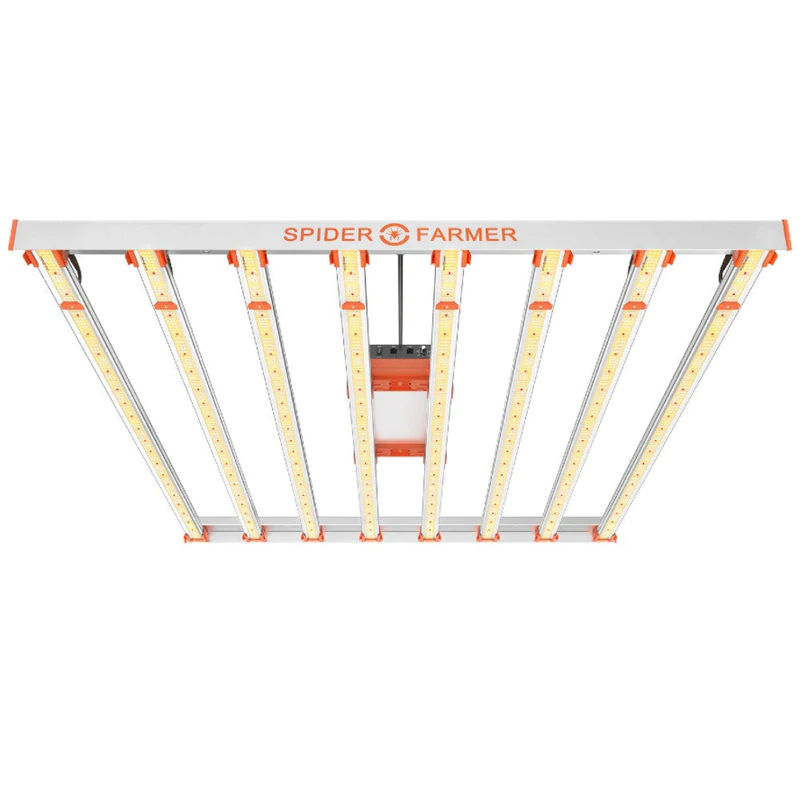
Features:
This Spider Farmer LED Grow Light features an even peripheral PPFD score for even coverage, ensuring maximum light per plant. The elongated light bar design also ensures a more even distribution of light, reaching all edges and corners. The strip grow light design and the aluminium heatsink on the back contribute to better airflow and good heat dissipation. The G860W Garden Light features a detachable driver and 6.56" long power cord to reduce ambient heat in the grow space for longer life. The LED diodes are coated with water repellent, so they are not afraid of a wet environment. Dimming daisy-chaining allows you to link up to 60 G680W Series grow lights together — dimming multiple lights simultaneously. Widely used in commercial cultivation, vertical farming, home gardens, home cultivation, CO2 systems and hydroponics.
Mammoth Lighting Fold Series MF08 LED Grow Light
Features:
The Mammoth LED grow lights are built with high-quality Samsung diodes. The lights encompass a continuous range of wavelength from blue and green to red, creating a light blend matching the natural sunlight. 469 Samsung LM301B diodes per bar delivers the industry’s Highest PPFD and Yield. Mammoth customized their light spectrum to optimize plant growth and increase yields while consuming less energy and reducing operating costs compared with traditional horticulture technologies. With a proprietary blend of 3000k+5000k+660nm+730nm, for full cycle growth. 730nm speeds up flower (~5 days) and adds up to 5% more yield. Up to 5x5 flower coverage, 7x7 veg coverage. Strategically designed bars/spacing delivering more even lighting coverage (and growth) over a 5'x5'.
Factors to Consider Before Buying an LED Grow Light
Here are important aspects of indoor growing that you should know to get the best LED grow lights for your strain.
Price
A grow light can cost from as low as $100 to as much as $2000; generally, the more the price, the better the quality of the LED light.
Another cost factor is the electricity bill you’ll have to pay monthly. LEDs won’t consume a lot of electricity due to their energy-saving properties, but the bigger the growing operation, the more the cost of electricity.
The frequency of growing plants will also influence the overall cost of buying the lights. For example, if you buy an expensive LED light, then it means that you’ll get a return on your investment if you use it to get multiple harvests in a year.
The Number of Plants
Most states that allow the planting of plants will have regulations regarding the number of plants you can plant in your home. For example, most states will limit the number of plants from 6 to 12. One or two lights should cover these lights.
If you’re planning on growing plants indoors on a large scale, you’ll need several huge LED lights or many small ones. When growing plants on a large scale, it is important to consider the room’s size and grow space. It will dictate the size of the grow lights you’ll install.
Power
It can be difficult to compare the power outputs for LED grow lights as manufacturers use several metrics and standards to quantify them.
Generally, 1 watt will provide 90 lumens of light output. There is also a standard lumen requirement for a plant in the different stages of growth.
For example, in the seedling stage, the plants require 2,000 lumens for every square footage. It translates to power needs of 23 watts per square footage. In the flowering stage, the lumen requirement goes up to 10,000. It translates to power needs of 113 watts per square footage.
Determining the power needed for growing your plants also helps you choose the right LED light.
Safety
When growing plants indoors, you’ll use a lot of electrical equipment to grow plants effectively. Since the equipment runs with less human interaction, ensure you maintain high safety standards.
For example, you should consider the power needs of the grow light. Chances are that you’ll be running the lights constantly for a long period. It means they’ll consume a lot of power over a long period.
It’s important to check if the power outlets and breaker board can safely handle the drawing of such power. Overloading electrical outlets can spell trouble when there is a short circuit.
Conclusion
You’ll agree that the ideal LED grow light for any grower must be full-spectrum, feature high-quality diodes for maximum intensity, cover a large area, and most importantly, be affordable.
ECO Farm 1000W Commercial Full Spectrum LED Grow Light Bar MS Series VS Spider Farmer SE1000W Dimmable Full Spectrum CO2 LED Grow Light
LED grow lights are a relatively new type of light designed specifically for indoor plants to help them thrive. There are many benefits to using LED grow lights, but one major disadvantage is the cost of these lights. But what if I told you there is an affordable option? The great thing about LEDs is that they last for years and generate less heat than traditional light bulbs. They also use less electricity, which makes them more economical in the long run. If you want to make your business’ greenhouse more productive, this article tells you everything you need to know about LED grow lights!
Why Choose LED Grow Lights?
LED grow lights are a great solution for today’s indoor plant growers. When shopping for LED grow lights, you need to consider their durability. Construction should be of high quality. If not, then you are wasting your hard earned money. LED grow lights provide the light spectrum your plants need. If your plant doesn’t get enough light, it won’t grow strong. Then the productivity of the factory will also drop. So, if you don’t have enough fruits and flowers in your indoor garden, you can use some cheap LED grow lights. Also, if you need to protect the plants from snow or cold by providing them with enough sunlight.
ECO Farm 1000W Commercial Full Spectrum LED Grow Light Bar MS Series
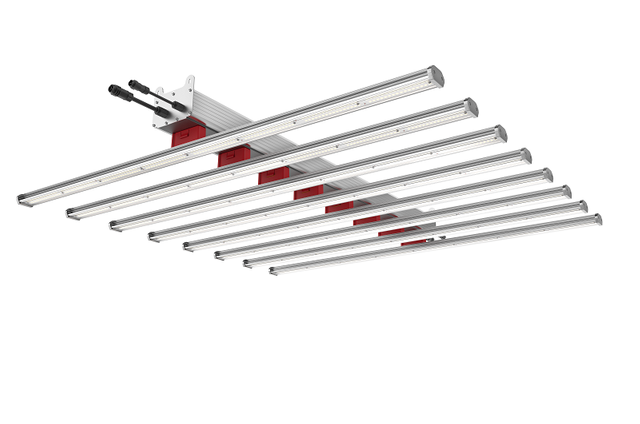
Features:
The ECO Farm grow light uses Samsung high-bin LEDs, ultra-high PPFD, and 8 high-efficiency aluminum rods to ensure high-efficiency PPE 2.7umol/J, better heat dissipation, and long service life. Compared with old plant lights, the average PPFD is increased by 30%, and the yield and quality are increased by 50%. 90% of led plant growth light will be absorbed by plants, while traditional HPS lights and MH lights, the effect is only 8 %-10%. 8 LED growth lights, each rod is covered with high-grade glue, waterproof and easy to clean, not easy to be filled with dust. This plant growth light also uses a special dimmer, which can precisely adjust the brightness. 0–10 levels are optional. This means that you can see clear brightness levels and record while adjusting. No need to worry about differences.
Spider Farmer SE1000W Dimmable Full Spectrum CO2 LED Grow Light
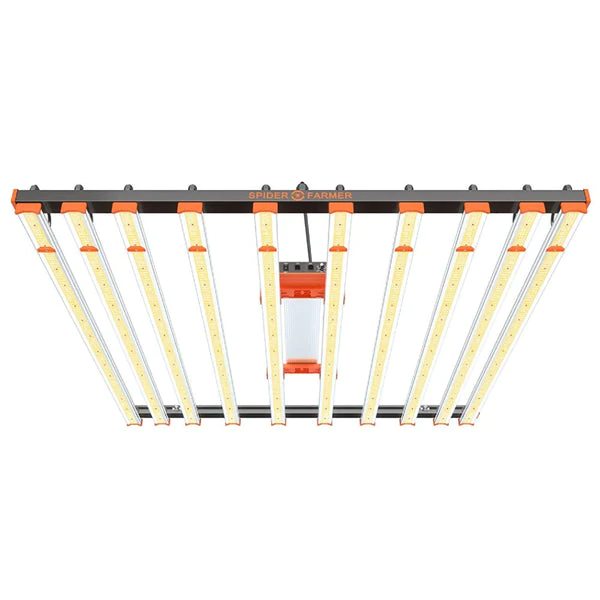
Features:
Spider Farmer LED Grow Lights feature a uniquely designed extension of 10 to provide more even and complete canopy coverage, especially in exterior growing areas. With 3710 SAMSUNG LM301B diodes, the SE1000W Led Grow Light consumes 1000 watts at 2955 umol/s, achieving an impressive PPE of 2.9 umol/J, covering a high yield full cycle growth of 4'x4'. The dimmer knob is ideal for growers to adjust light intensity for different growth stages. The SE1000W grow light comes with a detachable driver and long power cord to reduce ambient heat in the grow space and extend its lifespan. The LED diodes are coated with water repellent, so there is no need to worry about wet environment.
How to choose the best LED grow light for your needs?
Many people find growing with LEDs to be difficult because LEDs require more attention than other types of light sources such as T5 fluorescents, HPS lamps, or MH (metal halide) lamps, which are designed for growing plants under artificial light Designed to grow. This is not true at all! They require less care because they generate very little heat and can be placed closer to the tops of plants than any other type of grow lights. For example, a 250 watt HPS light will cover up to 2 sq ft/m2, while a single board LED system of the same wattage will cover up to 4 sq ft/m2 due to its higher lumens per watt rating.
LED grow lights have another advantage — they can be easily fixed to your table or hung on the wall without any additional equipment like HPS lights require you to buy extra equipment like reflectors and towns Inverters, these devices take up more space and cost more than LEDs, which is true for grow lighting. This is why LED grow lights are considered by many to be the best artificial light source for indoor plant growth under artificial light conditions. If you’re growing small plants, you don’t need to buy an expensive ballast + reflector combo as the T5 Fluorescent Grow Lights will do as you don’t have to place the light source very close to the top of the plant.
In order to decide which LED grow lights are best for you, it’s important to understand how they work before purchasing your own system. For example — a single strip 400 watt LED grow light system will typically produce a PAR of 200–400 watts, while a full spectrum 600 watt LED light will only produce a PAR of 150–300 watts. If you plan on growing medium sized plants or even larger plants, you don’t have to buy expensive full spectrum lighting as you can get better results with single strip LEDs which produce more PAR per watt , and give better light penetration into the plant canopy without losing too much quality.
When using LED grow lights to grow plants indoors, you should always try to use reflective walls or other means or reflectors if necessary to divide the planting area to ensure that all parts of the plant get the best possible results without any shaded areas. Optimum lighting conditions. This is especially important on very tall plants, which can block light from the stems and lower parts of the leaves, which will lead to a loss of growth hormones and even discoloration (yellowing) of the outer leaves.
Conclusion
In summary, the best LED grow light for your needs is one that provides just the right amount of light to your plants, is easy to use, and has solid construction. Be sure to read reviews and compare different models before buying so you can find the perfect LED grow light for your needs.
Spider Farmer SE7000 730W Full Spectrum LED Grow Light VS Mammoth Lighting Fold Series MF08 LED Grow Light
With so many options on the market, finding the best LED grow lights for your indoor garden can understandably be tricky.
LED grow lights are becoming more and more popular in indoor gardening and hydroponic systems. They offer many advantages over traditional HID (High-Intensity Discharge) lighting, including lower energy consumption, less heat output and a longer lifetime.
But that doesn’t simplify things when it comes to choosing the right product for your indoor gardening needs. There are dozens of options on the market, with different features, coverage, light intensities, and designs, and it can be overwhelming.
We’ve compiled this complete guide to the best LED grow lights 2023 to help you find the right light for your indoor garden and requirements.
How Much Electricity Does It Take?
A professional light bulb can bring a lot of light energy to plants, so naturally, you will think that it needs a lot of electricity.
Indeed, commercial growers with thousands of plants to care for may incur huge electricity costs.
But for ordinary indoor gardeners or small indoor greenhouses, the monthly cost of running a single greenhouse LED grow light with medium power may be as low as one or two dollars per month.
Service Time
It seems obvious but compared with lighting the lamp for 6 hours a day, lighting the lamp for 12 hours a day will consume twice the energy.
Power Consumption
Some small greenhouse grow lights are quite low in power, and only 10 watts are used when they are used. Others can easily consume 100 watts or more (ten times).
Spider Farmer SE7000 730W Full Spectrum LED Grow Light
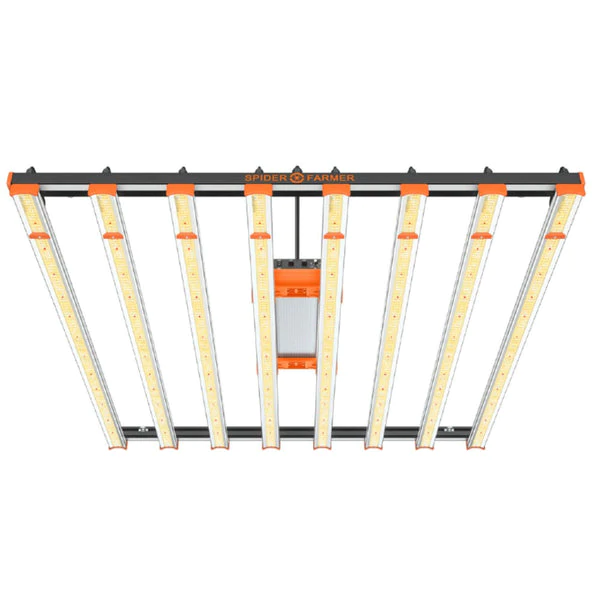
Features:
This Spider Farmer LED grow light features a uniquely designed extension of 8 bars to provide more even and complete canopy coverage, especially in outer edge planting areas. With 2688 SAMSUNG LM301B diodes, the SE7000 Led Grow Light consumes 730 watts at 2045 umol/s, achieving an impressive PPE of 2.8 umol/J. The full spectrum (3200–4200K, 4800–5000k, 650–665nm) is ideal for vegetable flowering to suit every stage of the plant cycle. The dimmer knob is ideal for growers to adjust the light intensity for different growth stages. The strip grow light design and the aluminium radiator on the back contribute to better airflow and good heat dissipation. The LED diodes are coated with water repellent, so there is no need to worry about a wet environment.
Mammoth Lighting Fold Series MF08 LED Grow Light
Features:
The Mammoth LED grow lights are built with high-quality Samsung diodes. The lights encompass a continuous range of wavelength from blue and green to red, creating a light blend matching the natural sunlight. 469 Samsung LM301B diodes per bar delivers the industry’s Highest PPFD and Yield. Mammoth customized their light spectrum to optimize plant growth and increase yields while consuming less energy and reducing operating costs compared with traditional horticulture technologies. With a proprietary blend of 3000k+5000k+660nm+730nm, for full cycle growth. 730nm speeds up flower (~5 days) and adds up to 5% more yield.
Things to Consider
Spectrum
First, we need to talk about the growth spectrum. This is basically the wavelength produced by a light source, such as the sun or LED lights. As a spectrum, there is a range of wavelengths that growers are most interested in affecting plant growth — these wavelengths include UV radiation, the visible portion of the spectrum (including photosynthetically active radiation or PAR), and far-red radiation.
Plants use light in the PAR part of the spectrum for photosynthesis, which is fairly easy for growers to discern.
In plants, chlorophyll — which converts light energy into chemical energy — absorbs primarily red and blue light during photosynthesis. Red and blue light also occur in the PAR range of the spectrum.
Some 5 billion years of DNA from the sun have been stored in plants — we can’t be naive enough to think we know everything now. Full-spectrum LED lights best mimic sunlight.
Daily light interval
A daily light interval is a fancy way of saying when lights are on and when they are off — or when your plants are “sleeping” and when they are “awake.”
As plants grow and mature, how much light they need changes. Younger plants need more light over a longer period of time, while older plants can survive in less light — but they need more intense light.
That’s the advantage of full-spectrum LED lights. Full-spectrum LED lights more closely mimic the sun because, as the name suggests, they include all the colors in the spectrum.
If you’re growing plants, young plants need more blue light, while flowering plants need more red light. This is where full-spectrum light can benefit growers, as they use artificial light to help plants grow more efficiently.
Use Artificial Light
Growers use artificial light to help plants grow bigger and better. This is when full-spectrum LED lights will come into play, so humans can help nature by emphasizing what plants need at precise times to influence better outcomes. This is why you probably don’t want plants in different stages to be under the same light, as they don’t need to be at the same intensity at the same time.
Full Spectrum LEDs
It can be said that LED lights are new things on the street. And there’s been a debate about which is better: LED or HID? In fact, plants grow well under either condition, but recent research has shown that LEDs have evolved to the point where they now perform better under LED lights. Indoor plants in particular tend to benefit more from green light (as we mentioned above). Since LED lights emit much more green light than HID lights, it becomes a matter of preference and cost.
Conclusion
When looking for grow lights for houseplants, it is essential to consider various factors. But at the end of the day, the best grow lights for your plants are the ones that meet their specific needs. Whether you’re looking for grow lights, consider the size and type of plants you’re growing, as well as the size of your growing space. Remember, it’s best to consult an expert for the best advice for your situation.
ECO Farm MB660 Foldable Grow Light Bar VS Phaser X660 Pro LED Grow Light
How Do I Choose the Best Greenhouse Lighting for Indoor Gardening? For the best, most thoroughly researched, reliable and effective grow lights, see this in-depth guide.
The plants in my seventh grade science class taught me that they need light for photosynthesis, the process by which they create food. Photosynthesis is the process by which green plants convert water, carbon dioxide (CO2) and minerals into glucose.
The plants won’t be able to develop unless this happens, so having plenty of light is crucial.
In the same way that outdoor plants need sunlight for photosynthesis, indoor plants may not get enough sunlight. To continue growing normally, they must have access to other forms of light similar to the sun.
This is where the lifesaver of grow lights comes into play!
However, not all lights are created equal, and today we’re going to take a look at some of the best greenhouse lights that will ensure your plants reach their full potential.
ECO Farm MB660 Foldable Grow Light Bar
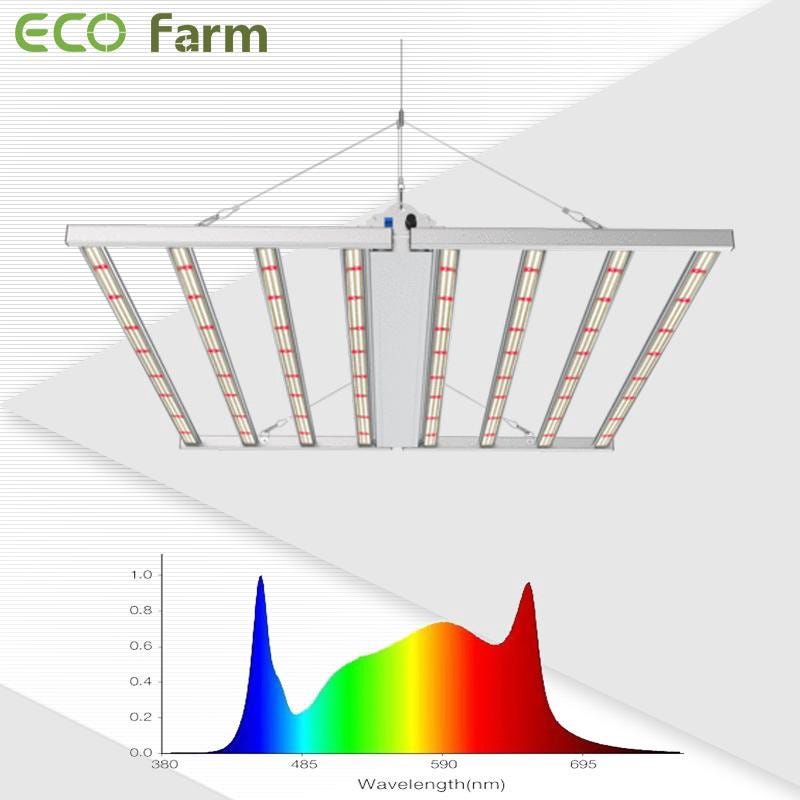
Features:
The UV+IR bars of this ECO Farm LED grow light can increase your plant THC content. UV light causes the plant to create more resin to protect itself, which means higher THC and CBD levels. This LED grow light utilizes the latest technology on the market–from intensive research for optimum performance, to customized spectrums to achieve the highest yields possible. This grow light is the most powerful commercial-grade LED grow light on the market. No fans = silent & noise-free operation. The full spectrum(2112pcs LM301b 3030 White chips+48 Osram 660nm Red chips) allows you to drastically increase yields and quality. Using this LED grow light is a great way to save on lighting for larger grow rooms and greenhouses.
Phaser X660 Pro LED Grow Light
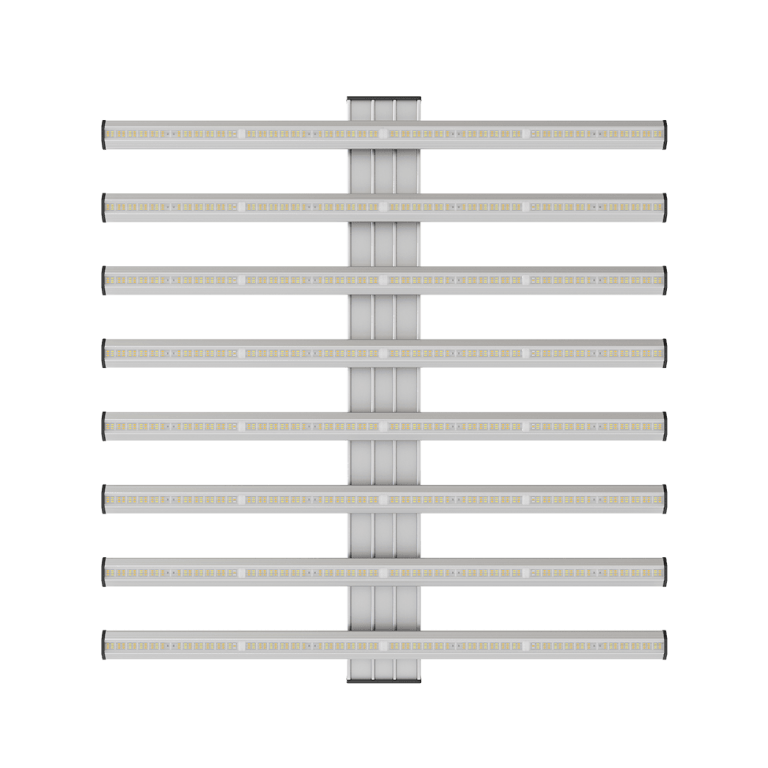
Features:
This full-spectrum LED grow light has an excellent spectrum that mimics the sun spectrum, optimizing the whole stages of indoor growing plants from seed to flowering, to maximize the yields and ensure crop quality. Perfect grow lights for indoor plants. These grow lights are also built-in 0–10V dimming control knob, to satisfy the plant’s growth stages needs. This grow light for indoor plants utilize an advanced aluminium heat-sink design, No fans ZERO noise, 8 aluminium led bars offer an excellent 360° heat dissipation to protect plants and expand grow light lifespan. Indoor grow lights utilize high-low profile design, ideal for vertical grow configurations and greenhouse. Adjust the hanging height to suit the plant growing needs and maximize yields. At 660W, 1735 µmols light output is higher than HPS lights, while using less energy.
What to Consider When Buying Indoor Grow Lights
What and where you’re growing: When shopping for indoor grow lights, the first thing you need to do is consider the types of plants you’re growing and where they will be in your home. If you are germinating seed trays or have a large number of houseplants that need supplemental light, you may want to use panel lights that cover a larger area and can be hung overhead. LED bulbs can be used in any standard light fixture and are easy to use. Novice gardeners might consider a complete grow light system with built-in lights to help hone your gardening skills.
Wattage: When calculating the wattage needed to keep your plants healthy, consider that you need about 25 to 45 watts per square foot of growing space. If you’re growing low-light plants like lettuce, various herbs, or other leafy greens, you’ll need about 10 to 15 watts for healthy growth. On the other hand, seedlings and vegetable plants need more light and thrive on 30 to 35 watts.
Fluorescent Bulbs vs. LED: When choosing the perfect grow light, consider that fluorescent and incandescent grow lights are not as efficient as LED grow lights, don’t last as long, and are more expensive to run on energy. They produce a cooler, one-dimensional light that is perfect for raising seedlings or growing leafy plants. However, compact fluorescent lamps (CFLs) are full-spectrum and are the best choice when used with fluorescent lamps. LED grow lights are more expensive than fluorescent lights, but last longer and are more efficient. They also replicate the sun’s full color spectrum, producing red and blue light. Blue light supports vegetative growth of plants and red light supports fruiting and flowering.
Conclusion
Grow lights open up a whole new world for indoor gardening. From starting seeds to transplanting outdoors to overwintering houseplants, grow lights are a popular and affordable way to keep plants of all types healthy, even if they’re tucked away in the back corner of a dimly lit room.
