ECO Farm UI2 690W Samsung 301B Chips LED Grow Light VS Enlite Flora 680W LED Grow Light
Grow lights allow you to garden almost anywhere and in every season. While grow lights are popular when the spring garden is starting to seed, you can also use them to grow herbs, houseplants, and vegetables year-round.
When you’re looking for the right grow lights for your needs and space, remember to always look for the most environmentally friendly lighting options. Even small efficiencies like placing lights near sunny windows or finding lights with timers can really add up over the years. You’ll feel good knowing you’re starting a green habit like gardening while reducing your overall carbon footprint.
Think of grow lights as a long-term investment. You’ll be able to use them every season to grow delicious herbs or any other plant. They are especially good for growing seedlings before the weather is warm enough to grow outdoors. Growing your own plants from seed can also help you save money compared to buying from a nursery. Perhaps most importantly they bring life and light to those dark months of the year. Here are some of the best grow lights when you start your own indoor setup.
How to Determine the Amount of Light for Plants
Once you know the specific light needs of a plant, you can determine how much light you need to give the plant. There are a few steps you can follow to determine the correct amount of light for your plants. First, determine the type of plant you are growing. Some popular plant varieties include indica, sativa, or hybrids. Each plant has slightly different light requirements throughout the growth cycle. You can also find helpful information by reading articles or product descriptions that provide growing instructions. Second, determine the planting environment, such as the size of the planting area, the type of grow lights, and the distance from the light source. The size of your growing environment and the type of light you use will affect the amount of light your plants need.
ECO Farm UI2 690W Samsung 301B Chips LED Grow Light
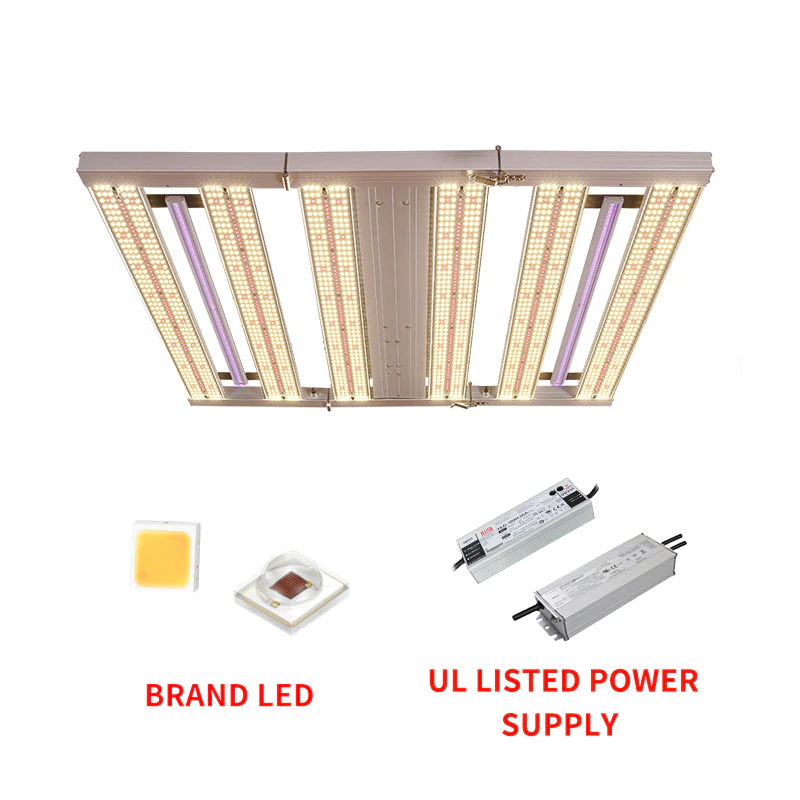
Features:
This ECO Farm LED grow light is designed with 8 strips for a more even and complete canopy coverage. Equipped with high efficiency Samsung LM301B diode with extremely low thermal resistance. The plant light is flicker-free and dim, with a lifespan of 50,000 hours. The LED grow light consumes 690 watts at 2240 µmol/s and achieves a satisfactory PPE of 2.8 µmol/J covering high yield full cycle growth of 4'x4'. Each full spectrum LED grow light uses custom 2244 Samsung LM301B diodes. The abundance of wavelength types is consistent with the spectral range of plant photosynthesis. It can concentrate specific wavelengths of light to illuminate crops evenly, controlling plant height and plant nutrients.
Enlite Flora 680W LED Grow Light
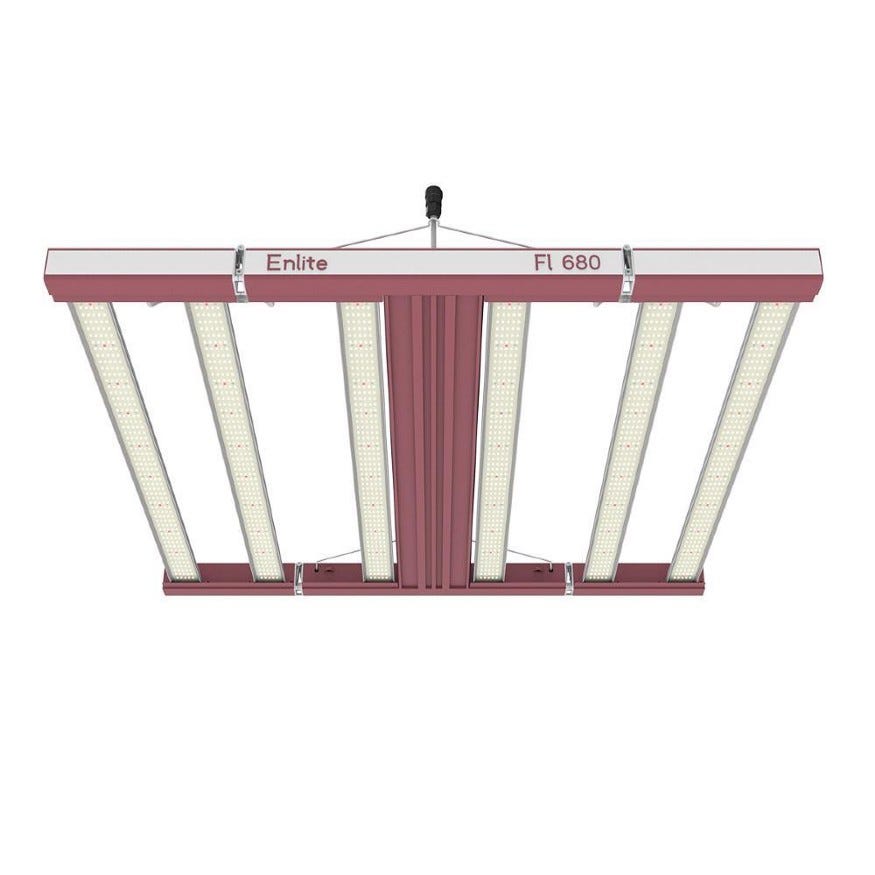
Features:
This Enlite LED grow light gives a High-PPFD level 1000–1100 μmol/m2/s in a 4x4ft to growers. This grow lights adopt a self-designed special structure heat dissipation system. Compared with other plant lights, its working temperature is much lower. This unique design can not only extend the light life, but also bring less harmful canopies. Enlite LED plant growth lights use full spectrum, a light suitable for the entire growth stage from vegetables to flowering. So growers only need to buy a lamp suitable for the entire growth stage. The Flora series plant light is composed of 3 parts of uniform size, each part can be folded 180 °. This design helps us make shipping and packaging easier, and you can store it more easily.
What to Look for in Grow Lights
When growing plants indoors, it is crucial to choose a grow light that emits the correct wavelength of light.
Different colors of light help plants grow in different ways. For example, blue light is necessary for plants to grow leaves and stems. Red light helps plants to flower and bear fruit.
UV (ultraviolet) and IR (infrared) light are also beneficial to plants. Infrared enhances the stems of plants. UV light is important to plants because it helps them produce essential oils and other beneficial substances. Without UV rays, plants lose their health benefits.
Full-spectrum grow lights not only emit all the wavelengths plants need, but they are also the best type of grow lights. Although full-spectrum grow lights cost more than other types of grow lights, they produce higher yields, making them worth the investment.
In addition to the type of light, there are a few other characteristics to look out for when choosing grow lights for herbaceous plants.
The first is light intensity. Plants need a lot of light, so it’s important to choose grow lights that are powerful enough to meet their needs.
The second is the duration of the light. Plants love sunlight and need about 6–8 hours of light per day. If you use grow lights, you need to make sure it is on for at least 6 hours a day.
The third is the setup and size of the garden. Are you planning to have a large garden, or are you planning to grow a few of your favorite plants? The size and layout of your garden will determine which grow lights best suit your needs.
If you have a large indoor garden, you will need to purchase or build a grow lighting system large enough to meet the needs of the plants.
Also, where will you put the grow lights? You need to make sure the plants are in the light range where they can get their full benefit. Do you want your grow lights to stay still or move your plants around? These are important considerations to keep in mind when choosing grow lights for plants.
In addition to the quality of plant lights, another consideration is price. They can be expensive, so it’s best to choose one that fits your budget. You can easily find affordable options as there are many different types of grow lights on the market.
If you are looking for the best grow lights, be sure to consider these key factors when purchasing. With the right grow lights, you can enjoy healthy, thriving plants year-round.
Conclusion
All of these factors will help in choosing the best LED grow lights for plants that meet your expectations. So, use your time effectively.
That’s it for the ultimate guide to buying grow lights. We hope you can buy with confidence. happy shopping!
Spectrum King Phoenix 1050W LED Grow Light VS GrowPros HM960 LED Grow Light
Traditional artificial light sources generate excessive heat. For example, through LED lighting and hydroponic systems, air can be recycled, excess heat and moisture can be removed, and electrical energy can be efficiently converted into effective photosynthetic radiation and ultimately into plant materials. Studies have shown that the use of LED lighting can increase the growth rate and photosynthetic rate of lettuce by more than 20%. It is feasible to use leds in plant factories (vertical farming).
LED plant growth light is a great invention, it is a creative stable and variable light source, which can replace the sometimes absent sunlight, and provide a variety of light growth conditions for plants in different periods. The optimized configuration of LED grow lights can not only realize the resource utilization of agriculture and reduce the energy consumption of the entire industry, but also reduce the purpose of using pesticides, reduce the occurrence of diseases and insect pests, and improve the survival rate and land utilization rate.
LED or HID? — What grow lights should growers be concerned about?
There is a lot of debate about which grow lights are best for indoor growing. However, most growers choose one of two light models: light-emitting diodes (LEDs) or high-intensity discharges (HIDs). There are many advantages to both light designs, but most home growers will prefer LED grow lights.
Today’s LEDs offer many significant cost advantages over HIDs. For example, LED lights emit greater light intensity while consuming less power. LEDs don’t radiate as much ambient heat as HIDs, making it easier for home growers to manage tent temperatures. Additionally, LEDs tend to last longer and require less maintenance than HID bulbs.
LED panels tend to be easier to fit into small planting areas, which may benefit areas with limited space. LEDs with dimmer switches may also be suitable for use in seedling, vegetative growth and flowering stages.
While HIDs are not a “bad” choice, they have unique considerations that every home grower needs to consider. In addition, HID is too strong at the fragile seedling stage. You will want to invest in fluorescent bulbs to help your seedlings grow, then switch to HID as the plants move into vegetation.
Whether you rely on LED panels or HID, you’ll need to measure your growing space and make sure you’re using the right light model for your tent. Carefully check the weight requirements of the tent support frame, and consider additional load-bearing equipment such as heat extraction fans and ventilation. After evaluating all of these considerations, you should be in a good position to choose the right lights for your grow space.
Spectrum King Phoenix 1050W LED Grow Light
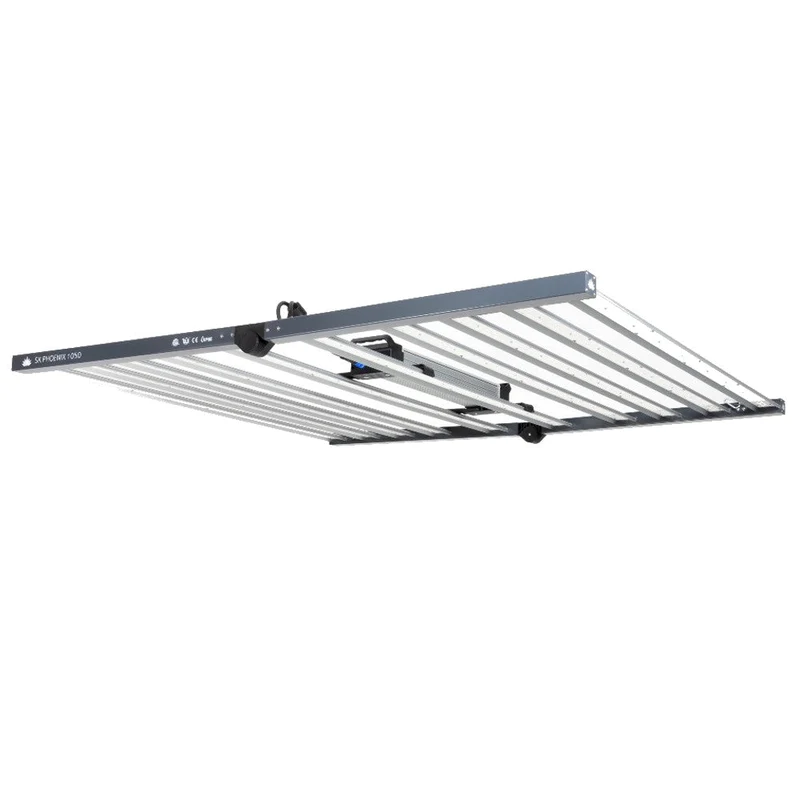
Features:
Spectrum King’s Phoenix 1050W LED Grow Light is a grow lighting beast that unleashes 1050 watts of sun-like light in areas up to 6' x 6', unleashing the ultimate output for your grows. Designed to hang high, the Phoenix 1050 recreates the sunniest summer days for plants that never seem to get enough light. SK Cryo-Therm cooling technology enables an ultra-thin profile that allows maximum airflow and minimizes microclimates. Optimized for single or multi-tier planting near the canopy. For growers who need the biggest, brightest LEDs, the Phoenix 1050W is for you.
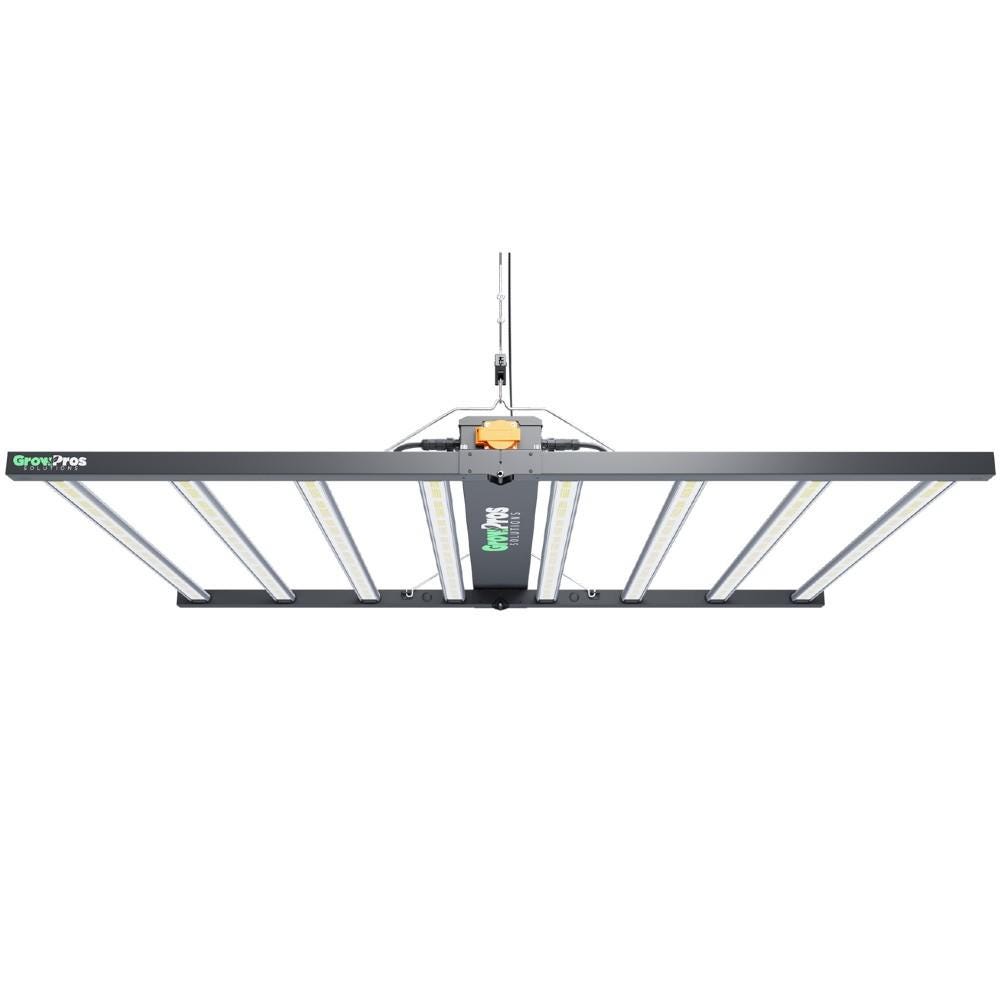
Features:
The GrowPros LED grow light, with a longer lifespan than traditional grow light sources, produces healthier, happier plants. The grow light yields 1.8 grams of crop per watt (dry). High PPFD and PAR indicate high efficiency, or light output per unit of power consumption. Compared to traditional HID and HPS light sources, the HM960 saves about 50% energy, and you can save a lot of energy over time. Almost 100% of energy consumption is converted into light energy for growth. The HM960 lighting system is a complete pre-assembled LED grow light that reduces installation time with a variety of wiring techniques and connectors. This grow light systems run cooler with passive cooling thermal management, meaning your lighting system will last longer while maintaining high light output levels.
What to Look for When Buying LED Grow Lights
When shopping for LED grow lights, it’s important to keep the specific needs of your plants in mind. Different plants have different light requirements, so it’s important to choose grow lights that provide the proper amount and type of light for your particular plant.
In general, you should look for LED grow lights that emit full-spectrum light, as this will give your plants the most complete coverage. Ideally, you should have a light that allows you to change the light spectrum (e.g. UV/IR control) to suit different growth stages.
You should also make sure the light is bright enough to penetrate the leaves and reach the base of the plant.
Finally, you need to consider the quality of your grow lights. While more expensive lights may offer more features or higher-quality lights, they’re not necessarily better for you. Lamps that use cheaper generic diodes and LED drivers will perform poorly, run hotter and burn out faster. This is thermodynamics and there is no getting around it. Quality is very important when choosing LED grow lights, otherwise you run the risk of poor results.
Conclusion
In conclusion, it is very important to choose the right grow lights for your garden to produce the best results. When choosing grow lights, it’s important to consider the size of your garden, the types of plants you’re growing, and the effect you want. With these factors in mind, there is a growing light for everyone. Keep these tips in mind as you shop, and you’ll be on your way to growing your own vegetables successfully!
ECO Farm ECOD Samsung UV+ IR 800W Dimmable LED Grow Light VS Spider Farmer G860W Full Spectrum LED Grow Light
LED grow lights have become very popular as an effective way to provide light to plants to help them grow. These lamps provide specific light and heat to the plants, promoting their growth. The best LED grow lights can be expensive and take some getting used to.
How Can Indoor LED Grow Lights Help You With Your Growth Process?
LED lights are full-spectrum and give your plants the desired wavelength of light in order to yield the best possible quality of plants.
LED lights that include UV and infrared diodes are the best.
Ultraviolet light has been proven to make your plants react defensively and therefore produce additional trichomes.
Ultimately this leads to an increase in the THC levels in your plants.
PAR output present in full-spectrum lighting is also beneficial for photosynthesis.
Between 400 to 600 moles is perfect for late or veg cycles and 700 to 900 is ideal for the flowering stage.
Ultimately, with artificial lighting, you have more control over the consistency and duration of light provided to plants.
ECO Farm ECOD Samsung UV+ IR 800W Dimmable LED Grow Light
Features:
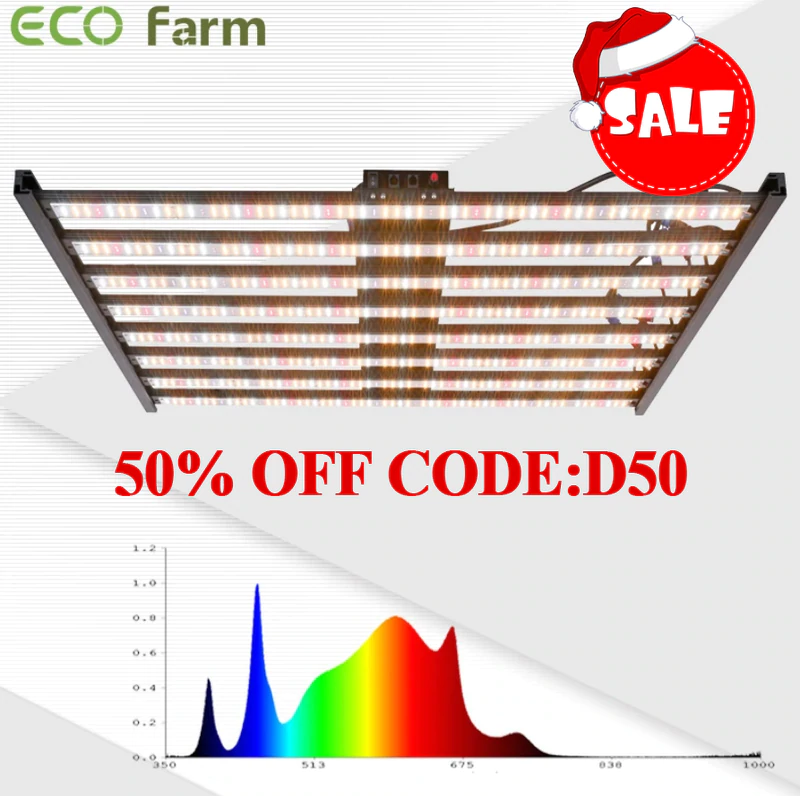
This ECO Farm LED grow light adopts the top quality equivalent diodes, producing a 800W PPF output of 2019.6 μmol/s and a PAR efficacy of 2.8umol/J, ideal for home and vertical farm planting. This full spectrum grow light meets the lighting requirements of every stage during the plant’s growth cycle. It consists of 660nm of red light, IR, 3000K and 6500K of the white light spectrum, providing plants in all stages from veg to flower with everything they need in the natural sunlight.LED plant lights enable cultivators to produce density buds, the 8-bar configuration allows widely application in the home grow (grow box and grow tents), climate rooms, commercial growing (horizontal and vertical), greenhouse cultivation, vertical racks, hydroponics.
Spider Farmer G860W Full Spectrum LED Grow Light
Features:
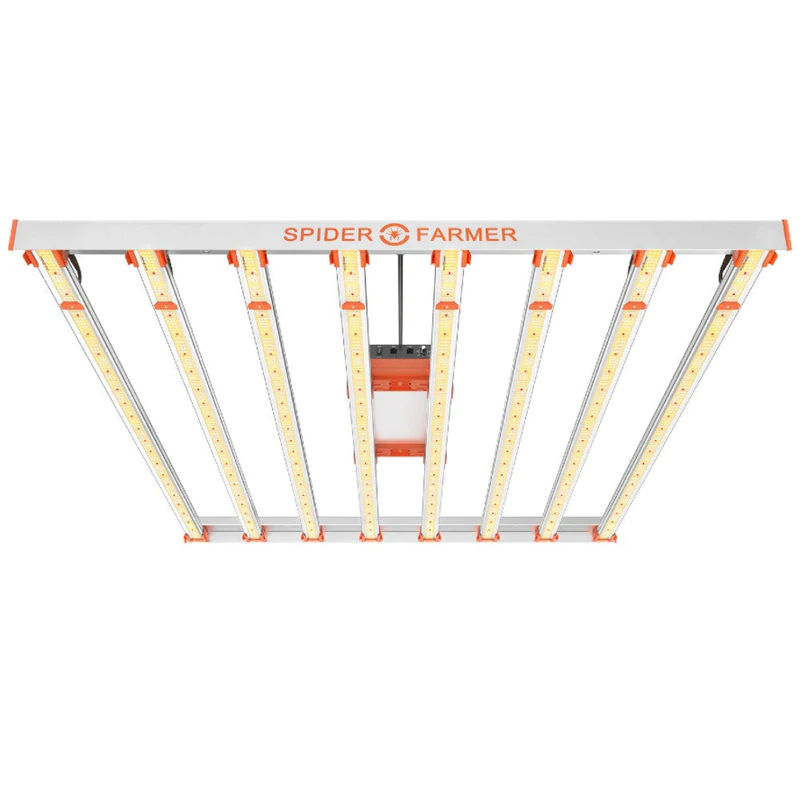
This Spider Farmer LED Grow Light features an even peripheral PPFD score for even coverage, ensuring maximum light per plant. The elongated light bar design also ensures a more even distribution of light, reaching all edges and corners. The strip grow light design and the aluminium heatsink on the back contribute to better airflow and good heat dissipation. The G860W Garden Light features a detachable driver and 6.56" long power cord to reduce ambient heat in the grow space for longer life. The LED diodes are coated with water repellent, so they are not afraid of a wet environment. Dimming daisy-chaining allows you to link up to 60 G680W Series grow lights together — dimming multiple lights simultaneously. Widely used in commercial cultivation, vertical farming, home gardens, home cultivation, CO2 systems and hydroponics.
Factors Other than Color that Play a Role
The correct light color is not everything a plant requires for healthy growth and development.
Here are a few factors that equally contribute to plants’ growth.
1. Light Intensity
Not all plants need the same light intensity for healthy growth.
Plants such as Cacti and succulents have a higher need for high lighting intensity than other plants.
They would naturally require grow lights with high lighting intensity without the risk of burning their leaves.
Otherwise, you can adjust the intensity as per your need by changing the settings, if there are any.
Alternatively, consider keeping your plant close to the light source to increase the effect of light intensity. Likewise, move them as far as the light source if they prefer moderate to low lighting.
The light level for normal office work is more common in the range of 500–2000 lux, but it may significantly increase when used as the grow lights.
A low-light plant may need around 100–5000 lux, while a full-sun plant may need 35,000–60,000 lux of the light level.
2. Light Duration
The duration of artificial lighting will entirely depend on the plant’s growth and requirement.
A vegging plant would require at least 12 hours of light each day, while a flowering plant would require 18 hours.
Generally, the illumination duration for most houseplants ranges between 12 and 16 hours, with at least 8 hours of darkness.
The illumination ensures that the plant produces food and energy for its upkeep, while the darkness helps the plant break down the food and fuel for consumption.
3. Heat or Temperature
This is another crucial factor for the plant’s growth because a plant will fail to develop despite proper lighting when the temperature is too low or high.
Most foliage and flowering plants require between 70–80 degrees temperature during the day and 60–68 degrees at night.
Conclusion
I hope you found this article useful!
All of the best LED grow lights reviewed in this article will provide solid support for your plants.
They are reasonably priced and made by reliable manufacturers with good warranties and customer service.
If you’re looking for a reliable light that will produce high yields without breaking the bank, you can’t go wrong with these lights.
Fluence SPYDR 2i 33" LED Grow Light VS GrowPros HM480 LED Grow Light
Houseplants are growing in popularity as people look for ways to add a natural element to their homes. While there are a variety of ways to grow houseplants, one of the most common is by using grow lights. Grow lights come in all shapes, sizes and colors, but they all serve the same purpose: to give plants the light they need to grow.
What Light Is Best For Growing Indoor Plants?
While LEDs are frequently recommended for grow lights, some fluorescent and incandescent bulbs can also be used. The most important feature of the bulbs is that they provide full-spectrum illumination, producing waves of red and blue light, which is required for plants to thrive indoors.
While growing plants is critical, many growers lack the necessary knowledge to identify the best light sources. Plants convert water and carbon dioxide into food (sugar) by photosynthesis. It is also important to keep track of the amount of time the plant is exposed to sunlight and how long it takes to come out. The sun’s light must be recreated in order for plants to grow inside, as well as two important factors. In electromagnetic waves, temperatures are measured in Kelvin units. The best way for plants to grow is to be exposed to light between 2,700 and 7,000 Kelvin, which is as close to natural sunlight as possible. As the bulbs reach 2,700 Kelvin, they become warmer and brighter, with a stronger red and orange color. It can be useful for growing aquarium plants or raising fish because it is similar to the spectrum of light visible deep underwater.
Fluence SPYDR 2i 33" LED Grow Light
Features:
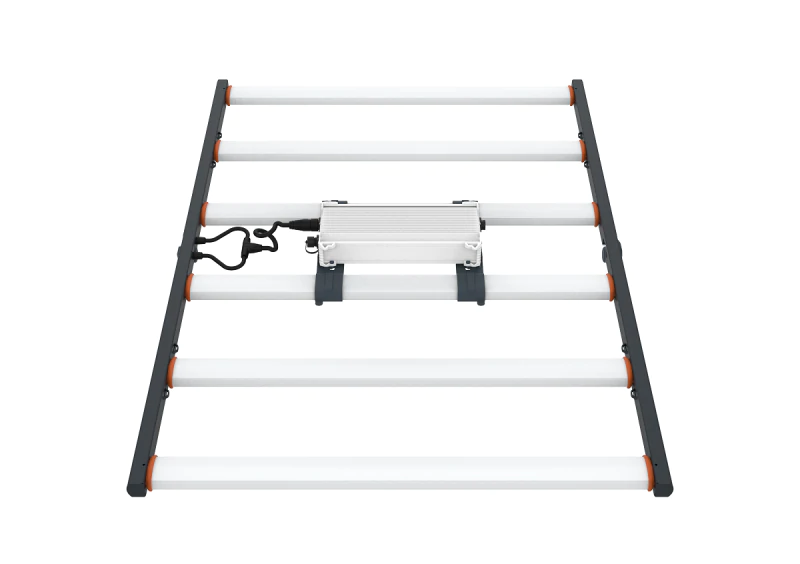
The Fluence LED grow light is designed for multi-layer cultivation — from vegetable to flowering — with a PPF of up to 1,250 µmol/s for the 2i 33". SPYDR 2i is a high performance toplighting solution for commercial horticultural cultivation. Designed for growers Pushing the limits with high PPFD cultivation practices. Not suitable for growing without supplemental CO2. With an upgraded form factor, the SPYDR 2 series is a plug-and-play solution that works out of the box for faster installation. All SPYDR models can be dimmed with our light intensity dimmers for precise control of PPFD , and provides flexibility to instantly adapt to new crop requirements with different light.
Features:
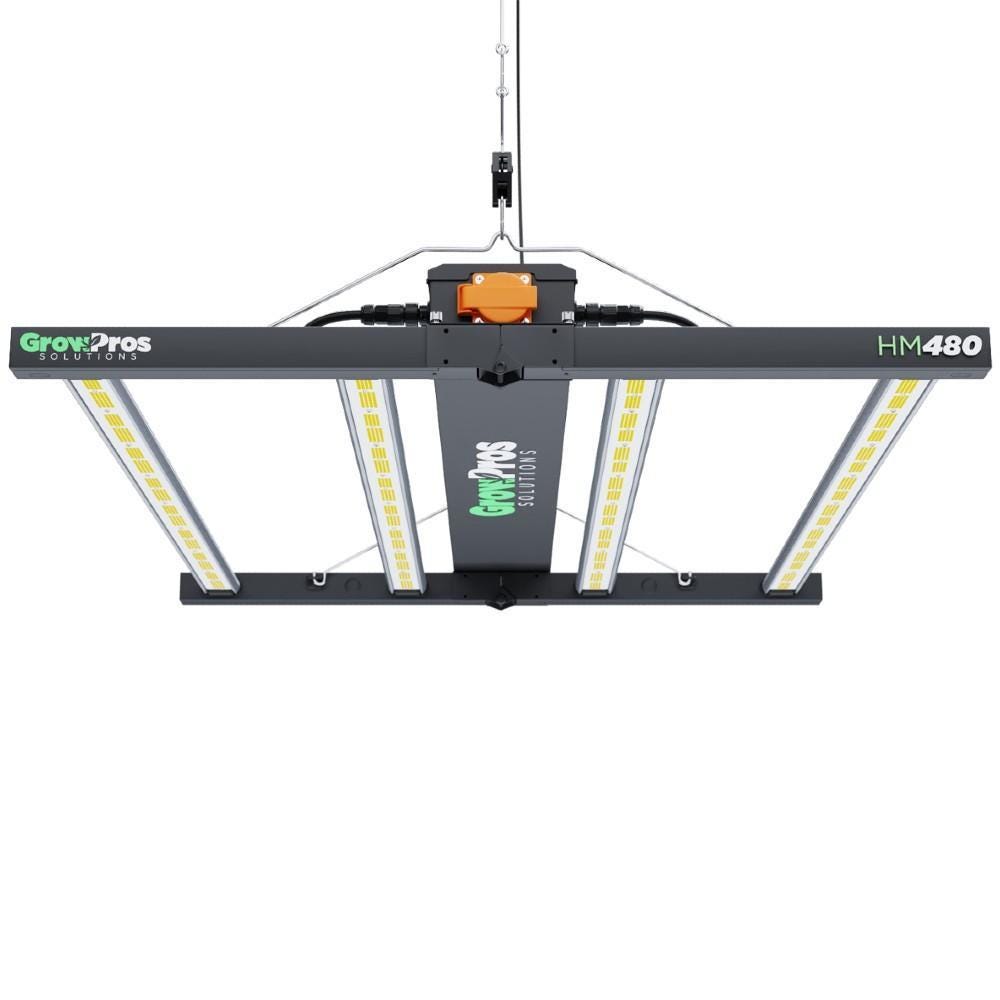
This GrowPros grow light, with an increased lifespan over traditional grow light sources, cultivates healthier, happier plants. The HM480 Series produces 1.8 gram per watts (dried) of crop yield. A high-PPFD and PAR indicates high efficacy, or light output produced per expenditure of unit of power. Generating about 50% more in energy savings over traditional HID and HPS light sources, the HM480 gives you meaningful savings over time. Will not produce the same results without CO2 supplementation. A full-spectrum LED rack lighting solution designed for commercial indoor and greenhouse applications, enabling control over the plant cycle from the vegetative stage to the flowering stage.
Can any LED light be used as a grow light?
No, scientifically it is not beneficial to use an LED light as a grow light even if the specific LED light is capable of emitting wavelength according to plant requirements. Although these lights emit beneficial radiation and wavelength, these are insufficient for supporting optimal plant growth and development. Primarily growing plants require blue and red light and only some LED lights are designed for maximized emission of these lights.
There are numerous styles and types of LED grow lights in the market, and some are better than others due to their better capacity of coverage and emitting light specifically according to plant requirements. The success of vegetative plant growth, development, and production is greatly affected by the right or wrong selection of LED grow light for the indoor grow room.
LED Grow Lights for Indoor Growing
Generally, these grow lights are more expensive than the common lights and gardeners want to save money by using regular lights. However, common LED lights and bulbs may not favor the best development, and growers have to move on with compromised and stunted growth.
So, it is a matter of preference as spending one time on the efficient grow lights will ensure better growth of plants for years. There are numerous benefits of using the right LED grow light for indoor growing plants such as efficiency, longevity, less heat, and effectiveness.
Cost-Effectiveness
LED technology has completely transformed the concept of a traditional lighting system due to less electricity consumption, less price, and more durability. These lights have lower operational costs and are cheaper options for better growth in enclosed spaces.
Longevity
LED lights have a longer lifespan than other lights as they easily last for more than 50,000 usage hours. This lifespan is five to six times longer as compared to fluorescent lights. The use of these lights is much more convenient and also helps with waste reduction. Gardeners can review the longevity and other features of LEDs and traditional lighting systems before purchasing.
Efficiency
Results of scientific studies conducted by electrical engineers have shown that the best-LED lights are the most energy-efficient systems. These lights use much less energy than the other lights and are sustainable options for both wallet and the environment.
Less Heat Emission
LED lights emit less heat than fluorescent lights and are 80% more helpful to maintain cooler environments than fluorescent options. Thus, it helps to maintain the moisture level in the soil and grow media and reduces the need for frequent irrigation. Moreover, excessive heat is not even good for the plant foliage and vegetative growth as it can cause burning and scorching.
Greater Intensity
Best LED grow lights produce more intensity than the other lights and do not cause excessive heating and burning sensations in the environment due to less use of power and modern technology. It is also safer to maintain a distance of only a few inches between the plants’ canopy and LED lights for a better growing experience.
Conclusion
LED grow lights can be used as your only grow light or as part of a more complex setup. Their flexibility is very beneficial, giving you more precise control over the placement of your grow lights. With a full color spectrum, you can be sure your plants are getting everything they need, provided you know which one to buy. Hopefully, you have a good idea of whether or not you can grow plants using LED strip lights.
ECO Farm Z6–600 Samsung LM301B LED Grow Light VS VIVOSUN VS6450 Foldable Dimmable LED Grow Light
Overall, LED grow lights are a good choice for growing plants, but choosing the right light for your specific needs is essential.
With so many grow lights and systems on the market, you need help deciding which one is right for you. We’ve compiled a list of the most popular grow light ranges in this guide, so you can get an idea of what they’re capable of and what they can do for you.
What are the functions of plant lights?
Industrial greenhouses, which grow vegetables, tropical fruit or flowers year-round, use artificial light to simulate the time of day. Heat-loving tropical plants and native vegetables require a certain level of sunlight to grow, bloom and bear fruit in out-of-season or atypical climates. In order to reproduce the sunlight, the specialists installed special lamps on the ceiling structure.
Indoor plants that grow in nearly every unit also need additional lighting to regulate sunlight from late fall to early spring. Potted flowers, ficus trees, ornamental trees, pepper buds, balcony cucumbers, and other vegetable plants will grow better and develop thick stems if they get enough light. In today’s lighting market, you can find a wide variety of lights.
LED lights can be used for artificial lighting. However, don’t rush into buying the first lights that come out and come in standard white or warm yellow lights. Their spectrum is not important to plants. This bulb is suitable for flat lighting, but not for greenhouse lighting or other rooms where seedlings, flowers or vegetables are grown.
ECO Farm Z6–600 Samsung LM301B LED Grow Light
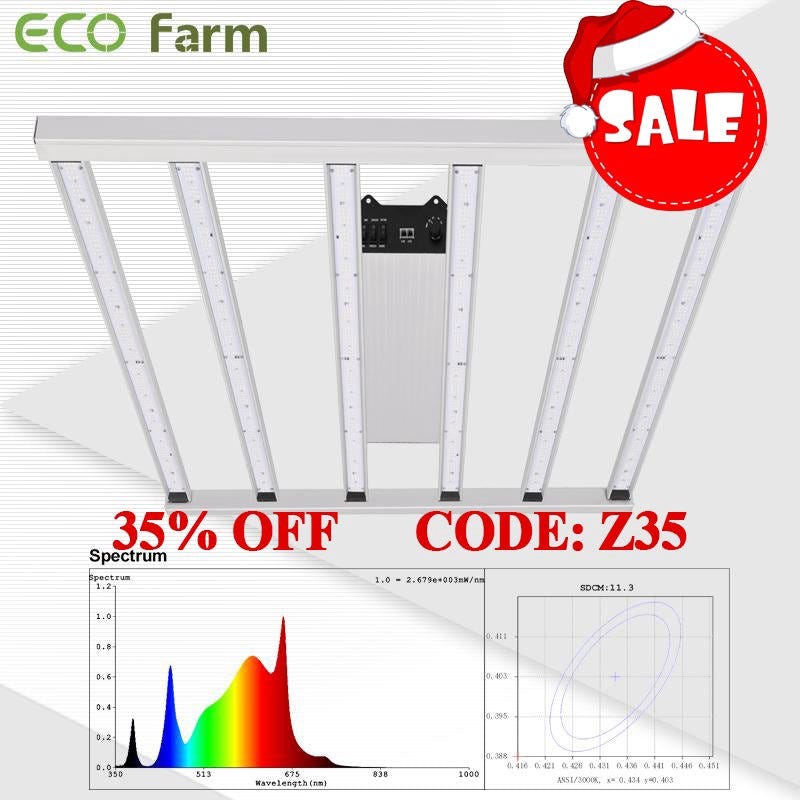
Features:
This ECO Farm LED grow light uses 1632pcs Samsung LED Diodes and 6pcs aluminum bars, ensuring higher efficiency PPE 2.7 umol/J and higher average PPFD, it coves 4 x 4ft growing area. 600W indoor plant grow lights adopts external driver and dimmer, power cord length can allow you to take the driver and dimmer out of grow tents and easy to control the light intensity as well as tremendous reduce the heat. The grow light bar adopt the latest LED technology to simulated the sunlight, combines 3500K warm white lights and 660nm red lights, which suit for whole stages of indoor growing plant. Plug and play, very easy to use. LED grow light bar equipped with 6 movable aluminum bars, convenient for growing plants, excellent heat dissipation and longer lifespan than other plant lights. No fan zero noise design, quiet working
VIVOSUN VS6450 Foldable Dimmable LED Grow Light
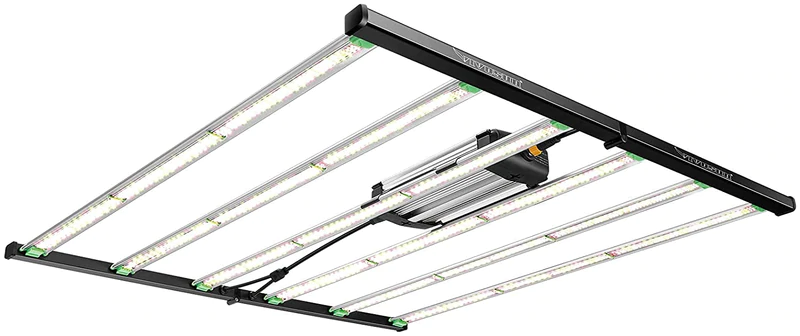
Features:
This VIVOSUN LED grow light uses Samsung 3030 and Osram 3535 LED strips, which are more than 50% higher than HID lights in PPFD and save 37% energy; this high-quality LED light can be used in the best way and is an effective way to support plant photosynthesis Way. The clip can be folded up to 180 degrees, compact and easy to install; it doesn’t take up much space and keeps your pantry tidy. This LED grow light has 40% to 100% dimming options to meet various needs; in addition, the light fixture is compatible with the main controller, so you can easily and quickly adjust the LED light to accurate parameters. This light is perfect for all stages of plant growth; it provides enough warm white light to encourage plants to bloom, making them larger and more vibrant; blue light encourages plant germination, and red light combined with blue light increases yield
Buying Guide for Grow Lights
To make an informed purchase about what grow light works best for your gardening needs, consider the following factors.
Size/Number
Choose a light that’s large enough to cover all of the plants in your indoor garden. For one plant, you can get a small light that can move from room to room with your plant. On the other hand, you need a large overhead light if you have rows of plants. You can also purchase several lights if one isn’t enough.
Light
Different plant species and growth stages require different colors and temperatures of light. Warm light helps with fruit and flower production. Cool light, meanwhile, helps seeds grow stems and leaves and greens expand their foliage.
If you have both flowering and leafy plants or don’t know which type of light your plants need, you can find full-spectrum grow lights. These provide a balance of warm and cool lighting to resemble natural sunlight.
Bulb
Most grow lights on the market today use LED bulbs. LED lights are long-lasting and energy-efficient. They also come in different colors and temperatures to suit your lighting needs. These bulbs have almost entirely replaced fluorescent and HID ones.
Fluorescent bulbs are useful for growing plants that require a modest amount of light. However, because their output is fairly weak, you have to put them a few inches from your plants. Though HID bulbs are powerful, even more so than LED ones, they are expensive and energy-inefficient and require special fixtures.
Conclusion
Now that you know how to choose the right plant for your needs, it’s time to get one and start growing those delicious plants! Remember that houseplants need at least 12 hours of direct sunlight per day, so if you live in a cooler climate or where natural light is limited, be sure to supplement it with grow lights.
Super Lumen Beam 600 Watt LED Grow Light VS Optic LED Slim 600H Dimmable LED Grow Light 600W
While many houseplants will grow just fine indoors with any amount of natural light coming in through a window, certain plants will bloom more reliably or develop healthier foliage with extra light from an artificial light source. If you start growing vegetable and annual flower seeds indoors, they often need the help of light to develop properly. While the amazing power of sunlight is difficult to fully replicate, it can come close with a grow light setup filled with simple fluorescent or LED bulbs.
Do you have to use LED lights?
Home growers don’t need LED lights for plants to thrive. LEDs are a popular choice because they don’t use a lot of electricity, don’t generate high levels of heat, and they generally last longer than incandescent or fluorescent lights. In most cases, LED grow lights are the best choice.
Super Lumen Beam 600 Watt LED Grow Light
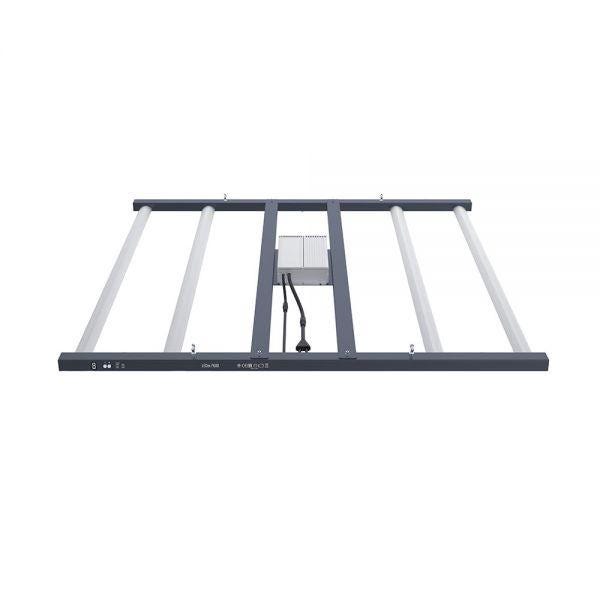
Features:
Grow from start to finish with the Super Lumen LED Grow Light and enjoy a stellar performance all the way through the plant lifecycle thanks to world-renowned Nanolux Technology. Flexible And User-Friendly Design. it can fold down to make for easier handling, transportation, and storage. Once positioned in your room or tent, you’ll see the digital control screen and buttons on the side of the fixture that allows you to adjust and monitor the dimmer setting — with output options including 100W, 200W, 300W, 400W, 500W, and 600W. The grow light got the LED bar protection function, which works in the highly unlikely event of a single bar failure, keeping everything else safely operating as normal whilst isolating the issue. Finally, the IP65 classification proves the LED is waterproof, moisture-proof, and dust-proof.
Optic LED Slim 600H Dimmable LED Grow Light 600W
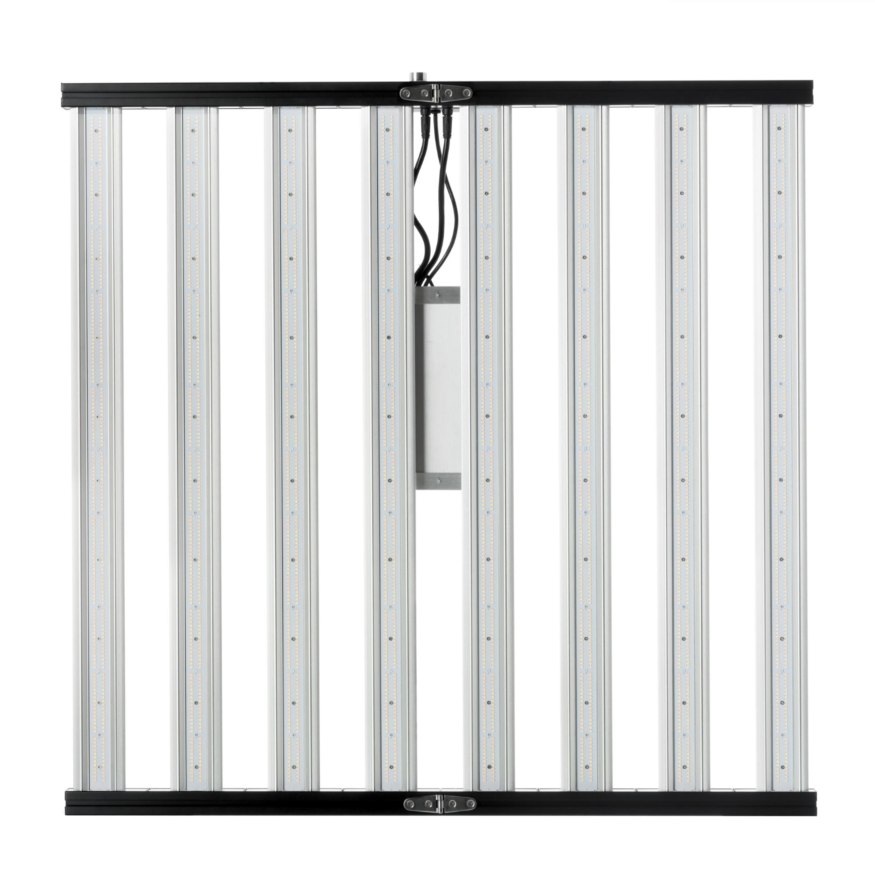
Features:
Optic LED grow light is a vertical farming LED grow light with an exceptional design featuring the best of the latest high-end LED technology from Samsung, and the best from Meanwell. This growing light promotes uniform growth throughout the canopy. Dimming gives you full control over your intensity and allows you to use only what you need, taking efficiency to the next level, reducing BTU output, and extending the life of your fixtures. Grow lights use 4.6 LEDs per watt, which adds to the cost, but also provides the industry’s best efficacy for LED grow lights with Samsung Gardening Series LEDs. The dual-row LED strip with a total of 2,768 LEDs is all underdriven for maximum efficiency to deliver next-generation Par efficiency.
What factors need to be considered when choosing LED grow light?
Light intensity
When choosing a LED grow light, light intensity is one of the first considerations. Different plants and each stage of plant growth require different light intensity levels. When talking about light intensity, it’s not the intensity that the human eye sees, but the number of photons that plants can use to grow and bloom.
The PPF reading can be used to determine the amount of light emitted by the light. PPF stands for Photosynthetic Photon Flux and is the total light output of the light in umol/s. Generally, if the PPF is above around 1100 umol/s, it will cover a 4′ x 4′(120x120cm) area. Most of the current LED grow lights are equipped with dimmable function. You can adjust the light intensity according to the hanging height and the growth stage of your plant, extremely convenient.
Spectrum
In the whole spectrum, each wavelength (color) has a different effect on plant growth. Full Spectrum LED Grow Lights has red and blue light spectrum, as well as infrared and ultraviolet light. Blue and red light are the most conspicuous colors, as blue light promotes the stoutness of the plant during its vegetative stage. Red light helps plants stretch and bloom during flowering stage. This is why you can’t choose a single-spectrum light but choose a full-spectrum LED grow light.
Price
LED grow lights tend to have higher upfront costs, and some accessories need to be purchased in addition to the lights. In the long run, it’s actually a good investment. Because LED grow lights are more energy-efficient than other grow lights, the cost of electricity and cooling is low, but the output is similar to other grow lights. Therefore, when choosing LED grow lights, you should choose those produced by experienced manufacturers with excellent cost performance.
Coverage area
Each grower grows a different number and size of plants, so it’s important to know the exact dimensions of the space so you can choose light that fully cover the area. Areas for plants usually include 4′ x 4′(120x120cm), 3′ x 3′(90x90cm), and 2′ x 2′(70x70cm) spaces, too much or too little light coverage can adversely affect plant growth, so growers need pay attention to this problem.
Warranty and certification
When choosing LED grow lights, you must choose a brand with warranty and certification. The quality can be guaranteed, and if there is a problem with the product, you can send it to be repaired for free
Conclusion
In the end, plants grown indoors under light will require more light hours than the same plants grown outdoors. Grow lights should be on for at least 14 hours but no more than 18 hours per day; even houseplants need at least 6 hours of darkness per day.
SideKing SK5000 LED Grow Light VS Viparspectra KS5000 500W LED Grow Light
Any crop will be more efficient and productive by investing in the best LED lights for your grow tent. For this, we have analyzed the best tools for all interested.
So that means growing plants and flowers is much easier now. Even grow lights allow for great versatility in crop placement. Many plants and flowers will be able to be grown indoors in a home or commercial store.
What size LED lights do I need for a 4×4 grow?
On the one hand, heat dissipation is one of the fundamental aspects, depending on the number of plants or flowers in a given crop. Here it is necessary to take this aspect into account, since too much lighting can seriously damage the plants.
In turn, grow cabinets measuring 4 x 4 can provide 500 to 1200 watts of power. Here, too, it is important to consider the type of plant or flower. Different flowers and vegetables have different requirements.
Therefore, the requirements of the different plants and flowers in the crop vary. This is certainly very decisive when it comes to choosing the best LED lights for your 4×4 grow tent. Also, it is most important to avoid too little or too much light for proper growth of the crop.
SideKing SK5000 LED Grow Light
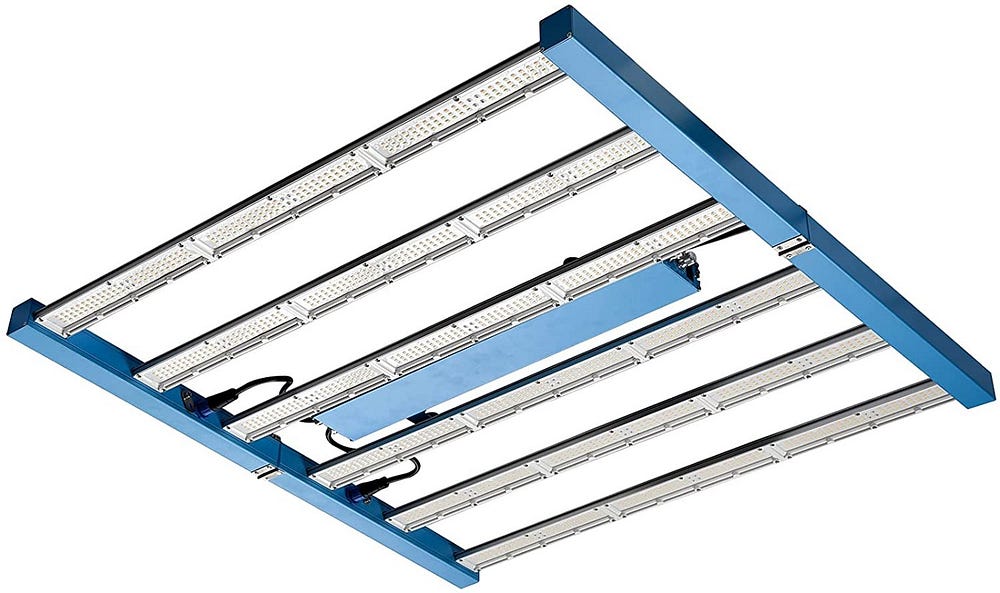
Features:
This SideKing LED grow light is compatible with 1188pcs Samsung LM283B+ 3800K (3000K+4000K+5000K) LEDs, 60pcs 660nm Red LEDs and 12 pcs 740 nm IR LEDs, which can optimize the plant grow performance at every growth stage from seed to harvest. The plant will respond to it rapidly, speeds up flowering time, and boost yields. The grow light boasts a High-Efficiency Rating of PPF per Joule reach up to 2.8μmol/J, providing powerful light output and enhancing canopy penetration to resulting in a higher-yielding footprint, Veg coverage is 5 x 5 ft, Flowering coverage is 4 x 4 ft. Running 50% less power consumption and 50% more harvest than HPS light.
Viparspectra KS5000 500W LED Grow Light
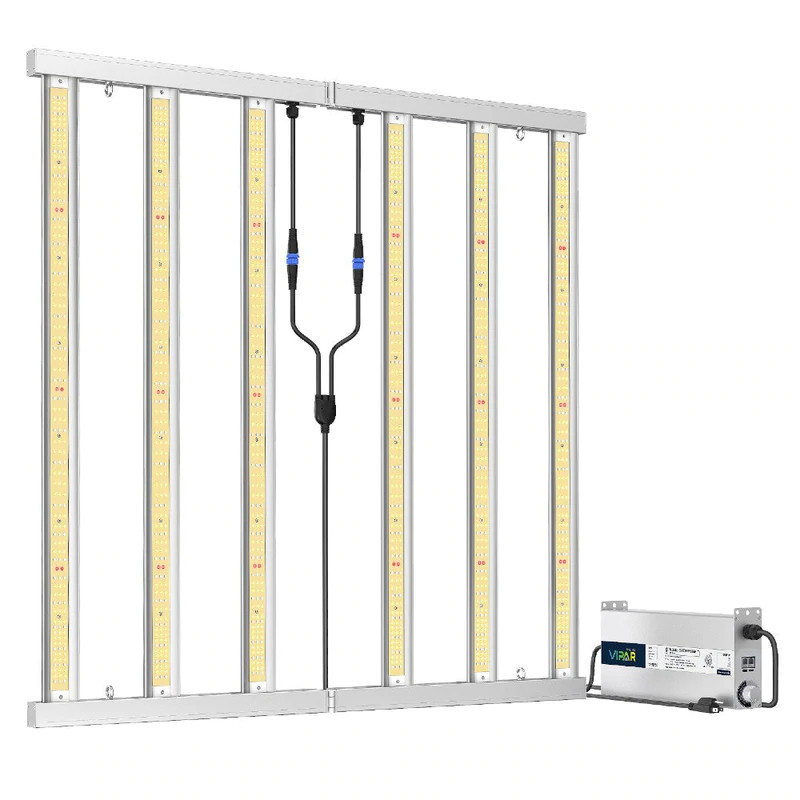
Features:
VIPARSPECTRA LED Grow Light uses market-leading Samsung LM301H diodes (3.10 μmol/J) and Osram 660nm diodes, more energy-efficient LEDs that increase crop yields and save operating costs. High-end components give the KS5000 incredible performance. The KS series is designed for individual or commercial growers who want to optimize their growing space for maximum crop yield while producing the highest quality crops. The KS5000 Dimmable Grow Light with Daisy Chain allows you to connect up to 100 KS5000 grow lights to your commercial grow, horizontal and vertical farming, greenhouse grow, pipe grow, hydroponics, 4x4 grow tent. A built-in dimmer allows you to dial in the perfect PPFD for your plants at all growth stages. The KS5000 features a detachable power supply that can be remotely mounted on the side of a rack or on an adjacent wall to dissipate heat from your grow space.
What to look for in a LED grow light
Drivers: The driver is the part of your grow light that converts power into light. It’s the most important part of your LED grow light and should be chosen carefully. The driver may be a separate component or be included within the grow light itself.
Wattage: The wattage of your light will determine how large an area it can cover as well as how many plants you can grow under it. As a general rule, aim for 20 to 40 watts per square foot.
Diodes: The diodes are the individual light-emitting components that make up your grow light. They are what emit the visible light that plants use to grow, so it’s important to choose a model with high-quality diodes. High-end grow lights will use power-efficient diodes from OSRAM or Samsung.
Diode count: The diode count is the number of diodes in your grow light. A higher diode count means more light output.
Components: The material used in the construction of your grow light can affect its durability. Some models use plastic parts instead of metal ones, which can be more likely to break over time.
Colour spectrum: The colour spectrum is the range of colours a grow light can emit. A wider spectrum means more red and blue diodes, which allows plants to absorb more light.
Lumens: Lumens are a measure of how much visible light is emitted from your grow light. More lumens generally means more usable light for your plants.
PAR: PAR stands for “photosynthetic active radiation”. PAR is a measurement of the amount of light available to plants during photosynthesis, and it’s often used as a way to compare grow lights.
PPFD: PPFD stands for “photosynthetic photon flux density”. PPFD essentially tells us how much PAR arrives at the plant, and is viewed as the best way to measure grow light performance. It’s measured in micromoles per square meter per second (μmol/m²/s). 600–900 PPFD is ideal for plants that are fruiting, budding, or flowering.
Size: Size is a crucial factor when choosing a light for your indoor grow space. You need to know how big it is and what size of coverage you can expect from it.
The size of an LED grow light depends on the number of diodes used to make up the fixture, which will give you an idea of how much space it takes up and how many plants can be grown under it.
It’s also important to consider how much power is being consumed by each unit so that you don’t overload your electrical circuit with too many lights at once.
Conclusion
You should always buy what works for you and your needs. Research the price, quality, and features of different grow lights before purchasing. After choosing a model, check the specifications to make sure it will work with your current home setup and your future plans for your indoor growing area.
Grow lights are the heart and soul of plant health. The best LED grow lights are the ones that are right for you.
ECO Farm ECOD Samsung UV+ IR 640W Dimmable LED Grow Light VS Omega Luna 630W PRO+ LED Grow Light
Sometimes the hardest part of growing houseplants is creating the environment for them to thrive. Worrying about your plants getting proper sun exposure can be difficult, but grow lights are an easy solution! There are many options for indoor lighting. You can start your search for the best LED grow lights for your houseplants here.
What is the best color for growing indoors?
Natural sunlight contains the full spectrum of light, including all colors of the rainbow and even non-visible light like infrared and UV. When we use LED grow lights for indoor growing, we want to mimic natural sunlight as closely as possible, to create the perfect growing environment for our plants, even better than what we could find outdoors. Because we want to mimic the perfect growing environment for our plant, we should copy the natural environment of our plant while using a light source that produces a full spectrum of light.
The color of the light is one of the most important aspects that affect indoor growing. The two colors red and blue are on either end of the spectrum, and they have different effects on your plant. Further, your plants will utilize certain colors at various stages in the grow cycle: for example, plants utilize blue light to grow new leaves and to stretch stems and branches, while they use red light to produce buds and flowers.
A good grow light will need to produce sufficient red and blue light as these parts of the spectrum are extremely important to plant growth, while plants reflect a lot more green and yellow light, which is what gives them their color. During the process of photosynthesis, plants usually respond to 400 and 700 nanometer wavelengths, which, coincidentally and very useful for growers, corresponds to the visible portion of the light spectrum.
What is the best light intensity for the indoor grow?
The intensity of light that a plant obtains is determined by bulb brightness and the distance from the plants to the light. Of course, different plants need different light intensity. Usually, plants that grow in northern climates do not need as much light as plants that grow in tropical areas.
As a quick reference, 10 to 12 inches of distance between the light source and the plant is suitable for a lot of houseplants like begonias, ivies. Other plants like philodendron can have a light source up to 36 inches away and still grow happily. On the other hand, some vegetables require a much higher light intensity before they will be able to flower or grow usable products..
ECO Farm ECOD Samsung UV+ IR 640W Dimmable LED Grow Light
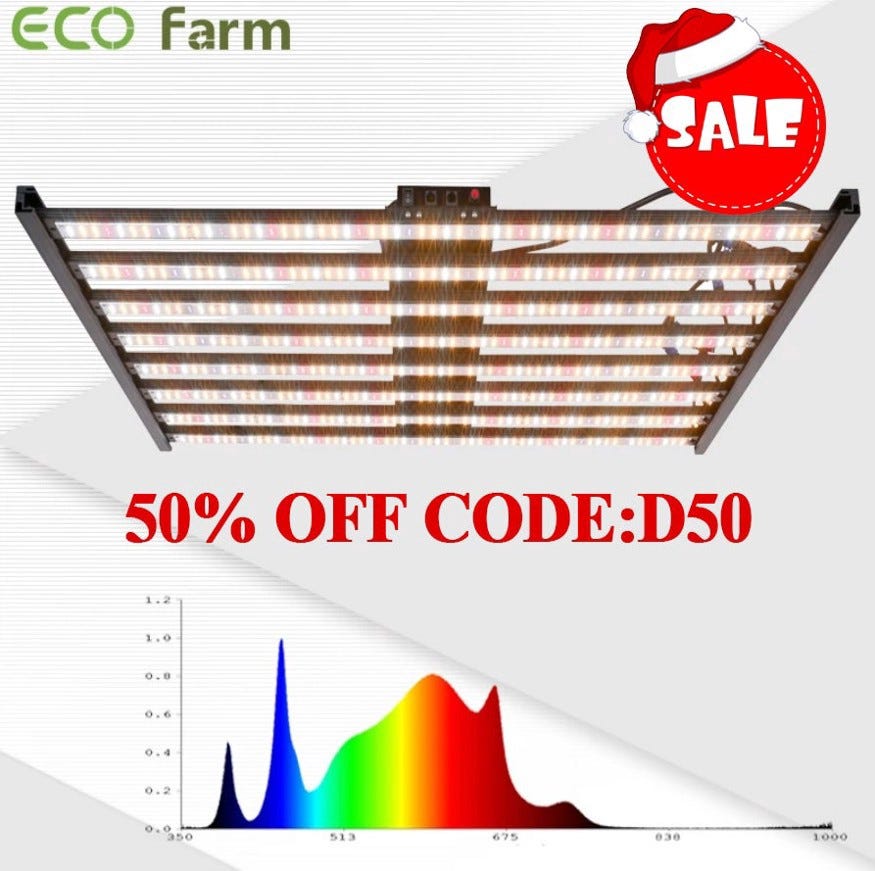
Features:
This ECO Farm LED Grow Light has high energy efficiency up to 40% energy saving, and get 50% greater yield compared with the traditional HPS lights. High quality and 50000 hours long lifespan can mostly reduce your electricity bills or maintenance fees.The bar structure LED grow light provide you more even and full canopy coverage, make the light more concentrated, make the illumination is more uniform. The growth of plants requires an environment of red and blue wavelengths, use led grow lamps to boost productivity, Increase your yields & profits 50% without adding any additional energy costs. This grow light dissipates heat quickly and high performance, growing lamp with 6 passive-cooled bars, no-fan no noise design, give you a quiet cultivation environment and extend plant light lifespan.
Omega Luna 630W PRO+ LED Grow Light
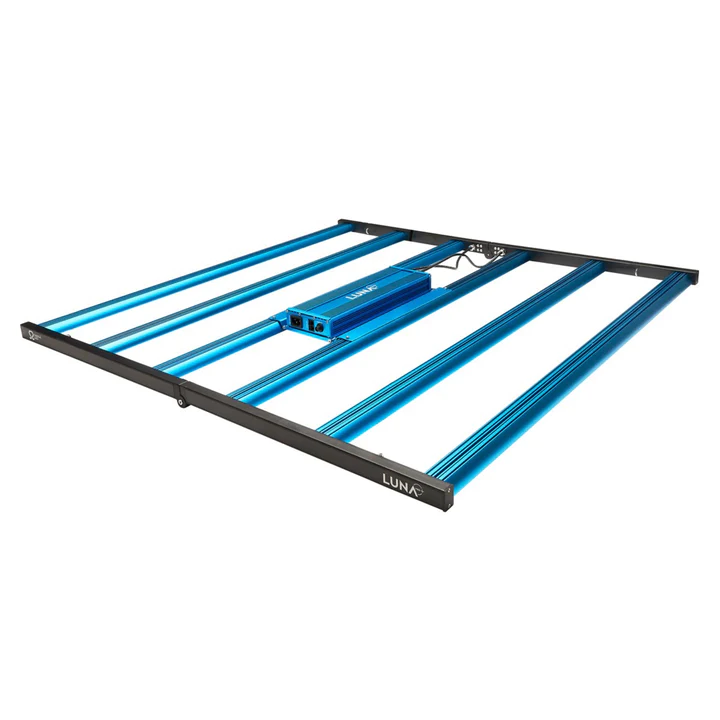
Features:
The Omega LED grow lights run about half the cost of standard HPS lights. Not only that, but its life expectancy is a staggering 50,000 hours: more than 11 years for a 12/12 cycle. The Pro+ boasts lower running costs than its predecessor, while the specs will only increase. Each LED strip operates at 2.9 µmol/J but is more powerful than most ceiling lights on the market. The Pro+ is designed to be smaller and lighter than the original, and is just as impressive as its performance. Thanks to the foldable central hinge, the light can be easily stowed away or for the grower to take with him on the go. The Pro+ is dimmable and controller compatible, allowing users to monitor the plant’s environment and make adjustments to keep it in optimal health.
What to Consider When Searching for the Best LED Grow Lights
When trying to find suitable LED grow lights, there are many aspects you need to think about.
Don’t worry though:
It’s not rocket science.
What to Consider When Searching for the Best LED Grow Lights
And once you go through the most important factors, you will understand what you need exactly. Here’s what you should pay attention to:
Wattage. The required wattage of your LED lights would depend on many factors. They may include the tent size, the plant type, the growth phase, and so on. So, while you have general recommendations for different tent sizes, you may want to check an online calculator that can also factor in other aspects.
Coverage area. How big is your grow tent? You need the lights that would cover the whole area, so that each plant gets enough light. Typically, the most powerful LED grow lights can cover a 4 x 4 area. This means if you have an 8 x 8 tent, for example, it’s better to buy two lamps that would cover a 4 x 4 section. Performance-wise, such a configuration would be better than buying bigger lights for an 8 x 8 area.
Budget. LED grow lights can be quite expensive, and that’s the main issue users typically have with them. However, LED lights will serve you longer, which means they can be a worthy investment. The price will depend on the quality of parts, spectrum, and the light intensity. But remember that the most expensive lights might not be the best ones. You need to pay attention to the characteristics first, and only then — the price.
Warranty. Typically, the warranty for LED grow lights ranges between 1 and 7 years depending on the brand. A 3-year warranty is probably the most common coverage option. Of course, most users want longer warranty as it can be an indication of good quality. However, it’s also important to check what aspects the warranty covers. Fixing LED lights can be expensive, so if your warranty covers that, you would save more money in the long run.
Durability. The durability of the LED grow lights should be of utmost consideration when you are searching for the best LED grow lights, so you will not waste your hard-earned money on something that will not last. Ensure you always purchase what will stand the test of time.
Heat output. Your plants will be at significant risk if you do not consider the heat emitted from your LED grow lights. You may even spend extra to cool the room. Hence, it is essential always to consider the heat output of your LED grows light when searching.
PAR. For a grow light that suits every stage of your plant growth, you should consider PAR when searching. PAR which means Photosynthetically Active Radiation is the amount of light your LED panel is emitting that contributes to the photosynthesis process of your plants.As you already know, not all types of light aids in photosynthesis. The reason why the plant in your sitting room will die even though it is being exposed to the lamps there. The type of light emitted by sitting room lamps is not ideal nor does it aid photosynthesis.
So, the PAR value of your LED grow light is very essential. This value is actually more important than the wattage of the LED grow light.
Conclusion
LED grow lights are gaining popularity among indoor gardeners and hydroponic growers. While LEDs have been used in commercial applications for some time, it’s only now that they’ve become affordable for home gardeners.
LEDs offer many advantages over traditional grow lights, including higher efficiency, longer lifespan, and cooler operating temperatures.
But there are a few things to look out for when buying LED grow lights, such as power consumption and light spectrum.
ECO Farm ECOZ 1000W Samsung 301H Chips LED Grow Light VS Mars Hydro FC-E1000 Bridgelux 1000W LED Grow Light
Is it possible to get the best LED grow lights online that are effective enough for a winter garden?
The answer is of course yes! You don’t have to be rich to enjoy the benefits of grow lights. There are a variety of grow lights to choose from. Options you can take advantage of at very friendly prices. Depending on the type of garden you have and the plants you want to grow, you can get the grow lights you need.
LED grow lights are a proven way to save energy. They emit specific light in the spectrum to help brighten your garden or vegetable garden
LED grow lights make your indoor garden grow at a faster rate, especially when you use a hydroponic system.
Will Full Spectrum LED Lights Grow Plants?
LED grow lights are the future of indoor gardening. They offer many advantages over traditional fluorescent and HPS lamps, such as long life, low energy consumption and no heat output. LED grow lights also come in full-spectrum varieties, which provide plants with all the wavelengths of light they need to thrive.
Full-spectrum LED grow lights emit a range of colors including blue, purple, red, yellow and green. In this way, plants absorb these different colors and nutrients more efficiently than traditional grow lights. Some growers believe that full-spectrum LED lights are better for plants because they provide more oxygen and help lower stress levels.
Some of the disadvantages of using full-spectrum LED lights include higher initial cost and difficulty finding the right fixture. However, given the many benefits they offer over traditional lighting solutions, full-spectrum LED grow lights are sure to become the dominant type of grow light for home gardens.
ECO Farm ECOZ 1000W Samsung 301H Chips LED Grow Light With Separately UV+IR Control
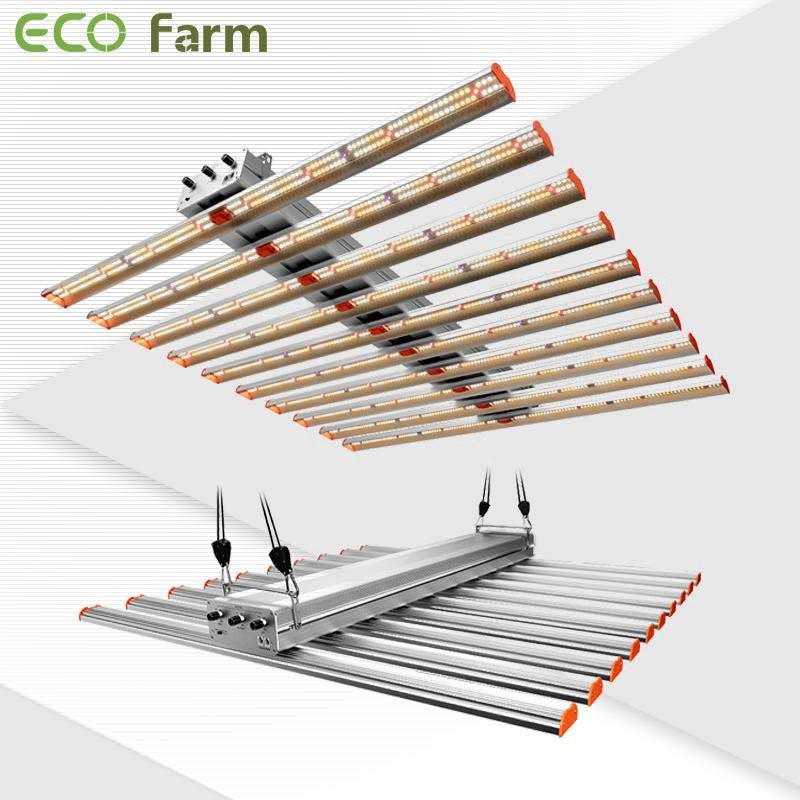
Features:
The ECO Farm grow light is equipped with Top Bing Samsung & Osram Chip and brand driver to ensure high-efficiency PPE 2.9umol/J, better heat dissipation, and long service life. Compared with old plant lights, the average PPFD is increased by 30 %, and the yield and quality are increased by 50%. At the same time, it also has the most trustworthy full Cycle Sunlike Spectrum, close to natural sunlight. The spectrum applies to the entire stage of indoor planting. This ECO Farm LED grow light has independent control of the VEG switch, Bloom switch, and UV switch. VEG dimmer controls white light 5000K, one Bloom dimming The device controls white light + red light (3000K+660nm+730nm), and the UV dimmer controls UV 395nm. And there are optional knobs and touch screen controllers.
Mars Hydro FC-E1000 Bridgelux 1000W LED Grow Light
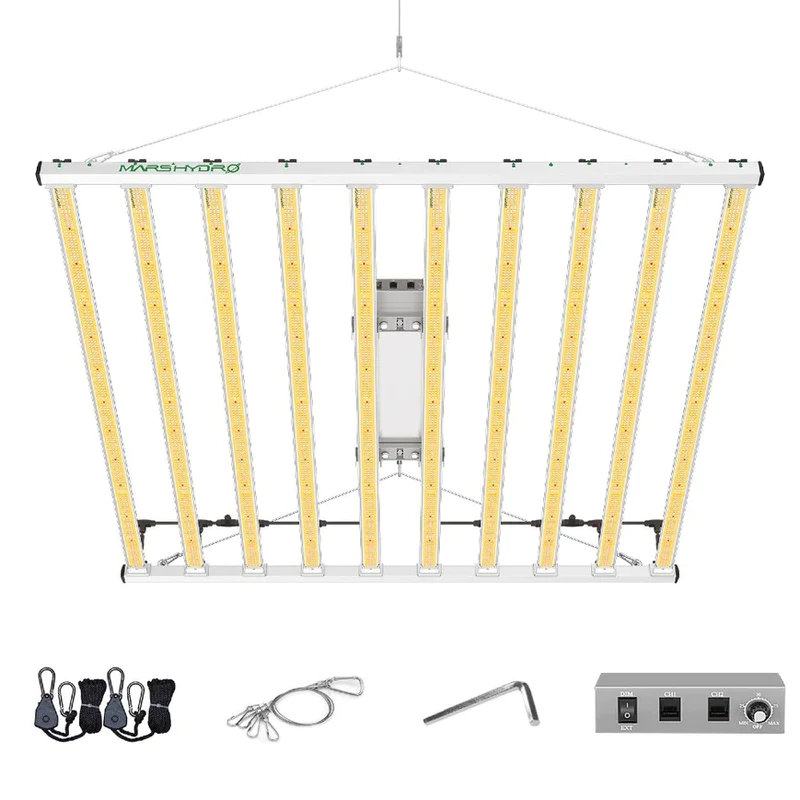
Features:
The Mars Hydro LED Grow Light has a full spectrum for full cycle plant growth. FC-E1000W is specially designed for high PPFD culture (such as high concentration CO2 growth). It is by far the most powerful grow light with a high PPF of 2,766 umol/s and an average PPFD of over 1,300 umol/m2/s. The FC-E1000W is slightly different from other FC-E LEDs because of its scalable flexibility, allowing for customization and configuration. Typically, 10 light bars are arranged on 2 support bars to provide an unusually high amount of power for an area of 4x4 feet.
What To Look For When Selecting a LED Grow Light
When selecting a LED grow light there are a number of factors you need to consider for yourself, which include:
Materials
Durability is key when selecting your new lighting rig. A good quality lamp will be around for at least a decade.
And with products that last longer, you can invest more into them. Electrical Output and Consumption
Your LED hydroponic grow light will need to be on for around 10–11 hours a day. Depending on your hydroponic unit, you’ll want to ensure that your unit is drawing the least amount of power.
Low Heat
LED lights that get too hot will damage themselves and the plants. You need to be sure that the unit is pumping out the least amount of heat.
And if it does overheat, the heating management system should do its job well.
Space and Plants
A major factor will also be the space you’re growing your plants in.
Spaces with little to no ventilation will cause mold to form on the plants.
And if you share a space with the LED lights, you’ll want to consider noise issues.
Ease of Use and Daisy Chain
Your LED hydroponic grow lights need to be simple to operate. Otherwise you won’t utilize all the great features.
Ease of use also extends to installation. An easy to install unit is one that gets to work faster.
For ambitious growers, you will want the option to expand your grow project. Make sure you’re happy with the amount of units you can link up to one another.
Warranty
None of these options are especially cheap. Thus each unit should come with a warranty or return policy.
Don’t purchase a unit if there’s no warranty or return policy.
Conclusion
What Are the Best LED Grow Lights and How to Choose Them? What criteria need to be considered? These are questions that many people ask. In fact, the answer depends on many factors. First of all, you need to know that indoor plants are sun-loving plants, but sometimes it is not always easy to grow them indoors because they may not get enough sun, especially in winter.
If your windows aren’t providing enough light, or you just want to keep your plants indoors over the winter, getting grow lights is a great idea. Whatever the reason, grow lights add strength to your plants.
ECO Farm SP-400 Samsung Foldable Dimmable Full Spectrum LED Grow Light VS Spectrum King LowPro Veg 420 Watt LED Grow Light
Grow lights have improved a lot in recent years, and now you can get grow lights on an affordable budget that actually works really well for the money you spend, unlike when LED lighting first appeared on the market, Cheap LED grow lights for indoor growing are basically garbage and a waste of time.
You’ll have to choose from many different affordable options, whether you want a complete grow light solution or just adding bulbs to lights you already own.
Even if you already have large fancy grow lights, you can always add extra lighting to your system with smaller, more affordable LED lights, because when it comes to indoor gardening, there can never be too much light.
I’ve reviewed the best options I’ve come across when shopping for cheap LED grow lights for myself, so I hope this helps you make good choices for growing success!
Signs Your Plants Need More Light
Stunting is a sure sign that your houseplants need more light. Plants that don’t grow new leaves lack the energy the sun provides. Flowering plants may not germinate and stems may become leggy. This is especially evident in plants like heart-shaped bunches, where the slender stems are bare and have few leaves.
Leaf fading is another sign of lack of light, which eventually leads to leaf drop; variegated plants may return to a solid green. On the other hand, you can distinguish plants that receive too much sun from scorched leaves.
ECO Farm SP-400 Samsung Foldable Dimmable Full Spectrum LED Grow Light
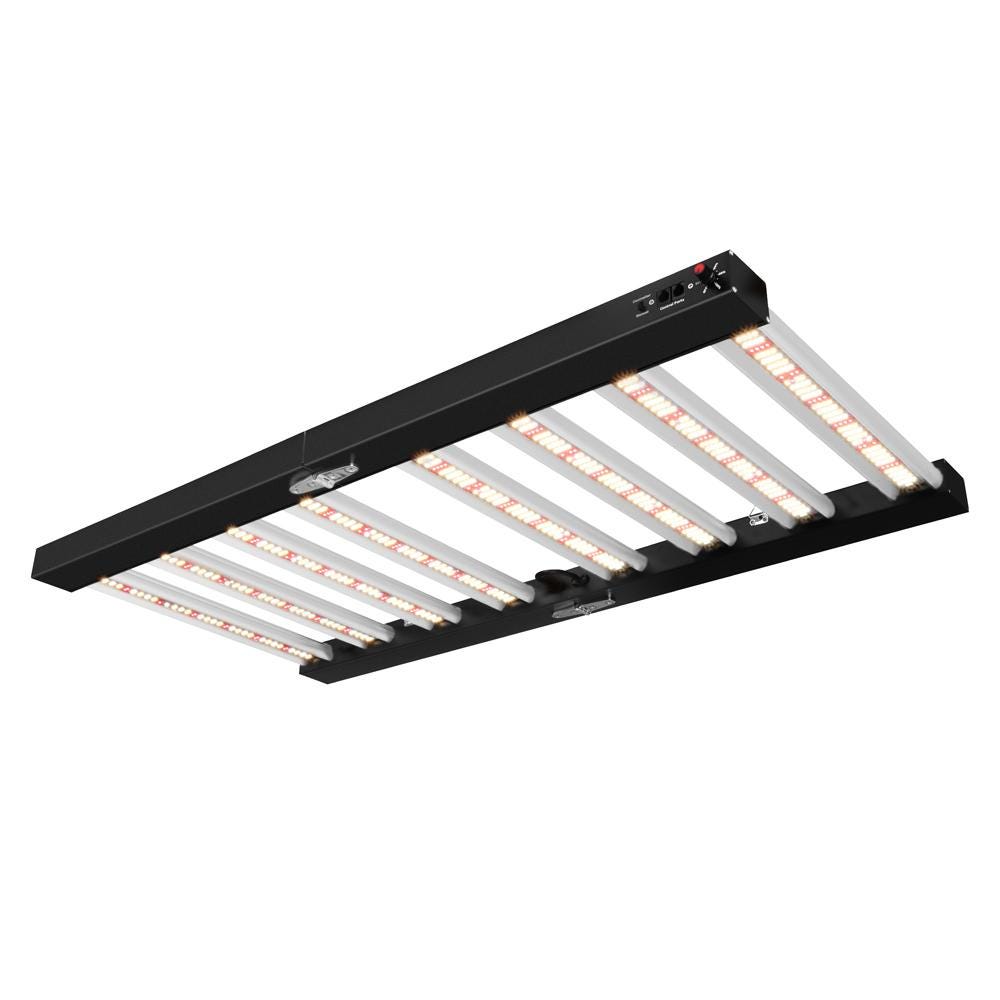
Features:
This ECO Farm LED grow light uses 1088pcs high efficient Samsung LM281B LEDs, full-spectrum sunlight with higher PAR. This LED grow light has a full spectrum consisting of LM281B leds(3000k+5000k) +RED 660nm+IR 730nm +UV 395nm, which is great for producing more flowers and healthier buds to achieve the absolute best harvest. The high efficiency with 2.8 umol/j while only consuming only 420watts. More uniform coverage. Perfect for covering a 7x4ft growing area in the Veg stage and 5x3ft for the flowering stage. The newly designed aluminium material quickly disperses heat without a noisy fan.
Spectrum King LowPro Veg 420 Watt LED Grow Light
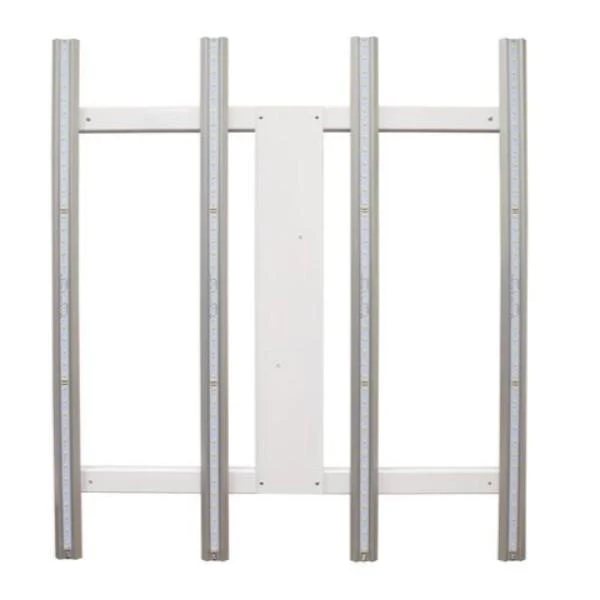
Features:
The Spectrum King LED Grow Light is designed for commercial and large growers who do vertical farming on the shelf. The LowPro Veg 420 Watt Grow Light makes it easier than ever to grow plants on a shelf close to the plant. This incredible light produces great coverage with only 6 inches to 3 feet of clearance from your plants. With its low-profile profile and easy installation, we’ve made it super easy to grow plants on shelves close to them. Add manual dimmers for finer control or larger installations Get our remote power system and program your light schedules, levels, group sections together…
LED Grow Light Selection Guide
As the name suggests, the LED Grow Light utilizes modern LED chips in a stylish way to introduce the right grow light for the plants. The quality you get from different LED grow lights varies, which in turn affects the growth and sustainability of your plants. If you’re planning to build an indoor grow deck, you should go through our top picks for the best LED grow lights.
These options were chosen from hundreds of different options based on a variety of key factors such as light intensity, panel size, and the overall quality of the LED grow lights. Nonetheless, you should briefly consider the properties mentioned below to understand their benefits for different types of applications. After reading our best LED grow lights buying guide, we can assure you that you will be able to choose the best option for yourself.
LED light intensity
As we mentioned earlier, the light intensity produced by LED lights is one of the most critical factors, which directly affects the growth quality of plants under the light. Because different types of plants have different photon requirements, you need to choose the correct light intensity for your plants. For best results, you should choose high-volume LED grow lights that can be dimmed as needed.
LED Spectrum
The spectrum of an LED light refers to the different wavelengths of light emitted by the LED. Different spectra of light must be supplied to plants in different growth stages. If you want to use the same LED grow lights for different types of growth stages, you should choose the full spectrum option. Otherwise, you can choose between a single spectral panel suitable for a single application.
Coverage Area
The footprint of an LED panel represents the area the panel can illuminate at one time. In short, the area of the grow unit must be equal to or smaller than the coverage area of the LED grow light for best results. If part of your planting platform is out of the sun zone, it can cause uneven growth of the plant as well as affect the entire plant. You can also install certain lenses to increase or decrease the coverage area of your LED grow lights.
Warranty
Finally, we would recommend that you carefully review the warranty period that a brand assigns to a particular LED grow light. The LED lights on the panel can fail at any time, you can’t simply replace a single LED in that part. Since buying heavy duty LED grow lights is very expensive, you should always opt for a longer warranty. Therefore, you will get a full guarantee from the manufacturer regarding the durability of the panels and LED lights.
Conclusion
Grow lights are a must when you want a garden that works in all seasons. It is especially important that they are placed in a greenhouse during the winter. Owning grow lights is the best way to provide constant warmth and healthy lighting to overwintering plants.
ECO Farm YS SERIES 700W LED Grow Light VS Kind LED X750 Grow Light
Growing plants indoors differs from traditional outdoor gardening. It requires different techniques and tools. The most important aspect here is to create a naturally moist environment with the right light, temperature and water to mimic the plants’ natural habitat. An integral part of organizing successful indoor gardening is creating optimal lighting conditions. However, without large windows and sunlight, it would be quite challenging to achieve proper lighting.
To overcome this problem, you should buy the best lights for your seedlings. Unfortunately, artificial light isn’t quite the same. They serve different functions and have specific advantages or disadvantages. If you want to choose the right type of lighting, you need to consider every aspect of the growing process. Read on for expert tips on how to choose the best lighting for your indoor garden to make an informed decision.
Why choose the Best LED Grow Light?
LED Grow Lights Produce Less Heat
LED grow lights at a similar power level to HID grow lights produce significantly less heat. This means you won’t spend as much energy on cooling with an air conditioner. It also makes them a bit better for growing in small concealed spaces.
LED Grow Lights Use Less Air Conditioning
When energy usage is a major concern for your grow operations, LED grow lights will really stand out. Because they require less cooling, they can cut your energy greatly compared to the demands of conventional HID grow lights.
This makes them a pretty favorable option for very long-term operations in the right conditions.
Running your air conditioning less saves you money and is a win for the environment!
LEDs are Less Maintenance
Expect HID bulbs to typically last around 10,000 hours for MH and 18,000 hours for HPS. A top-quality set of LEDs can last as long as 50,000 to 100,000 hours. This means they require less maintenance. And you won’t have to worry about changing bulbs over top of your active grows nearly as frequently.
Another maintenance-saving feature of LED grow lights is they do not have reflectors that need cleaning and replacing. Both cleaning them and replacing them add additional costs.
With LEDs, there are no ballasts to replace. In many HID setups, the ballast is required to be replaced every 3–4 years. Depending on the fixture it can take lots of time to open them up make the swap and put them back together. In a commercial grow with tons of lights, this can get expensive.
ECO Farm YS SERIES 700W LED Grow Light
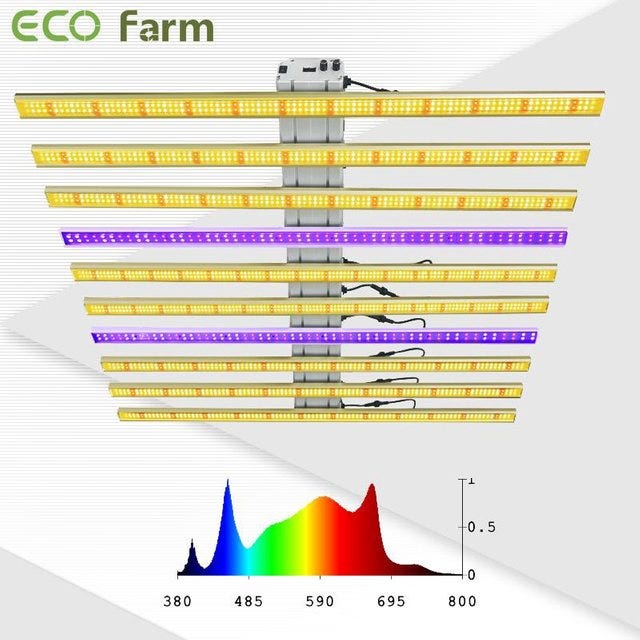
Features:
This ECO Farm LED grow light provides high energy efficiency at 2.7umol/J.The best solution to get more and better quality fruits. The light intensity can be changed by dimmer knob according to the different growth stages of plants. If in a grow tent, over 90% of reflected light can be absorbed by plants. Adequate and sun-like light can prevent the growth of plants from spindly and moulding. The best lighting solution for indoor hydroponics and soil cultivation. The actual power is 700w. Increasing the heat dissipation area by utilized a special surface treatment of the aluminum heat sink. Saving up to 50% energy and 30% cooler than than other grow lamp. Low energy consuming fast heat dissipation. No fan. IP65 Waterproof and mute. This dimmable LED grow light so that you can adjust the brightness without frequently changing the position of the light. 1–23 hour timer for hassle-free light cycling control.
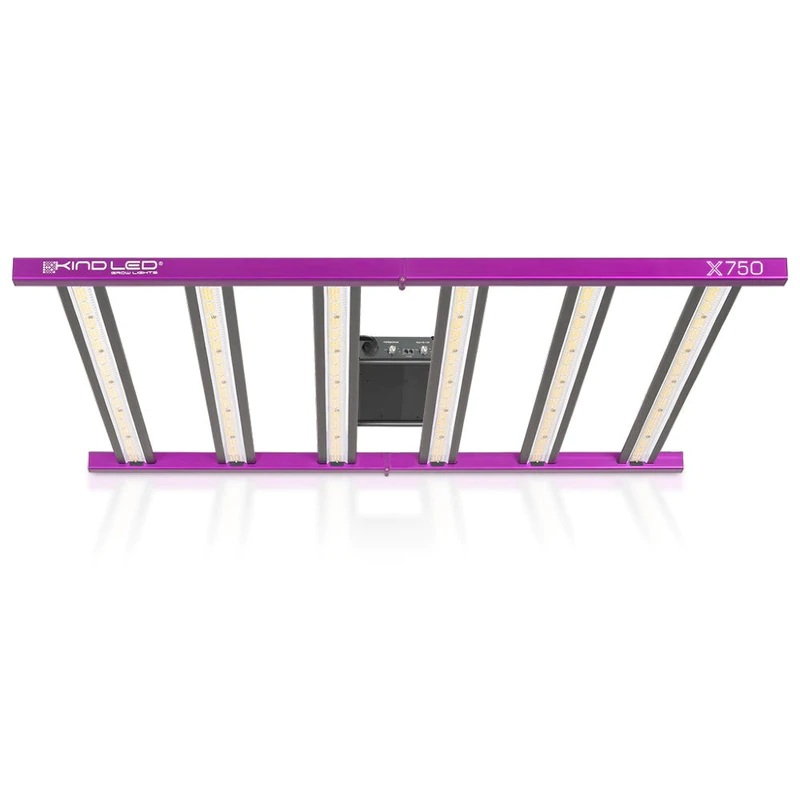
Features:
Kind LED grow light uses top-of-the-line Osram and Phillips diodes to produce targeted full-spectrum light as well as UV and IR to enhance your plants during flowering. The KIND X750 uses the full spectrum white LED diodes used by top LED companies. Kind’s Targeted Full Spectrum is designed for plants to maximize harvest weight and plant quality. Our spectrum is the result of hundreds of thousands of hours of field testing in the Northern California medicinal plant industry. With 750 watts of power and a 4' x 4' footprint, the X750 is powerful enough for commercial growers while still being compact enough for single planting.
LED Lights: A Buyer’s Guide
Lumen
Lights are traditionally measured in watts, which is a measure of how much power or energy a grow light will consume — no direct brightness measurement is used. However, in LEDs, brightness is measured in lumens, and this is mentioned on each lamp.
Since lumens are a relatively new measurement technology, many companies provide their watt-equivalent measurements so you can get a better idea of how they compare to traditional grow lights. For example, a 60-watt grow light is equivalent to 900 lumens to an LED grow light, while a 100-watt grow light is equivalent to 1,600 lumens.
Color Temperature
Color temperature is another important measurement that can give you an idea of the type of color an LED light emits. It is measured in Kelvin, and the cooler the temperature, the warmer the light.
Most companies label cool tones as daylight because the human brain perceives cool tones to be close to natural light. For residential applications, the ideal color temperature range is 2,000 Kelvin to 6,500 Kelvin. These shades will keep your home cozy while providing plenty of light for you to work in peace. You can also choose warm colors for your living room or bedroom and install cool grow lights in your workplace or study.
Fixture Type
Fixture type is an important consideration because it directly affects the lifespan of LED lights. LEDs can last for decades, but only if they can dissipate the heat they generate. For this, you’ll need to purchase grow lights that fit the fixtures in your home.
If you have enclosed light fixtures, you’ll want to make sure the LED lights you buy are designed for them; not only are such grow lights designed to withstand higher temperatures, but they also dissipate heat more efficiently.
Additional Features
Some LED lights may have special functions, which may not be necessary, but may be helpful depending on your needs. For example, some LED lights are dimmable, which is useful because they allow you to change the light tone according to your mood and occasion.
Also, some companies are making grow lights that are equipped with wifi and bluetooth. This means you can use voice control to dim the lights or turn them on or off at your convenience. Some LEDs are even equipped with motion sensors, which can be used as a security system, as they can alert you to intruders.
Conclusion
Indoor gardens are growing in popularity, especially in densely populated urban areas. Many people want to grow their own food but don’t have the space to grow it outdoors. Growing indoors is the only solution.
Using grow lights not only allows them to be grown indoors, but also allows any type of plant to be grown year-round regardless of weather conditions. LED grow lights allow them to do these jobs more efficiently without the heat issues of traditional lighting.
ECO Farm Z6–600 Samsung LM301B LED Grow Light VS Lightspeed Pro Cosmic Plus LED 600W LED Grow Light
In today’s article, we invite you to think about one of the most important aspects of indoor growing: lighting. If you’re just starting out growing, you’ll find that you have a variety of options, not only in terms of lamp power, but also in the types of lights you can find. So today we will focus on the most popular one, which is LED plant growth lights.
The purpose of this article is not to say that LED grow lights are better or worse than other kinds of grow lights, but only that they are just different options (with a wide range of prices) and growers have to make decisions among them according to their needs. selection and growth conditions. However, given the improvements in LED equipment in recent years, such lights are likely to dominate the indoor grow market in the near future.
Benefits of LED Grow Lights
But that’s not all. Full-spectrum LED grow lights also offer other benefits, such as:
LED lights are 40% more efficient than traditional light sources such as HPS, HID or CFL. As a result, they can save you a ton of money on your energy bills, while also being kind to the environment.
Because LED lights do not contain any filament, gas, lead or mercury, they are fundamentally different from other lights, which makes them very reliable in the long run.
Also, LED lights have a very long lifespan, up to 50,000 hours on premium quality lights!
LED lights also don’t heat up too much, so they don’t affect the temperature of the grow room.
Finally, high-quality LED lights that can be customized and adjusted according to your requirements.
ECO Farm Z6–600 Samsung LM301B LED Grow Light
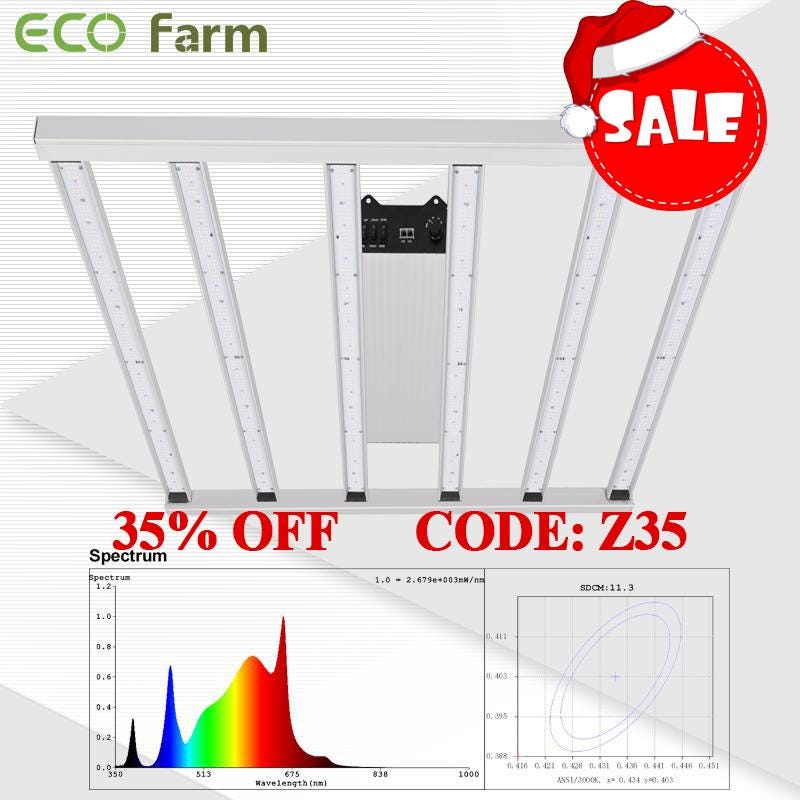
Features:
This ECO Farm LED grow light uses a high-quality and durable driver and top trash can LED generation and 6 passive cooling light bars to provide full spectrum and wide coverage light for vegetable and flowering growth stages. It covers 5'x5' Veg footprint and 4'x4' flower footprint. The high energy efficiency of 2.7umol/J produces a total PPF output of 1501 umol/J, which produces uniform light spread very close to the crop canopy, and provides excellent effects for indoor planting, greenhouses and planting tents. Compared with conventional similar wattage HPS solutions, LED lights can achieve 30–40% HVAC capacity and up to 30–60% increase in output. IP65 wet environment protection grade, waterproof and dustproof. The LED plant growth lamp adopts high-quality aluminum heat sink design to efficiently dissipate heat. It has no additional fans, and the quiet planting environment has zero noise.
Lightspeed Pro Cosmic Plus LED 600W LED Grow Light
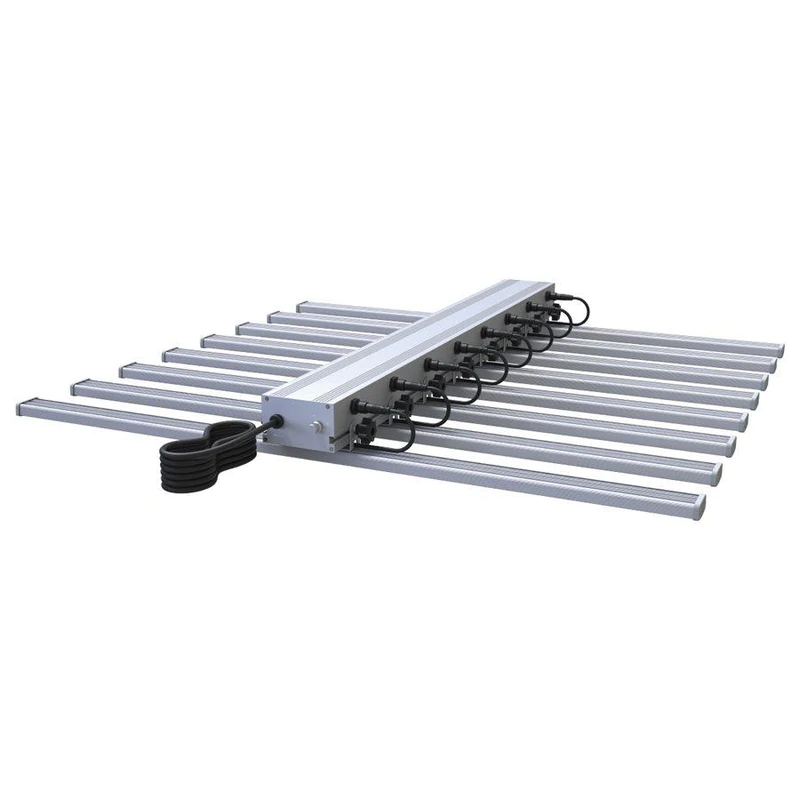
Features:
The Lightspeed Pro Cosmic Plus LED 600W Grow Light provides 600W of powerful lighting, producing higher intensity lighting to ensure maximum indoor plant growth. This 600W full spectrum hydroponic grow light is specially designed to optimize plant reproduction during the growth and flowering stages of plants cultivation. Like all of our Lightspeed Cosmic lighting ranges, this grow light has many innovative features designed to help you reduce operating costs and make your hydroponics business more profitable. First, it provides more uniform full-spectrum LED natural light than HPS and MH lighting. Plus, it has a dimmer that allows you to precisely control the light during key growing stages to help prevent damage to sensitive plants and extend the life of your grow lights.
LED Lighting: Factors Affecting Growth
There are several lighting factors that determine how well indoor plants will grow.
1. Spectrum
The most important factor affecting plant growth is the light spectrum produced by grow lights. Depending on the lamp you choose, the spectrum can vary greatly.
While the sun naturally provides the full-spectrum light that plants need to thrive, you need to be more strategic with your grow lights. Even slight differences in the spectrum of your growing process can have a major impact on your final product.
Which brings us to our next point…
2. PAR (Photosynthetically Active Radiation)
Photosynthetically Active Radiation, or PAR, is the part of the light spectrum that plants need for photosynthesis. For indoor plants, PAR is somewhere between the blue/violent low end of the spectrum and the orange/red high end.
How are you using PAR for your growth?
Indoor plants require different spectra depending on their growth stage.
During the vegetative phase, indoor plants require a lot of low-end blue light, which translates to PAR values in the 400–500 nm (nanometer light) range.
When a indoor plant flowers, it needs high end orange/red light, or PAR values above 600 nm.
While this may sound complicated, you can pick up a PAR meter to make sure your plants are receiving the correct spectrum at the correct time.
3. Light intensity
Light intensity, measured in lumens, also plays an important role in the size and strength of the harvest. In general, the more light you can provide to your plants, the better.
If you buy lights specifically designed for growing — and if you have enough (and the right settings) — they should provide enough light intensity to promote healthy plant growth.
If your grow lights are not strong enough, or if they are placed too far from your plants, the growth cycle will suffer. The ideal distance ultimately depends on the strength of your grow lights. We have provided a form at the end of this article to help you plan your space.
4. Photoperiod
Finally, photoperiod, or the amount of light your plants receive, will have an impact on your harvest.
In short, extending or shortening a plant’s photoperiod (a concept familiar to growers of light deprivation) will dramatically affect how long a plant stays in the vegetative phase and when it begins to flower.
Generally, indoor plants will begin to bloom if the photoperiod is short (about 12 hours per day). On the other hand, when the photoperiod is longer (about 18 hours per day), flowering is delayed.
Achieving the correct light cycle for houseplants is as easy as turning the grow lights on and off as needed (a timer makes this easier).
Conclusion
If you’re keeping up with the times and want to simplify the process, choose LED grow lights or CMH lights, depending on how long you plan to grow.
Remember that LEDs have a much longer lifespan than CMH lights.
If you grow plants at home and plan to move the plant to a different space as it grows, you can also use MH (for vegetation) and HPS (for flowering), or just stick with full-spectrum lights throughout.
These are especially useful because they are so close to sunlight that you can change the spectrum by turning a knob.
We hope this was helpful to you, and good luck with your growth!
